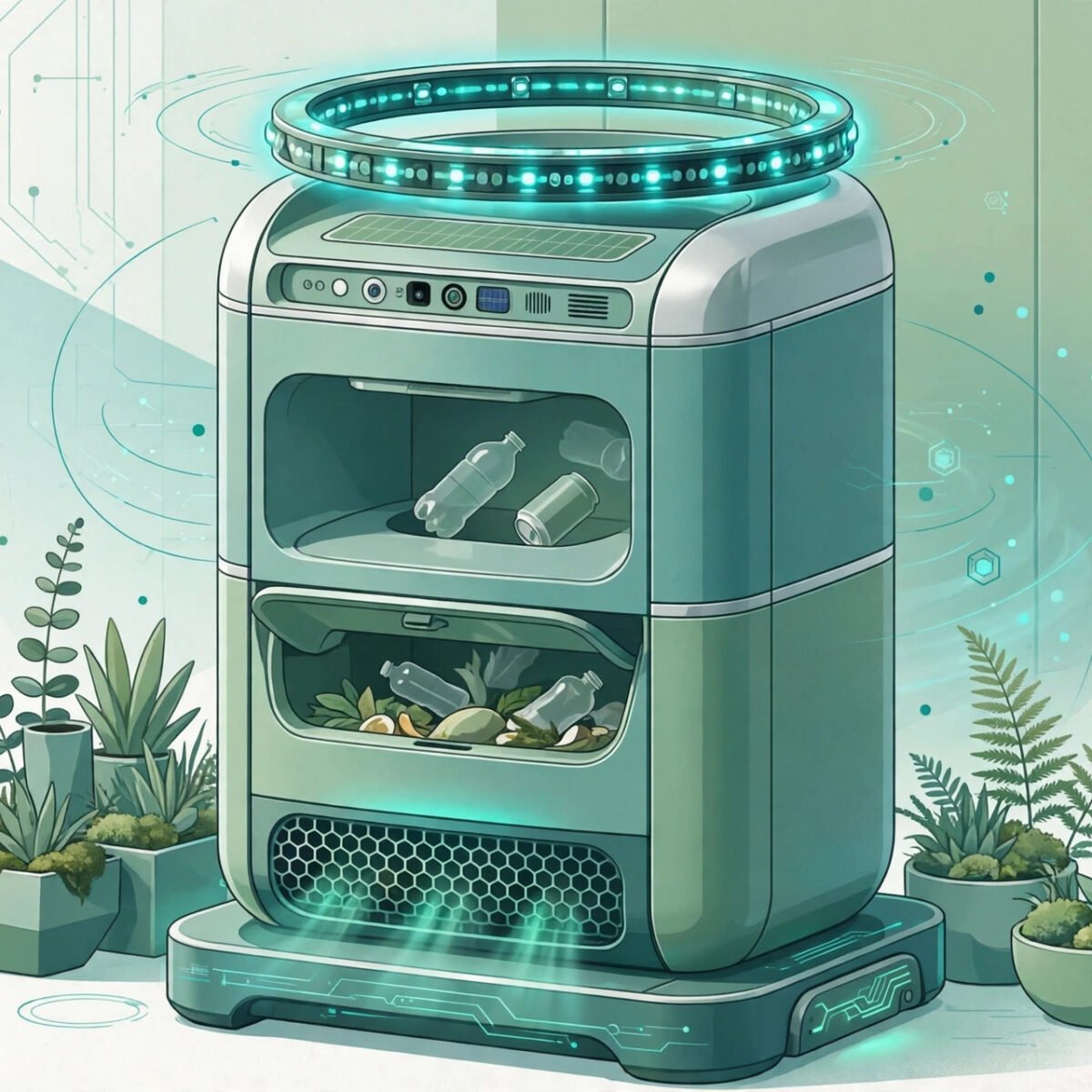
MataRecycler is a smart-recycling concept described in recent tech guides as an AI-driven system that sorts waste at the point of disposal. Its five core parts are sensors and cameras, computer vision, a machine-learning classification model, automatic sorting or on-screen user prompts, and a cloud analytics dashboard that tracks what was thrown away.
One honesty note first: there is no verifiable MataRecycler company, product launch, or official website. Articles describing it as a tested device cannot be verified. The honest way to read the term is as a concept for what AI-powered recycling could look like, built from real technologies already used in the industry. This guide covers the concept, what every source agrees on, and which parts are real and deployed.
Recycling has a simple idea and a messy reality: most people stand in front of a bin, hold up a greasy pizza box or a coffee cup, and guess. At DigitalGeekSpot we cover emerging tech in plain language, separating concept from marketing.
The pieces of MataRecycler are not science fiction. Computer vision, material sensors, and cloud dashboards already run inside real recycling facilities. What is new is pushing that intelligence down to the bin itself, so sorting happens before the garbage truck arrives.
This guide covers why traditional recycling fails, how the concept works step by step, where it could be used, what it costs, where it falls short, and why searching the term sometimes surfaces results about a computer virus.
Key Takeaways: MataRecycler is an AI smart-recycling concept, not a confirmed product or company. It would sort waste at the bin using cameras, computer vision, machine learning, auto-sorting or user prompts, and a cloud dashboard. Real equivalents already run in facilities operated by AMP, Rumpke, and Republic Services. Costs are not public.
Why Does Traditional Recycling Fail?
Traditional recycling fails mostly because of contamination, which starts with ordinary people: a greasy pizza box in the paper stream, plastic bags tangling in machinery, half-finished drinks splashing liquid over everything. One badly sorted item can spoil a whole batch, and facilities then reject entire loads to landfill.
The numbers back this up. The Recycling Partnership reports that only about 21% of recyclables are captured, with roughly 76% lost at the household level. The EPA set a national goal of a 50% recycling rate by 2030, while the current rate sits around 32%. Landfills account for about 14.4% of US human-related methane emissions (2022 EPA figures), and modernizing American recycling infrastructure is estimated to cost between $36 and $43 billion. Human sorting adds its own limits: fast, repeated decisions mean inevitable errors, while households get no real-time feedback and repeat the same mistakes for years. That feedback gap is the exact opening MataRecycler is designed to fill.
What Exactly Is MataRecycler?
MataRecycler is a smart-recycling concept: a bin or station that identifies what you throw away and either routes it correctly or tells you what you got wrong, in real time. Guides describe it as a smart bin, a bins-plus-software system, or a guiding principle for AI in waste management. All agree on the core idea: move sorting intelligence from the facility to the moment of disposal.
How Does MataRecycler Work?
The concept runs as a continuous five-step loop: scan, identify, route or correct, report, and learn.
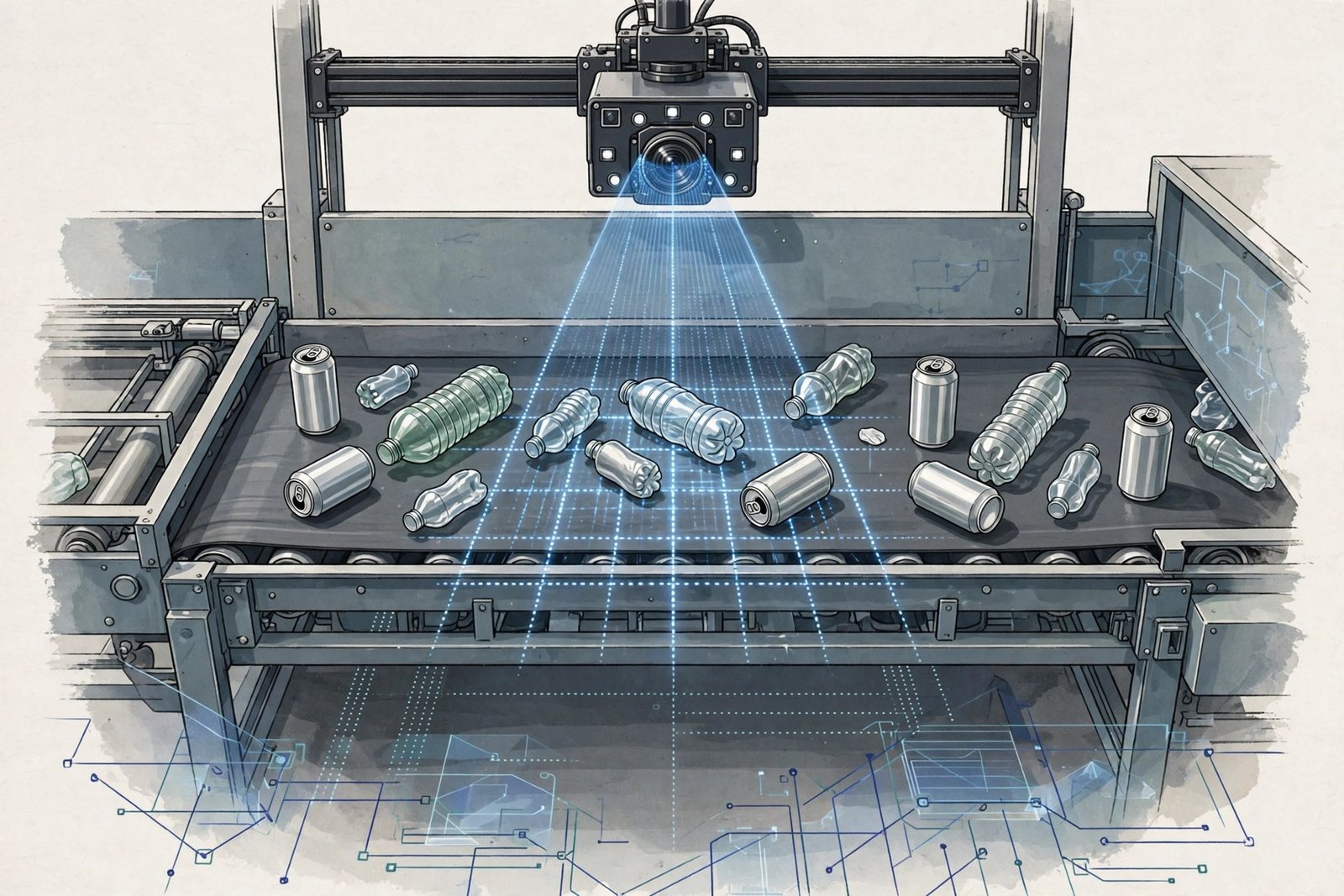
- Bin scan: Cameras and sensors capture images, shape, color, and sometimes weight or material signals for each deposited item.
- AI material identification: A computer vision model classifies the item, including plastic sub-types such as PET, HDPE, and PVC, and flags contamination like food residue or liquid.
- Auto-route or user prompt: The system opens the correct internal compartment automatically or shows a correction on screen, such as routing a coffee cup lid to trash.
- Cloud dashboard: Every deposit is logged with volumes, material mix, contamination rates, and fill levels for operators.
- Learning loop: The model retrains on new data, so recognition improves as it sees more items and local packaging types.
What Are the Core Components of a MataRecycler System?
Every description of the concept names the same building blocks:
| Component | What It Does | Why It Matters |
|---|---|---|
| Camera and sensor package | Captures images, shape, color, and weight or material signals | Good data is the foundation; bad scans mean bad sorting |
| Computer vision and ML model | Classifies materials, including plastic sub-types, and detects contamination | Replaces guesswork with consistent, repeatable decisions |
| Prompt screen | Shows instant feedback or correction to the person disposing the item | Teaches correct behavior at the exact moment of the mistake |
| Cloud analytics dashboard | Tracks volumes, material mix, contamination rates, and fill levels | Turns disposal data into decisions for operators and cities |
| Optional robotic arm | Physically picks and routes items into the right internal compartment | Removes the user from sorting in fully automated setups |
Traditional Recycling vs MataRecycler: What’s the Difference?
The differences are biggest where traditional systems are weakest: accuracy, feedback, and data.
| Feature | Traditional Recycling | MataRecycler Concept |
|---|---|---|
| Sorting accuracy | Depends on human judgment, inconsistent | AI classification of materials and plastic sub-types |
| Contamination control | Found late at facilities, batches often rejected | Detected at the bin before joining the waste stream |
| User guidance | Static signs and flyers, rarely read | Real-time correction at the moment of disposal |
| Data tracking | Little or none at the household level | Every deposit logged to a cloud dashboard |
| Speed | Manual facility sorting is slow and error-prone | Instant recognition, optional robotic routing |
| Cost efficiency | Low upfront cost, high waste from contamination | Higher setup cost, savings from cleaner streams |
| User engagement | Passive, easy to ignore | Interactive feedback and possible gamified rewards |
Where Is MataRecycler Used?
The concept is pitched for four main settings:
- Public spaces and smart cities: Parks, airports, and transit hubs where contamination is highest and staff cannot supervise every bin.
- Businesses and retail: Offices, malls, and restaurants that want cleaner waste streams and measurable reporting for sustainability targets.
- Homes and residential pilots: Apartment complexes and neighborhoods testing whether instant feedback changes household habits over time.
- Industry and education: Factories with specific waste streams, plus schools and universities that combine recycling with teaching moments.
What Are the Benefits of MataRecycler?
The gains cluster around five areas: accuracy (identifying PET, HDPE, and PVC sub-types, since recyclers buy sorted streams, not mixed bales), speed (instant recognition beats manual checking), cost (cleaner streams lower disposal fees and raise resale value), behavioral change (real-time correction teaches in seconds what flyers never did), and output quality (cleaner downstream material raises recovery rates and cuts landfill pressure).
What Are the Limitations and Drawbacks?
Upfront cost is the first barrier: sensor hardware, cameras, installation, and software add up, with no public pricing to benchmark against. Second, systems need calibration and maintenance: lenses get dirty, sensors drift, and new local packaging must be added to the model. Third is adoption pace: changing city-wide habits takes years of education. Fourth is privacy: camera-equipped bins raise questions about what is recorded. Responsible designs use material-only recognition, short retention, and aggregated reporting, but buyers should confirm that before deploying in public.
Is MataRecycler a Virus, an App, or a Real Company?
First, the virus: older Windows users may remember “MATA recycler” as a VBS USB malware variant. It is completely unrelated, just a coincidental name overlap. Second, the app: software dashboards and companion apps exist in the concept, but hardware (cameras, sensors, sorting mechanisms) is central. Third, the company: there is no verifiable MataRecycler company with a product launch or official website. Think of it as a technology layer that waste companies, hardware makers, or cities could build, not a curbside pickup brand you can sign up with.
What Is the MataRecycler Biofuel Angle?
Some guides associate the term with waste-to-energy rather than sorting: sorted plastics go through pyrolysis to produce fuel oil or diesel, while organic waste ferments into ethanol or syngas. Treat this as a separate thread, a waste-to-fuel concept that shares the name, not the sorting-bin concept described above.
How Does MataRecycler Fit Into Smart Cities?
Cities are the natural home for the concept. Fill-level alerts let trucks run optimized routes instead of fixed schedules. Contamination heatmaps show which stations need targeted education. Sustainability teams get auditable diversion reporting. Looking ahead, sources describe robotic arms, blockchain bale tracking, carbon-credit integration, and reward apps for clean sorting. City-scale cameras need clear, published data governance before public trust follows.
What Should a Smart Recycling Bin NOT Accept?
Lithium batteries from phones, laptops, vapes, and e-bikes cause fires in collection trucks and sorting facilities when crushed or punctured. No smart bin should accept them; take batteries to a dedicated collection point instead. A well-designed system would recognize a battery, reject it, and point the user to proper disposal.
How Much Does MataRecycler Cost?
There is no public pricing because there is no confirmed commercial product; any quoted setup price or payback period is invented. Honest cost drivers: sensor and camera hardware, installation, software licensing, ongoing calibration, and deployment scale.
Are There Real-World Projects Like MataRecycler?
While MataRecycler itself is unverified, the underlying technology is deployed at scale by named companies with announced figures:
| Project | What It Is | Announced Figure |
|---|---|---|
| AMP, Colorado | AI-powered sorting facility | About 62,000 tons per year |
| Rumpke, Columbus | Material recovery facility with optical sorters | 19 optical sorters, about 97% uptime, about 99% recovery |
| Republic Services, Bridgeton | High-throughput recycling facility | About 45 tons per hour |
These figures come from public project announcements, not MataRecycler marketing. They prove AI sorting works at industrial scale.
Frequently Asked Questions
What is MataRecycler?
MataRecycler is a smart-recycling concept described in recent guides as an AI system that sorts waste at the point of disposal using cameras, computer vision, machine learning, auto-sorting or user prompts, and a cloud dashboard. It is not a confirmed real company or product.
How does MataRecycler work?
It follows five steps: the bin scans the item, AI identifies the material including plastic sub-types, the system routes it automatically or corrects the user on screen, data goes to a cloud dashboard, and the model improves over time through a learning loop.
Does it replace existing recycling programs?
No. It is designed to work on top of existing programs by improving sorting quality at the bin. Cities and facilities would still run collection and processing; the concept just makes what arrives cleaner.
What waste types can it sort?
The concept covers plastic sub-types (PET, HDPE, PVC), paper and cardboard, metals, and glass, with contamination detection for food residue, liquids, and mixed materials. Batteries and hazardous waste are explicitly excluded.
Is AI sorting more reliable than human sorting?
In controlled settings, yes, because AI applies the same rules every time without fatigue. Human sorters make fast repetitive decisions and errors are inevitable. The advantage is consistency, not superhuman judgment.
What happens to the data the bins collect?
Deposit data goes to a cloud dashboard for operators. Privacy-respecting designs limit recognition to materials, keep retention short, and report in aggregated form. Buyers should verify this before deploying cameras in public.
Is MataRecycler a computer virus?
No. An unrelated VBS USB malware variant was once called “MATA recycler.” That malware has nothing to do with the smart-recycling concept; the names simply overlap.
What does it cost, and will it cut waste?
There is no public pricing because there is no confirmed product, so treat quoted figures as unverified. As for waste: the concept targets the right problem, since contamination is why so much recyclable material reaches landfills, and real AI-sorting facilities show the approach works at scale. Until a commercial product publishes results, waste reduction claims remain theoretical.
Is MataRecycler Worth Watching?
MataRecycler is best read as a preview of where recycling technology is heading, not as a product review. The name may be invented, but every piece of the concept, vision systems, material classification, real-time feedback, and cloud analytics, already exists in real facilities. Watch the companies doing it at scale, keep batteries out of your bin, and treat “I tested it” trial claims with skepticism. For more explainers, see our guides to AelfTech and Coyyn.