Written by James Foster for Digital Geek Spot. Last updated: November 2026.
CBD oil vs capsules: which is better? Neither format wins on strength. The only human trial that tested the same CBD oil as drops and inside capsules found nearly the same blood levels from both, with peak levels at 4 hours in each case. The real choice is about control, taste, speed, and routine. CBD oil gives drop-by-drop dose control and a faster start. CBD capsules give a fixed, tasteless dose that fits a daily routine and travels well. This guide compares both formats on absorption, onset, duration, dose control, cost per milligram, and safety, using the trial data and current 2026 guidance.
Key Takeaways
- CBD oil vs capsules: which is better comes down to control, not strength. One crossover trial found peak blood levels of 28.0 ng/mL from capsules and 24.0 ng/mL from drops, both at 4 hours.
- CBD oil starts faster and doses in small steps. Typical onset is 15 to 45 minutes, and a dropper lets you move the dose 5 mg at a time.
- CBD capsules last longer per dose and need no measuring. Typical onset is 45 to 90 minutes, with effects lasting 6 to 8 hours.
- Food moves absorption more than format does. A high-fat meal raised peak CBD levels about 5-fold in label data.
- Price per milligram decides value. Oils usually cost 3 to 5 cents per mg, capsules about 6 cents per mg.
Table of Contents
- What Is CBD Oil?
- What Are CBD Capsules?
- CBD Oil vs Capsules at a Glance
- How Does Your Body Absorb CBD Oil and Capsules?
- Which Works Faster, CBD Oil or Capsules?
- Are CBD Capsules as Effective as CBD Oil?
- How Do Doses Compare Between Oil and Capsules?
- Which Costs Less per Milligram?
- Which Format Fits Your Routine?
- Can You Use CBD Oil and Capsules Together?
- How Do You Read a CBD Lab Report?
- Will CBD Oil or Capsules Affect a Drug Test or Your Medicines?
- Frequently Asked Questions
- Conclusion
What Is CBD Oil?
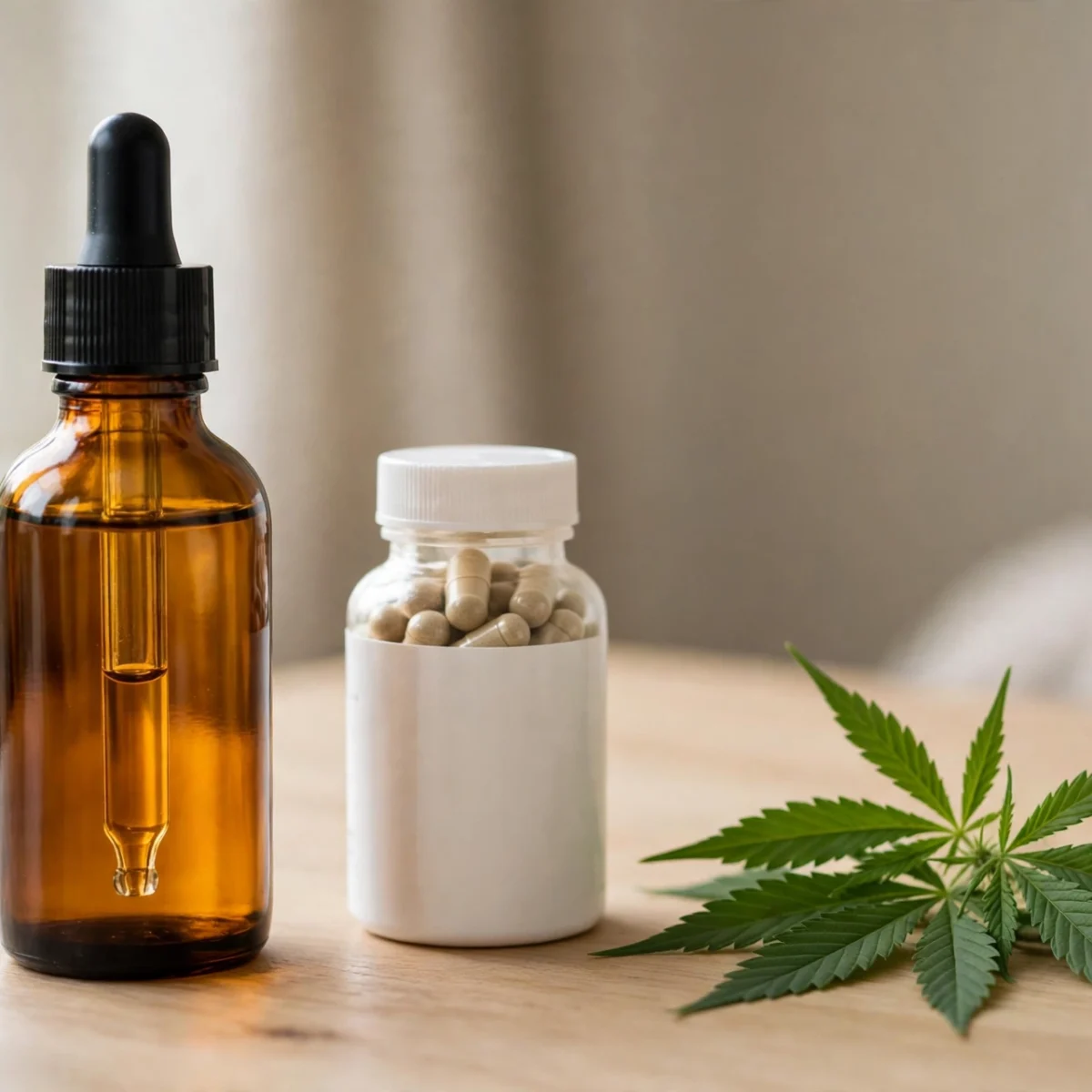
CBD oil is a hemp extract mixed into a carrier oil, sold in a bottle with a dropper for dosing by the drop. The extract holds cannabidiol (CBD), the compound the product is sold for, and the carrier oil is usually MCT oil from coconut or hemp seed oil. A standard bottle holds 30 mL, and the label states total CBD in milligrams plus CBD per mL. To use CBD oil, place the drops under the tongue, hold them for 30 to 60 seconds, then swallow. Cannabidiol is the compound at the center of this comparison, and the format only changes how it reaches the body. CBD oil comes in three extract types: full spectrum keeps CBD plus trace THC under 0.3 percent and other hemp compounds, broad spectrum removes the THC, and isolate holds CBD alone. Check the label for the extract type before you compare prices. CBD oil suits people who want to change the dose in small steps, because one drop can add as little as 5 mg.
What Are CBD Capsules?
CBD capsules are pre-measured doses of hemp extract sealed in a swallowable shell. Each capsule or softgel holds a fixed amount of CBD, often 10 mg, 25 mg, or 50 mg, mixed with a carrier oil inside the shell. To use CBD capsules, swallow one with water, the same way you take a daily vitamin. The shell dissolves in the stomach, the contents release, and the CBD passes through digestion and the liver before it reaches the blood. CBD capsules come in the same three extract types as oil: full spectrum, broad spectrum, and isolate. The shell hides the hemp taste completely, and the fixed dose removes all measuring. CBD capsules suit people who want a set routine, because every capsule gives the same dose with no dropper and no counting, and a bottle of capsules packs like any supplement and never leaks.
CBD Oil vs Capsules at a Glance
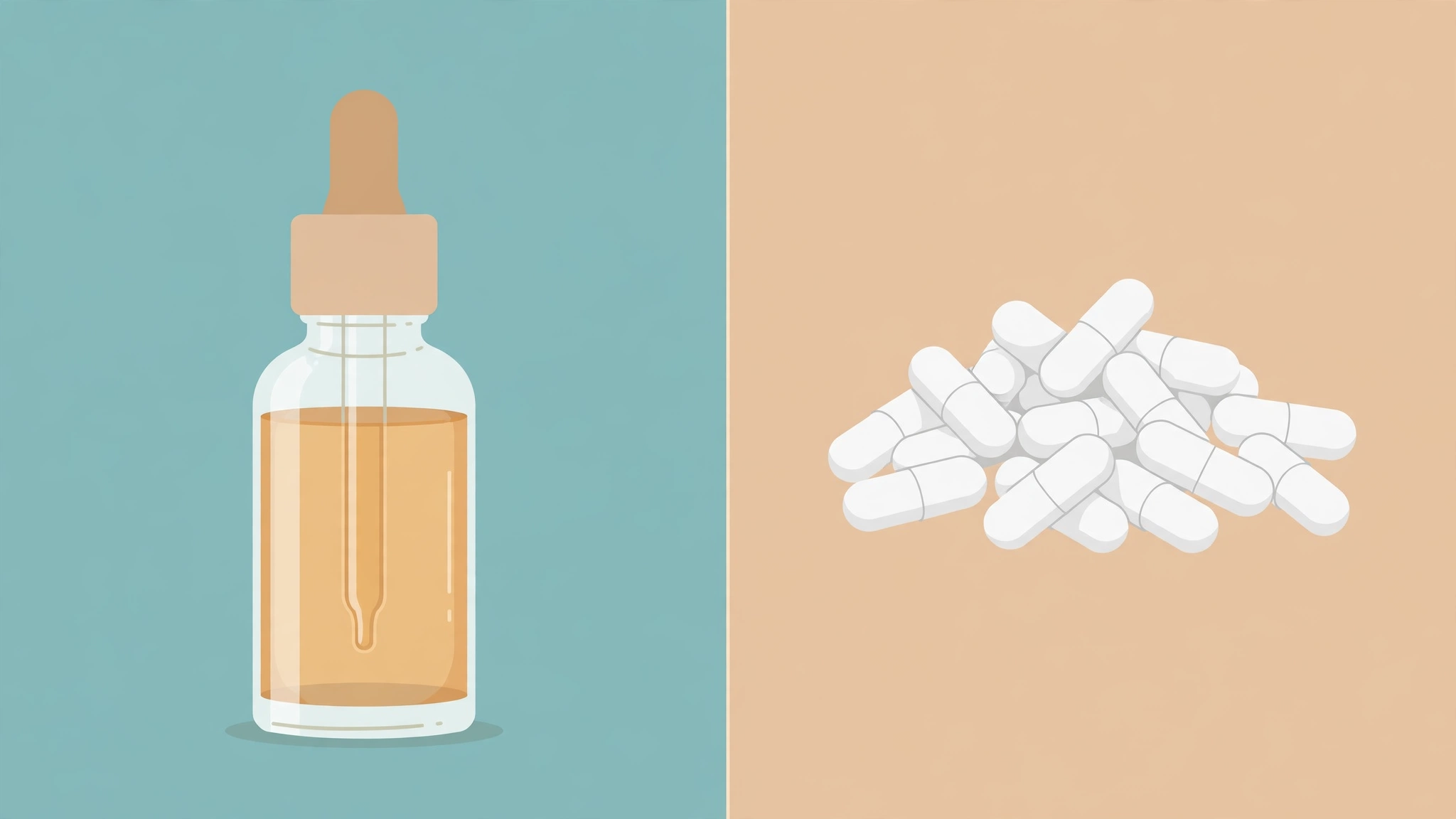
The table below shows the full comparison in one place.
| Feature | CBD oil | CBD capsules |
|---|---|---|
| How you take it | Drops under the tongue, then swallow | Swallow whole with water |
| Typical onset | 15 to 45 minutes | 45 to 90 minutes |
| Typical duration | 4 to 6 hours | 6 to 8 hours |
| Dose control | Adjustable drop by drop | Fixed per capsule |
| Taste | Earthy hemp flavor, or flavored | Tasteless |
| Discretion | Needs a dropper, less discreet | Looks like a vitamin, very discreet |
| Travel | Bottle can leak, needs care | Packs easily, no leak risk |
| Cost per mg | Often 3 to 5 cents | Often about 6 cents |
| Best for | Flexible dosing and faster onset | Steady daily routine and travel |
How Does Your Body Absorb CBD Oil and Capsules?
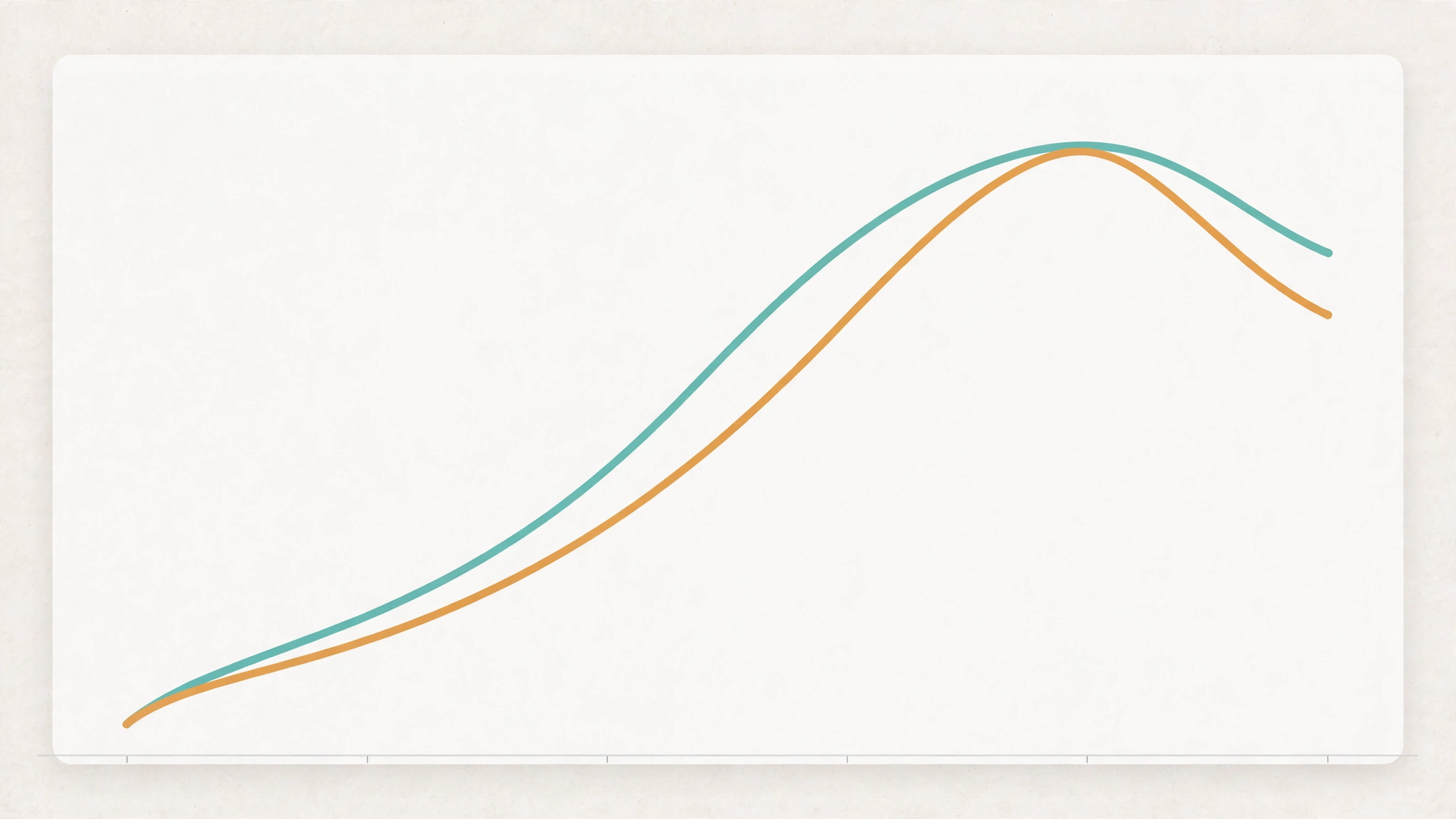
CBD oil and CBD capsules reach the blood through nearly the same route, and the one direct trial found no real difference between them. Eight healthy men completed a participant-blinded randomized crossover using the same hemp oil at 69 mg of CBD per mL, as drops and inside capsules. Peak plasma CBD was 28.0 ng/mL from the capsules against 24.0 ng/mL from the drops, time to peak was 4 hours in both, and 6-hour exposure was 45.3 against 41.8 ng/mL times hours. Nothing separated the two formats. The shared 4-hour peak points to absorption in the gut, not the mouth lining, because oil held under the tongue is mostly swallowed before the mouth can absorb it. Source: Endoca (2026). Both formats then meet the same liver step. CBD passes through the liver on first pass, where enzymes CYP2C19 and CYP3A4 process it, and first-pass metabolism is the reason swallowed CBD loses a share of each dose. A 2018 review put oral bioavailability at roughly 13 to 19 percent. Source: Millar et al. (2018). Food changes absorption more than format does. A high-fat, high-calorie meal raised peak concentration about 5-fold and total exposure about 4-fold at 750 and 1,500 mg doses. Source: Endoca (2026). Take either format the same way each day so the dose stays comparable.
Which Works Faster, CBD Oil or Capsules?
CBD oil works faster than CBD capsules in most cases, but the gap is smaller than most product pages claim. Oil held under the tongue typically starts in 15 to 45 minutes, while capsules typically start in 45 to 90 minutes, because the capsule shell must dissolve and the contents must pass through digestion first. The prescription CBD drug label gives a time to peak blood level of 2.5 to 5 hours at steady state, and in a small 2025 study, nine healthy men took a 40 mg CBD capsule and reached maximum blood concentration at about six hours. Source: Pisak et al. (2025). Food in the stomach slows onset and raises total absorption, and body weight and metabolism vary by person, so the same product starts at a different time for two people. If speed matters, hold oil under the tongue for a full 60 seconds before swallowing. The CBD category on Digital Geek Spot covers oils, gummies, vapes, and lab reports in more depth.
Are CBD Capsules as Effective as CBD Oil?
Yes, CBD capsules are as effective as CBD oil at the same dose, because both deliver the same active compound and the trial found the same blood exposure. The crossover trial is the only direct test, and it found no difference in peak levels or 6-hour exposure between drops and capsules made from the same oil. The format changes timing and control, not the compound. Duration differs a little: oil effects typically last 4 to 6 hours, while capsule effects typically last 6 to 8 hours, because digestion releases the dose more slowly. No trial has measured duration of effect directly for either format, so treat those ranges as brand and reviewer figures, not trial results. A 2024 review of seven studies of healthy, physically active adults found limited evidence for benefits. Source: Bezuglov et al. (2024). Judge a format by fit, not by promise: oil wins when you need to adjust the dose day by day, capsules win when you need the same dose every day without thought.
How Do Doses Compare Between Oil and Capsules?
CBD oil doses in small steps, while CBD capsules dose in fixed jumps, and that gap is the largest real difference between the two formats. A 15 percent oil can declare 5 mg of CBD per drop, so a daily amount can move 5 mg at a time, while capsules arrive as fixed units of 10 mg, 25 mg, or 50 mg. Work through one example. A person who wants 35 mg a day can take 7 drops of a 5 mg-per-drop oil, or one 25 mg capsule plus one 10 mg capsule. New users often start low and raise the dose in small steps over two weeks. Oil fits that plan, because each step can be 5 mg. Capsules fit a steady plan better, because the dose stays fixed once it is set. Two rules keep dosing safe with either format: read the label for CBD per mL for oil and CBD per capsule for capsules, and change only one thing at a time, dose, timing, or format, never all three at once.
Read our CBD oil guide to compare extract types before you choose a format.
Which Costs Less per Milligram?
CBD oil usually costs less per milligram than CBD capsules, and a 30-second formula proves it for any two products. Divide the price by the total CBD milligrams in the package. The result is the cost per mg, and the lower number wins on value. Worked examples make the math concrete. An oil with 1,000 mg of CBD for 50 dollars costs 5 cents per mg. A capsule bottle with 30 capsules at 25 mg each holds 750 mg, so at 45 dollars it costs 6 cents per mg. A second oil at 35 dollars for 1,000 mg costs 3.5 cents per mg. The capsule bottle costs about 20 percent more per mg than the first oil and about 70 percent more than the second oil in these examples. Prices are illustrative, from brand and reviewer pages checked in November 2026, so run the same division on the exact products you compare. Capsules cost more per mg because shells, filling machines, and extra packaging add cost, while oils need only a bottle, a dropper, and the extract.
Which Format Fits Your Routine?
The better format is the one that fits your day, so match the format to the goal instead of chasing a winner.
- Pick CBD oil if you want to adjust the dose. Oil lets you raise or lower the dose 5 mg at a time, which suits a two-week titration plan or a dose that changes with the day.
- Pick CBD capsules if you want a fixed daily routine. Capsules give the same dose every morning with no measuring, which suits a set-and-forget routine.
- Pick CBD oil if speed matters. Oil starts in 15 to 45 minutes, which suits an evening routine where you want effects within the hour.
- Pick CBD capsules if you travel or work in public. Capsules look like vitamins, need no dropper, and never leak in a bag.
- Pick CBD capsules if you dislike the hemp taste. Capsules are tasteless, while oil carries an earthy hemp flavor unless it is flavored.
First-time buyers often do better with oil, because small-step dosing lets them find their level without buying three capsule strengths. People who already know their dose often do better with capsules, because the fixed dose removes the daily measuring step.
Can You Use CBD Oil and Capsules Together?
Yes, you can use CBD oil and capsules together, and many users do, with capsules as the base and oil as the adjustment. Take a capsule in the morning for a steady base dose, then use oil in the evening when you want a smaller or larger amount than the capsule gives. One sample day: one 25 mg capsule with breakfast, then 2 drops of a 5 mg-per-drop oil in the evening for 10 mg more, which totals 35 mg for the day. Three rules keep dual use safe. First, add the milligrams together and keep the daily total inside the range you already tested. Second, do not count the same dose twice: write down each dose as you take it. Third, change only the oil dose when you adjust, and keep the capsule dose fixed. The formats share the same active compound, so mixing them adds no new ingredient, only a second way to measure the dose.
How Do You Read a CBD Lab Report?
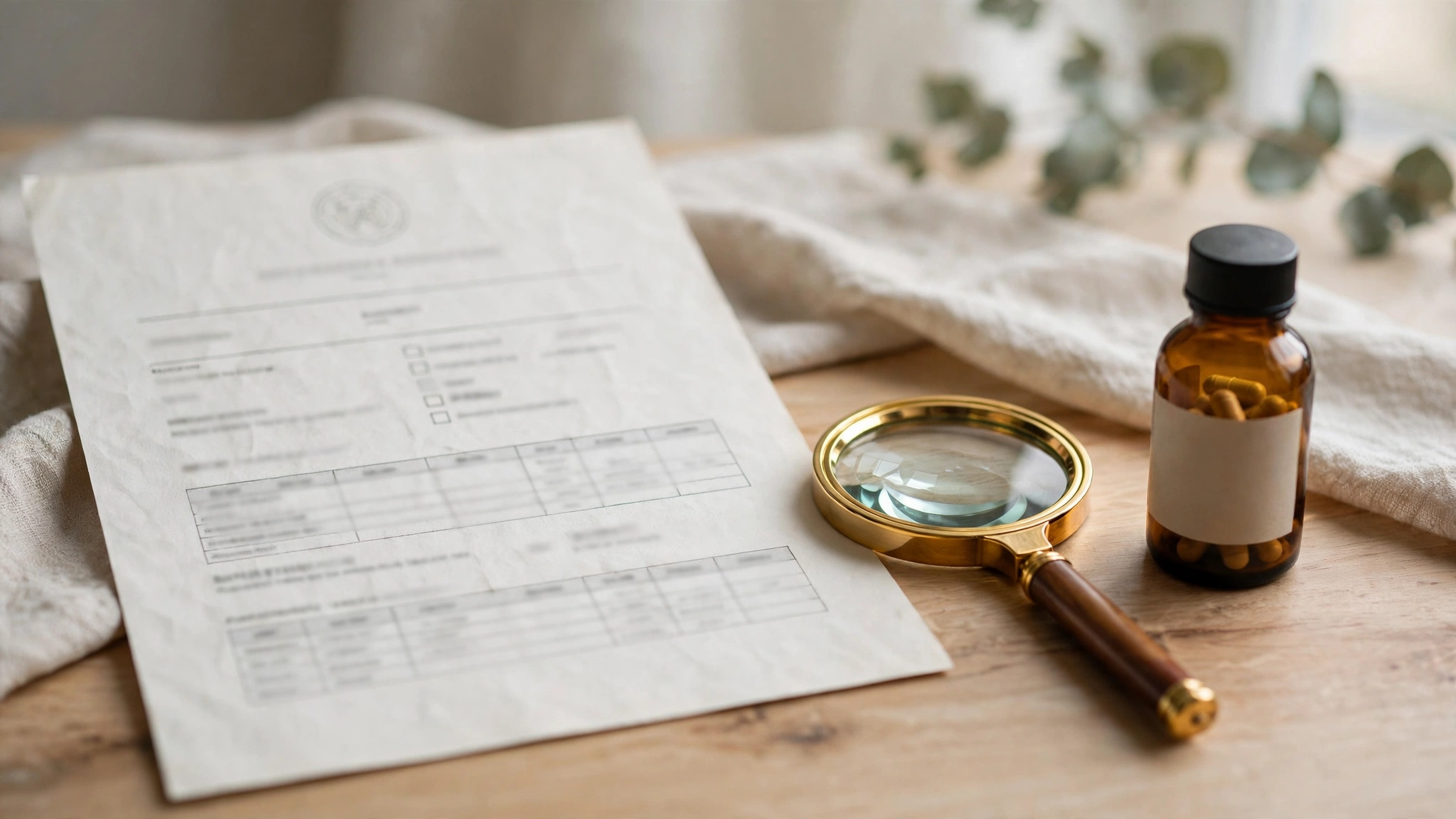
Read the lab report before you buy, because the report is the only check that the label is true. A certificate of analysis (COA) is a third-party lab test for one batch of a product, and a current COA matters more than any brand claim. Run these 5 checks on every COA.
- Match the batch number. The batch number on the COA must match the number on the bottle. A mismatch means the report belongs to a different batch.
- Check the CBD milligrams. The CBD per serving on the COA must sit within 10 percent of the label claim. A 25 mg capsule should test between 22.5 mg and 27.5 mg.
- Check the THC level. Full-spectrum products must show THC under 0.3 percent by dry weight. Broad-spectrum and isolate products should show no detected THC.
- Check the contaminant panel. The COA must show passes for pesticides, heavy metals, microbes, and residual solvents. A COA with cannabinoid numbers only is incomplete.
- Check the date. The test date must be within the last 12 months. A report older than a year belongs to an old batch, not the bottle in front of you.
If a brand hides its COAs, shows a COA with no batch number, or links to a report that does not match the product, buy a different brand.
Will CBD Oil or Capsules Affect a Drug Test or Your Medicines?
CBD oil and CBD capsules carry the same drug test and medication risks, because the risk comes from the extract, not the format. Standard drug tests screen for THC metabolites, not CBD, so pure CBD does not trigger a standard test. The risk comes from THC in the product. Full-spectrum oil and capsules hold trace THC under 0.3 percent, and daily use of a full-spectrum product can build enough THC metabolites to fail a test in some cases. Broad-spectrum and isolate products carry a lower risk, but no CBD product can promise a clean test, because labels and batches vary. If a test matters for work, pick an isolate product with a batch-matched COA that shows no detected THC, and stop use well before the test date. Medication interactions need the same care. CBD affects liver enzymes CYP2C19 and CYP3A4, which process many prescription drugs, including blood thinners and some seizure medicines, so talk to a doctor before you start CBD if you take any prescription medicine. Common side effects are mild: dry mouth, drowsiness, appetite changes, and loose stools. Do not use CBD during pregnancy or breastfeeding. One legal note for 2026 buyers: finished products above 0.4 mg of total THC per container were scheduled to lose federal hemp status in the United States on December 11, 2026. Source: Louis Berry (2026).
Frequently Asked Questions
Are CBD capsules as effective as CBD oil?
Yes, CBD capsules are as effective as CBD oil at the same dose. The only direct human trial found peak blood levels of 28.0 ng/mL from capsules and 24.0 ng/mL from drops, both at 4 hours, with the same 6-hour exposure. The formats differ in timing and dose control, not in the compound they deliver.
How long does CBD oil take to work compared with capsules?
CBD oil typically starts in 15 to 45 minutes, while CBD capsules typically start in 45 to 90 minutes. Oil held under the tongue starts faster because part of the dose absorbs through the mouth lining, while capsules must dissolve and pass through digestion first. Trial data puts peak blood levels at about 4 hours for both formats.
Which is better for sleep, CBD oil or capsules?
Capsules often suit a sleep routine better, because they last 6 to 8 hours and need no measuring at bedtime. Oil suits sleep better only when you need to adjust the dose night by night. No trial has tested either format for sleep directly, so pick the format you will use every night without fail.
Can I take CBD oil and capsules on the same day?
Yes, you can take CBD oil and capsules on the same day. Use capsules as a fixed base dose and oil as a small adjustment, add the milligrams together, and keep the daily total inside the range you already tested. Write down each dose so you never count the same dose twice.
Do CBD capsules last longer than oil?
Yes, CBD capsules usually last longer than CBD oil, with typical durations of 6 to 8 hours against 4 to 6 hours for oil. Digestion releases the capsule dose more slowly, which stretches the effect. No trial has measured duration of effect directly, so treat these ranges as reviewer figures, not trial results.
Is CBD oil or capsules cheaper?
CBD oil is usually cheaper per milligram than CBD capsules. Divide the price by total CBD milligrams: a 1,000 mg oil at 50 dollars costs 5 cents per mg, while 30 capsules at 25 mg each hold 750 mg and cost 6 cents per mg at 45 dollars. Compare cost per mg, not price per bottle.
Conclusion
CBD oil vs capsules: which is better? The trial answer is that neither format is stronger, and the practical answer is that the better format is the one that fits your routine. CBD oil gives drop-by-drop dose control, a faster start in 15 to 45 minutes, and a lower cost per milligram at 3 to 5 cents. CBD capsules give a fixed tasteless dose, a longer duration of 6 to 8 hours, and a routine that travels well. Food moves absorption more than format does, so take either format the same way each day. Read the lab report before you buy, check the THC level against your drug test risk, and talk to a doctor if you take prescription medicine.
Read our guide on how long CBD stays in your system to plan your dose timing around the 2 to 5 day clearance window for a single dose.