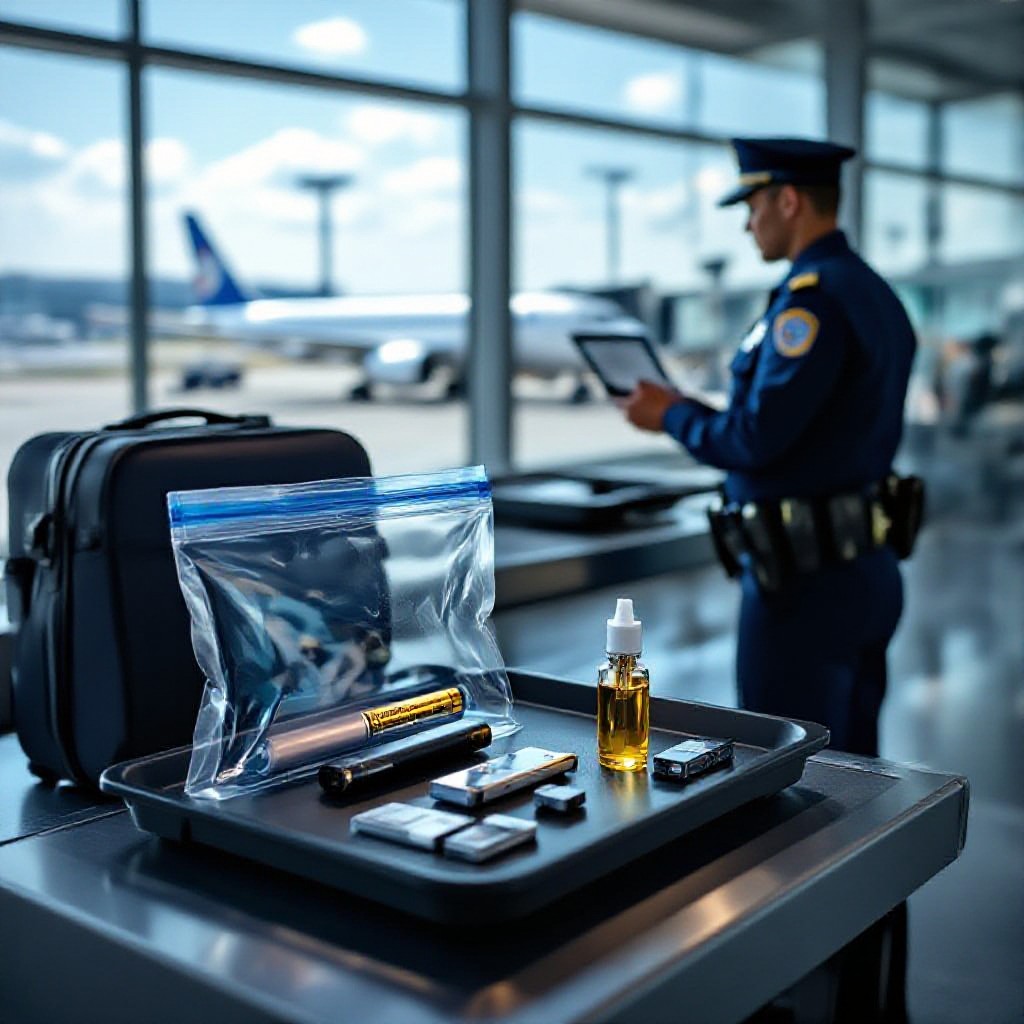

With your travel plans taking shape, you might wonder about bringing your vape on board. Understanding TSA regulations for electronic cigarettes and vaping devices is imperative. You must properly pack your vape to avoid issues at security checkpoints and ensure a smooth journey.
TSA Regulations for Vaping Devices
Understanding TSA guidelines for vaping devices is imperative before you pack for your flight. These rules prioritize safety, primarily due to the lithium-ion batteries found in most vapes. You must adhere to specific packing instructions to avoid confiscation and travel delays.
Carry-on Bag Requirements and Restrictions
You must always pack your vape device in your carry-on bag. The TSA strictly prohibits these devices in checked luggage because of fire risks posed by batteries. You can bring liquids like e-juice, but they must follow the 3-1-1 rule for liquids.
Prohibition of Vapes in Checked Luggage
Placing any vaping device in your checked luggage is strictly forbidden. This rule is non-negotiable for all passengers. The potential for thermal runaway in lithium-ion batteries poses a significant fire hazard in the aircraft’s cargo hold, making compliance mandatory.
Airlines and the TSA enforce this prohibition rigorously to prevent potential fires during flight. Lithium-ion batteries, when damaged or overheated, can ignite and are extremely difficult to extinguish in a cargo compartment. This safety measure protects everyone on board, ensuring a secure journey for all passengers and crew. You will face penalties if you attempt to bypass this regulation, including confiscation and potential fines.

In-Flight Conduct and Legal Prohibitions
Your journey doesn’t end when you board; strict regulations govern your conduct with vapes once airborne. Understanding these rules is vital to avoid legal trouble and ensure a smooth flight for everyone. Ignoring these prohibitions can lead to severe penalties, affecting your travel plans and potentially future flights.
Federal Bans on Onboard Vaping and Stealth Hits
You absolutely cannot vape in an airplane cabin. Federal law explicitly prohibits using e-cigarettes and similar devices during flights, including in lavatories. Attempts at “stealth hitting” are easily detectable and carry serious consequences.
Strict Rules Against Charging Devices in the Cabin
Charging your vape device while in the air is also strictly forbidden. Airlines prohibit plugging in any personal electronic devices that could pose a fire risk. This rule safeguards all passengers from potential hazards during flight.
Carrying extra batteries for your vape device, or the device itself, presents a fire risk, especially during charging. Many incidents involving lithium-ion batteries overheating have led to strict airline policies. To protect everyone on board, you must keep these devices and their spare batteries in your carry-on luggage and never attempt to charge them during the flight.

Navigating the Security Checkpoint
Approaching the TSA checkpoint with your vape gear requires a clear understanding of the process. You can ensure a smooth experience by knowing exactly what to do with your devices and liquids. Your preparation here directly impacts your journey through security.
Proper Placement in Bin During Screening
Place your vape device and any sealed e-liquids in a separate bin for X-ray screening. Make sure batteries are removed if your device allows. This separation helps TSA officers clearly identify items.
Communicating with TSA Officers Regarding Gear
If you have any questions or concerns about your vape setup, speak up. You can proactively inform officers about your device before screening begins. Clarity prevents potential delays.
You might find it helpful to initiate a conversation if your device is unusual or if you have a significant quantity of e-liquid within the allowed limits. Explaining what an item is, especially if it looks unfamiliar, can expedite the screening process and prevent unnecessary searches. Your transparency can make a considerable difference in how quickly you pass through security.

FAQ
Q: Can I bring a vape device and e-liquids in my carry-on luggage?
A: Yes, you can bring vape devices and e-liquids in your carry-on luggage. The Transportation Security Administration (TSA) requires all battery-powered e-cigarettes, vaporizers, vape pens, and other electronic nicotine delivery systems (ENDS) to travel in your carry-on bag. This rule exists because of the potential fire risk posed by lithium-ion batteries. You must pack any spare batteries in your carry-on bag as well. E-liquids, like other liquids, gels, and aerosols, must adhere to the TSA’s 3-1-1 rule. This means each container of e-liquid must be 3.4 ounces (100 milliliters) or less, fit comfortably in one quart-sized bag, and each passenger is limited to one such bag. Placing these items in your carry-on ensures they are accessible and can be quickly removed for inspection if necessary.
Q: Are there any restrictions on bringing vapes in checked baggage?
A: No, you cannot pack vape devices or any lithium-ion batteries in your checked baggage. The TSA strictly prohibits these items in the cargo hold due to the risk of thermal runaway, which can lead to fires. Lithium batteries can overheat and ignite, posing a serious safety hazard during flight. This prohibition applies to the vape device itself, any spare batteries, and even devices with built-in batteries. If you accidentally pack a vape in your checked bag, airport security will likely detect it during screening, potentially causing delays or requiring you to remove the item before your bag can be loaded onto the plane. Always ensure all vaping equipment stays with you in your carry-on bag.
Q: What are the rules for using a vape on an airplane or in an airport?
A: Using a vape device on an airplane is strictly prohibited. Federal regulations, including those enforced by the Federal Aviation Administration (FAA), ban smoking and vaping on all commercial flights. This prohibition extends to the aircraft lavatories, where smoke detectors are present and will trigger an alarm if activated by vapor. Tampering with, disabling, or destroying a lavatory smoke detector is a federal offense. Vaping is also generally not permitted inside airport terminals, including gate areas, restrooms, and restaurants. Most airports have designated smoking and vaping areas, typically located outside the terminal buildings, away from entrances. Passengers should always check airport signage or inquire with airport staff to locate these permitted areas. Disregarding these rules can result in fines, legal penalties, or removal from the flight or airport premises.