Casual Outfit Ideas for Women: Easy Looks for Everyday Style
Getting dressed casually sounds simple until the same jeans-and-shirt combination starts feeling repetitive. The solution is not necessarily more clothing. A stronger casual wardrobe comes from having a few reliable outfit formulas and knowing how to change them with proportion, layers, footwear, color, and accessories.
Casual style needs to perform. You may be walking through a grocery store, meeting a friend for coffee, traveling, working in a relaxed environment, or spending a weekend outdoors. The best outfit should look intentional while still allowing movement and comfort.
The easiest way to build that balance is to start with familiar pieces and give each combination a clear purpose. Think of an outfit as a formula rather than a fixed uniform.
What makes a good casual outfit?
A good casual outfit combines comfort, practicality, and visual balance. It should suit the activity, allow movement, coordinate naturally, and contain at least one element that makes it feel deliberate such as a strong silhouette, useful layer, interesting texture, or well-chosen accessory.
Comfort does not mean shapelessness. A soft tee can look polished when paired with structured jeans and clean sneakers. Relaxed trousers can look intentional with a tucked shirt and simple jewelry.
1. The everyday jeans-and-tee formula
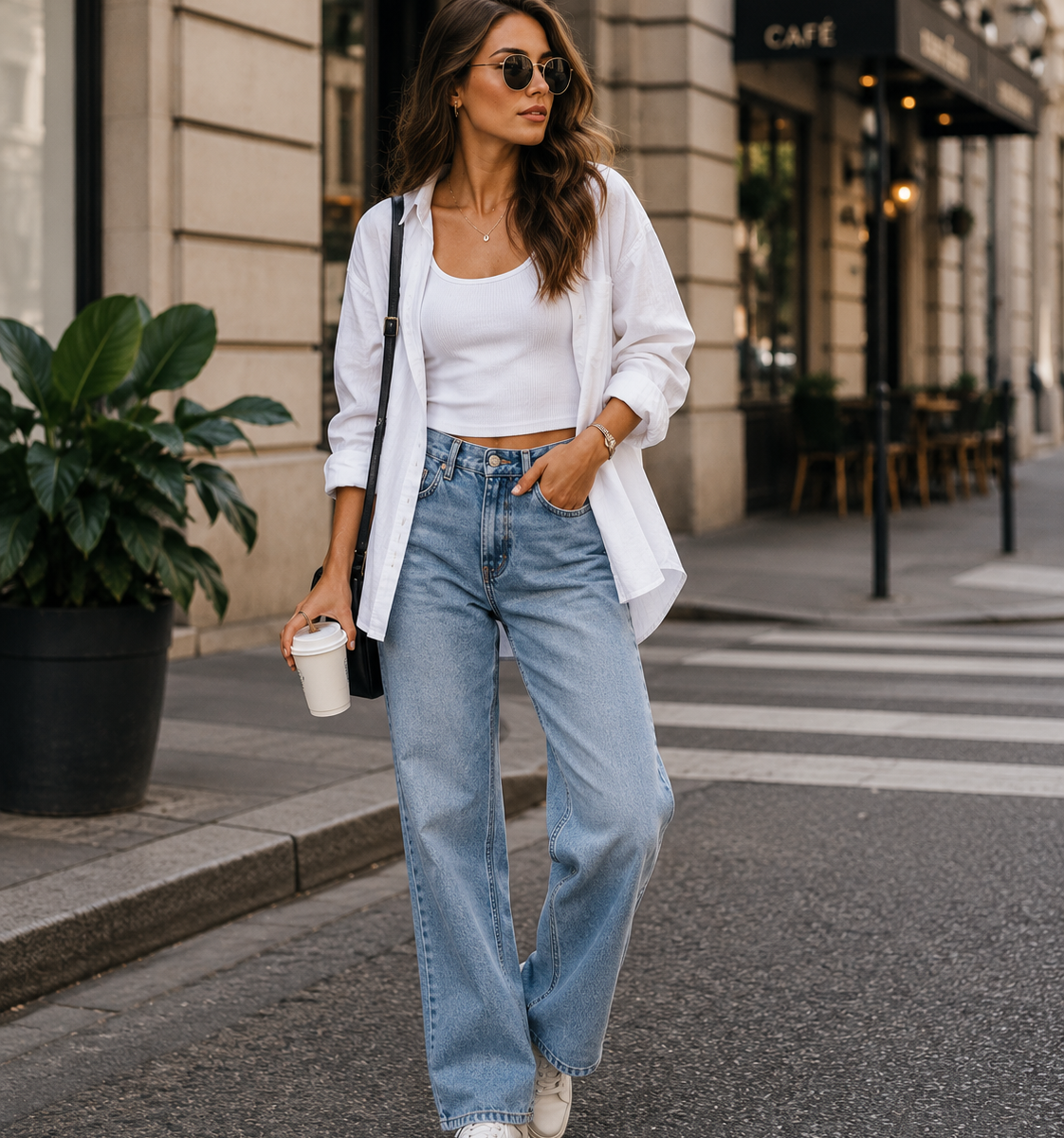
Start with straight-leg, relaxed, or wide-leg jeans and a well-fitting T-shirt. Add sneakers and a lightweight layer such as a cardigan, denim jacket, or relaxed blazer.
Change the feel through proportion. A fitted tee creates a different silhouette from a boxy tee. Tucking the shirt partially can define the waist without making the outfit formal.
Neutral jeans provide a strong foundation, but color denim or a subtle print can also work when the rest of the outfit remains simple.
2. Casual outfits for running errands
Errand outfits should prioritize movement and convenience. Try relaxed jeans or trousers, a simple top, a lightweight jacket, and supportive sneakers.
A crossbody bag keeps essentials accessible without requiring a large handbag. If you expect to be outdoors, sunglasses and a light outer layer can make the outfit more functional.
For a modern finish, keep the colors coordinated rather than adding several unrelated statement pieces.
3. Weekend outfit ideas
Weekends allow more freedom. Wide-leg jeans with a fitted knit can create a balanced silhouette, while leggings with an oversized shirt can work for a more relaxed mood.
If you enjoy looser clothing, use proportion intentionally. Our guide to how to style oversized clothes explores why volume looks strongest when another part of the outfit provides visual structure.
4. Coffee-date outfits
A coffee date is a useful middle ground between casual and polished. Try straight-leg jeans with a blouse, a casual dress with sneakers, or trousers with a simple knit.
The easiest upgrade is often footwear or accessories. A small shoulder bag, watch, earrings, or structured shoe can make a familiar outfit feel more considered without sacrificing comfort.
5. Casual work outfits
Relaxed workplaces often allow jeans, knitwear, simple dresses, or clean sneakers, but the exact expectation depends on the workplace.
A practical formula is dark denim + polished top + structured layer. Another is tailored trousers + simple knit + understated accessories.
If your workplace has a more defined dress code, our business casual outfits for women guide can help you move from relaxed casual into more professional combinations.
6. Travel outfits
Travel clothing should handle sitting, temperature changes, movement, and layers. Consider soft trousers or jeans, a breathable base, a cardigan or overshirt, and comfortable shoes.
Avoid creating an outfit that only works at one temperature. Layering gives you control as conditions change.
A simple color palette also makes packing easier because each item can coordinate with several others.
7. Summer casual outfits
Warm weather calls for lighter fabrics and less layering. Cotton, linen, lightweight denim, and breathable blends can be useful choices.
Try a relaxed linen shirt with shorts, a simple sundress with flat sandals, or lightweight trousers with a fitted tank.
For more occasion-specific warm-weather combinations, see our guide to summer outfit ideas for women.
8. Winter casual outfits
Winter casual dressing is largely about layers. Start with a base layer, add knitwear, then use a coat or jacket as the outer layer.
Instead of adding bulk everywhere, vary the thickness and length of each layer. A longer coat over a shorter sweater, for example, creates clear visual lines.
Boots, scarves, and structured bags can add personality without making the outfit complicated.
Building a small casual wardrobe
You do not need dozens of casual pieces. A practical foundation might include:
- Two or three jeans in different silhouettes
- Neutral and colored T-shirts
- One or two knit layers
- Relaxed trousers
- A casual jacket
- A versatile dress
- Everyday sneakers
- Comfortable flats or boots
- One practical crossbody bag
The exact list should reflect your lifestyle. Someone who works from home needs different casual clothing from someone who travels frequently or spends weekends outdoors.
This is also why capsule wardrobe essentials can be useful: the goal is to maximize combinations rather than accumulate items.
How to make simple casual outfits look better
Focus on five details: fit, proportion, color, texture, and finishing.
A perfectly ordinary outfit can look stronger when the sleeves are adjusted, the shirt is partially tucked, the hem length works with the shoe, and the accessories feel intentional.
You can also create a signature casual formula. For example: relaxed jeans + fitted top + statement earrings. Repeating a successful formula is not boring; it is a practical way to make personal style easier.
Outfit formulas that make casual dressing easier
A useful casual wardrobe benefits from formulas that are specific enough to guide you but flexible enough to adapt.
Jeans + polished top + sneaker: This is a reliable starting point for errands, casual meetings, and relaxed social plans. Change the top from a T-shirt to a blouse to raise the level of polish.
Relaxed trousers + fitted top + cardigan: This combination balances comfort with structure. It also works across seasons by changing the fabric and footwear.
Casual dress + flat shoe + crossbody: A dress can be easier than building a top-and-bottom combination. The bag and shoe determine whether the outfit feels sporty, polished, or playful.
Wide-leg bottom + shorter or tucked top: This is particularly useful when you want a relaxed silhouette without losing definition.
A five-minute outfit decision process
When you are short on time, ask five questions:
- What am I doing today?
- What level of formality does that activity require?
- What is the weather?
- Which base piece do I already feel good wearing?
- What one detail will finish the outfit?
This keeps casual dressing practical. You are not searching for the perfect outfit; you are selecting a reliable combination for a real situation.
When casual becomes too casual
Comfort can become visually careless when clothing is visibly worn out, badly proportioned, heavily wrinkled, or inappropriate for the setting. You do not need formal clothing to avoid this. Clean shoes, intentional layers, a coordinated palette, and clothing that fits comfortably can make relaxed outfits look finished.
The goal is effortless, not accidental.
Casual dressing for different levels of activity
Not every casual outfit needs the same amount of structure.
For a low-activity day, jeans, a soft knit, and loafers may be enough. For a day involving walking, sneakers and flexible trousers may be more useful. For travel, layers become more important because indoor and outdoor temperatures can differ.
This is a useful reminder that “casual” describes a level of formality, not one specific type of clothing.
How to make casual outfits feel personal
Choose one repeated detail. It might be rolled sleeves, a particular jewelry style, a favorite sneaker shape, a consistent color, or a preference for relaxed trousers.
These details create continuity across outfits. You do not need a dramatic signature.
Refreshing casual clothes between seasons
The same basic outfit can transition through the year. Jeans and a tee can work alone in warm weather, under a light jacket during transitional weather, or beneath a heavier outer layer in winter.
This is one reason versatile pieces are valuable. Seasonal dressing becomes a process of layering rather than replacing the entire wardrobe.
A simple casual wardrobe planning exercise
Take one week of your calendar and list the situations you expect: errands, home time, social plans, commuting, travel, or casual work. Next to each situation, write one outfit formula you could realistically wear.
You may discover that your wardrobe is heavy in one category and weak in another. That is more useful than buying random “cute casual outfits.”
Also note which shoes and bags appear repeatedly. Accessories often reveal your actual lifestyle more clearly than clothing does.
Make comfort specific
Instead of saying an outfit is comfortable, ask what makes it comfortable. Is it a soft fabric, a flexible waistband, a loose sleeve, a supportive shoe, or a layer that can be removed?
Once you know the reason, you can reproduce that comfort in other outfits.
This turns casual style into a repeatable system rather than a daily guessing game.
Casual outfit finishing details
A casual outfit often improves through small adjustments. Try changing the sleeve length, partially tucking a top, adding a belt, or switching the shoe. These changes alter proportion without requiring new clothing. Also consider clothing condition. Casual does not mean worn-out. Clean sneakers, intact hems, and fresh-looking basics make relaxed outfits appear intentional. For repeat wear, choose fabrics and fits that tolerate your routine. If an outfit only looks good when carefully arranged, it may not be practical enough for everyday life.
Quick reference: casual outfit decisions
When choosing a casual outfit, start with the activity, then the weather, then the level of movement. Pick a comfortable base and add one element that makes the look intentional. That element might be a jacket, polished shoe, accessory, texture, or color contrast. If the outfit feels too plain, change one variable instead of rebuilding it. Swap sneakers for loafers, add a belt, tuck the shirt, or change the bag. If it feels too busy, remove one statement element. For shopping, prioritize pieces that work with several existing outfits. A casual wardrobe becomes more useful when every new garment has multiple combinations rather than a single perfect look.
The best casual wardrobe is repeatable
If you find yourself reaching for the same combination every week, do not treat that as failure. It is evidence that the formula suits your life. Keep it and create small variations around it. A favorite jeans-and-top combination can change through footwear, outerwear, jewelry, or color. This approach gives you consistency without making every day identical.
FAQ
What are the easiest casual outfits for women?
Jeans with a T-shirt and sneakers, relaxed trousers with a knit, casual dresses with flat shoes, and layered denim outfits are reliable starting points.
How can I look stylish while staying comfortable?
Prioritize good fit, breathable fabrics, supportive footwear, and one polished detail such as a structured layer or accessory.
What should I wear for casual Friday?
A practical option is dark or clean denim with a polished blouse or knit and simple footwear, provided it matches your workplace expectations.
How can I avoid repeating the same casual outfit?
Keep the base pieces and change the silhouette, layer, shoe, color, or accessory. One pair of jeans can produce several distinct looks.
Are sneakers appropriate for casual outfits?
Yes. Sneakers are one of the most versatile casual footwear choices, although the style and condition of the shoe should match the setting.
How many casual clothes do I need?
There is no universal number. A smaller wardrobe can work extremely well if the pieces coordinate and match your actual routine.
Conclusion
Casual style becomes easier when you stop treating each outfit as a brand-new decision. Build a few formulas, learn which proportions feel best, and use layers and accessories to create variation.
Start with the situations you dress for most often errands, weekends, work, travel, or social plans and create two or three reliable combinations for each. From there, your wardrobe becomes more flexible without becoming larger.