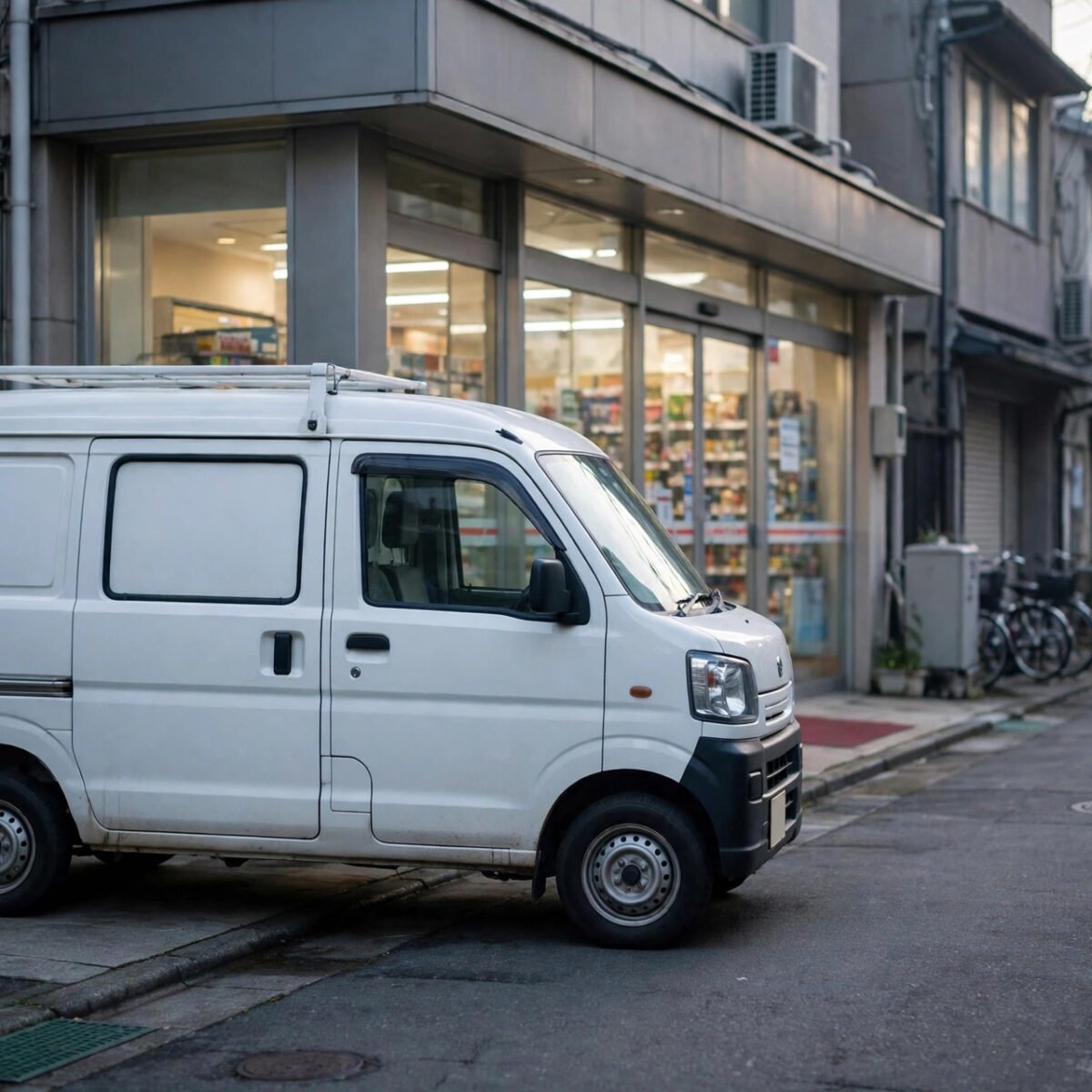
If you have ever watched a convenience store in Japan receive a delivery at dawn, you have probably seen a keibann in action. These small, boxy delivery vans slip into alleys where larger trucks cannot fit, park in tiny spaces, and unload parcels, food, and pharmacy supplies in minutes. A keibann is one of the most important tools in Japanese last-mile logistics, and it is quietly becoming one of the most interesting commercial vehicle concepts in the world.
The term “keibann” refers to light-duty delivery vans derived from Japan’s kei vehicle class, a regulated category of small, economical vehicles known domestically as keijidōsha. Built to strict limits on size and engine displacement, keibann vans trade raw power for maneuverability, low running costs, and a cargo volume that is surprisingly generous for the footprint. For micro-entrepreneurs, courier businesses, and urban fleets, they offer a practical answer to a modern problem: how to move goods through dense, congested cities quickly and cheaply.
Key Takeaways
- A keibann is a Japanese light-duty delivery van built within the kei vehicle class, defined by compact dimensions and a small-displacement engine.
- Japan’s kei regulations cap these vehicles at 3.4 meters long, 1.48 meters wide, 2.0 meters tall, and 660cc engine displacement, with a voluntary power ceiling around 64 PS.
- Keibann vans are recognizable by their boxy high-roof design, sliding side doors, and wide rear openings that maximize cargo volume for last-mile routes.
- Gasoline versions remain the most common, while hybrid and fully electric keibann variants are expanding, with automakers launching electric kei vans aimed squarely at delivery fleets.
- Typical use cases include convenience store restocks, pharmacy and medical supply runs, e-commerce parcel drop-offs, and micro-entrepreneur delivery businesses.
- Modern keibann vans carry safety technology such as ABS, electronic stability control, and increasingly driver assistance systems like collision mitigation braking.
What is a keibann?
A keibann is a compact commercial van built on Japan’s kei vehicle platform, purpose designed for light-duty delivery work. The word connects to the kei class of Japanese vehicles, which has existed since 1949 as a way to encourage affordable, fuel-efficient transportation. Where a kei truck (sometimes called a keitora) carries an open cargo bed, a keibann is the enclosed van version: a small, tall, box-shaped vehicle with sliding doors and a protected cargo area.
Think of a keibann as the nimble backbone of Japanese urban commerce. These vans handle the deliveries that keep cities running, from early morning convenience store restocks to same-day e-commerce drop-offs. Their defining philosophy is simple: be small on the outside and roomy on the inside. The high roof and squared-off body allow cargo to be stacked vertically, and the compact footprint lets drivers squeeze through narrow streets and complete tight urban routes faster than a conventional van could.
What are Japan’s kei regulations?
Kei regulations are the legal framework that defines Japan’s keijidōsha, or “light vehicle” class. A vehicle only qualifies as a kei vehicle if it stays within hard limits set by the government: a maximum length of 3.4 meters, a maximum width of 1.48 meters, a maximum height of 2.0 meters, and an engine displacement of no more than 660cc. Japanese automakers also observe a voluntary cap on engine output at about 64 PS, roughly 63 horsepower. In Japan, kei vehicles are recognizable by their yellow license plates with black numbers.
It is worth noting that the kei class is one of Japan’s most successful automotive policies, with published reports noting annual kei sales exceeding 1.6 million vehicles across family cars, microvans, farm trucks, and delivery vans. A keibann is simply the commercial van expression of that same proven formula.
How do keibann vans work for delivery?
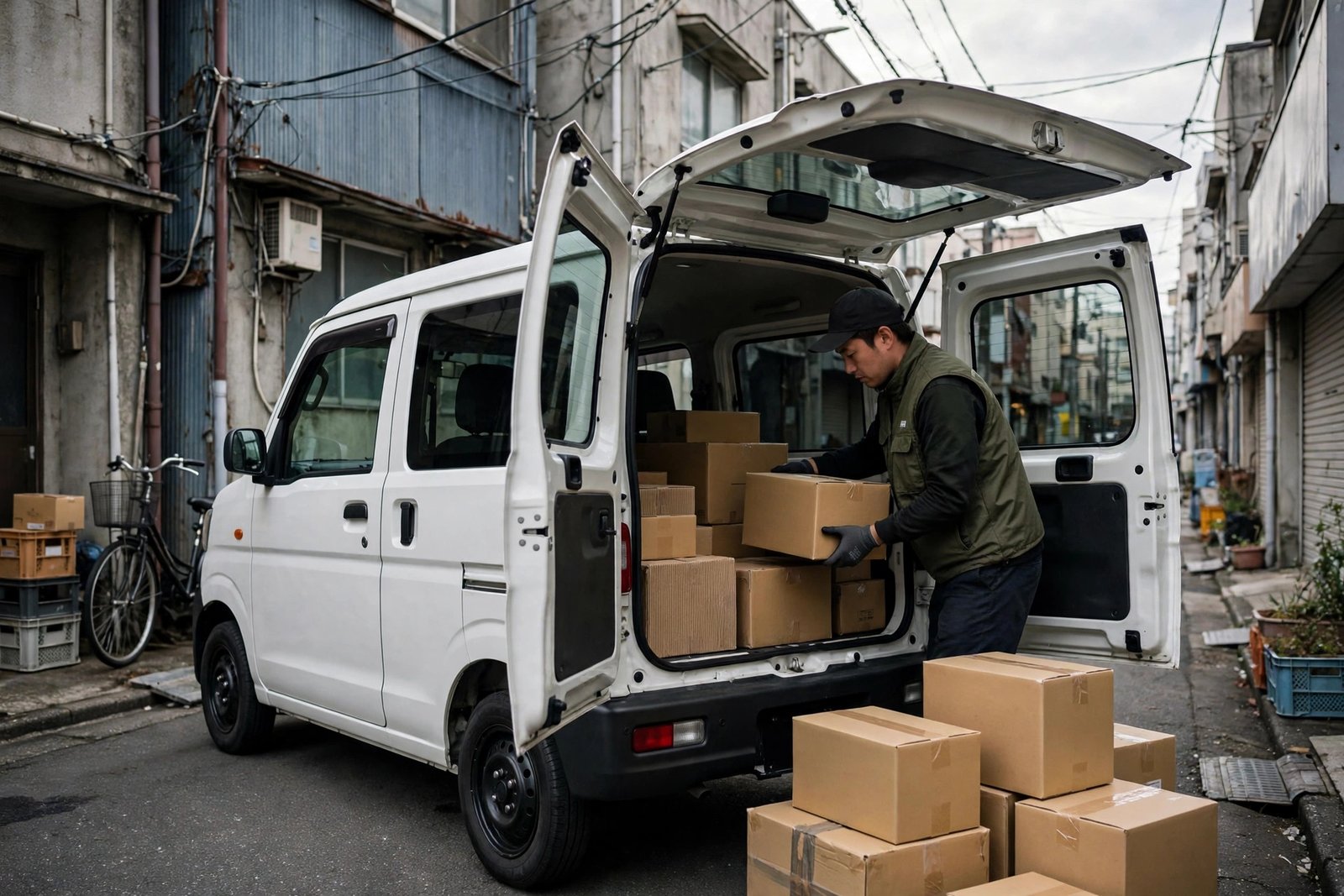
A keibann works for delivery because every design choice serves speed at the stop. The sliding side doors open in tight parking spaces where hinged doors would hit a wall or another car. The wide rear opening and waist-height cargo floor let a driver load and unload bins, parcels, and crates without heavy lifting. The tall, boxy cargo area maximizes volume within the tiny footprint, and the interior can be fitted with shelving, bins, or racks to match the cargo type.
On a route, the small size pays off continuously. Dense delivery routes with high stop counts and short dwell times favor smaller vans, because the driver spends less time hunting for parking and more time making handoffs. In Japanese cities, where streets can be extremely narrow, a keibann goes directly to the door while a full-size van waits at the curb. That door-to-door advantage is the core of keibann logistics.
Signature design features
- High-roof boxy silhouette: maximizes vertical cargo space within the legal height limit.
- Sliding side doors: enable loading and passenger access in confined parking.
- Wide rear opening: allows fast loading of larger parcels and equipment.
- Flat, low cargo floor: reduces lifting effort and speeds up parcel handling.
- Modular interiors: racks, bins, and dividers can be configured for parcels, food, or medical supplies.
Gasoline vs hybrid vs electric keibann: which powertrain fits?
Gasoline-powered keibann vans are still the most common choice, and for good reason. A small three-cylinder gasoline engine in the 656 to 659cc range is cheap to buy, cheap to service, and proven over decades of daily delivery work. For businesses that already run keibann fleets, gasoline keeps maintenance familiar and upfront costs low.
Hybrid keibann variants build on that foundation with improved fuel economy, which matters on routes defined by constant stop-and-go driving. Fully electric keibann vans are the fastest-growing segment in the category. Automakers have launched micro-sized electric commercial vans aimed at Japan’s delivery industry, with published ranges around 245 kilometers for recent models. For predictable urban routes with overnight depot charging, an electric keibann cuts fuel costs while producing zero tailpipe emissions, a real advantage in low-emission delivery zones.
| Attribute | Gasoline keibann | Hybrid keibann | Electric keibann |
|---|---|---|---|
| Upfront cost | Lowest | Moderate premium over gasoline | Highest, offset by incentives in some cases |
| Running cost per kilometer | Moderate, fuel price dependent | Lower, thanks to regenerative and efficient cruising | Lowest on electricity, especially with depot charging |
| Range | Long, with quick refueling | Long, with fewer refueling stops | Shorter, suited to predictable urban routes |
| Refuel or recharge time | Minutes at any station | Minutes at any station | Hours overnight, or shorter on fast charging where available |
| Emissions | Standard tailpipe emissions | Reduced tailpipe emissions | Zero tailpipe emissions |
| Best fit | Established fleets, long or varied routes | High-mileage stop-and-go delivery work | Fixed urban routes with depot charging and emission rules |
What are the best use cases for a keibann?
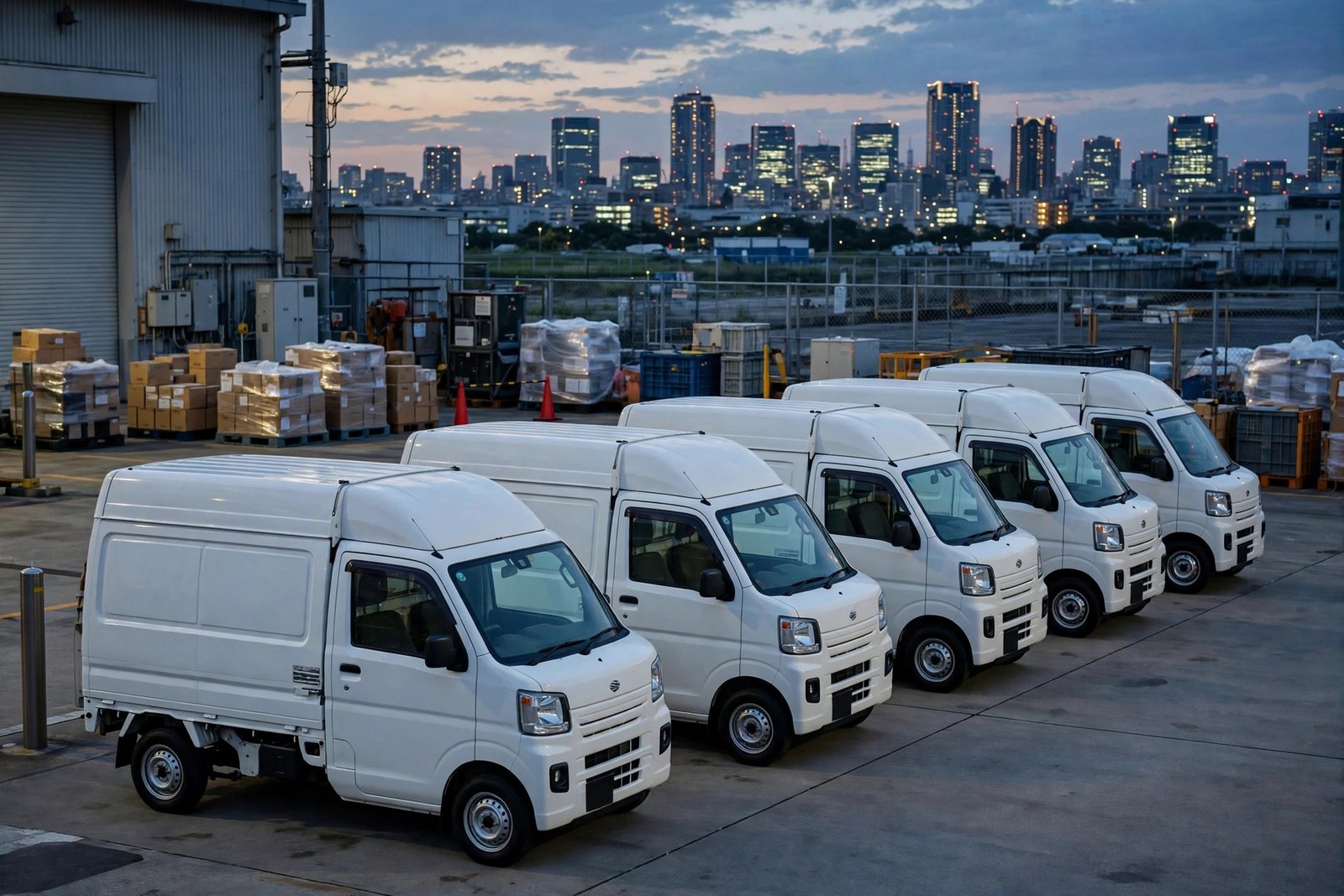
The best use cases for a keibann all share one trait: many stops, short distances, and tight spaces. Convenience store restocking is a classic example, with early morning deliveries of food, beverages, and daily goods to stores on narrow shopping streets. Pharmacy runs are another, where keibann vans move prescriptions and home-care supplies on predictable routes with easy curb access. E-commerce parcel drop-offs are a growing use case, as dense residential neighborhoods reward small vans that can stop, unload, and move on quickly.
Beyond these, keibann vans power micro-entrepreneurship across Japan. Independent couriers, catering businesses, mobile services, and small contractors use them as rolling workshops and delivery platforms. Fleet operators also deploy them for last-mile legs of larger logistics networks, where a big truck drops bulk cargo at a hub and keibann vans fan out for final delivery. If your delivery business needs to automate scheduling and customer notifications around tight routes, pairing the right vehicle with workflow tools such as Zapier automation can multiply the efficiency gains a keibann already provides.
What safety technology do keibann vans have?
Modern keibann vans carry considerably more safety technology than their simple appearance suggests. Anti-lock brakes (ABS) and electronic stability control (ESC) are standard on current models, helping drivers keep control during emergency stops and on slippery surfaces. Driver assistance systems are also spreading through the category, with features like collision mitigation braking increasingly available on new keibann vans.
Safety also extends to how these vans are used commercially. Japanese authorities have strengthened safety measures for light motor hauling business operators, with revised requirements taking effect in 2025 covering appointed safety managers, training cycles, and driver aptitude checks. For any business running a keibann fleet, these rules underscore a simple principle: the vehicle’s compact size is an asset only when drivers are properly trained and operations are well managed.
How to choose and spec a keibann for your fleet
Choosing a keibann starts with the route, not the vehicle. Map your typical delivery day first: average distance, number of stops, cargo weight and volume, parking conditions, and whether the route is fixed or variable. A fixed urban route with depot access to overnight charging makes an electric keibann worth serious consideration, while long, variable rural routes still favor gasoline.
A practical selection checklist
- Cargo volume vs. footprint: confirm the high-roof interior fits your largest standard parcel or bin with room to stack.
- Door configuration: dual sliding doors plus a wide rear opening give the fastest turnaround at busy stops.
- Powertrain: gasoline for versatility, hybrid for heavy stop-and-go mileage, electric for fixed routes with depot charging.
- Drivetrain: two-wheel drive for city work; consider four-wheel drive for rural, snowy, or unpaved delivery areas.
- Safety equipment: confirm ABS, stability control, and the ADAS features your operation needs, such as collision mitigation braking.
- Interior fit-out: plan shelving, bins, and load dividers before purchase so the van earns its keep from day one.
- Total cost of ownership: weigh taxes, insurance, fuel or electricity, and maintenance over the full service life, not just the sticker price.
Fleet buyers should also think about how delivery vehicles connect to the rest of the business. Route data, customer records, and accounting all need to flow together, and small businesses running their own fleets can benefit from tools covered in guides like the best CRM for small business and the best accounting software for small business. Entrepreneurs considering a delivery-based business model, such as e-commerce fulfillment, may also find how to start a dropshipping business in 2026 a useful companion read. For more technology coverage, visit the DigitalGeekSpot homepage.
Frequently asked questions about keibann
Are keibann vans the same as kei trucks?
No. Both belong to Japan’s kei vehicle class, but a kei truck (keitora) has an open cargo bed, while a keibann is an enclosed van with a protected cargo area, sliding doors, and typically a high roof. The van body makes the keibann better suited to parcel, food, and pharmacy deliveries that need weather protection.
Why are keibann vans so small?
Their size is set by Japan’s kei regulations, which cap length at 3.4 meters, width at 1.48 meters, height at 2.0 meters, and engine displacement at 660cc. Staying within these limits brings lower taxes, cheaper insurance, and parking advantages, so the small size is a deliberate commercial strategy, not a limitation.
Can a keibann handle highway driving?
Yes. Kei vehicles are legally permitted on Japanese motorways. The small engine means modest top speeds and relaxed highway cruising, but for their intended role of urban and regional delivery, highway capability is more than adequate.
How much can a keibann carry?
Published references generally describe kei commercial payloads around 350 kilograms for truck variants, with vans offering generous cargo volume relative to their footprint thanks to the tall, boxy body. Exact payload varies by model and configuration, so fleet buyers should check the specifications of the specific van they are considering.
Are electric keibann vans available?
Yes, and the segment is growing. Automakers have launched micro-sized electric commercial vans aimed at Japan’s delivery industry, with published cruising ranges around 245 kilometers for recent models. They suit fixed urban routes where overnight depot charging is available.
What does it cost to run a keibann fleet?
Running costs are one of the category’s main strengths. Kei vehicles benefit from lower road tax and insurance in Japan, and their small engines keep fuel consumption low. Electric variants can reduce energy costs further on predictable routes, though buyers should model total cost of ownership, including charging infrastructure, before committing.
Are keibann vans available outside Japan?
Kei vehicles have gained attention internationally, but availability and road legality vary widely by country. Import rules, safety certification, and emissions standards differ, so verify registration requirements with your national transport authority before purchasing.
The bottom line
The keibann proves that clever regulation can produce genuinely clever vehicles. By constraining size and engine displacement, Japan’s kei rules forced designers to maximize cargo space, access, and maneuverability instead of horsepower, and the result is a delivery van perfectly tuned for dense urban commerce. As e-commerce pushes deliveries closer to the customer and cities tighten emissions rules, the keibann formula, small outside, big inside, and increasingly electric, looks less like a Japanese curiosity and more like a blueprint for the future of last-mile logistics.