Last updated: November 2026. Written by James Foster for Digital Geek Spot.
What is dry herb vaping? Dry herb vaping is the act of heating dried plant material, most often cannabis flower, in a device called a dry herb vaporizer until the active compounds turn into vapor that the user inhales, with no flame and no smoke. Dry herb vaping heats ground flower to a controlled temperature, usually between 160 degrees Celsius and 220 degrees Celsius, so cannabinoids and terpenes release as vapor while the plant stays unburned. This guide explains how dry herb vaporizers work, the 3 heating methods, the temperature ranges that shape flavor and effect, the benefits and risks compared with smoking, and the steps, cleaning routine, and beginner mistakes that decide whether a first session goes well. Digital Geek Spot covers vape devices and guides across its Vape section, and this article fits that series as the plain-language starting point for dry herb devices.
Key Takeaways
- Dry herb vaping heats dried plant material below combustion, so the user inhales vapor, not smoke and ash.
- Dry herb vaporizers use conduction, convection, or hybrid heating, and the method shapes flavor, speed, and evenness.
- Most sessions run between 160 degrees Celsius and 220 degrees Celsius, with lower settings favoring flavor and higher settings giving thicker vapor.
- Vapor contains fewer combustion byproducts than smoke, but dry herb vaping is not risk free and still carries lung and heart risks.
- Grind, pack loosely, start low, draw slowly, and clean the chamber often for steady results.
Table of Contents
- What Is Dry Herb Vaping?
- How Does a Dry Herb Vaporizer Work?
- What Are the 3 Types of Dry Herb Vaporizer Heating?
- What Is the Difference Between Dry Herb Vaping and Smoking?
- What Are the Benefits of Dry Herb Vaping?
- Is Dry Herb Vaping Safe?
- What Temperature Should You Set on a Dry Herb Vaporizer?
- How Do You Use a Dry Herb Vaporizer Step by Step?
- How Do You Choose a Dry Herb Vaporizer?
- How Do You Clean a Dry Herb Vaporizer?
- What Mistakes Do Beginners Make?
- Dry Herb Vaping vs E-Liquid Vaping vs Concentrate Vaping
- Conclusion
- FAQs
What Is Dry Herb Vaping?
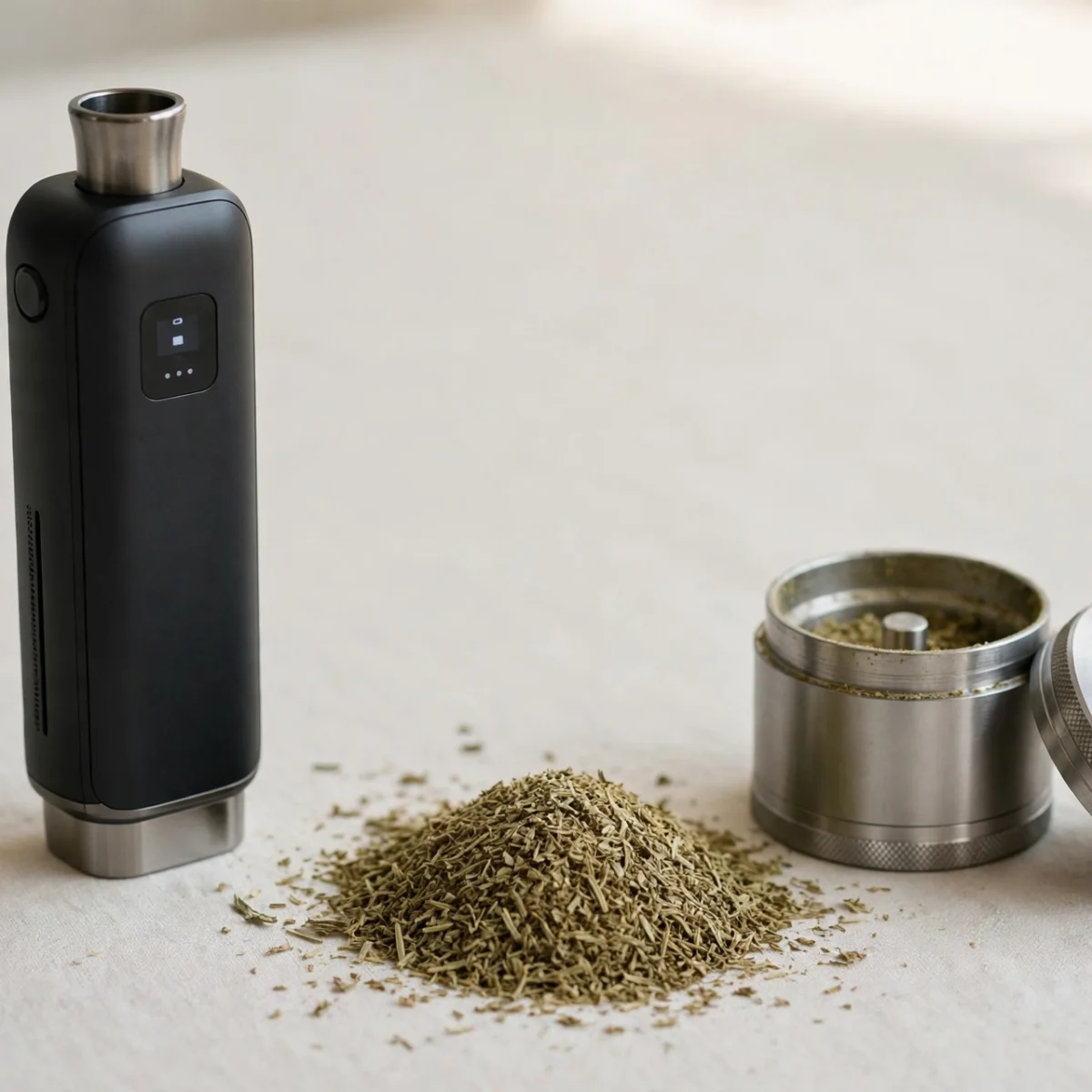
Dry herb vaping is the act of heating dried plant material in a dry herb vaporizer until active compounds release as vapor, without burning the plant. A dry herb vaporizer is a device that heats ground flower in a chamber to a set temperature below the point of combustion. The user loads the chamber, waits for the device to reach temperature, and draws vapor through a mouthpiece. No flame touches the herb, no paper burns, and no ash forms. The spent herb comes out brown and toasted, not black and burned.
Dry herb vaping differs from other forms of vaping in one clear way: the material. E-liquid vapes heat a liquid, and concentrate vapes heat wax, rosin, or oil. A dry herb vaporizer works with actual dried plant material only. Most users vape cannabis flower, but some adults use dry herb vaporizers with other legal herbs, such as chamomile, lavender, mint, and thyme, at lower temperature ranges. The device does not decide what is legal. Cannabis laws vary by country, state, and region, and users must check local law before buying or using a device for cannabis.
How Does a Dry Herb Vaporizer Work?
A dry herb vaporizer works by heating ground flower in a chamber to a set temperature, usually 160 to 220 degrees Celsius, so cannabinoids and terpenes reach their boiling points and turn into vapor. The device holds the temperature below combustion, which starts at about 230 degrees Celsius (446 degrees Fahrenheit) for plant material. That gap between the working range and the burning point is the whole idea.
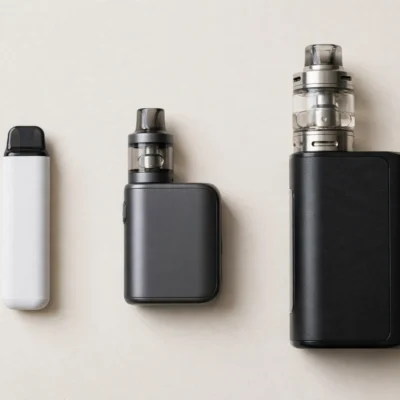
A dry herb vaporizer has 5 core parts: a battery or power source, a heating element, a chamber (also called an oven), an air path, and a mouthpiece. Portable models add a screen and buttons for temperature control, and desktop models add a whip (a tube) or a balloon (a bag that fills with vapor).
Draw technique matters as much as temperature. Slow, steady draws of 5 to 10 seconds pull hot air through the herb and produce steady vapor, while fast, hard pulls cool the chamber and give thin vapor.
What Are the 3 Types of Dry Herb Vaporizer Heating?
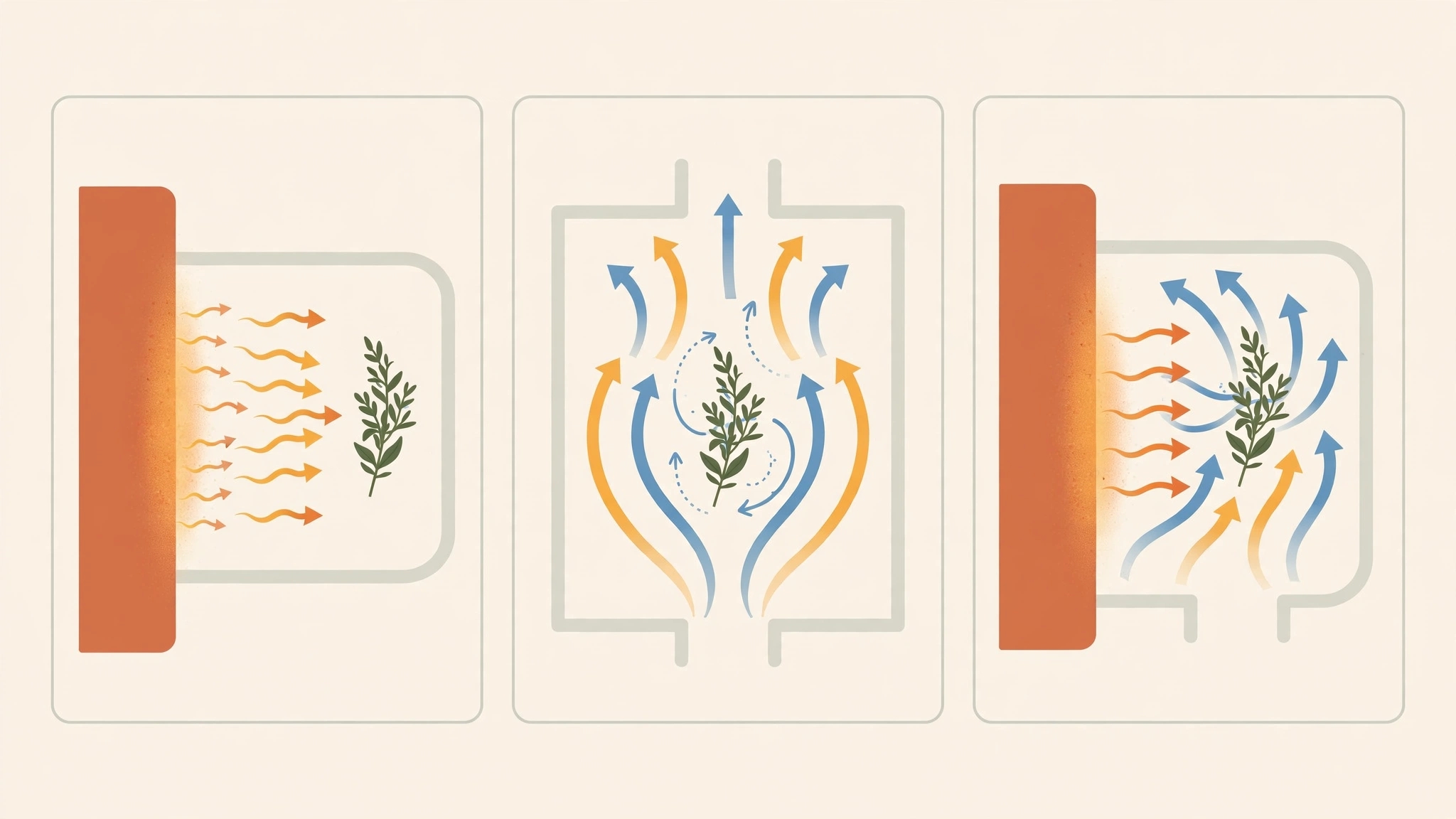
Dry herb vaporizers use 3 heating methods: conduction, convection, and hybrid heating, and the method decides how fast the device heats, how even the vapor is, and how much stirring the session needs. Conduction heats the herb through direct contact with a hot chamber wall, much like a pan heats food. Convection heats the herb by passing hot air through it, much like an oven heats food with hot air. Hybrid heating uses both methods at once.
| Heating method | How it heats | Heat-up speed | Flavor and evenness | Best for |
|---|---|---|---|---|
| Conduction | Hot chamber wall touches the herb | Fast, often under 30 seconds | Good flavor at first, needs stirring for even heating | Beginners and quick sessions |
| Convection | Hot air passes through the herb | Slower, often 30 to 90 seconds | Even heating, strong flavor through the session | Flavor-focused users |
| Hybrid | Hot wall plus hot air together | Medium, often 20 to 60 seconds | Even heating with fast starts | Most daily users |
Conduction devices cost less on average and heat fast, but the herb touching the wall can overheat while the center stays cool, so stirring halfway through the session helps. Convection devices cost more and take longer to heat, but the hot air reaches all of the herb, so the flavor stays steady and the user stirs less. Hybrid devices, now the most common type in portable models, balance the two: the wall gives a fast start and the hot air finishes the job evenly.
Material also shapes the result. Ceramic chambers give clean flavor, stainless steel chambers last longer, and glass air paths keep flavor pure but break more easily.
What Is the Difference Between Dry Herb Vaping and Smoking?
The difference between dry herb vaping and smoking is heat: smoking burns the flower with a flame above 600 degrees Celsius, while dry herb vaping heats the flower below 230 degrees Celsius without burning it. Smoking turns the flower into smoke, ash, tar, carbon monoxide, and polycyclic aromatic hydrocarbons (PAHs), which are chemicals formed during burning. Dry herb vaping turns the flower into vapor that carries cannabinoids and terpenes with far fewer burning byproducts.
| Feature | Dry herb vaping | Smoking |
|---|---|---|
| Heat source | Controlled heating element, 160 to 220 degrees Celsius | Open flame, above 600 degrees Celsius |
| What the user inhales | Vapor with cannabinoids and terpenes | Smoke with cannabinoids plus tar, carbon monoxide, and PAHs |
| Ash and smell | No ash, lighter smell that fades faster | Ash, strong smell that lingers on clothes and rooms |
| Flavor | Clearer flavor, terpenes survive at lower heat | Harsher taste, high heat destroys many terpenes |
| Efficiency | More of the active compounds reach the vapor | Burning destroys a share of the active compounds |
| Dose control | Temperature and session length set the dose | Harder to control, each puff varies |
Research backs the gap in byproducts. A study of cannabis vapor found only 3 additional compounds beyond the cannabinoids in vapor, while cannabis smoke held 111 compounds beyond the cannabinoids, including several carcinogenic PAHs (Source: study cited on Vaporizer (inhalation device), Wikipedia). A 2007 study by the University of California, San Francisco found virtually no exposure to harmful combustion products when users vaporized instead of smoking, and a study in the Journal of Psychoactive Drugs found vaporizing delivered about 46 percent of available THC, compared with about 25 percent from smoking.
The gap in byproducts does not make dry herb vaping harmless. Vapor still carries fine particles, and inhaling any heated plant material stresses the lungs.
For readers who want the basics of vaping devices in general, our guide on what vaping is and how vape devices work explains e-liquid devices, which heat liquid rather than dried flower.
What Are the Benefits of Dry Herb Vaping?
Dry herb vaping offers 5 main benefits over smoking: less smoke exposure, clearer flavor, lighter smell, better efficiency, and finer dose control. Each benefit comes from the same root cause, which is heating without burning.
First, less smoke exposure. Vapor skips combustion, so the user avoids tar and most of the PAHs that burning creates. A 2015 study in the Canadian Journal of Respiratory Therapy found that vaporizing did not raise exhaled carbon monoxide levels, while smoking raises them sharply. Second, clearer flavor. Terpenes, the aromatic compounds that give each strain its scent and taste, boil off between about 120 and 220 degrees Celsius, and low temperature sessions keep them intact instead of burning them away. Third, lighter smell. Vapor smells less strong than smoke and fades faster from a room, which matters for users who share living space.
Fourth, better efficiency. Because burning destroys part of the THC, a vaporizer delivers more of the active compounds from the same amount of flower, and users report using less flower per session. Fifth, finer dose control. A user sets a temperature, takes a counted number of draws, and stops, while a joint keeps burning between puffs and delivers a less steady dose. Temperature stepping adds one more layer of control: low settings give a light, clear effect, and higher settings give a heavier body effect from the same load.
Is Dry Herb Vaping Safe?
No, dry herb vaping is not safe, and dry herb vaping still carries health risks even though dry herb vaping exposes users to fewer combustion toxins than smoking. The distinction matters: “less harmful than smoking” is not the same as “safe”. Researchers link all forms of inhaling cannabis to risks that include effects on the heart and lungs, and long-term studies of dry herb vaping are still limited because the devices are newer than cigarettes.
The known risks fall into 4 groups: lung irritation (vapor can irritate airways, trigger coughing, and worsen asthma), heart effects (THC raises heart rate for a period after use), contamination (flower from unregulated sources can carry pesticides or mold), and device risks (cheap or damaged batteries can overheat).
Three habits lower the risk. Buy flower from legal, tested sources where testing is available. Keep the device clean, because residue buildup changes flavor and can harbor mold in damp chambers. Stay below 220 degrees Celsius in normal sessions, because pushing past 230 degrees Celsius crosses into combustion and brings back smoke toxins. Users with asthma, heart conditions, or pregnancy should avoid inhaling cannabis in any form and talk to a clinician first.
The Vape category on Digital Geek Spot covers device guides and safety explainers across vaping types, and readers who want the wider picture can browse the Vape guides for related topics.
What Temperature Should You Set on a Dry Herb Vaporizer?
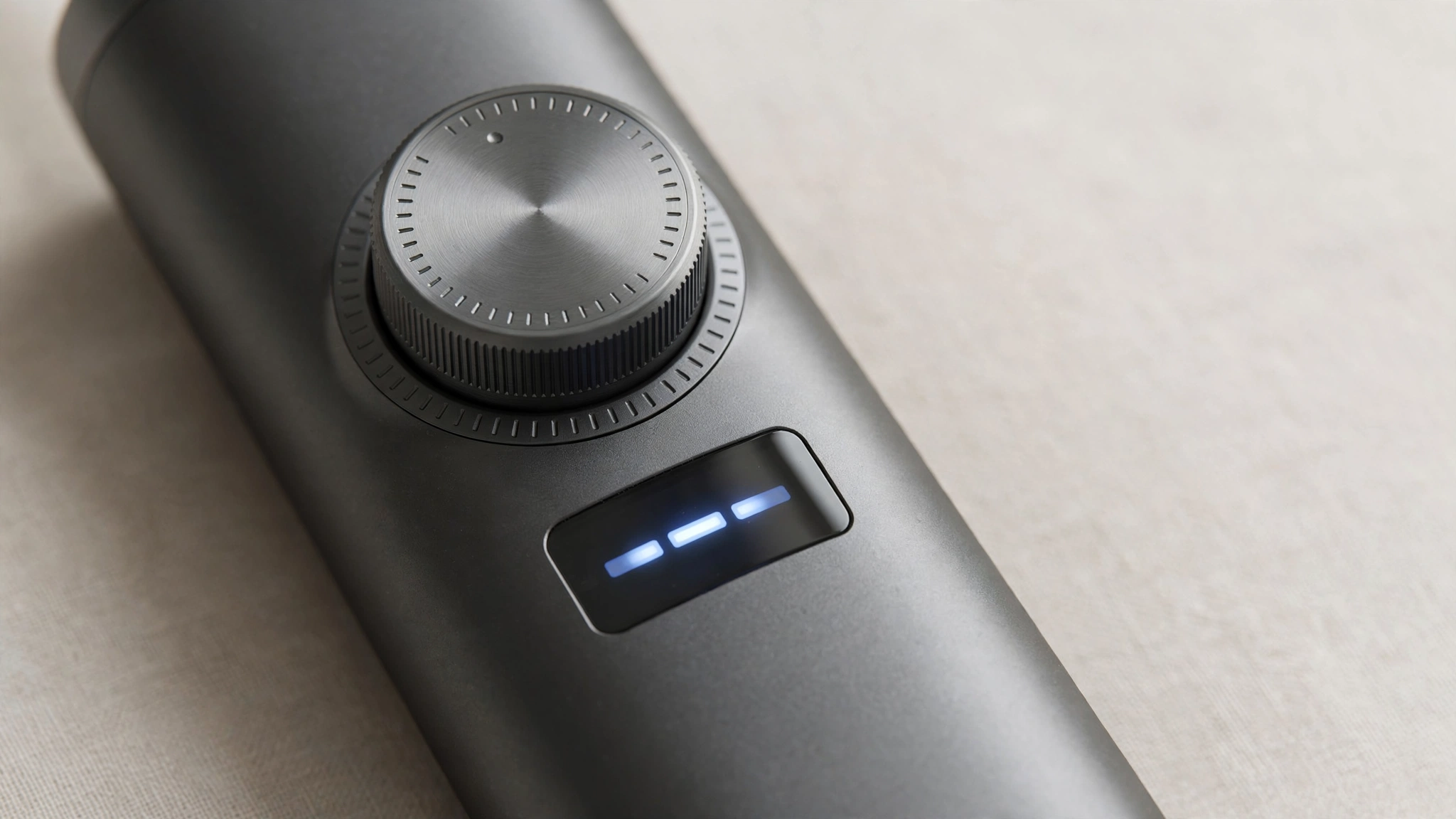
The best starting temperature for a dry herb vaporizer is 170 to 180 degrees Celsius, and most users settle between 160 and 220 degrees Celsius after testing what suits them. Lower temperatures give light, flavorful vapor with a clear effect. Higher temperatures give dense vapor with a heavier body effect and less flavor. Above 210 degrees Celsius, vapor turns harsh, flavor drops, and the risk of charring rises.
| Temperature range | Vapor character | Effect | Best for |
|---|---|---|---|
| 160 to 175 degrees Celsius (320 to 347 degrees Fahrenheit) | Light, very flavorful | Mild, clear, head-focused | Flavor and first sessions |
| 175 to 195 degrees Celsius (347 to 383 degrees Fahrenheit) | Balanced, denser | Balanced mental and body effect | Most daily sessions |
| 195 to 210 degrees Celsius (383 to 410 degrees Fahrenheit) | Thick, less flavor | Strong, body-focused, more sedating | Evening sessions |
| Above 210 degrees Celsius (410 degrees Fahrenheit) | Harsh, risk of charring | Maximum extraction, more irritation | Rare, short finishes only |
Temperature stepping is the standard method for a full session. Start at 170 degrees Celsius for flavor, take 3 to 4 draws, raise the setting to 185 degrees Celsius for a balanced middle, then finish at 200 degrees Celsius for a stronger effect. Each step releases a new set of compounds: THC boils at about 157 degrees Celsius, CBD at about 160 to 180 degrees Celsius, and many terpenes between 120 and 220 degrees Celsius.
Other legal herbs need lower settings: chamomile at 130 to 150 degrees Celsius, lavender at 130 to 160 degrees Celsius, mint at 150 to 170 degrees Celsius, and valerian at 160 to 175 degrees Celsius.
How Do You Use a Dry Herb Vaporizer Step by Step?
To use a dry herb vaporizer, grind the herb, load the chamber loosely, set a low temperature, wait for heat-up, take slow draws, and empty the chamber when the herb turns brown. The full routine takes about 10 minutes from grind to cleanup.
- Grind the flower to a medium-fine, even consistency with a grinder.
- Load the chamber loosely, filling it to the top without packing it tight.
- Set the temperature to 170 degrees Celsius for a first session.
- Switch the device on and wait for the ready signal, usually a light or vibration.
- Draw slowly for 5 to 10 seconds, then pause between draws.
- Stir the herb halfway through on conduction devices, or raise the temperature one step.
- Stop when vapor thins and the herb looks evenly brown.
- Switch the device off, let it cool, and empty the chamber with the brush tool.
- Brush out loose residue while the chamber is still warm, not hot.
Packing decides the result. A chamber packed too tight blocks airflow and gives thin vapor, while a chamber packed too loose gives weak vapor because hot air passes around the herb. The right fill feels like a loosely packed pinch: full, springy, and easy to draw through. Grind size matters too: a fine grind suits conduction devices, and a medium grind suits convection devices, because hot air needs gaps to pass through.
How Do You Choose a Dry Herb Vaporizer?
Choose a dry herb vaporizer by matching 4 factors to your use: portable or desktop form, heating method, temperature control, and budget. Portable models fit pockets, run on batteries, and suit users who vape away from home. Desktop models plug into mains power, fill balloons or feed whips, and suit home sessions and groups. Desktop models give stronger, steadier vapor, while portable models give freedom at the cost of smaller chambers and shorter battery life.
| Factor | Portable | Desktop |
|---|---|---|
| Power | Battery, 60 to 90 minutes per charge | Mains power, unlimited sessions |
| Chamber size | Small, about 0.1 to 0.3 grams | Large, about 0.5 grams or more |
| Vapor quality | Good, varies by model | Best, steady temperature and airflow |
| Price range | Low to mid range | Mid to high range |
| Best for | Solo use, travel, quick sessions | Home use, groups, long sessions |
Beginners should weigh 5 checks before buying: temperature control (degree-by-degree control beats 3 presets), chamber size (a small chamber suits solo users), cleaning (a removable mouthpiece and simple chamber clean in minutes), battery (a removable battery lasts longer over years than a sealed battery), and warranty and parts (makers who sell spare mouthpieces, screens, and batteries support the device for years).
Butane-powered models form a separate group. These devices use a torch lighter to heat a metal cap, with no battery and no electronics, and the cap clicks when it reaches temperature.
How Do You Clean a Dry Herb Vaporizer?
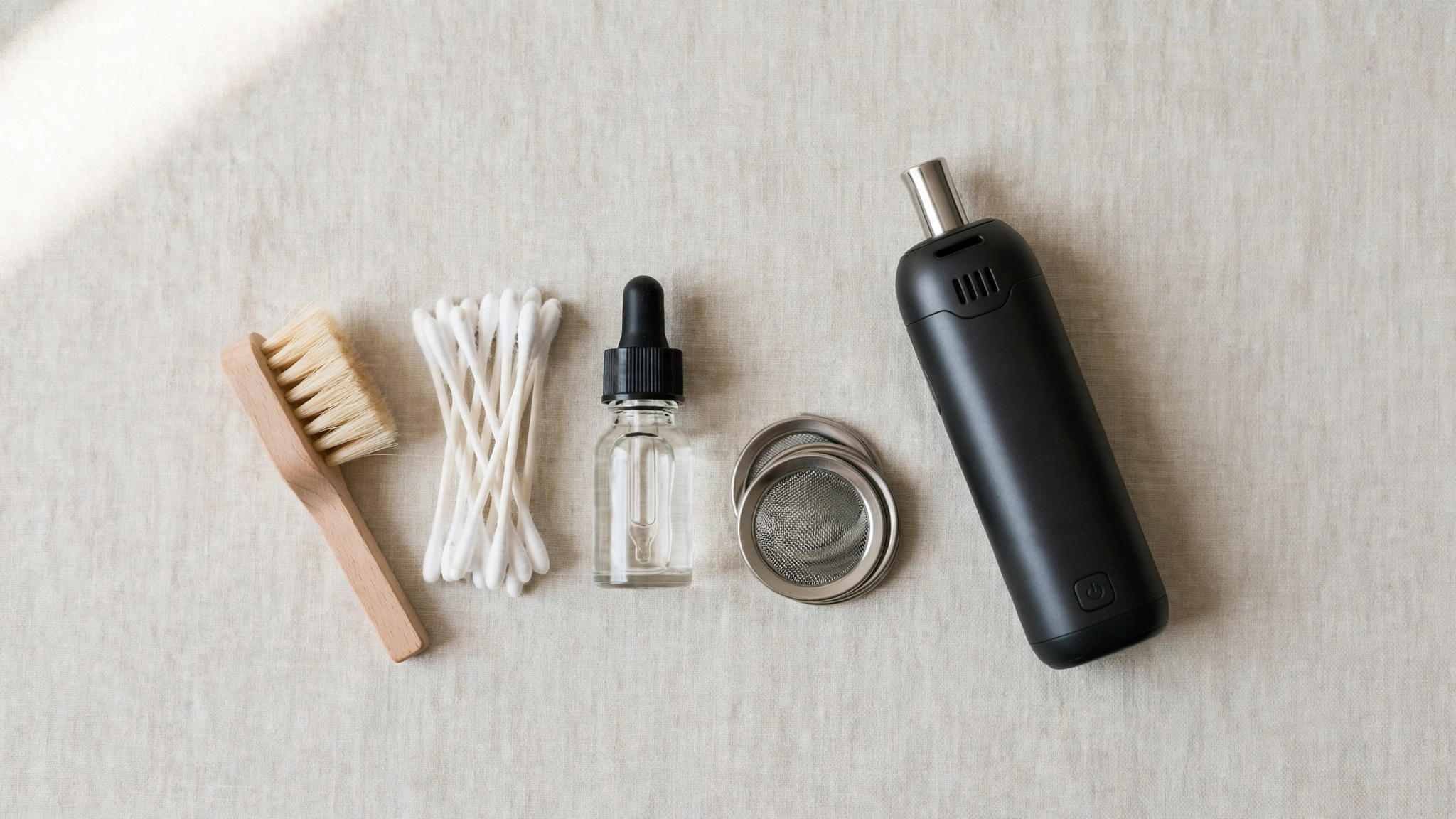
Clean a dry herb vaporizer after every few sessions with a brush-out, and deep clean the mouthpiece and screens every 10 to 20 sessions. Residue builds fast: vapor leaves sticky oils on the chamber walls, the screens, and the mouthpiece, and dirty parts change flavor, block airflow, and strain the battery.
For a quick clean, empty the chamber after each session, brush out loose herb while the chamber is warm, and wipe the mouthpiece with a dry cloth. For a deep clean, remove the mouthpiece and screens, soak the metal and glass parts in isopropyl alcohol for 20 to 30 minutes, rinse with warm water, and dry fully before refitting. Never soak electronic parts, batteries, or plastic parts that the maker marks as non-removable. Replace screens when they stay clogged after soaking, because a clogged screen forces the user to pull harder and overheats the chamber.
A cleaning kit needs only 4 items: a small brush, cotton swabs, isopropyl alcohol, and spare screens.
What Mistakes Do Beginners Make?
Beginners make 5 common mistakes with dry herb vaporizers: packing too tight, starting too hot, drawing too hard, skipping cleaning, and buying on price alone. Each mistake has a simple fix.
Packing too tight blocks airflow and gives thin, uneven vapor, so load loosely and test the draw before heating. Starting too hot, at 210 degrees Celsius or above, burns flavor and irritates the throat, so start at 170 degrees Celsius and step up slowly. Drawing too hard cools the chamber and gives wispy vapor, so draw slowly for 5 to 10 seconds. Skipping cleaning lets residue build until flavor turns stale and airflow drops, so brush out the chamber after each session. Buying on price alone lands users with weak batteries and poor temperature control, so check temperature range, chamber material, and warranty before buying.
Two more mistakes catch new users. The first is expecting smoke-style hits: vapor feels lighter than smoke, and chasing thick clouds by cranking the heat only brings harshness. The second is judging a device on one session: a new device needs 3 to 4 sessions to learn.
Dry Herb Vaping vs E-Liquid Vaping vs Concentrate Vaping
Dry herb vaping, e-liquid vaping, and concentrate vaping differ by material, device, and dose control, and the material is the clearest way to tell them apart. Dry herb devices heat dried flower, e-liquid devices heat a liquid of propylene glycol, vegetable glycerin, flavorings, and usually nicotine, and concentrate devices heat wax, rosin, or oil on a coil or atomizer.
| Feature | Dry herb vaping | E-liquid vaping | Concentrate vaping |
|---|---|---|---|
| Material | Dried flower | Liquid (PG/VG, flavorings, usually nicotine) | Wax, rosin, or oil |
| Device | Chamber vaporizer | Pod, tank, or disposable | Dab rig or concentrate pen |
| Preparation | Grind and load | Fill or fit a pod | Load a small dose on a coil |
| Dose control | Temperature and draw count | Puff count and nicotine strength | Small doses, very potent |
| Flavor source | Plant terpenes | Added flavorings | Concentrated plant compounds |
| Best for | Flower users who want full plant flavor | Nicotine users and ex-smokers | Experienced users who want strong effects |
Dry herb vaping suits users who want the full range of plant compounds and a slower, session-based routine. E-liquid vaping suits users who want a quick puff format and nicotine control, and our earlier guide on vaping covers those devices in depth. Concentrate vaping suits experienced users only, because concentrates hold far more cannabinoids per gram than flower, and a small dosing error gives a much stronger effect. A device built for one material should never be loaded with another: e-liquid in a dry herb chamber leaks and damages the heater, and flower in a concentrate pen burns.
Conclusion
Dry herb vaping is heating dried plant material below combustion so active compounds release as vapor, and that single change in heat explains the clearer flavor, lighter smell, better efficiency, and lower smoke exposure compared with smoking. Dry herb vaping is not safe, and the honest verdict is narrower: dry herb vaping lowers exposure to burning byproducts while keeping lung, heart, and contamination risks. Beginners get the best results by starting at 170 degrees Celsius, packing loosely, drawing slowly, stepping temperature through the session, and cleaning the chamber often. Buyers should match portable or desktop form, heating method, temperature control, and warranty to their own use, and should check local law before buying a device for cannabis. With those habits in place, a dry herb vaporizer gives a steady, flavorful session that smoking cannot match for control or taste.
For more device guides, read our guide on vaping on a plane for airline and TSA rules for vape devices and batteries.
FAQs
Is dry herb vaping safe?
No, dry herb vaping is not safe, but dry herb vaping exposes users to fewer combustion toxins than smoking. Vapor skips tar and most PAHs from burning, yet vapor still irritates airways, and THC raises heart rate. Users with asthma, heart conditions, or pregnancy should avoid inhaling cannabis and talk to a clinician first.
What is dry herb vaping?
Dry herb vaping is heating dried plant material in a dry herb vaporizer until active compounds turn into vapor, without burning the plant. The device holds the temperature below combustion, usually 160 to 220 degrees Celsius, so the user inhales vapor instead of smoke and ash.
What temperature is best for dry herb vaping?
The best starting temperature for dry herb vaping is 170 to 180 degrees Celsius. Lower settings give light, flavorful vapor, and higher settings give denser vapor with a heavier effect. Stay below 220 degrees Celsius in normal sessions, because heat above 230 degrees Celsius crosses into combustion.
Is dry herb vaping better than smoking?
Yes, dry herb vaping is better than smoking for smoke exposure, because dry herb vaping avoids combustion and its tar, carbon monoxide, and PAHs. Studies show fewer byproducts in vapor and fewer respiratory symptoms in vaporizer users, but dry herb vaping is not risk free, and both methods carry health risks.
Can you vape herbs other than cannabis in a dry herb vaporizer?
Yes, dry herb vaporizers can vape other legal herbs, including chamomile, lavender, mint, thyme, and valerian, at lower temperatures. Chamomile and lavender work at 130 to 160 degrees Celsius, and mint works at 150 to 170 degrees Celsius. Check local law for each herb and buy from trusted sources.
How often should you clean a dry herb vaporizer?
Brush out a dry herb vaporizer after every session, and deep clean the mouthpiece and screens every 10 to 20 sessions. Soak metal and glass parts in isopropyl alcohol for 20 to 30 minutes, rinse, and dry fully. Never soak batteries or electronic parts, and replace screens that stay clogged after soaking.
Do dry herb vaporizers smell?
Yes, dry herb vaporizers smell, but the smell is lighter than smoke and fades faster. Vapor carries the scent of the herb, so a session still leaves a noticeable smell in a closed room. Ventilation and a smoke filter reduce the smell, but no dry herb vaporizer is fully odorless.