Last updated: October 2026. Written by James Foster for Digital Geek Spot.
Vaping is the act of inhaling an aerosol produced by a battery powered device called a vape, e-cigarette, or electronic nicotine delivery system (ENDS). What is vaping and how do vape devices work? A vape device heats a liquid called e-liquid until the liquid turns into a fine aerosol, and the user inhales that aerosol through a mouthpiece. No tobacco burns in the process, and no smoke is produced. This guide explains the parts inside a vape device, the types of devices on sale, what e-liquid contains, the difference between mouth to lung and direct to lung vaping, and the safety facts every beginner should know before buying a first device. The guide also covers nicotine strengths, battery care, and the mistakes that spoil a first device.
Key Takeaways
- Vaping means inhaling an aerosol made by heating e-liquid, not smoke from burning tobacco.
- Every vape device has 4 core parts: a battery, a coil, a wick, and a pod or tank that holds e-liquid.
- Device types run from sealed disposables to adjustable box mods, with pod kits in the middle for most beginners.
- Most e-liquid contains propylene glycol, vegetable glycerin, flavorings, and usually nicotine.
- Vaping carries health risks, and nicotine is addictive, so non-smokers and young people should not start.
Table of Contents
- What Is Vaping?
- How Do Vape Devices Work Step by Step?
- What Are the Parts of a Vape Device?
- What Is E-Liquid Made Of?
- What Types of Vape Devices Exist?
- What Is the Difference Between MTL and DTL Vaping?
- Is Vaping Safe?
- Is Vaping Better Than Smoking?
- How Do You Choose Your First Vape Device?
- What Mistakes Do Beginners Make?
- Conclusion
- FAQs
What Is Vaping?
Vaping is the act of inhaling an aerosol produced by an electronic device that heats e-liquid until the liquid becomes a fine mist of tiny droplets, vapor, and air. The word vaping comes from vapor, and the person using the device is called a vaper. A vape device simulates tobacco smoking in the hand to mouth action and the visible aerosol, but the process differs at the core: a cigarette burns tobacco at high heat and produces smoke, while a vape device heats liquid and produces aerosol without combustion.
An electronic cigarette is the formal name for most vape devices, and the devices now cover a wide range of shapes, from slim sticks that look like cigarettes to boxy kits with screens and adjustable power. The devices share one working principle across every price level. A battery sends power to a heating coil, the coil heats e-liquid held on a wick, and the heated liquid becomes an aerosol that travels through a mouthpiece to the user. The user controls the process with a puff or a button press, depending on the device design.
People new to the topic often ask what the aerosol actually is. The aerosol is not water vapor, and it is not smoke. The aerosol is a mix of tiny liquid droplets and air, and it carries the ingredients of the e-liquid, including nicotine when the liquid contains nicotine. That distinction matters for health, because the aerosol carries chemicals from the liquid and from the heating process into the lungs.
How Do Vape Devices Work Step by Step?
To use a vape device, the user inhales or presses a button, the battery powers the coil, the coil heats the e-liquid on the wick, and the heated liquid turns into an aerosol that the user inhales through the mouthpiece. The full cycle takes about one second from puff to aerosol, and the cycle repeats with each puff until the liquid or the battery runs out.
Step 1: Activation. Draw activated devices use a flow sensor that detects the inhale and switches the battery on. Button activated devices use a fire button that the user holds during the puff. Some devices offer both methods, and the method is set by the manufacturer, not by the user.
Step 2: Power delivery. The battery sends electric current to the coil. The coil is a small wire heating element, usually made from kanthal, stainless steel, or nichrome. The power level decides how fast the coil heats and how much aerosol each puff produces. Low power devices run at fixed wattage, while adjustable devices let the user set wattage within a range.
Step 3: Heating. The coil heats to a range of about 100 to 250 degrees Celsius inside the chamber, based on the device and the liquid. The heat turns the e-liquid soaked into the wick into aerosol. The wick, usually cotton, draws fresh liquid from the pod or tank to the coil between puffs, so the coil stays wet during use.
Step 4: Inhalation. The aerosol travels up through a channel to the mouthpiece. The user inhales in one of two styles: mouth to lung, where the aerosol pauses in the mouth before going to the lungs, or direct to lung, where the aerosol goes straight to the lungs. Airflow vents on the device control how tight or open each draw feels.
Step 5: Repeat and refill. When the pod or tank runs low, the user refills the liquid or replaces the pod. When the coil wears out, flavor drops or a burnt taste appears, and the user replaces the coil or the pod. When the battery runs low, the user recharges the device over USB, usually USB-C on current models.
What Are the Parts of a Vape Device?
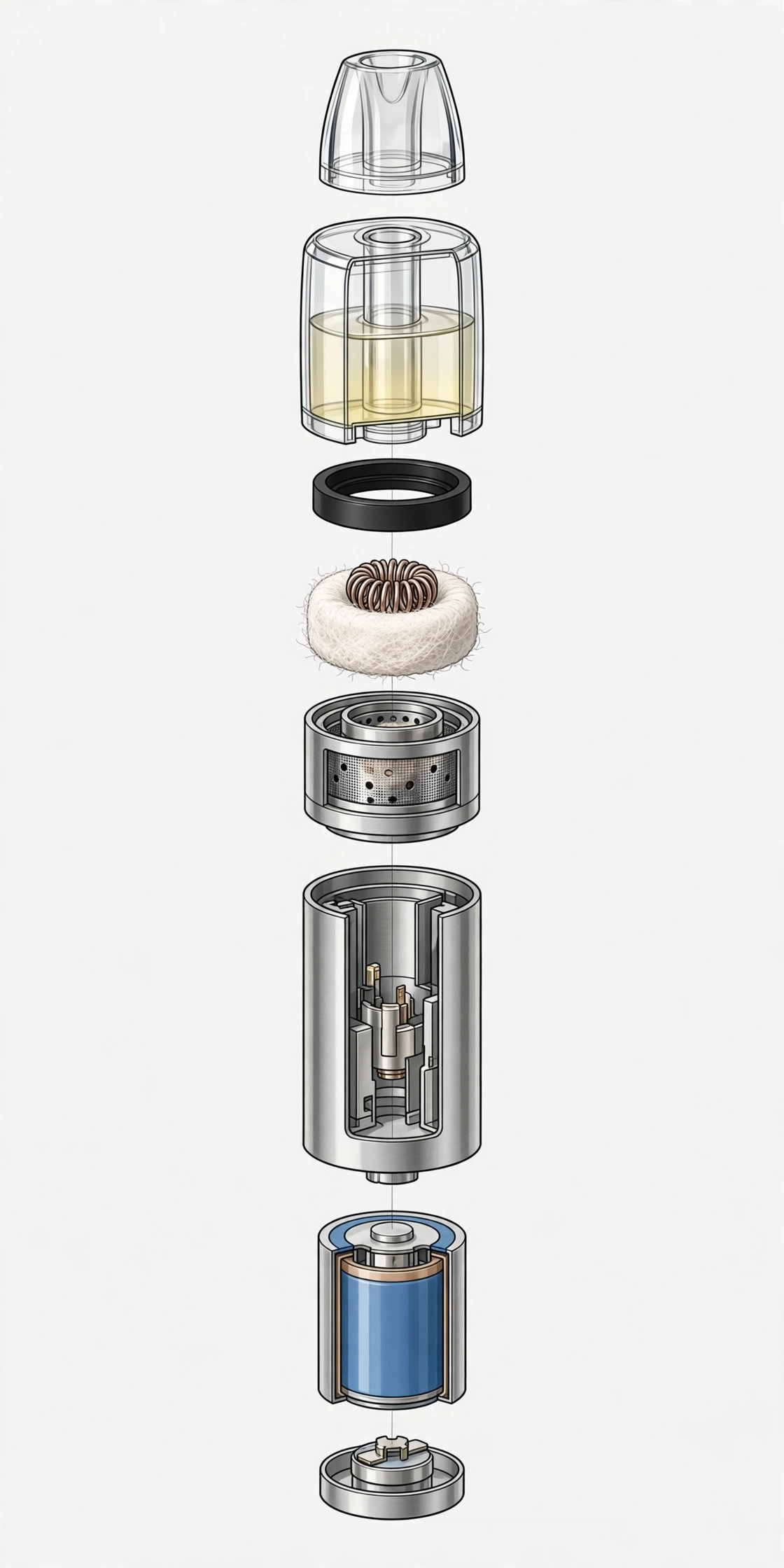
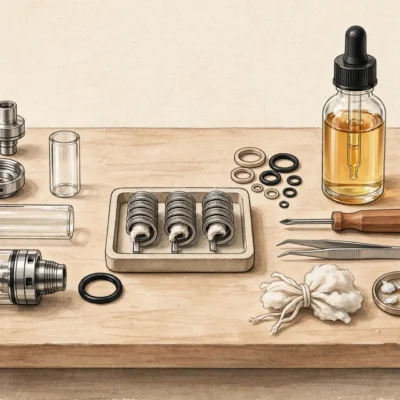
A vape device has 4 core parts: a battery, a coil, a wick, and a pod or tank that holds e-liquid, plus a mouthpiece and a control circuit that ties the parts together. Each part has one job, and a fault in one part changes how the whole device performs.
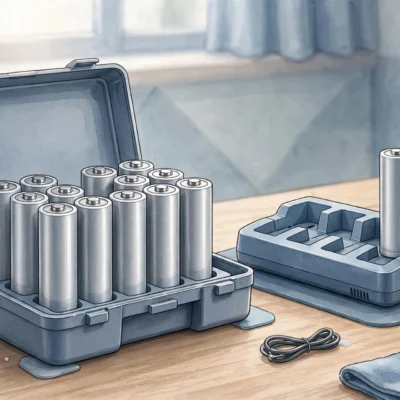
The battery is the power source and the largest part of most devices. Small devices use a built in lithium ion battery that charges over USB. Large box mods use one or two removable lithium ion cells, usually 18650 or 21700 size. Battery capacity is measured in milliamp hours (mAh), and higher capacity gives more puffs between charges. The control circuit, often called a chipset, manages power output, protects against short circuits, and cuts power when the battery runs low.
The coil is the heating element. The coil is a wire wrapped into a small spiral, and the wire type and resistance decide how the device vapes. Low resistance coils, under 1.0 ohm, run hotter and produce more aerosol, and these are called sub ohm coils. High resistance coils, at or above 1.0 ohm, run cooler and produce less aerosol, and these suit mouth to lung vaping. The coil sits inside the pod or tank, surrounded by e-liquid.
The wick is the delivery system for the liquid. The wick is usually organic cotton that soaks up e-liquid from the pod or tank and feeds the liquid to the coil. The wick must stay wet during use. A dry wick burns, and a burnt wick gives the harsh taste that vapers call a dry hit. Priming a new coil, which means soaking the wick with liquid and waiting several minutes before the first puff, prevents dry hits on refillable devices.
The pod or tank holds the e-liquid. A pod is a small plastic container that clicks into a pod kit, and the pod either has a built in coil or a replaceable coil. A tank is a larger glass and metal container that screws onto a box mod, and the tank uses replaceable coils. The mouthpiece, also called a drip tip, sits on top of the pod or tank and shapes the draw. Narrow mouthpieces suit mouth to lung draws, and wide mouthpieces suit direct to lung draws.
What Is E-Liquid Made Of?
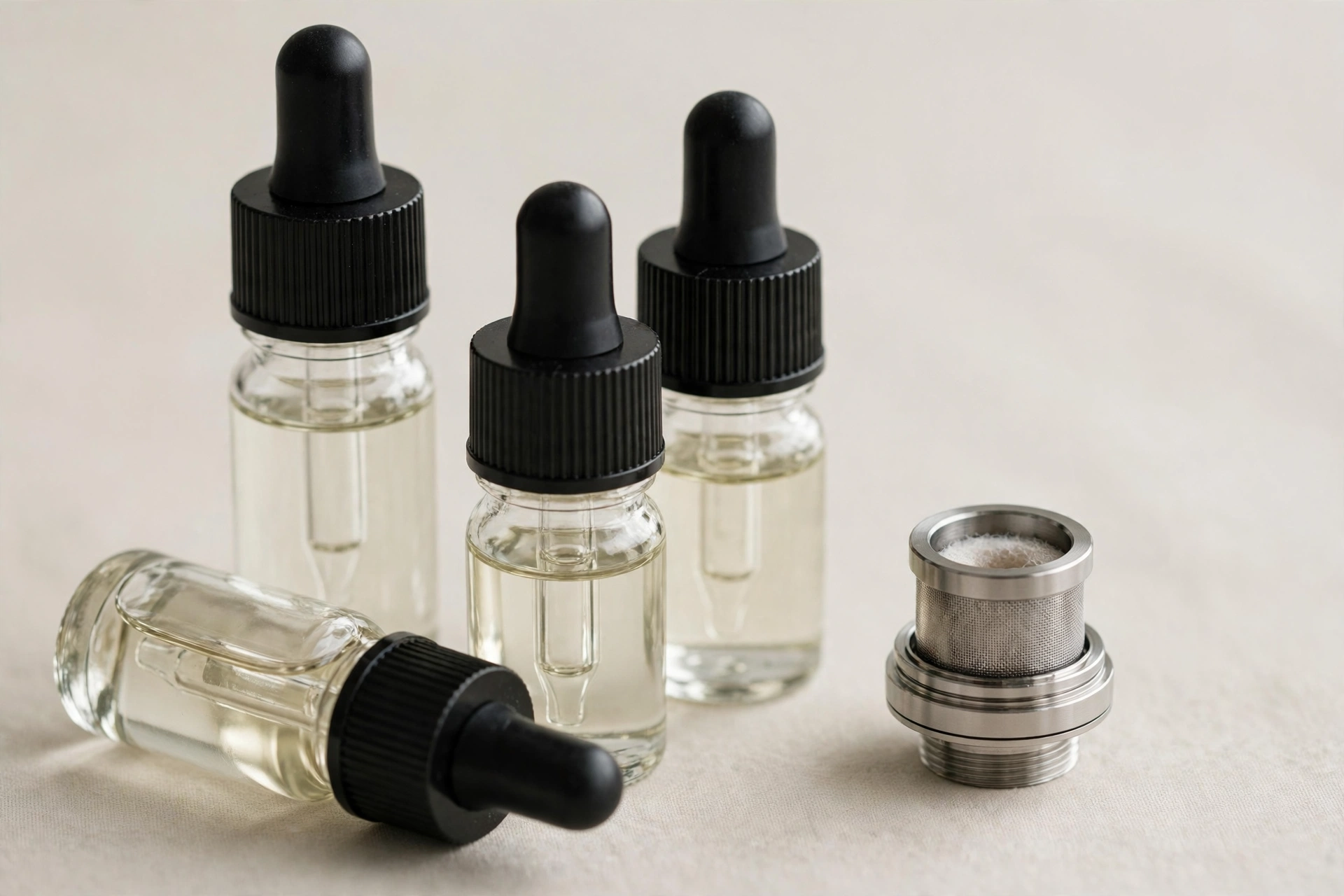
E-liquid is a liquid made from propylene glycol (PG), vegetable glycerin (VG), flavorings, and usually nicotine, and the PG to VG ratio decides the throat feel, the flavor strength, and the amount of aerosol each puff produces, and the ratio also sets how fast the liquid feeds the wick in small pods. E-liquids are also called vape juice, and the liquid is the only consumable that every vape device needs.
Propylene glycol is a thin, colorless liquid that carries flavor and gives the throat hit that smokers recognize. Vegetable glycerin is a thicker, slightly sweet liquid that produces the visible aerosol. A 50/50 PG to VG ratio gives a balanced draw with clear flavor and moderate aerosol, and this ratio suits pod kits and mouth to lung devices. A high VG ratio, such as 70/30 VG to PG, gives thick aerosol and a smoother draw, and this ratio suits sub ohm tanks and direct to lung devices.
Nicotine in e-liquid comes in two forms. Freebase nicotine is the standard form, and it gives a stronger throat hit at higher strengths. Nicotine salt, often called nic salt, is nicotine bonded with an acid, and it gives a smoother throat hit at higher strengths with faster absorption. Nic salt liquids suit low power pod kits, and freebase liquids suit higher power devices. Nicotine free e-liquid exists, and the label shows 0 mg. Labels show nicotine strength in milligrams per milliliter (mg/ml) or as a percentage, and 20 mg/ml equals 2 percent.
Flavorings in e-liquid range from tobacco and menthol to fruit, dessert, and drink flavors. Flavorings are food grade concentrates, but food grade status does not mean the flavoring is safe to inhale, and inhaled flavorings are one of the health concerns around vaping. Some liquids also contain sweeteners that shorten coil life, because sweetener residue builds up on the coil and burns during use. Buyers should check the label for the PG to VG ratio, the nicotine strength, and the bottle size before buying, and should buy sealed bottles from known brands, because unsealed or unlabelled liquid may contain unknown ingredients.
What Types of Vape Devices Exist?
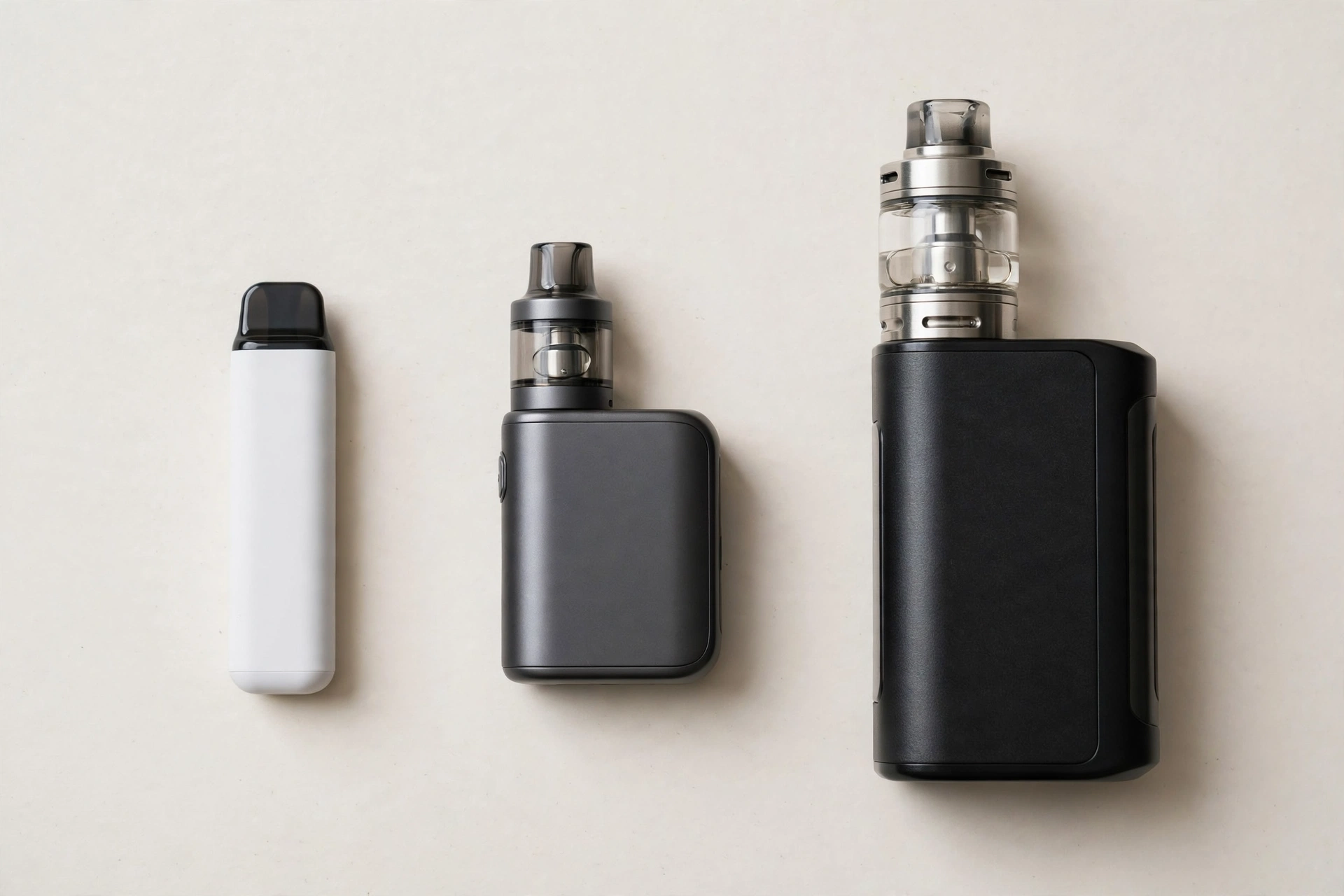
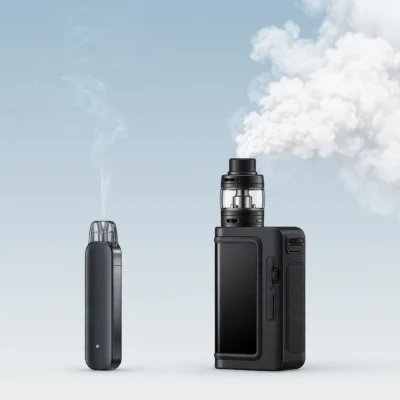
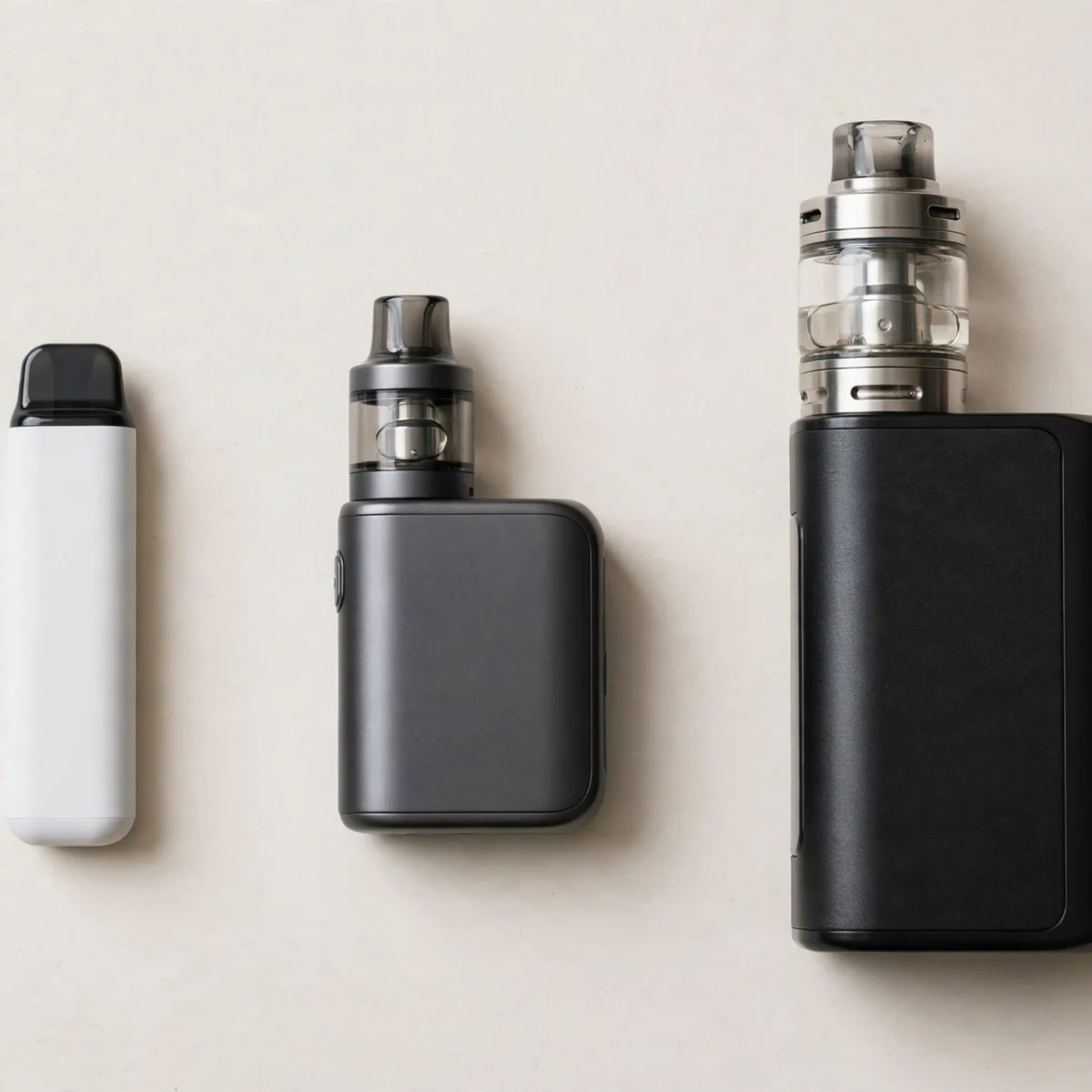
Vape devices fall into 5 main types: disposables, cigalikes, pod kits, pod mods, and box mods, and the types form a spectrum from zero setup to full control. The right type depends on how much setup the user wants, how much the user wants to spend over time, and which inhale style the user prefers. The Vape category on Digital Geek Spot covers device guides across all 5 types.
| Device type | Refillable? | Power | Best for | Running cost |
|---|---|---|---|---|
| Disposable vape | No, sealed | Fixed | Trying vaping with zero setup | High over time |
| Cigalike | Prefilled cartridges | Fixed, low | Smokers who want a cigarette shape | Medium |
| Pod kit | Yes, refillable pod | Low, fixed or light adjustment | Beginners and mouth to lung vapers | Low |
| Pod mod | Yes, larger pod | Adjustable wattage | Vapers who want more control in a pocket size | Low to medium |
| Box mod with tank | Yes, refillable tank | High, fully adjustable | Experienced direct to lung vapers | Medium |
A disposable vape is a sealed device with a battery, a coil, and e-liquid already inside. The user opens the package and vapes until the liquid or the battery runs out, then disposes of the whole device. Disposables need no setup, no charging on most models, and no coil changes. The trade off is cost: buying a new device each time adds up, and each empty device becomes electronic waste. Flavor also fades near the end of the device life, and the user cannot change the coil to fix the flavor.
A cigalike is a slim device shaped like a cigarette, and it uses prefilled cartridges that click onto a small battery. Cigalikes suit smokers who want a familiar shape and a simple draw. The battery is small, so battery life is short, and the cartridge range is limited to the flavors the maker offers.
A pod kit is a small rechargeable device that uses a refillable or prefilled pod. Pod kits suit beginners because the pod clicks in, the device is draw activated on most models, and the power is fixed or lightly adjustable. Pod kits run at low power, so they use little liquid, and the running cost stays low. Most pod kits pair with nic salt liquid for a smooth draw at higher nicotine strengths.
A pod mod is a hybrid that keeps the pod format and adds mod features: adjustable wattage, a screen, adjustable airflow, and a larger battery. Pod mods suit vapers who want more aerosol and more control without carrying a full box mod. Pod mods cover both mouth to lung and light direct to lung vaping, depending on the pod and coil fitted.
A box mod is a larger device with a removable battery or batteries, a screen, adjustable wattage from low to over 200 watts on some models, and a screw fitting that accepts any matching tank. Box mods suit experienced vapers who want large aerosol production and full control over wattage, airflow, and coil choice. Box mods need more care: the user must match the coil to the wattage range, keep battery wraps in good condition, and clean the tank during coil changes.
For a closer look at the simplest type, read our guide on what a disposable vape is and how it works.
What Is the Difference Between MTL and DTL Vaping?
Mouth to lung (MTL) vaping means drawing aerosol into the mouth first and then inhaling to the lungs, while direct to lung (DTL) vaping means inhaling aerosol straight to the lungs in one deep draw. The difference comes from the device, the coil, the airflow, and the liquid, and the style changes the feel of every puff.
MTL vaping mimics the draw of a cigarette: a tight draw, a small amount of aerosol, and a clear throat hit. MTL devices use high resistance coils at or above 1.0 ohm, narrow airflow, and low power. MTL vaping suits nic salt liquid and 50/50 PG to VG liquid, and MTL devices use little liquid per day. Beginners who smoked cigarettes usually find MTL familiar, because the draw and the throat hit match the smoking action.
DTL vaping gives an open draw, a large amount of aerosol, and a smoother throat hit. DTL devices use low resistance sub ohm coils under 1.0 ohm, wide airflow, and higher power. DTL vaping suits high VG liquid, and DTL devices use more liquid per day. DTL vaping suits vapers who want large aerosol production and who already vape at low nicotine strengths, because a large aerosol volume delivers more nicotine per puff even at low liquid strength.
The choice between MTL and DTL is set by the coil and the airflow, not by the user alone. A pod kit with a 1.2 ohm coil and tight airflow gives MTL draws. A box mod with a 0.2 ohm coil and open airflow gives DTL draws. Some pod mods cover both styles by changing the pod or the coil, and the maker lists the coil resistance and the suggested wattage range on the coil or the packaging.
Is Vaping Safe?
No, vaping is not safe, and vaping carries health risks even though vaping exposes users to fewer toxic chemicals than cigarette smoke. The honest answer has two parts: vaping is less harmful than smoking for adult smokers who switch fully, and vaping is still harmful for anyone, with the risk highest for young people, non-smokers, and pregnant people.
Nicotine is the main risk in most e-liquid. Nicotine is a highly addictive chemical, and nicotine affects memory, concentration, and self control, with stronger effects on developing brains. Nicotine dependence builds fast, and withdrawal brings cravings, irritability, and trouble concentrating. People who vape daily often take in more nicotine than they expect, because a device is easy to puff often and a pod can hold as much nicotine as a pack of cigarettes or more, depending on the liquid strength and the pod size.
The aerosol carries more than nicotine. The aerosol contains ultrafine particles, flavoring chemicals, and metals from the heating coil, and some of these substances are toxic or cancer causing. Vitamin E acetate, an additive in some illicit cannabis liquids, caused the EVALI lung injury outbreak in the United States in 2019 and 2020. EVALI stands for e-cigarette or vaping product use associated lung injury, and the outbreak sent thousands of people to hospital. The outbreak shows why liquid source matters: sealed liquids from known brands carry less risk than unlabelled or illicit liquids.
Secondhand aerosol also matters. People near a vaper breathe in exhaled aerosol, and the aerosol contains nicotine and fine particles. The risk to bystanders is lower than secondhand smoke, but the risk is not zero, and vaping indoors around children or in cars deserves the same caution as smoking. Battery safety is a separate risk: damaged batteries, loose batteries in pockets with metal objects, and wrong chargers can cause fires, and users should use the maker charger, check battery wraps, and never carry loose cells with keys or coins.
The long term risks of vaping are still unknown, because vaping has only been common for about two decades, and long term studies need more time. Health agencies advise non-smokers, young people, and pregnant people not to vape at all, and advise smokers who vape to quit nicotine fully as the end goal. Anyone who vapes and notices coughing, chest pain, or breathing trouble should stop and seek medical advice.
Is Vaping Better Than Smoking?
Yes, vaping is less harmful than smoking for adult smokers who switch fully, because vaping avoids tobacco combustion, and tobacco smoke contains thousands of chemicals, including tar and carbon monoxide, that vape aerosol does not contain, and the benefit holds only for a full switch, not for dual use. Research reviews find that e-cigarette aerosol contains toxicants at levels far below cigarette smoke, and that smokers who switch fully show lower levels of smoke related chemicals in the body. Research also finds that nicotine e-cigarettes help some adult smokers quit, with quit rates above nicotine replacement therapy in some trials, though the trials are shorter and smaller than the trials for approved quit aids.
The comparison changes for non-smokers. A non-smoker who starts vaping gains no benefit and takes on nicotine dependence and aerosol exposure for no health gain. The comparison also changes for dual users. A smoker who adds vaping but keeps smoking still inhales tobacco smoke, and the smoke exposure drives most of the disease risk. The benefit of vaping over smoking applies only to a full switch, and the best outcome for any smoker is quitting nicotine fully.
To see the full comparison, read our breakdown of vape versus cigarettes on health, cost, and chemicals.
How Do You Choose Your First Vape Device?
To choose a first vape device, pick a pod kit with a fixed or lightly adjustable power level, a refillable pod, a 1.0 ohm or higher coil for mouth to lung draws, and a nicotine strength that matches prior smoking, then buy sealed liquid from a known brand. The checklist below covers each choice in order, and each choice removes one common beginner error.
First, pick the type. A pod kit is the best first device for most beginners, because a pod kit is small, cheap to run, and simple to use. A disposable is simpler still, but a disposable costs more over time and gives no control over liquid choice. A box mod is too much device for a first purchase, because the settings, the coil matching, and the battery care add work that a beginner does not need.
Second, pick the coil and the draw style. A coil at or above 1.0 ohm with tight airflow gives mouth to lung draws, and mouth to lung draws suit former smokers. A coil under 1.0 ohm gives direct to lung draws, and direct to lung draws suit vapers who already vape at low nicotine strength. The coil resistance is printed on the coil or the packaging, so check the number before buying.
Third, pick the nicotine strength. Heavy smokers, at a pack a day or more, often start with 20 mg/ml nic salt liquid in a pod kit. Light smokers often start with 10 mg/ml. Non-smokers should pick 0 mg liquid or skip vaping entirely, because nicotine dependence is the main risk of starting. The strength is a starting point, and the user can lower the strength over time as the goal moves toward quitting nicotine fully.
Fourth, check the practical points. Check the battery capacity in mAh, and pick a device with USB-C charging. Check the pod capacity in milliliters, and check local rules on pod size, because some regions cap pod size at 2 ml. Check the coil availability, because a device with hard to find coils becomes useless when the first coil burns out. Check the maker warranty and the seller return policy, because a faulty battery or a leaking pod should be replaceable.
When I tested a draw activated pod kit while preparing this guide, the device fired on the inhale alone, with no button to press, and the draw felt close to a cigarette draw. That simple activation is the reason pod kits suit beginners: the device removes setup steps and leaves only the puff.
What Mistakes Do Beginners Make?
Beginners make 5 common mistakes: vaping on a dry coil, using the wrong nicotine strength, chain vaping without breaks, buying unlabelled liquid, and ignoring battery care. Each mistake has a simple fix, and each fix protects flavor, safety, or both.
Mistake 1: Vaping on a dry coil. A new coil needs priming: drip liquid onto the exposed cotton, fill the pod or tank, and wait 5 to 10 minutes before the first puff. A dry first puff burns the cotton, and a burnt coil never recovers its flavor, so the coil must be replaced.
Mistake 2: Using the wrong nicotine strength. A strength that is too high gives dizziness, nausea, and a harsh throat hit. A strength that is too low gives constant craving and chain vaping. The fix is to start at a middle strength for the smoking level and adjust after a week of use.
Mistake 3: Chain vaping without breaks. Puffing without pauses overheats the coil, dries the wick, and raises nicotine intake fast. The fix is to pace puffs like cigarette breaks: a short session, then a break, with water between sessions, because vaping dries the mouth and throat.
Mistake 4: Buying unlabelled or illicit liquid. Unlabelled liquid may contain unknown ingredients, wrong nicotine levels, or harmful additives. The fix is to buy sealed bottles with a label that shows the maker, the PG to VG ratio, the nicotine strength, and the bottle size, and to avoid liquids sold without packaging.
Mistake 5: Ignoring battery care. Loose batteries in pockets, damaged wraps, and wrong chargers cause most vape battery fires. The fix is to carry spare cells in a case, replace wraps that are torn, use the maker charger, and stop using a battery that gets hot during charging.
Conclusion
What is vaping and how do vape devices work? Vaping is the act of inhaling an aerosol made by heating e-liquid, and a vape device does that job with 4 core parts: a battery, a coil, a wick, and a pod or tank. Device types run from sealed disposables to adjustable box mods, and pod kits give most beginners the best mix of simplicity and low running cost. E-liquid contains propylene glycol, vegetable glycerin, flavorings, and usually nicotine, and the PG to VG ratio and the nicotine form shape each puff. Vaping is less harmful than smoking for adult smokers who switch fully, but vaping is not safe, and nicotine is addictive, so non-smokers should not start. A beginner who picks a pod kit, primes the coil, buys sealed liquid, and respects battery care avoids the mistakes that spoil the first weeks of vaping. Digital Geek Spot will keep covering vape devices, e-liquid guides, and safety updates in the Vape section, so readers can check back for the next guide.
FAQs
What is vaping in simple words?
Vaping is the act of inhaling an aerosol made by a battery powered device that heats e-liquid until the liquid turns into a fine mist. The device does not burn tobacco, so no smoke is produced. The aerosol carries the liquid ingredients, including nicotine when the liquid contains nicotine.
How do vape devices work?
A vape device works by sending battery power to a coil, and the coil heats e-liquid on a wick until the liquid turns into an aerosol that the user inhales. The user activates the device by inhaling or pressing a button. The cycle repeats with each puff until the liquid or battery runs out.
What are the parts of a vape device?
A vape device has a battery, a coil, a wick, a pod or tank that holds e-liquid, a mouthpiece, and a control circuit. The battery powers the coil, the coil heats the liquid, the wick feeds liquid to the coil, and the mouthpiece shapes the draw.
Is vaping safer than smoking?
Yes, vaping is less harmful than smoking for adult smokers who switch fully, but vaping is not safe. Vaping avoids tobacco combustion and smoke toxicants, yet the aerosol still contains nicotine and other chemicals. Non-smokers gain no benefit from vaping.
Does vaping help smokers quit?
Yes, nicotine vaping helps some adult smokers quit, with quit rates above nicotine replacement therapy in some trials. The benefit applies to a full switch away from cigarettes. The best outcome for any smoker is quitting nicotine fully, and quit aids from a doctor or pharmacist can help.
What is the best vape device for beginners?
A pod kit is the best vape device for most beginners, because a pod kit is small, simple, and cheap to run. Pick a pod kit with a coil at or above 1.0 ohm for mouth to lung draws, a refillable pod, and sealed liquid at a nicotine strength that matches prior smoking.