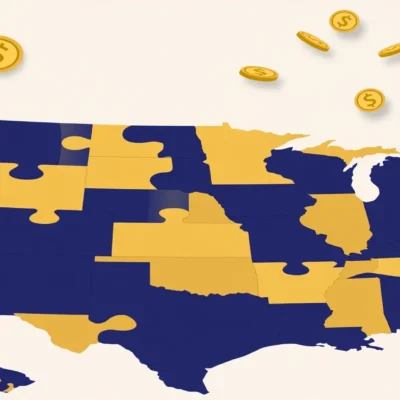
Searches for “home depot chapter 11” have been climbing for months, and they all point to the same confusion: did Home Depot go bankrupt, or did one of its rivals? The answer matters, because the real story is not about one failure but about several well-known home improvement companies collapsing under the same pressures. Between 2024 and 2025, a flooring giant, a 75-year-old hardware wholesaler, and a major home decor chain all filed for Chapter 11 protection, each with its own ending. This article lays out exactly what happened to each of them, with verified dates, debt figures, and store counts, so you can separate the facts from the rumors.
The quick answer: The company most associated with the home depot competitor bankruptcy story is LL Flooring, formerly Lumber Liquidators, which filed for Chapter 11 on August 11, 2024. True Value followed on October 14, 2024, and At Home on June 16, 2025. Home Depot itself never filed; it remains profitable and financially healthy.
The Home Depot Competitor Bankruptcies, Explained
When people type “home depot competitor bankruptcy” into a search box, they usually expect a single dramatic story. The truth is messier and more interesting. More than one Home Depot rival filed for Chapter 11 in the last two years, and the filings were not identical. One company nearly vanished before its founder bought it back. Another was absorbed by a competitor through the bankruptcy court. A third wiped out almost all of its debt and kept operating. What links them is a shared set of pressures that hit home improvement retail hard after the pandemic boom ended.
The pandemic years were unusually kind to home improvement. Stuck at home with time and stimulus money, consumers poured cash into flooring, hardware, paint, and decor. When life returned to normal, that demand faded fast. Interest rates climbed, the housing market stalled, and shoppers became cautious about big discretionary purchases. Smaller and mid-sized retailers, without the buying power and cash reserves of Home Depot and Lowe’s, felt the squeeze first. The result was a wave of filings that reshaped the home improvement landscape.
LL Flooring: The Flooring Giant That Filed First
LL Flooring, the company once known as Lumber Liquidators, was the first major Home Depot rival to file. On August 11, 2024, the Richmond, Virginia-based flooring retailer filed for Chapter 11 protection in the U.S. Bankruptcy Court for the District of Delaware. Court documents showed liabilities between $100 million and $500 million against assets of $500 million to $1 billion, and the company reported nearly $110 million in long-term debt. It also secured a commitment for $130 million in debtor-in-possession financing from its existing lenders to keep operating while it sought a buyer.
The filing announcement was blunt about the cause. The company blamed a post-pandemic slowdown in home sales, rising interest rates, and weaker spending on remodeling projects. Sales had already been falling sharply, with a reported 18.5 percent drop in net sales for 2023 followed by a further steep decline in early 2024, alongside a large operating loss. The company initially planned to close 94 stores in more than 30 states while keeping about 300 locations open and pursuing a sale of the business.
That plan fell apart within weeks. With no buyer stepping forward on acceptable terms, LL Flooring announced it would wind down all of its stores, and closing sales began in early September. Then came a twist: F9 Investments, a private equity firm led by the company’s own founder, Tom Sullivan, agreed to a going-concern sale. The deal, finalized around October 1, 2024, transferred 219 stores to F9, while roughly 211 other locations were shut down and up to 1,000 workers were kept on. The surviving stores were slated to return to the original Lumber Liquidators name, the brand the company had used before its 2020 rebrand.
For customers, the outcome was mixed. Some stores continued under the old name, but hundreds of locations closed permanently, and many employees lost their jobs during the wind-down. The LL Flooring episode became the signature example of home depot competitor struggles in 2024: a 30-year-old national chain, felled by a cooling housing market, rescued only partially by its own founder.
True Value: 75 Years, Then Chapter 11
Two months after LL Flooring’s filing, another icon followed. True Value Company, the Chicago-based hardware wholesaler that had supplied independent stores for 75 years, filed for Chapter 11 protection on October 14, 2024. The petition listed total liabilities between $500 million and $1 billion, with estimated assets of $100 million to $500 million. The company said declining sales, persistent inflation, and higher interest rates had created a cash crunch it could not escape.
The filing was structured around a sale from the start. True Value entered bankruptcy with a stalking-horse agreement to sell substantially all of its operations to Do it Best Corp., a Fort Wayne-based cooperative of independent home improvement retailers, for $153 million in cash plus roughly $45 million in assumed contracts and other obligations. A critical detail softened the impact: True Value’s roughly 4,500 independently owned retail stores were not part of the bankruptcy proceedings and continued operating normally throughout the process.
The sale closed on November 22, 2024. Do it Best, which had about 4,300 member-owned stores of its own, effectively doubled in size overnight, creating what it described as the world’s largest network of independent home improvement stores. The consolidation continued well into 2026, when Do It Best announced it would close the Chicago headquarters of True Value and fold the corporate operations into its Fort Wayne home office, affecting more than a hundred workers, of whom roughly 20 percent were retained.
Unlike LL Flooring, True Value never liquidated its brand. Stores kept their signs, and the cooperative model survived. But the episode showed how even a deeply established wholesaler could be overwhelmed by the economics of competing with big-box giants, and it gave the home improvement sector another entry in its bankruptcy ledger.
At Home: The $2 Billion Debt Reckoning
The most recent and largest filing came from At Home Group, the Coppell, Texas-based home decor and furniture retailer. On June 16, 2025, At Home filed for Chapter 11 protection, citing broader economic and retail-specific pressures. The company was carrying nearly $2 billion in debt, a burden that dated back to its 2021 acquisition by private equity firm Hellman and Friedman, which had taken the chain private for $2.8 billion and removed it from the New York Stock Exchange.
The court documents were specific about what pushed the company over the edge: rising interest rates, persistent inflation, and new tariff costs on imported goods. Because roughly 90 percent of At Home’s merchandise was sourced overseas, the tariffs hit especially hard, raising the cost of the cheap furniture and decor that were the core of its business. About 7,170 employees worked for the company at the time of filing.
At Home secured $600 million in debtor-in-possession financing, including $200 million in new capital, to keep the business running while it restructured. It also began closing underperforming stores, with the closure list growing from 26 to about 30 locations over the summer, roughly 10 percent of its roughly 260 stores across 39 states. On September 30, 2025, the bankruptcy court approved the reorganization plan, and the company officially emerged from Chapter 11 on October 24, 2025. The plan eliminated nearly all of the $2 billion in funded debt, transferred ownership to a group of lenders, and provided about $500 million in new exit financing. At Home reopened its next chapter with 229 stores and a cleaned-up balance sheet.
For shoppers, the At Home story ended better than LL Flooring’s. Most stores stayed open, the brand survived, and the company entered the holiday season with fresh capital. But it was still one of the largest home-goods bankruptcies of 2025, and a reminder that debt, not just sales, can sink a retailer.

Bankruptcy Timeline: Key Dates and Outcomes
The filings came in waves. Here is a chronological view of the major home depot chapter 11 events from 2024 through 2025:
| Date | Event | Outcome |
|---|---|---|
| August 11, 2024 | LL Flooring files for Chapter 11 in Delaware, plans to close 94 stores | Filing with $130M debtor-in-possession financing |
| September 2024 | LL Flooring pivots from restructuring to winding down all stores | Closing sales begin at remaining locations |
| October 1, 2024 | F9 Investments acquires 219 LL Flooring stores; about 211 close | Stores revert to the Lumber Liquidators name |
| October 14, 2024 | True Value files Chapter 11, seeks sale to Do it Best | Liabilities of $500M to $1B reported |
| November 22, 2024 | Do it Best closes its acquisition of True Value | Combined network of about 8,000 stores |
| June 16, 2025 | At Home files for Chapter 11 with nearly $2 billion in debt | Plans closure of about 26 to 30 stores |
| September 30, 2025 | Bankruptcy court approves At Home’s reorganization plan | Debt nearly eliminated; lender ownership set |
| October 24, 2025 | At Home emerges from Chapter 11 with 229 stores | $500M in new exit financing secured |
Why Home Improvement Retailers Struggled
The failures share a common thread, and it is not simply bad management. The home improvement sector ran hot during the pandemic, when consumers with time on their hands renovated kitchens, replaced floors, and repainted rooms. When that wave receded, sales dropped just as costs were rising. Inflation pushed up the price of labor and materials, and higher interest rates made home purchases and big renovation projects more expensive. Home Depot’s own chief financial officer noted in 2024 that professional contractors were seeing customers defer projects, not only because of financing costs but because of broader economic uncertainty.
Smaller chains had far less cushion. LL Flooring was already shrinking before rates peaked. True Value’s wholesale model depended on volume that thinner demand could not support. At Home’s private-equity debt load left almost no room for error, and the new tariffs on imported goods landed directly on its cost base. Each company also faced the same structural reality: competing for customers against two giants with enormous buying power and deep pockets makes every margin point precious.
It is worth noting the wave was industry-wide, not a single collapse: furniture chains such as Conn’s HomePlus and American Freight, and garden retailer Gardener’s Supply, also filed around the same time, which is why searches for home depot competitor struggles return so many names.
What Happened to Stores and Employees
The human impact varied by company. LL Flooring’s trajectory was the harshest: a full wind-down, hundreds of store closures, and job losses across its footprint, softened only by the founder’s partial buyback that preserved 219 stores and up to 1,000 jobs. True Value’s 4,500 independently owned stores stayed open throughout, but corporate employees felt the restructuring, including headquarters layoffs when Do it Best consolidated operations in Fort Wayne, Indiana, and the closure of a Springfield, Oregon, distribution center affecting dozens of workers.
At Home’s restructuring was gentler. Roughly 30 of its 260 stores closed, and the remaining locations kept operating with the company’s roughly 7,000-plus employees largely retained. The lender takeover gave the company a second life rather than a liquidation. Taken together, the three cases show the full range of Chapter 11 outcomes: partial rescue, acquisition, and reorganization. None of the three ended in a complete disappearance of the brand, but thousands of workers and hundreds of store communities were affected along the way.
Did Home Depot Declare Bankruptcy? No
Let us settle the question that drives most of this search traffic. Home Depot did not declare bankruptcy, and it is not in financial distress. The company remains one of the most profitable retailers in the world, with reported fiscal 2025 sales of $164.7 billion and billions in annual free cash flow. It has consistently paid dividends and continued to invest in stores and its professional contractor business. When Home Depot’s rivals were filing for Chapter 11, the company was instead posting revenue growth and steady profits.
The confusion is understandable. Headlines that read “Home Depot rival files Chapter 11” get shortened in search snippets until the “rival” part disappears. The reality is the opposite of bankruptcy: Home Depot and Lowe’s have actually benefited from rivals’ exits, since every closed competitor store redirects customers to the remaining big-box options.
Frequently Asked Questions
Which Home Depot competitor filed for Chapter 11 bankruptcy?
Three notable Home Depot rivals filed: LL Flooring (formerly Lumber Liquidators) on August 11, 2024; True Value Company on October 14, 2024; and At Home Group on June 16, 2025. LL Flooring is the company most commonly associated with the home depot competitor bankruptcy headlines.
Did Home Depot declare bankruptcy?
No. Home Depot never filed for bankruptcy and is financially healthy, with reported fiscal 2025 sales of $164.7 billion. The bankruptcy searches refer to its competitors, not to Home Depot itself.
What happened to LL Flooring after bankruptcy?
LL Flooring first planned to close 94 stores, then pivoted to liquidating everything, before founder Tom Sullivan’s F9 Investments bought 219 of the 442 stores for a going-concern sale. About 211 stores closed, up to 1,000 workers were kept, and the surviving stores reverted to the Lumber Liquidators name.
Did True Value stores close after the bankruptcy?
No. True Value’s roughly 4,500 independently owned stores were not part of the bankruptcy and stayed open. The company sold its operations to Do it Best Corp. for $153 million in cash plus about $45 million in assumed obligations, with the deal closing on November 22, 2024.
Is At Home still in business after filing Chapter 11?
Yes. At Home emerged from Chapter 11 on October 24, 2025, after eliminating nearly all of its roughly $2 billion in debt. Ownership transferred to a group of lenders, the company secured about $500 million in new financing, and it continues to operate about 229 stores across 39 states.
Why did so many home improvement retailers struggle at the same time?
The main causes were a post-pandemic drop in DIY demand, high interest rates that stalled the housing market, persistent inflation, and, for import-heavy chains like At Home, rising tariff costs. Smaller retailers lacked the buying power and cash reserves that protect Home Depot and Lowe’s from such cycles.
Related Articles
- Cash Flow vs Profit: What’s the Difference?
- Gross Margin vs Net Margin: Key Differences
- How to Write a Business Plan for Small Business: 9 Sections
- Sole Proprietorship vs LLC: Which Is Right for Your Business in 2026?
The Bottom Line
The home depot competitor bankruptcy story is really three stories: LL Flooring’s near-death and founder-led rescue, True Value’s court-supervised sale to Do it Best, and At Home’s debt-wiping reorganization. All three filed for Chapter 11 between August 2024 and June 2025, undone by the same post-pandemic cooling, high rates, and import costs that Home Depot and Lowe’s weathered with far greater resources. Home Depot itself never filed, and its rivals’ struggles have only strengthened its position. For more business coverage, visit DigitalGeekSpot.