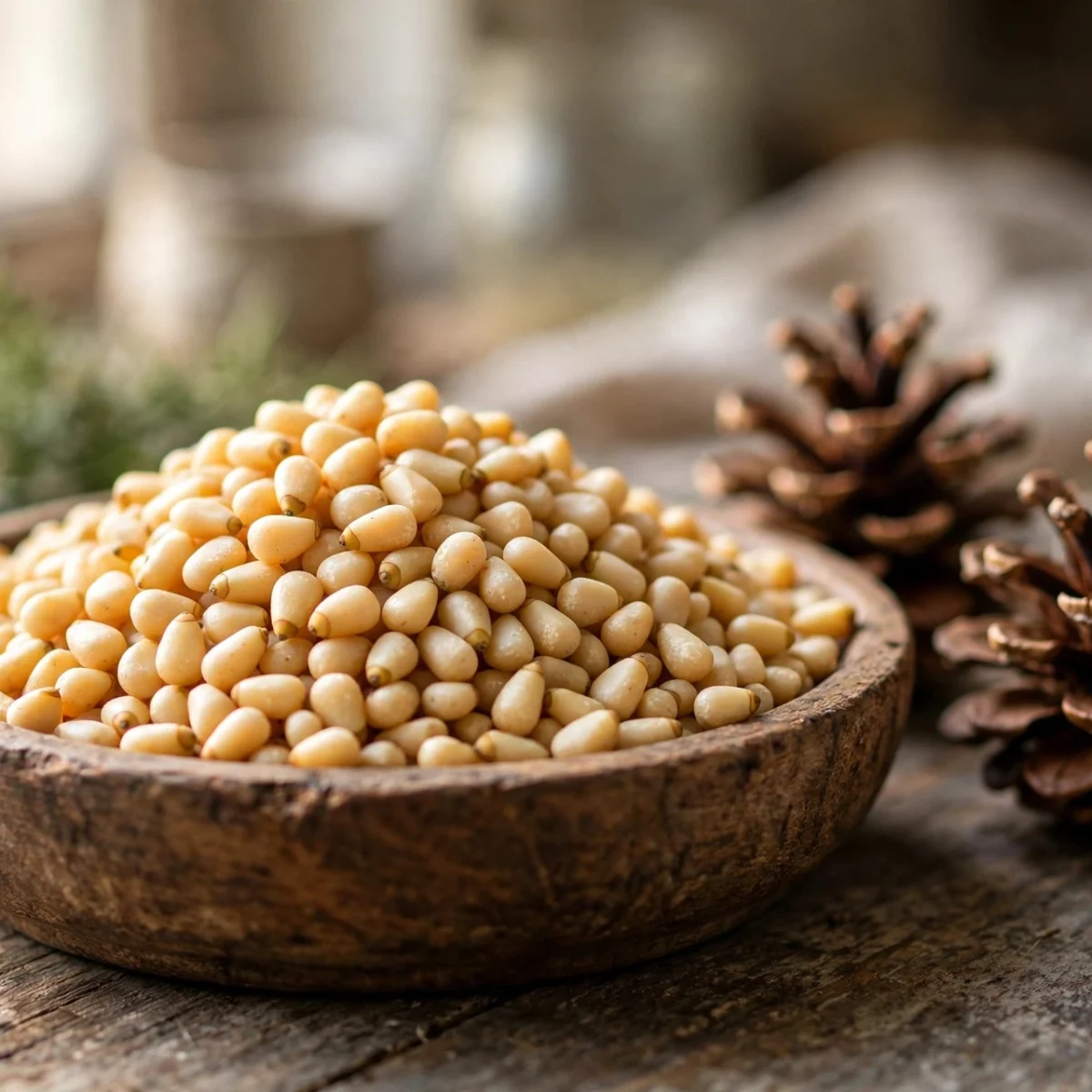
Quick answer: Pine kernels and pine nuts are the same thing. A pine kernel is the shelled, edible seed taken from inside a pine cone, and pine nut is simply the more common market name for it. These small, buttery seeds are rich in healthy unsaturated fats, protein, magnesium, zinc, and vitamin K. Research links them to heart-friendly fats, steadier blood sugar, and reduced appetite through a compound called pinolenic acid. The one quirk to know is “pine mouth,” a harmless bitter taste some people experience after eating certain pine nuts, which fades within a few days.
Pine nuts have been a prized food for thousands of years, from Roman soldiers to Korean temple cuisine. But because they are expensive and often sold under different names, shoppers reasonably ask whether a pine kernel is something different. This guide settles that question, then covers the nutrition, the evidence-backed benefits, the honest downsides, and how to buy and store them so they stay fresh.
Are Pine Kernels and Pine Nuts the Same Thing?
Yes. The two terms describe the exact same food, just at different stages or in different contexts:
| Term | What it usually means | When you see it |
|---|---|---|
| Pine nut | The general name for the edible seed of certain pine trees | Grocery stores, recipes, menus, nutrition labels |
| Pine kernel | The shelled seed, specifically the kernel inside the hard shell | Wholesale listings, ingredient suppliers, botanical descriptions |
| Pignoli / pinoli | The Italian name, used for pine nuts in pesto and baking | Italian delis, imported food shops |
| Piñón | The Spanish name, especially for Southwestern US varieties | Southwestern US markets, Mexican recipes |
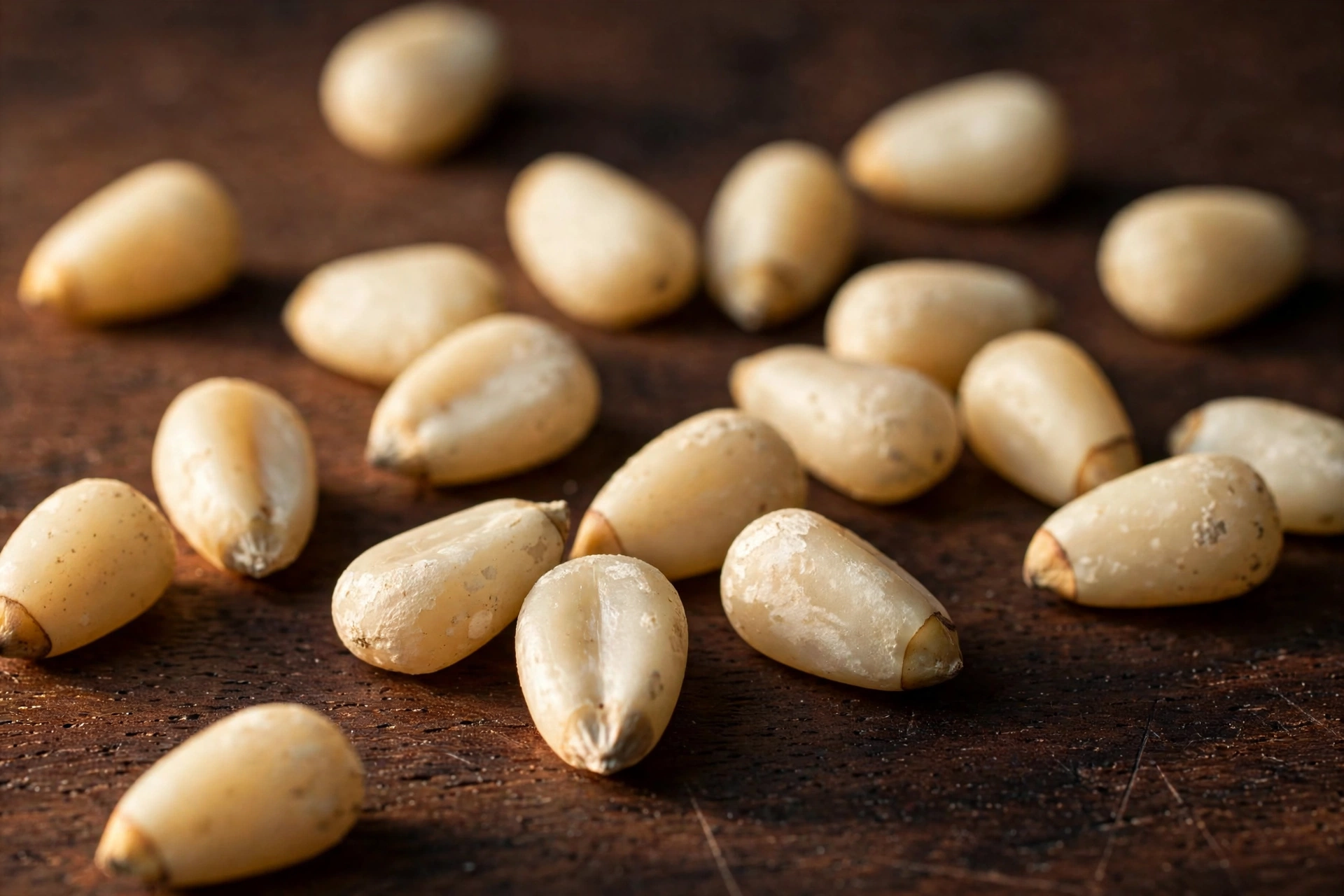
Think of it like a pumpkin seed and its kernel: the nut is the seed as you buy it, and the kernel is the edible inner part once the shell is removed. Practically all pine nuts sold for cooking are already shelled kernels, so a recipe calling for pine nuts and a supplier selling pine kernels are offering the same product.
What Are Pine Nuts and How Are They Harvested?
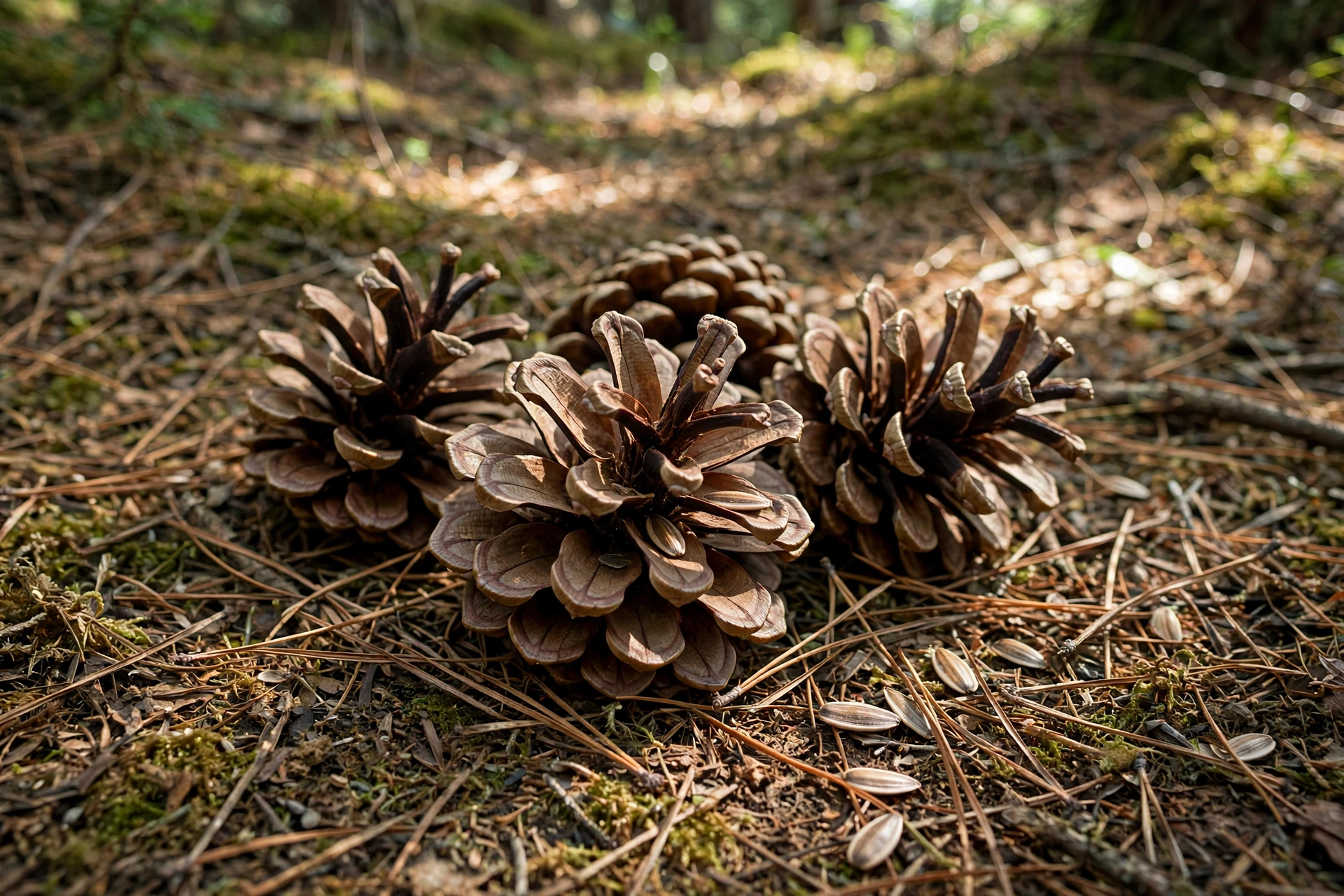
Pine nuts are the edible seeds of certain pine species. The main commercial sources are the stone pine (Pinus pinea) in the Mediterranean, the Korean pine (Pinus koraiensis) in East Asia, and the Chilgoza pine (Pinus gerardiana) in the Himalayas, with smaller supplies from pinyon pines in the American Southwest.
Harvesting is slow, manual work, and that is a big reason pine nuts cost so much. Cones are collected by hand, dried in the sun until the scales open, and the seeds are cracked out of their hard shells. A single tree can take 15 to 25 years to start producing cones at commercial levels, and good harvests are irregular, so supply is always limited.
Pine Nuts Nutrition Facts
For their size, pine nuts are remarkably nutrient-dense. One ounce (28 grams, about 167 kernels) provides:
| Nutrient | Per 1 oz (28 g) | Why it matters |
|---|---|---|
| Calories | 191 | Energy-dense, so portions matter |
| Total fat | 19.4 g | Mostly heart-healthy unsaturated fats |
| Protein | 3.9 g | More than most other tree nuts per calorie |
| Carbohydrates | 3.7 g | Low carb, modest fiber (1.1 g) |
| Vitamin K | ~15.3 mcg (about 13% DV) | Blood clotting and bone support |
| Vitamin E | ~2.7 mg (about 18% DV) | Antioxidant protection for cells |
| Magnesium | ~71 mg (about 17% DV) | Muscle, nerve, and blood sugar function |
| Zinc | ~1.8 mg (about 16% DV) | Immune support and wound healing |
| Iron | ~1.6 mg (about 9% DV) | Oxygen transport in the blood |
| Phosphorus | ~163 mg (about 13% DV) | Bone and teeth strength |
The fat profile is the standout feature: around 60 to 65 percent of pine nut fat is polyunsaturated (mainly linoleic acid), with most of the rest monounsaturated (oleic acid, the same fat that makes olive oil famous). If you want to compare the mineral punch of another heavyweight nut, see our guide to brazil nuts benefits, famous for their selenium content.
Pine Nuts Benefits: What the Evidence Suggests
Pine nuts have not been studied in as many large trials as almonds or walnuts, so honest framing matters: most evidence comes from their nutrient profile and from research on tree nuts and unsaturated fats generally, plus a smaller set of studies specific to pine nut compounds.
Heart Health
The strongest case for pine nuts is their fat profile. Replacing saturated fats with the unsaturated fats found in tree nuts is consistently linked to healthier cholesterol levels and lower cardiovascular risk in large observational studies. Pine nuts deliver mostly polyunsaturated and monounsaturated fats, plus vitamin E and magnesium, all of which support normal blood pressure and arterial function.
Blood Sugar Support
With under 4 grams of carbs per ounce, plenty of fat, and meaningful magnesium, pine nuts have a gentle effect on blood sugar. Magnesium plays a role in insulin signaling, and magnesium-rich diets are linked to better glucose control in observational studies.
Appetite Control and Weight
Pine nuts contain pinolenic acid, which has been studied for its effect on appetite hormones. In a small human trial, pinolenic acid from pine nut oil stimulated the release of cholecystokinin (CCK) and GLP-1, hormones that signal fullness, and participants reported reduced desire to eat. This is early, small-scale evidence, not proof of fat loss. But the combination of protein, fat, and fiber in a small handful does make them a satisfying snack.
Bone and Mineral Support
Pine nuts are a strong plant source of magnesium, zinc, phosphorus, and vitamin K. Magnesium and phosphorus are core building blocks of bone, vitamin K helps direct calcium to bones, and zinc supports immune function and tissue repair.
Antioxidant Protection
Vitamin E and a range of polyphenols in pine nuts help neutralize free radicals, the unstable molecules involved in cell aging. Like other tree nuts, they support a healthy fat balance that researchers associate with lower markers of oxidative stress. For a broader look at antioxidant-rich foods, our article on cranberry juice benefits covers another pantry staple with strong antioxidant credentials.
Pine Mouth Syndrome: The Honest Downside
No honest guide to pine nuts should skip this. Some people develop a bitter, metallic taste 12 to 48 hours after eating pine nuts, a phenomenon nicknamed “pine mouth.” Food flavors taste off, especially anything sweet, and the sensation can last from a few days to a couple of weeks.
The good news: it is considered harmless and always resolves on its own, with no lasting effects reported in the medical literature. The likely culprit is specific pine species, particularly certain inexpensive Chinese varieties (Pinus armandii), which are sometimes mixed into bulk supplies.
Practical takeaway: buy pine nuts from a reputable seller with clear country-of-origin labeling (Mediterranean, Korean, or Italian sources have the best track record), and if you have ever experienced pine mouth, stick to brands you trust.
Culinary Uses of Pine Nuts
Pine nuts have a soft, buttery texture and a sweet, resinous flavor that turns rich and toasty when heated. Classic uses include:
- Pesto: the defining ingredient of Genovese pesto, blended with basil, garlic, Parmesan, and olive oil
- Salads and grain bowls: a small toasted handful adds crunch and richness without overpowering
- Baking: Italian pignoli cookies are essentially pine nuts held together by almond dough
- Middle Eastern and Mediterranean dishes: sprinkled over hummus, rice pilafs, and roasted vegetables
- Sauces and stuffings: ground into romesco-style sauces or mixed into meat and vegetable stuffings
- Desserts: folded into ice cream, shortbread, and honey-based pastries
Toast them lightly in a dry skillet for 2 to 3 minutes, shaking often, because they burn fast. Their high fat content means the flavor deepens dramatically with just a little heat. If you enjoy plant-based oils with culinary and wellness uses, our piece on black seed oil benefits explores another one worth knowing about.
How to Store Pine Nuts (They Go Rancid Fast)
Pine nuts are about 68 percent fat by weight, most of it polyunsaturated, which means they oxidize faster than almost any other nut. Rancid pine nuts taste bitter or soapy and will ruin a dish, so storage matters:
- Short term: keep them in an airtight container in a cool, dark pantry for up to 1 month
- Best practice: refrigerate in a sealed bag or jar for up to 3 to 6 months
- Long term: freeze in a freezer bag with the air pressed out for up to 9 to 12 months; they thaw in minutes and can go straight into a hot pan
- Always sniff first: fresh pine nuts smell sweet and buttery; any sharp, chemical, or crayon-like odor means they have turned
Buy in quantities you will actually use within a few months, and prefer vacuum-sealed or opaque packaging, since light and air speed up rancidity.
How to Choose Quality Pine Nuts
| What to check | Green flags | Red flags |
|---|---|---|
| Color and appearance | Uniform pale ivory to light gold, plump, similar sizes | Dark spots, shriveled kernels, lots of broken pieces |
| Smell | Mildly sweet, buttery, resinous | Sour, chemical, or paint-like odor |
| Origin labeling | Clear country of origin (Italy, Spain, Turkey, Korea, Portugal) | No origin listed, or vague “packed in” without source |
| Packaging | Sealed, dated, opaque or vacuum-packed | Open bulk bins with no turnover date, clear bags in bright light |
| Price | In line with market rates (they are genuinely expensive) | Dramatically cheaper than competitors, which suggests low-grade blends |
European (Mediterranean) pine nuts are generally considered the gold standard for flavor. Korean varieties are also well regarded. Whatever you choose, store them cold from day one.
Related Articles
- Brazil Nuts Benefits: Nutrition, Selenium, and How Many Per Day
- Black Seed Oil Benefits: Uses, Dosage, and Side Effects
- Cranberry Juice Benefits: What the Science Says
Frequently Asked Questions
Is a pine kernel the same as a pine nut?
Yes. A pine kernel is the shelled edible seed inside a pine cone, and “pine nut” is the common name for that same seed. If a recipe says pine nuts and a store sells pine kernels, buy them interchangeably.
How many pine nuts should you eat per day?
A typical serving is 1 ounce (28 grams, about 160 kernels). Because they are calorie-dense at around 191 calories per ounce, that amount gives you the nutrients and appetite benefits without overshooting your energy intake.
What does pine mouth taste like and how long does it last?
It is a bitter, metallic taste that affects everything you eat, starting 12 to 48 hours after eating the offending nuts. It is harmless and resolves on its own, usually within a few days and occasionally up to two weeks. Buying from reputable, origin-labeled brands reduces the risk.
Can you eat pine nuts raw?
Yes, shelled pine nuts are safe to eat raw and have a soft, buttery flavor. Light toasting deepens the flavor considerably, but watch them closely: their high fat content means they go from golden to burnt in under a minute.
Are pine nuts good for weight loss?
They can be a helpful part of a weight-management plan, not a weight-loss food on their own. Their protein, fat, and fiber make a small handful satisfying, and early research on pinolenic acid suggests an appetite-dampening effect. Portion control is essential, since the calories add up quickly.
Why are pine nuts so expensive?
The right pine species take 15 to 25 years to produce cones, cones are harvested by hand, extraction is labor-intensive, harvests are irregular, and demand keeps outpacing supply. Cheap pine nuts are usually a warning sign of low-grade or mixed species.
Conclusion
Pine kernels and pine nuts are one and the same: the shelled edible seeds of certain pine trees. They earn their premium price with a genuinely impressive nutrition profile, mostly unsaturated fats, useful protein, and standout levels of magnesium, zinc, vitamin E, and vitamin K, plus early evidence for appetite and blood sugar benefits. The only real caveat is pine mouth, an odd but harmless and temporary bitter taste tied to low-grade species, which smart buying largely avoids.
For more honest, evidence-based food and wellness guides, explore DigitalGeekSpot.
Disclaimer: This article is for informational purposes only and is not medical advice; consult a qualified healthcare professional about dietary changes, especially if you have a nut allergy or a medical condition.