

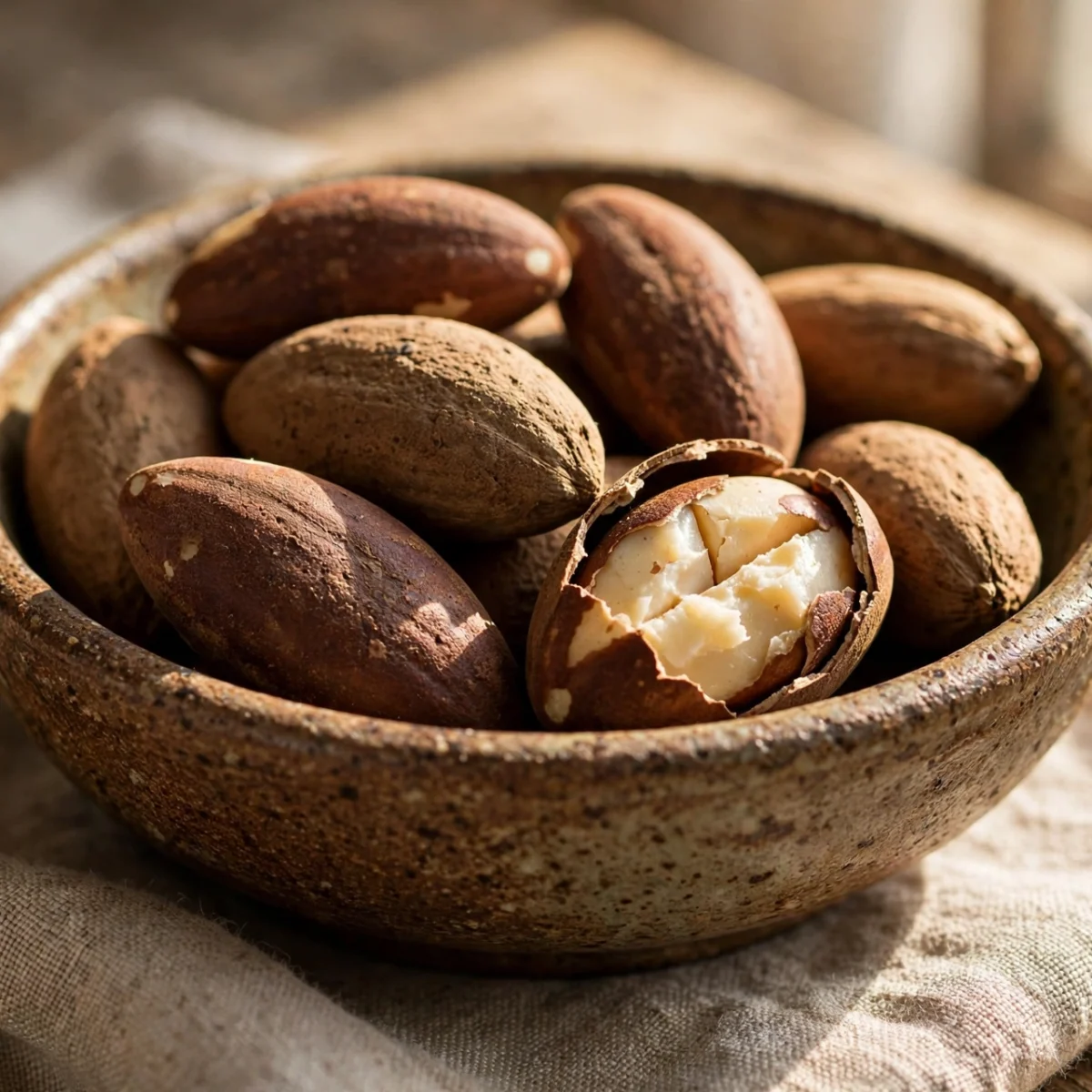
Quick answer: Brazil nuts are large Amazon tree nuts that contain more selenium per bite than any other food. A single nut can meet or exceed your daily selenium needs, which supports thyroid function, antioxidant defenses, and heart health. The catch: 1 to 2 nuts a day is enough, and regularly eating more can cause selenium toxicity (selenosis), with symptoms like hair loss, brittle nails, and digestive upset. Below is an honest, evidence-based breakdown of Brazil nuts benefits and nutrition.
What Are Brazil Nuts?
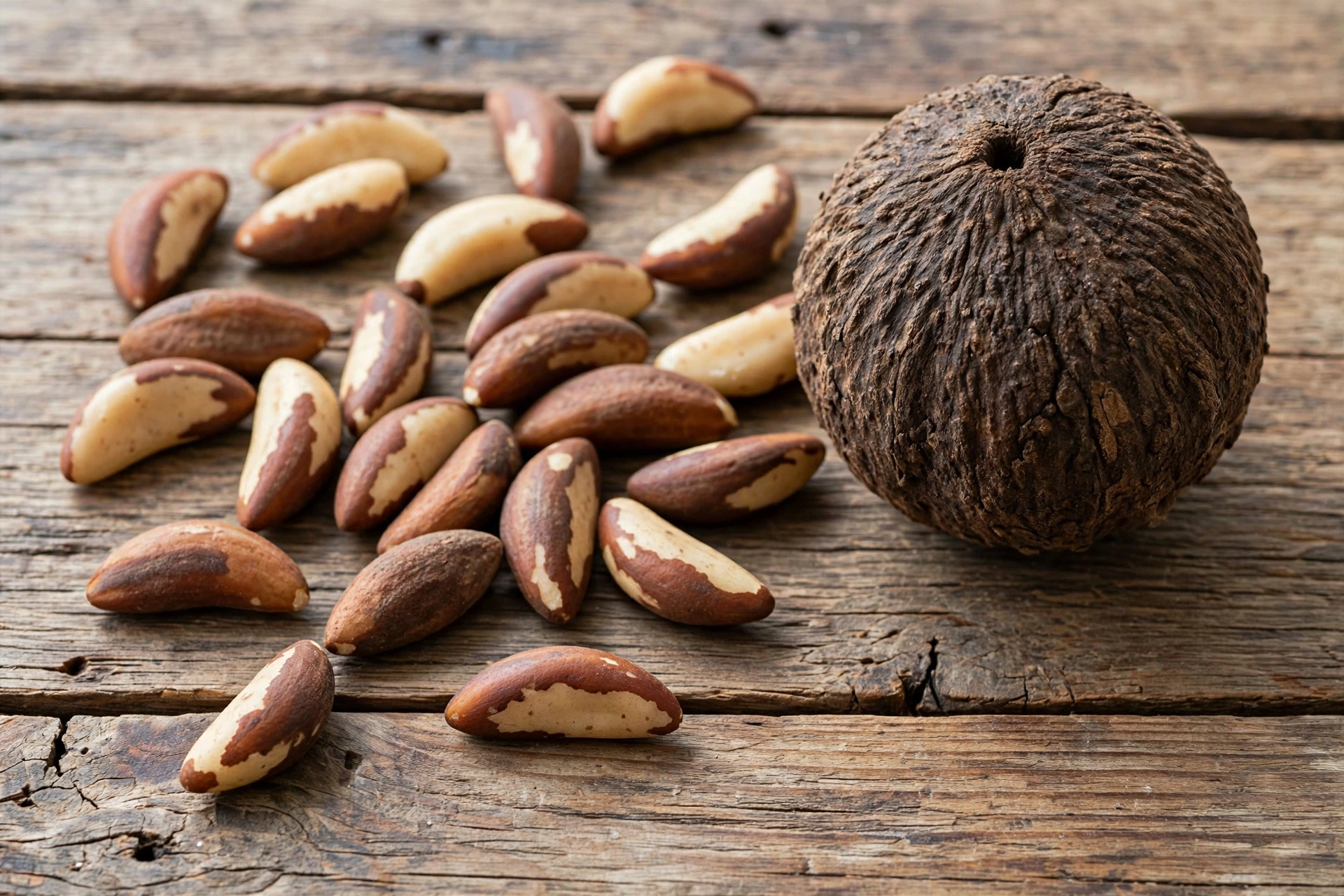
Brazil nuts are the seeds of the Brazil nut tree (Bertholletia excelsa), a giant canopy tree native to the Amazon rainforest in Brazil, Bolivia, and Peru. They are one of the few nuts still harvested mostly from wild trees, because the tree depends on a specific orchid bee for pollination and cannot be farmed easily. Each nut grows inside a large, woody pod holding 10 to 25 triangular, cream-colored kernels, noticeably larger than an almond or cashew, with a rich, buttery flavor.
Brazil Nuts Nutrition Facts
Per 1-ounce serving (28 grams, roughly 6 kernels), based on USDA data:
| Nutrient | Per 1 oz (28 g) | % Daily Value |
|---|---|---|
| Calories | 187 | 9% |
| Total fat | 19 g | 24% |
| Protein | 4 g | 8% |
| Carbohydrates | 3.5 g | 1% |
| Fiber | 2.1 g | 8% |
| Magnesium | 107 mg | 25% |
| Copper | 0.5 mg | 56% |
| Phosphorus | 206 mg | 16% |
| Zinc | 1.2 mg | 11% |
| Vitamin E | 1.6 mg | 11% |
| Selenium | ~544 mcg (varies widely) | ~990% |
The standout row is selenium. An ounce can deliver nearly 10 times the adult daily value of 55 mcg, but that figure is an average: individual nuts range from under 50 mcg to over 500 mcg depending on soil. That variability is exactly why portion control matters more with this nut than any other.
The Selenium Story: Why One Nut Can Be Enough
Selenium is an essential trace mineral needed for thyroid hormone metabolism, antioxidant enzymes (like glutathione peroxidase), and immune function. Deficiency is uncommon in varied diets, but suboptimal intake is widespread in regions with selenium-poor soil, including parts of Europe and China.
Brazil nuts are the most concentrated food source of selenium on the planet. One nut typically provides 68 to 91 mcg, already above the 55 mcg daily value, and nuts from selenium-rich soils can carry several hundred micrograms each. The tolerable upper intake level is 400 mcg per day, so a small handful of high-selenium nuts can overshoot that limit.
This is what makes Brazil nuts unique: a legitimate selenium supplement in nut form. But selenium has one of the narrowest gaps between “enough” and “too much” of any nutrient.
Potential Health Benefits: What the Research Suggests
Most Brazil nut research is small or short-term, so treat big claims cautiously. Here is where the evidence currently stands.
Thyroid Support
The thyroid holds more selenium per gram than almost any other organ. Selenium-dependent enzymes convert the thyroid hormone T4 into its active form T3 and protect the gland from oxidative damage. Small trials in people with low selenium status found that one or two Brazil nuts daily raises blood selenium and antioxidant enzyme activity. Some studies of autoimmune thyroid conditions suggest selenium may modestly lower antibody levels, though results are mixed. A daily Brazil nut is a reasonable food-based way to support thyroid function if your intake is low; it is not a substitute for thyroid medication.
Heart Health
Brazil nuts may support cardiovascular health through several routes: selenium powers antioxidant enzymes that help protect LDL cholesterol from oxidation, and the nuts provide magnesium and heart-friendly unsaturated fats. Small trials have reported improved cholesterol markers after several weeks, but they are short, so keep expectations modest. For a broader look at antioxidant-rich foods, see our guide to cranberry juice benefits.
Brain Health and Antioxidant Defense
Oxidative stress is implicated in cognitive decline, and selenium-dependent enzymes are central to the body’s antioxidant defense. One small trial in older adults with mild cognitive impairment found that one Brazil nut a day for six months improved verbal fluency, linked to rising selenium levels. Promising but preliminary: it does not mean Brazil nuts prevent dementia, only that adequate selenium supports the antioxidant systems your brain depends on.
Testosterone and Men’s Health
Here is where honesty matters most. Brazil nuts are marketed as a natural testosterone booster because selenium is involved in male reproductive biology, and severe deficiency can impair sperm development. But there is no solid human evidence that Brazil nuts raise testosterone in men who already get enough selenium. Correcting a deficiency may support reproductive health; beyond that, extra nuts are unlikely to move testosterone. Our guide to black seed oil benefits covers another frequently discussed natural option with the same honest framing, and a doctor’s evaluation beats any food-based guesswork.
How Many Brazil Nuts Per Day?
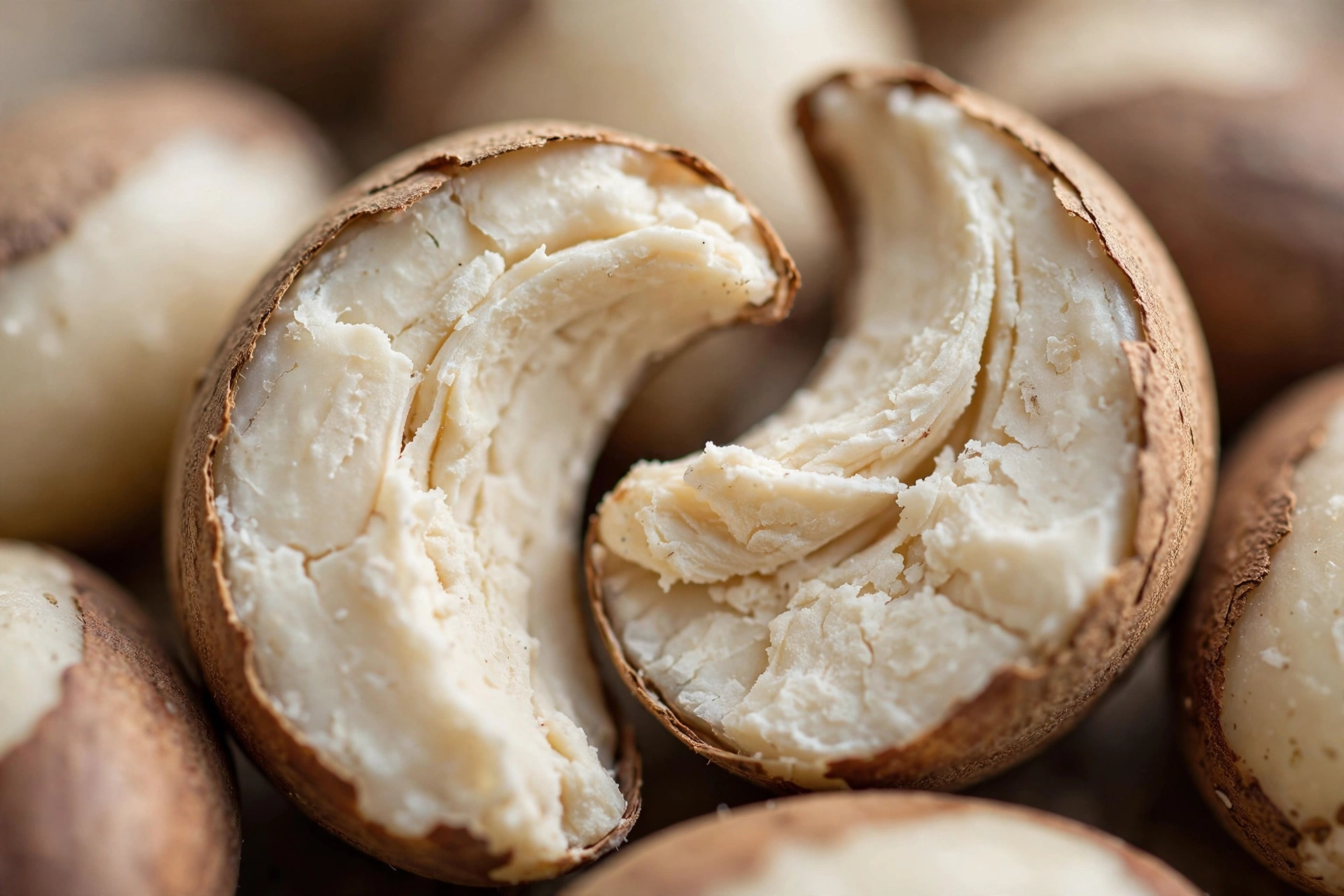
The safe answer is 1 to 2 Brazil nuts per day. One nut typically covers your daily selenium; two is a comfortable ceiling.
| Daily amount | Typical selenium range | Verdict |
|---|---|---|
| 1 nut | ~70 to 250 mcg | Ideal for most people |
| 2 nuts | ~140 to 500 mcg | Fine, but can approach the upper limit with high-selenium nuts |
| 4 or more daily | 300 to 2,000+ mcg | Risky as a habit: regularly exceeds the 400 mcg upper limit |
Practical tips for staying in the safe zone:
- Do not eat them by the handful. This is the one nut where a snack-size portion can genuinely be too much. Treat them like a supplement, not a snack.
- Watch mixed nuts. Trail mixes often include Brazil nuts, and the selenium adds up invisibly on top of your daily nut.
- Count your total. If you take a multivitamin with selenium (often 55 to 200 mcg), one Brazil nut on top could push you over the limit.
- Children and pregnancy: one nut is plenty for a child; skip daily use without a pediatrician’s guidance. Pregnant people have slightly higher needs but the same 400 mcg upper limit, so the 1-nut rule applies strictly.
Selenium Toxicity: Signs You’re Eating Too Many
Chronic overconsumption of selenium causes selenosis, and Brazil nuts are one of the most common food-based routes to it. The excess accumulates over weeks, so early signs are easy to miss:
- Hair loss: diffuse shedding or thinning, sometimes the first noticeable sign
- Brittle, discolored, or ridged nails: fingernails and toenails may weaken or develop white streaks
- Digestive upset: nausea, diarrhea, or abdominal discomfort after eating them
- Garlic-like breath odor: a distinctive metallic or garlicky smell, a classic selenium-excess marker
The good news: selenosis from food is reversible, with symptoms typically fading within weeks to a few months of cutting back. If you have been eating several Brazil nuts a day for weeks and notice hair shedding or nail changes, stop the nuts, check any selenium-containing supplements, and see a doctor if symptoms persist.
Side Effects and Who Should Be Careful
- Tree nut allergy: Brazil nuts can trigger serious allergic reactions, including anaphylaxis, in nut-allergic people.
- Calorie density: at nearly 190 calories per ounce, they add up fast. Fine at 1 to 2 nuts; problematic if you treat them like almonds.
- Trace radium: Brazil nut trees absorb naturally occurring radium from Amazonian soil. Levels are far below any health concern at normal intake, but it is one more reason not to eat them in bulk.
- Medication interactions: high selenium doses can interact with certain medications, including some sedatives and blood thinners. Tell your doctor or pharmacist about your Brazil nut habit if you take prescription drugs.
- Kidney disease: people with impaired kidney function may not clear excess minerals efficiently and should get medical advice before adding a high-selenium food daily.
Brazil Nuts vs Other Nuts: Comparison
Per 1-ounce (28 g) serving:
| Nutrient (per oz) | Brazil nuts | Almonds | Walnuts |
|---|---|---|---|
| Calories | 187 | 164 | 185 |
| Protein | 4.0 g | 6.0 g | 4.3 g |
| Fiber | 2.1 g | 3.5 g | 1.9 g |
| Selenium | ~990% DV | ~1% DV | ~2% DV |
| Magnesium | 25% DV | 19% DV | 11% DV |
| Vitamin E | 11% DV | 48% DV | 2% DV |
| Omega-3 (ALA) | Trace | Trace | ~2.6 g |
| Best for | Selenium, magnesium | Vitamin E, protein | Omega-3 fats |
No single nut wins everything. Brazil nuts dominate selenium and magnesium, almonds lead in vitamin E and protein, and walnuts are the clear choice for plant-based omega-3s. Use Brazil nuts as your daily selenium source (just one or two), and rotate almonds or walnuts for other nutrients. If you enjoy exploring nutrient-dense seeds too, our guide to pine kernels and pine nuts covers another underrated option.
How to Choose and Store Brazil Nuts
Brazil nuts are high in unsaturated fats, so they go rancid faster than drier nuts. Keep shelled kernels airtight in the fridge or freezer, and buy fresh:
- Buy whole, unshelled nuts when you can. The shell protects the kernel from air and light, and unshelled nuts stay fresh for months.
- Check the smell. Fresh Brazil nuts smell mildly nutty and sweet. A paint-like or sharp chemical smell means rancid oils; throw them out.
- Refrigerate shelled nuts. Shelled kernels keep about 3 months airtight in the fridge and up to a year in the freezer. At room temperature, use them within a few weeks.
- Prefer raw or dry-roasted. Raw preserves the most nutrients, but dry-roasted is fine. Skip heavily salted or flavored versions.
Related Articles
- Cranberry Juice Benefits: Is Cranberry Juice Good for You?
- Black Seed Oil Benefits: What the Science Says
- Pine Kernels and Pine Nuts: Nutrition and Benefits
Frequently Asked Questions
Can I eat Brazil nuts every day?
Yes, but limit it to 1 to 2 nuts per day. One daily nut safely covers your selenium needs. A handful daily risks selenium toxicity over time, since the 400 mcg upper limit is easy to exceed with high-selenium nuts.
What happens if you eat too many Brazil nuts?
Eating more than a few per day regularly can cause selenosis (selenium toxicity): hair loss, brittle or discolored nails, nausea, digestive upset, fatigue, and garlic-like breath odor. It is reversible, with symptoms usually fading within weeks to months after cutting back.
Do Brazil nuts really boost testosterone?
No solid human evidence shows they raise testosterone in men with adequate selenium. Selenium is genuinely needed for sperm development, so correcting a deficiency may support reproductive health, but “testosterone booster” marketing goes far beyond what studies show.
Are Brazil nuts good for your thyroid?
They can be, because the thyroid relies on selenium to activate hormones and defend against oxidative damage. One nut a day is a reasonable food-based way to support thyroid function if your intake is low. It does not replace thyroid medication or medical care.
How many Brazil nuts equal 200 mcg of selenium?
Roughly 1 to 3 nuts, but no exact answer exists because selenium varies by soil, from under 50 mcg to over 500 mcg per nut. That variability is why guidance sticks to a simple rule, 1 to 2 nuts a day, instead of a precise microgram target.
Should you refrigerate Brazil nuts?
Yes, if they are shelled. Their high unsaturated fat content makes them prone to rancidity. Store shelled kernels airtight in the fridge (about 3 months) or freezer (up to a year). Unshelled nuts keep for months at cool room temperature.
Conclusion
So, what are Brazil nuts benefits in plain terms? They are the most efficient food source of selenium you can buy, and 1 to 2 nuts a day can support thyroid function, antioxidant defenses, heart health, and overall mineral status with minimal effort. But they are also the one nut where more is definitively worse: chronic overeating leads to selenosis, with hair loss and nail damage as the classic warning signs. Treat them like a daily supplement rather than a snack, and you get one of the best nutritional bargains in the nut aisle.
For more honest health and wellness explainers like this one, explore DigitalGeekSpot and browse the related articles above.
Disclaimer: This article is for informational purposes only and is not medical advice; consult a qualified healthcare professional before changing your diet or supplement routine.



1 Comment