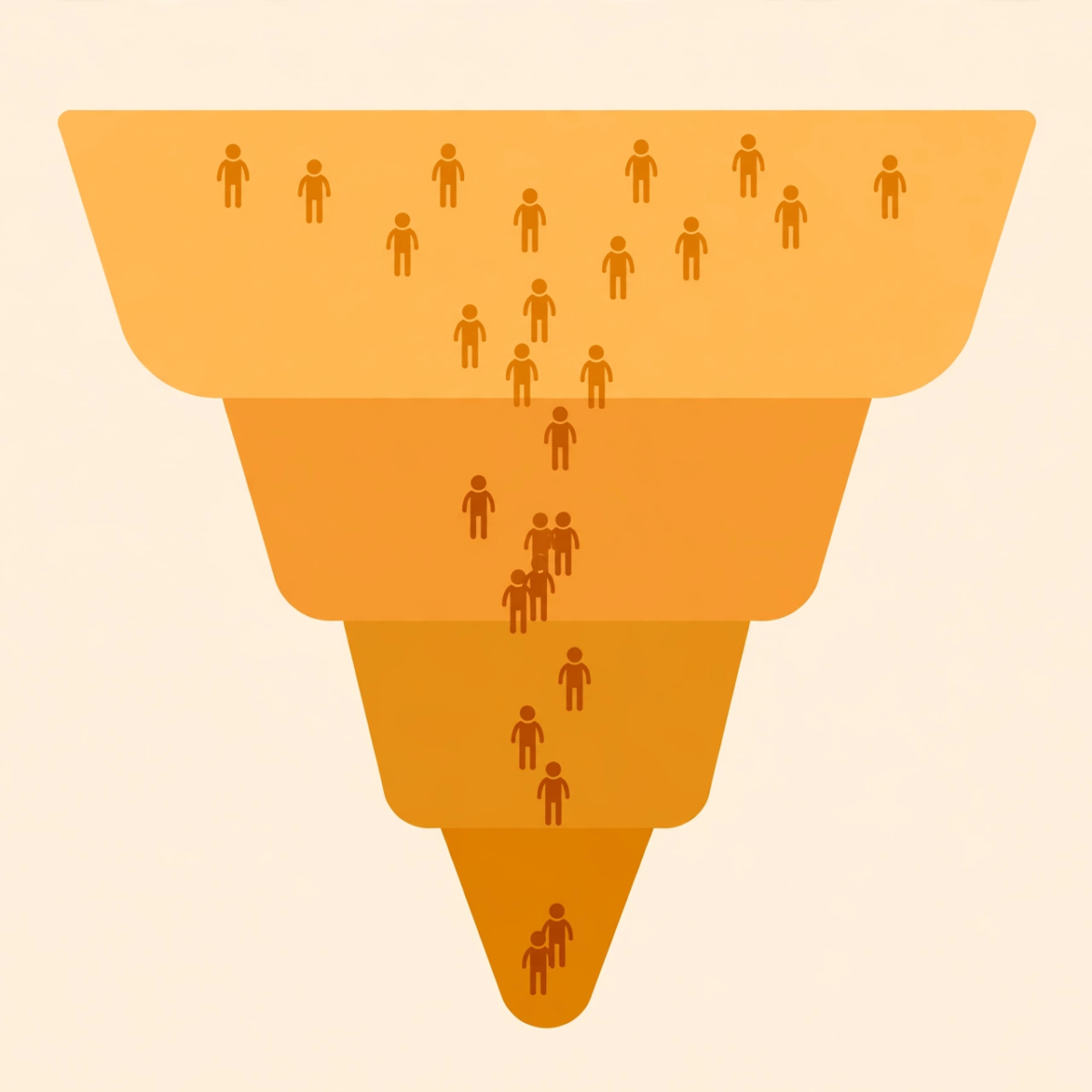
If you have ever wondered what is a sales funnel and why every marketing book talks about it, here is the simple answer: a sales funnel is the journey a person takes from first discovering your business to becoming a paying customer. It is called a funnel because many people enter at the top, but only a portion make it through each stage to a purchase. Understanding this journey helps small businesses turn casual visitors into loyal buyers, instead of hoping sales happen by accident.
What Is a Sales Funnel? A Simple Definition
A sales funnel is a model of the buying process, broken into stages. At the wide top, you have everyone who becomes aware of your business. As people move down, they show interest, consider your offer, and finally take action by buying. At each stage, some people drop off, which is completely normal.
The funnel matters because different stages need different messages. Someone who just discovered your bakery does not need a discount code yet; they need a reason to remember you. Someone comparing your prices with a competitor needs reassurance and proof. When you match your message to the stage, more people keep moving down instead of disappearing.
The 4 Stages of a Sales Funnel Explained
Most small business funnels use four classic stages, often remembered with the acronym AIDA: Awareness, Interest, Decision, Action. Here is what each one means in plain language.
Stage 1: Awareness (Top of Funnel)
At this stage, people realize they have a problem or desire, and your business appears as a possible answer. A homeowner notices a leaky faucet and searches for plumbers. A busy parent looks for meal ideas and finds your food blog. They are not ready to buy; they are just discovering options.
Your job here is visibility and helpfulness. Blog posts, social media content, local search listings, and short videos all work well. The goal is simple: be present and be useful when the problem first appears.
Stage 2: Interest (Middle of Funnel)
Now the person is actively looking into solutions. They follow your page, read your reviews, download your guide, or browse your service pages. They know you exist and want to learn more.
Your job here is education and trust. Share detailed guides, before-and-after examples, customer stories, and answers to common questions. An email list is especially powerful at this stage, because it lets you stay in touch while the person is still deciding. Paid traffic can also feed this stage; this outline of Google Ads strategy for doctors shows how targeted ads move prospects from awareness toward interest.
Stage 3: Decision (Middle to Bottom of Funnel)
The prospect is now comparing options: you versus a competitor, or you versus doing nothing. They read pricing pages, check testimonials, and look for guarantees or special offers.
Your job here is reassurance. Make your offer crystal clear, show proof through reviews and case studies, and remove risk with guarantees, free consultations, or trial periods. Clear comparison pages and honest FAQs do heavy lifting at this stage.
Stage 4: Action (Bottom of Funnel)
This is the purchase, booking, or signup. The prospect becomes a customer. But the funnel does not truly end here: a great experience leads to repeat purchases, referrals, and reviews, which feed new people into the top of your funnel.
Your job here is a frictionless finish. Keep checkout or booking simple, confirm the order clearly, and follow up afterward with a thank-you and a request for feedback or a review.
A Simple Example Funnel a Local Business Can Copy
Let us make this concrete with a fictional example: a local dental clinic.
- Awareness: A resident searches “tooth pain remedy” and finds the clinic’s blog article about common causes of toothaches.
- Interest: At the end of the article, a free “New Patient Smile Guide” is offered in exchange for an email address. The reader downloads it.
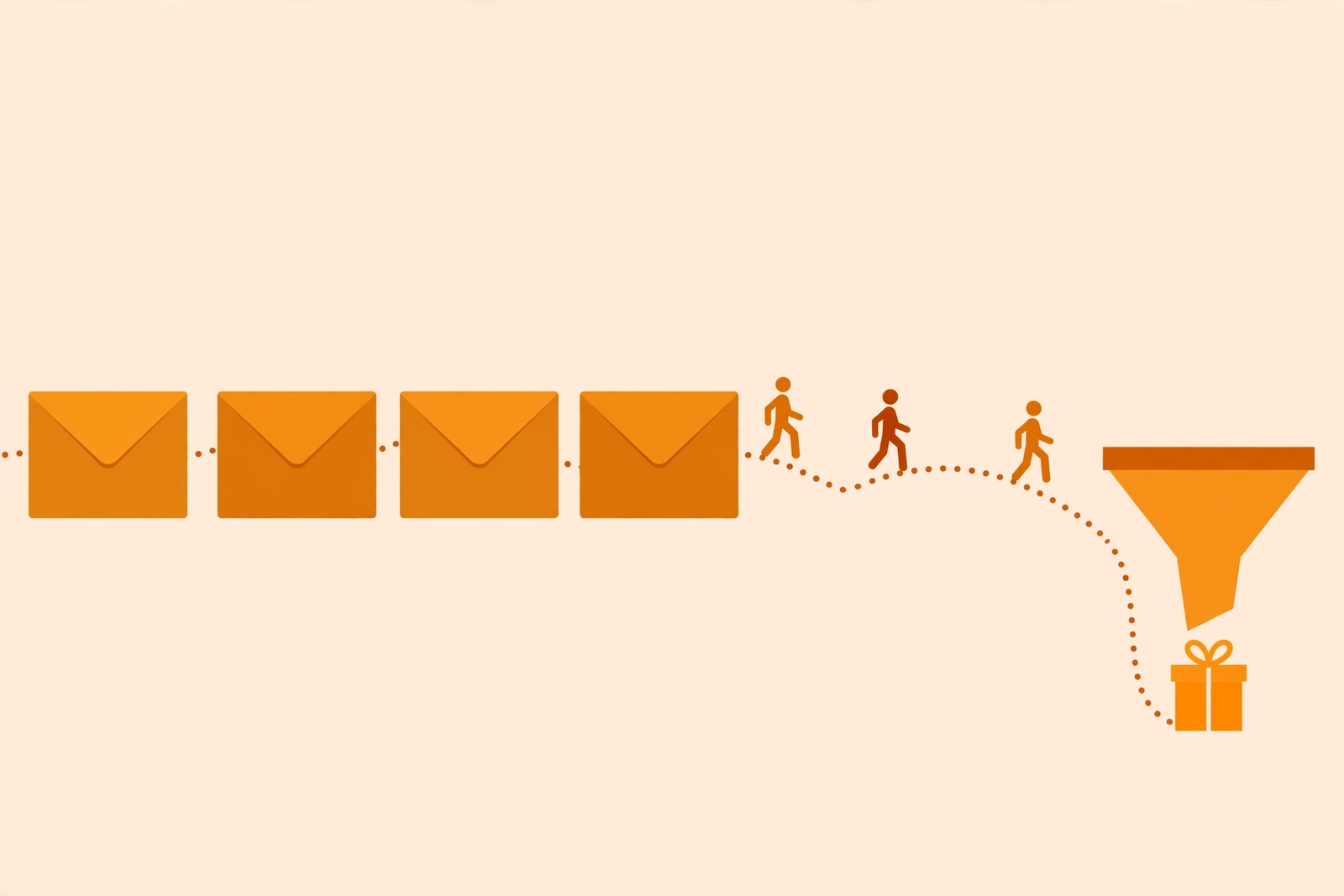
- Decision: Over the next two weeks, the clinic sends helpful emails: what to expect at a first visit, patient stories, and an offer of a discounted first checkup.
- Action: The reader books the discounted checkup online, visits the clinic, and becomes a regular patient.
- Beyond: After the visit, the clinic asks for a review and sends reminders for six-month checkups, turning one visit into years of repeat business.
Notice how each step hands the person naturally to the next. Nothing is pushy; the clinic simply shows up with the right help at the right time. Any small business, from a salon to a landscaping service to an online store, can map the same five steps onto its own customer journey.
Why Small Businesses Need a Sales Funnel
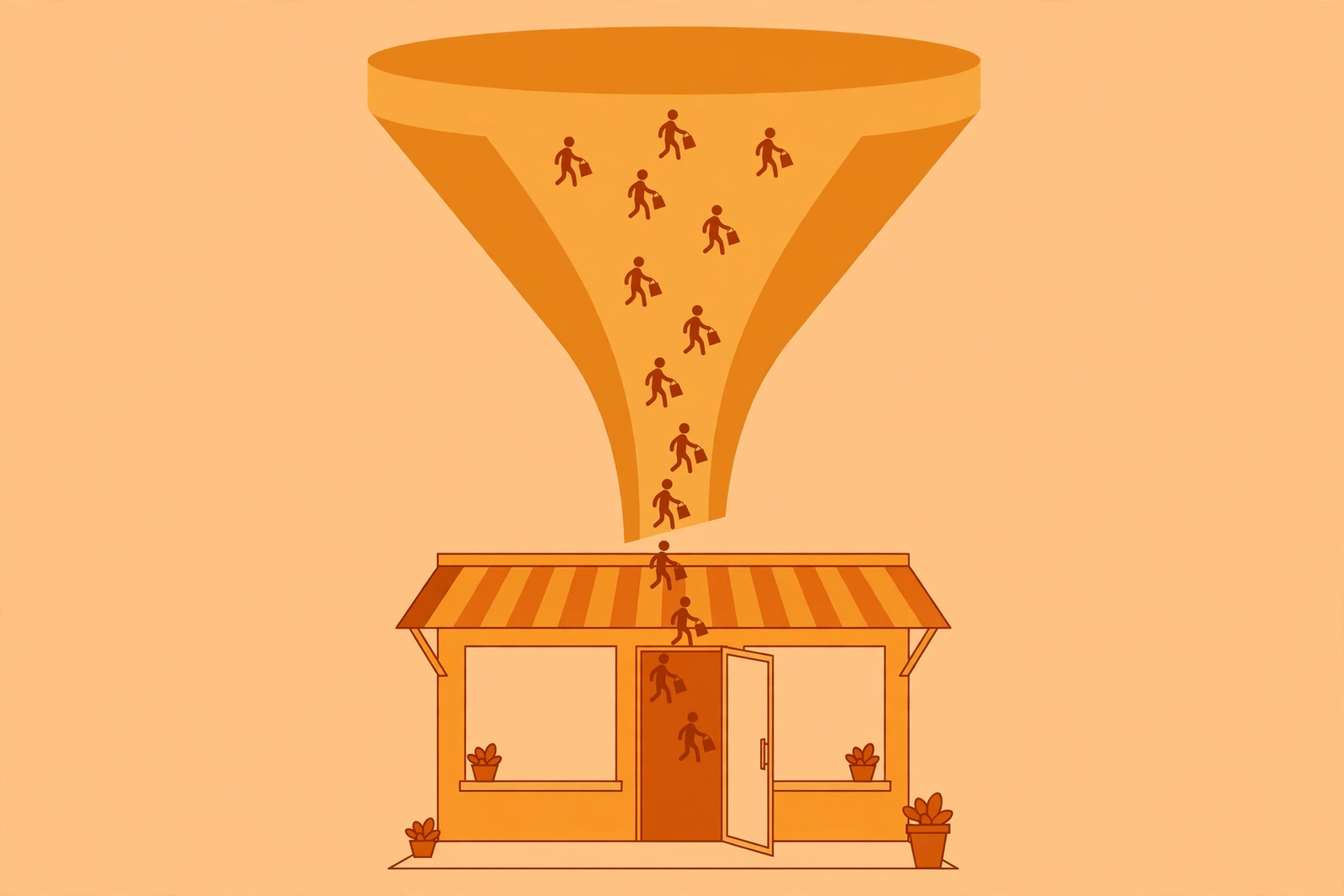
Many small businesses market without a funnel: they post randomly, run occasional ads, and hope for calls. A funnel brings structure to that effort. It shows you exactly where prospects are dropping off, so you can fix the real problem instead of guessing.
For example, if hundreds of people visit your pricing page but nobody books, the issue is at the decision stage, not awareness. You need stronger proof and clearer offers, not more traffic. Without a funnel view, you might waste money buying more ads when the leak is further down.
A funnel also protects you from platform changes. When you move interested prospects onto your email list, you own that relationship. If an ad account gets restricted or an algorithm shifts, your funnel keeps working. For broader growth strategy, many owners also study how agencies structure campaigns; this look at the SEO agency Interamplify offers useful perspective on how professionals plan visibility across funnel stages.
How to Build Your First Sales Funnel in 5 Steps
You do not need expensive software to build a working funnel. Start simple:
- Map your customer journey: Write down how your last ten customers found you and what convinced them to buy. That is your funnel, roughly sketched.
- Create one entry point: Pick a single way people enter the top, such as a helpful blog post, a short video, or a local listing, and make it excellent.
- Offer a reason to stay connected: Add an email signup with a small freebie, a booking link, or a free consultation so interested visitors do not vanish.
- Plan your follow-up: Write three to five short follow-up emails or messages: helpful content first, your offer later. Automation tools can send these for you.
- Make buying easy: Simplify your booking, checkout, or contact process until a stranger could complete it in under two minutes.
Running a funnel also takes consistent management. As orders and inquiries grow, these practical management tips can help you keep operations smooth while your funnel brings in more work. Find more small business guides on the DigitalGeekSpot homepage.
Common Sales Funnel Mistakes to Avoid
- Skipping straight to the sale: Asking for the purchase before building trust burns through prospects. Meet people at their current stage.
- No follow-up system: Most sales need multiple touches. If you never follow up, you lose the majority of interested prospects.
- Too many steps: Every extra click or form field loses people. Keep the path from interest to action as short as possible.
- Ignoring existing customers: Repeat buyers and referrals are the cheapest growth. Build post-purchase emails into your funnel.
- Never measuring: Track how many people move through each stage. Even rough numbers reveal where your funnel leaks.
Frequently Asked Questions
What is a sales funnel in simple terms?
A sales funnel is the step-by-step path a customer follows from first hearing about your business to making a purchase. It usually has four stages: awareness, interest, decision, and action. Visualizing it helps you see where potential customers drop off and fix those weak points.
Do small businesses really need a sales funnel?
Yes. Even a simple one, like a helpful blog post leading to an email signup leading to a booking page, makes marketing far more effective. It turns random effort into a repeatable system for winning customers.
How much does it cost to build a sales funnel?
A basic funnel can cost nothing beyond your time: a free email tool, a simple landing page, and content you create yourself. Paid options like funnel software or ads can speed things up, but they are optional when you are starting out.
What is the difference between a sales funnel and a marketing funnel?
The terms overlap heavily. Generally, a marketing funnel covers the wider journey from awareness through interest, while a sales funnel focuses more on the decision and action stages where revenue happens. For small businesses, one simple funnel covering all stages is usually enough.
How do I know if my sales funnel is working?
Watch the conversion rate between stages: what share of visitors become leads, what share of leads become buyers. If one stage loses far more people than the others, that is where to improve your message, offer, or process.
Can a sales funnel work without paid ads?
Absolutely. Organic content, local SEO, social media, referrals, and email can fill every stage of a funnel. Paid ads simply add speed and volume once your funnel already converts.