Optimizing Operational Efficiency
Your business growth depends heavily on how well you eliminate bottlenecks and reduce wasted resources. guide/” title=”What Is Haxillzojid54? complete-info-guide/” title=”What Is Haxillzojid54? Complete Info Guide” target=”_blank” rel=”noopener”>Complete Info Guide” target=”_blank” rel=”noopener”>Operational efficiency creates the foundation for sustainable expansion by maximizing output while minimizing costs. You’ll find that streamlined processes free up capital and time for strategic initiatives that drive revenue.
Streamlining Workflows for Scalability
Automated systems and standardized procedures allow your team to handle increased workload without proportional resource expansion. You should map current processes, identify redundancies, and implement solutions that scale with demand. Efficient workflows reduce errors and accelerate delivery times across all departments.
Leveraging Ftasiastock Analytical Tools for Performance Tracking
Ftasiastock’s analytical dashboard provides real-time insights into key performance indicators that matter most for your business. You can monitor metrics, identify trends, and make data-driven decisions quickly. The platform transforms raw data into actionable intelligence for continuous improvement.
Performance tracking through Ftasiastock gives you granular visibility into every aspect of your operations. You’ll access customizable reports that highlight productivity patterns, resource utilization, and profitability across different business units. The system’s predictive analytics help you anticipate challenges before they impact results, while benchmarking features let you compare performance against industry standards. You can set automated alerts for critical thresholds, ensuring you respond promptly to both opportunities and risks. This comprehensive monitoring capability enables you to refine strategies based on evidence rather than assumptions, creating a culture of accountability and continuous optimization throughout your organization.
Cultivating High-Performance Teams
Building exceptional teams requires strategic planning and consistent effort from your leadership. You need to identify top performers, create development pathways, and establish clear performance metrics that align with your business objectives. High-performance teams drive innovation and deliver measurable results when you invest in their growth and provide the resources they need to excel.
Talent Acquisition and Retention Strategies
Attracting skilled professionals demands competitive compensation packages and compelling company culture. You must streamline your hiring process, define role expectations clearly, and showcase growth opportunities to secure top candidates. Retention improves when you offer continuous learning, recognize achievements, and create meaningful career advancement paths.
Fostering a Culture of Accountability and Innovation
Accountability starts when you set transparent goals and establish ownership at every organizational level. Encourage your team members to take calculated risks and learn from failures without fear of punishment. Innovation thrives in environments where you value creative thinking and reward problem-solving initiatives.
Creating this environment means you must model accountability in your own leadership decisions and actions. Your team will mirror the behaviors you demonstrate, so transparency in your decision-making process sets the standard. Implement regular feedback sessions where employees can share ideas without hierarchical barriers limiting their input. Recognition programs that celebrate both successful outcomes and valuable learning experiences from failures will reinforce this culture. You should also allocate dedicated time and resources for experimental projects, allowing your team to explore new approaches. When accountability and innovation become embedded in daily operations, your organization develops the agility needed to adapt quickly to market changes and maintain competitive advantages in your industry.
Financial Stewardship and Resource Allocation
Your ability to manage financial resources determines whether your business thrives or merely survives. Strategic allocation requires you to balance immediate operational needs with long-term investment opportunities. Smart financial stewardship means making data-driven decisions that protect cash flow while funding growth initiatives that deliver measurable returns.
Budgeting for Sustainable Business Expansion
Creating a flexible budget framework allows you to scale operations without compromising financial stability. You must allocate resources across departments based on performance metrics and growth potential. Regular budget reviews help you identify cost inefficiencies and redirect funds toward high-impact areas that accelerate business expansion.
Monitoring Key Performance Indicators for ROI
Tracking the right metrics gives you clear visibility into which investments generate profitable returns. You should establish KPIs that align with your strategic objectives and review them monthly. Performance dashboards enable quick identification of underperforming assets, allowing you to reallocate resources effectively.
Your ROI monitoring system should include both financial and operational metrics that reveal the true health of your investments. Customer acquisition cost, lifetime value, profit margins, and revenue growth rate provide comprehensive insights into business performance. You need automated reporting tools that deliver real-time data, enabling swift course corrections when investments fail to meet projected returns. Benchmarking your KPIs against industry standards helps you understand competitive positioning and identify opportunities for improvement. Regular analysis of these indicators ensures you maintain accountability across all departments while optimizing resource allocation for maximum profitability.
Customer-Centric Development
Placing your customers at the heart of business development drives sustainable growth and competitive advantage. You need to align your product roadmap with actual customer needs rather than assumptions. This approach transforms how you design features, prioritize updates, and allocate resources. Your business thrives when customer satisfaction becomes the primary metric for success.
Enhancing Client Relationship Management
Building strong client relationships requires consistent communication and personalized engagement strategies. You should implement CRM systems that track customer interactions, preferences, and purchase history. Active listening to client concerns helps you anticipate needs before they become problems. Your retention rates improve dramatically when customers feel valued and understood.
Utilizing Market Feedback for Product Evolution
Market feedback serves as your compass for product development and refinement. You must establish systematic channels for collecting customer opinions through surveys, reviews, and direct conversations. Analyzing this data reveals patterns that guide your innovation strategy and feature prioritization.
Transforming customer insights into actionable product improvements requires a structured feedback loop within your organization. You should categorize feedback by urgency, frequency, and potential impact on user experience. Creating cross-functional teams that review customer data weekly ensures rapid response to emerging trends. Your development cycles become more efficient when engineers, marketers, and customer service teams collaborate on interpreting user needs. Testing new features with beta groups before full release minimizes risk and validates assumptions. Tracking metrics post-implementation confirms whether changes actually solve the problems customers identified. This iterative process keeps your offerings relevant in changing market conditions.
Risk Mitigation and Market Adaptability
Your business survival depends on anticipating threats before they materialize. Ftasiastock management requires constant market surveillance and proactive response mechanisms that protect your investments. You must establish early warning systems that detect shifts in consumer behavior, regulatory changes, and competitive movements. Building contingency plans for multiple scenarios ensures your organization remains resilient during unexpected downturns.
Identifying Potential Industry Disruptors
Emerging technologies and innovative business models can render traditional approaches obsolete overnight. You need to monitor startup ecosystems, patent filings, and venture capital trends within your sector. Conducting quarterly disruption assessments helps you spot threats from unconventional competitors who operate outside established industry boundaries.
Developing Agile Frameworks for Rapid Change
Your organization must adopt flexible structures that enable quick pivots when market conditions shift. Implementing sprint-based planning cycles and cross-functional teams allows you to test new strategies without committing excessive resources. Agile methodologies reduce decision-making bottlenecks and accelerate your response time to opportunities.
Creating an agile framework starts with breaking down your operations into modular components that can be reconfigured independently. You should establish clear communication channels that facilitate rapid information flow across departments. Empowering team leaders with decision-making authority eliminates bureaucratic delays that slow adaptation.
Regular retrospectives help your organization learn from both successes and failures, refining processes continuously. Your framework should include metrics that measure response speed, allowing you to track improvement over time. Training programs that develop versatile skill sets within your workforce prepare them for evolving role requirements as your business transforms.
Final Words
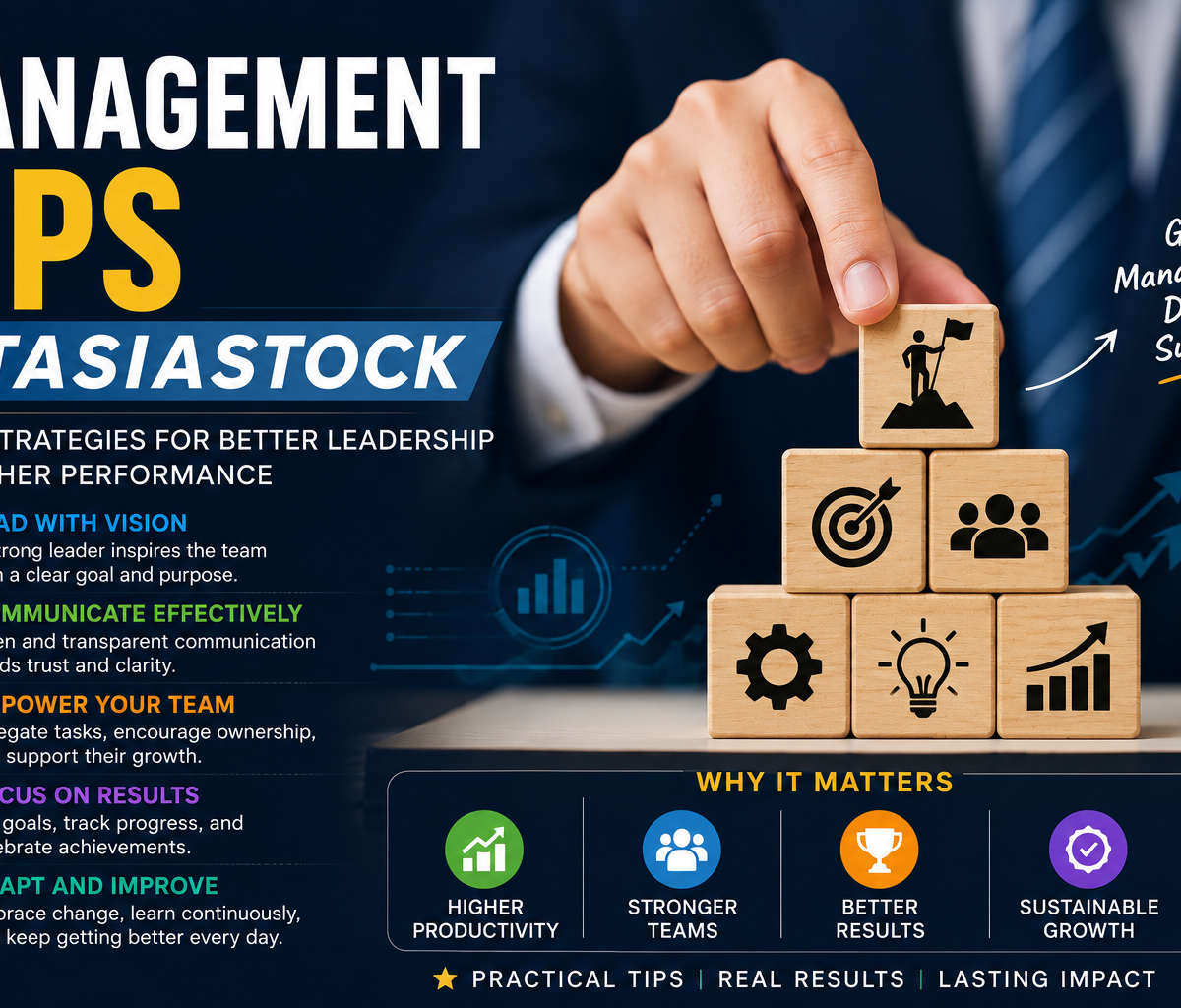
Implementing these top 10 management tips from Ftasiastock will transform your business operations and accelerate growth. You now have actionable strategies to optimize your workflow, strengthen team performance, and make data-driven decisions. Apply these methods consistently, and you’ll see measurable improvements in productivity and profitability. Your success depends on taking decisive action today to build a stronger, more competitive organization for tomorrow.