
Written by James Foster for Digital Geek Spot.
Brain fog is a group of symptoms that cloud clear thinking. Brain fog is not a diagnosis on its own. It is a signal that something underneath needs attention.
What causes brain fog and how to fix it? Brain fog is caused by poor sleep, chronic stress, dehydration, blood-sugar swings, nutrient gaps such as low vitamin B12, thyroid problems, hormonal shifts, medication side effects and conditions such as long COVID or depression. Fix brain fog by protecting 7 to 9 hours of sleep, drinking enough water, eating regular protein-rich meals, moving daily and cutting alcohol for 3 days. If fog lasts more than 2 weeks of steady fixes, ask a doctor for blood tests.
Key Takeaways
- Brain fog is a symptom cluster, not a disease, and most cases trace to 2 to 4 causes.
- Poor sleep is the most common cause, and 3 nights of 7 to 9 hour sleep is the fastest test.
- Dehydration, skipped meals and blood-sugar swings cause same-day fog that lifts within hours.
- Low vitamin B12, low iron, thyroid trouble and sleep apnea need blood tests.
- No supplement cures brain fog, and no drug treats it directly.
- Sudden confusion, slurred speech or face drooping is an emergency, not brain fog.
Table of Contents
- What Is Brain Fog?
- The 12 Most Common Causes
- Which Cause Is Behind It?
- Fix It in the First 72 Hours
- Fix It in 2 to 4 Weeks
- Supplements
- When to See a Doctor
- Brain Fog vs Normal Forgetfulness
- Frequently Asked Questions
- Conclusion
What Is Brain Fog?
Brain fog is a term for a group of cognitive symptoms that make clear thinking hard. Brain fog is not a medical diagnosis. Cleveland Clinic defines brain fog as a collection of symptoms that affect cognitive function, and notes that it can follow an illness, a medication side effect or an underlying condition.
The symptoms of brain fog include trouble concentrating, memory lapses, slow thinking, difficulty finding words and mental fatigue. Brain fog differs from dementia in 3 clear ways: brain fog is usually temporary and reversible, it does not steadily worsen over months, and it does not block daily tasks. Dementia is progressive, it worsens over time, and it limits daily function. A 2025 review reported that 28.2 percent of adults report it.
Digital Geek Spot covers practical health topics in its Health section.
What Causes Brain Fog? The 12 Most Common Causes
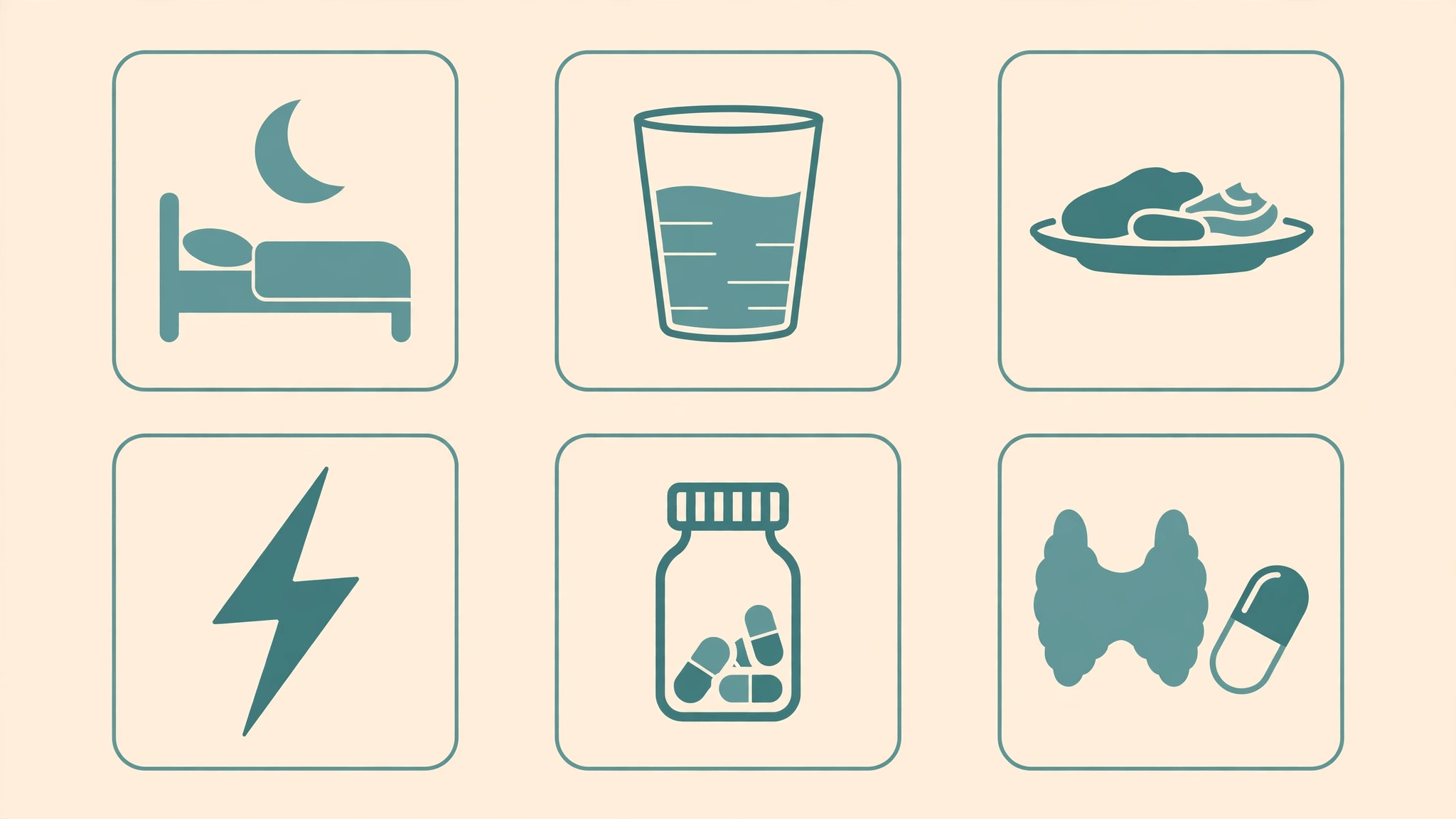
What causes brain fog is rarely one single thing. Most people with lasting fog have 2 to 4 causes working at once. The 12 causes below run from the most common to the least common.
1. Poor Sleep and Sleep Debt
Poor sleep is the most common cause of brain fog. Sleep debt builds below 7 hours a night, and even 6 hours degrades attention and memory.
2. Chronic Stress
Chronic stress raises cortisol for weeks at a time. Sustained high cortisol binds to receptors in brain areas that run working memory, and it degrades clear thinking.
3. Dehydration
Dehydration is the fastest cause of brain fog to fix. Even mild fluid loss dulls focus and slows reaction time.
4. Blood-Sugar Swings
Blood-sugar swings cause fog that tracks meals: skipped meals drop blood sugar and slow thinking. Sugary meals spike blood sugar and then crash it, bringing fog and cravings. Regular protein-rich meals steady blood sugar.
5. Poor Nutrition and Skipped Meals
Poor nutrition starves the brain of steady fuel. The brain uses about 20 percent of daily energy, so long gaps between meals hit thinking first.
6. Vitamin B12, Iron and Vitamin D Gaps
Low vitamin B12 blunts energy and thinking, and B12 deficiency can cause tiredness, confusion and poor memory (NIH Office of Dietary Supplements). Low iron cuts oxygen delivery to the brain and causes fatigue.
7. Underactive Thyroid
An underactive thyroid is a well-recognized and reversible cause of sluggish, foggy thinking. Low thyroid hormone slows processing speed and memory. Fog plus cold intolerance, weight gain and low energy points to the thyroid.
8. Hormonal Changes
Hormonal changes cause brain fog at clear life stages. Pregnancy affects memory and causes short-term cognitive impairment (research, 2018). Perimenopause and menopause bring midlife fog with hot flashes.
9. Medication Side Effects
Medication side effects are the most missed cause of brain fog. Sleep aids, antihistamines, some statins, blood pressure drugs and antidepressants all list fog or confusion as side effects. Chemo brain can last months after treatment.
10. Long COVID and Post-Viral Fog
Long COVID is a major cause of brain fog since 2020. The CDC defines long COVID as symptoms that persist more than 4 weeks after infection. Research points to immune activation and inflammation as drivers.
11. Depression, Anxiety and Mental Health Conditions
Depression and anxiety cause brain fog through 3 routes: low mood slows processing, anxiety burns working memory on worry, and both wreck sleep.
12. Chronic Inflammation and Underlying Conditions
Chronic inflammation runs through many brain fog causes, and autoimmune conditions such as lupus, multiple sclerosis and fibromyalgia all list fog. Fog with joint pain, rash, fever or numbness points to an underlying condition.
How Do You Know Which Cause Is Behind Your Brain Fog?

Match your pattern below, then run the first test or fix listed.
| Symptom pattern | Likely cause | First test or fix |
|---|---|---|
| Fog worst in the morning, snoring | Sleep apnea or poor sleep | 7 to 9 hour sleep window for 3 nights |
| Fog after skipped meals or sugary snacks | Blood-sugar swings | Regular protein-rich meals |
| Fog plus cold intolerance and weight gain | Underactive thyroid | TSH blood test |
| Fog plus pins and needles and fatigue | Low vitamin B12 | B12 blood test |
| Fog plus pale skin and breathlessness | Low iron | Ferritin and iron studies |
| Fog that started 1 to 2 weeks after a new drug | Medication side effect | Review drugs with a doctor |
| Fog after COVID-19 or flu, lasting weeks | Long COVID or post-viral fog | Rest and pacing |
| Fog with hot flashes and broken sleep | Perimenopause or menopause | Track symptoms for a month |
| Fog with low mood and poor sleep | Depression or anxiety | Mood screen with a doctor |
| Fog with joint pain, rash or fever | Autoimmune condition | Doctor visit, blood tests |
| Fog after drinking alcohol | Alcohol and fragmented sleep | No alcohol for 3 days |
| Fog that lifts within an hour of water and food | Dehydration and low fuel | Water plus a balanced meal |
A 7-day fog log finds personal triggers that no table can. Each evening, write 5 lines: hours slept, glasses of water, meals eaten, stress from 1 to 5, and fog from 1 to 5.
How to Fix Brain Fog in the First 72 Hours

How to fix brain fog fast starts with the free moves: a 7 to 9 hour sleep opportunity for 3 straight nights, steady fluids, regular protein-rich meals, and no alcohol for 3 days.
- Set a fixed sleep window. Pick a bedtime and a wake time 8 hours apart.
- Get morning light. Step outside within 30 minutes of waking for 10 minutes.
- Stop caffeine after 14:00. Finish coffee at least 8.8 hours before bed (Gardiner et al., 2023).
- Drink water on a schedule. Finish 6 to 8 glasses across the day.
- Eat 3 protein-rich meals. Add eggs, yogurt, beans, fish or chicken.
- Move for 30 minutes. Cleveland Clinic suggests 30 minutes of activity a day.
- Take a 20 to 30 minute break before you feel tired. Walk, listen to music or rest.
Work in 90-minute blocks with one task each, then take a 15-minute break away from the screen, with phone notifications off. Most people feel a clear lift by day 3. If nothing changes after 3 steady days, the cause is likely medical.
How to Fix Brain Fog in 2 to 4 Weeks
How to fix brain fog over 2 to 4 weeks means fixing the cause, not the symptom. The 72-hour plan clears the lifestyle fog, and this plan clears the deeper drivers.
Week 1: lock the basics. Keep the fixed sleep window, morning light and 3 protein-rich meals. Add a daily 30-minute walk, cut alcohol to zero, and score fog each evening.
Week 2: test and adjust. If fog is still above 3 out of 5 after a steady week 1, book blood tests: TSH, vitamin B12, ferritin, fasting glucose or HbA1c, and vitamin D. Review every medication with a doctor.
Week 3: treat what the tests show. Low B12, low iron, low vitamin D or a slow thyroid each have a direct treatment, and fog often lifts within 2 to 4 weeks. If tests are normal, a depression or anxiety screen takes 10 minutes and it changes the fix completely.
Week 4: build the routine that holds. Keep the sleep window, the morning light and the daily walk. Add 2 strength sessions a week and keep screens out of the bedroom. Two weeks of steady fixes with no gain is the cue to ask a doctor for a fuller check.
Sleep is the thread through all 4 weeks. For more on the sleep angle, read the Digital Geek Spot guide on how sleep affects immune health.
What About Supplements for Brain Fog?
No supplement has been shown to cure brain fog (Cleveland Clinic). Supplements help only when a test shows a real gap, and then the supplement treats the gap, not the fog.
Vitamin B12 helps when a blood test shows low B12, and it does nothing when B12 is already normal. Iron works the same way: repletion lifts fog only in true iron deficiency. Vitamin D helps only when levels are low. Omega-3 fatty acids show modest gains at best. Lion’s mane mushroom sits at the bottom of the evidence table: small trials exist, and it does not replace sleep, water or food.
The safe rule is simple: get bloodwork before buying supplements. A B12, iron and vitamin D panel costs less than a month of random pills, and it tells you which supplement, if any, will help.
When Should You See a Doctor About Brain Fog?
See a doctor about brain fog when it lasts more than 2 weeks despite steady sleep, food and fluid fixes. See a doctor sooner with weight change, cold intolerance, heavy periods, pins and needles, a sore tongue, joint pain, rash, fever or a new drug.
Call emergency services at once for sudden confusion, a drooping face, arm weakness, slurred speech, a severe headache with confusion, or a head injury with fog. Fast care changes the outcome.
A doctor visit for brain fog usually runs in 3 steps: a history of when fog started, blood tests (TSH, B12, ferritin, fasting glucose or HbA1c, vitamin D), and a plan to treat what the tests show. Bring the 7-day fog log.
Brain Fog vs Normal Forgetfulness
Brain fog and normal forgetfulness overlap. Normal forgetfulness is part of a busy life, while brain fog touches focus, speed and energy together.
| Feature | Brain fog | Normal forgetfulness |
|---|---|---|
| Memory | Forgets what was just said | Forgets a name, recalls later |
| Focus | Cannot hold attention | Distracted, refocuses fast |
| Thinking speed | Slow, words hard to find | Normal speed |
| Energy | Mental fatigue by midday | Tired, recovers overnight |
| Duration | Days to weeks | Minutes to hours |
| Daily function | Work output drops | Daily tasks on track |
| Fix | Needs the cause treated | Needs a list or good sleep |
Age alone does not explain brain fog. A steady decline in memory over months is a different signal from fog, and it deserves a doctor visit on its own.
Frequently Asked Questions
How long does brain fog last?
Brain fog lasts a few days to weeks in most cases, and sometimes months, depending on the cause. Sleep, dehydration and blood-sugar fog often lift within 24 to 72 hours of a fix. Thyroid, B12 and iron fog lifts over 2 to 4 weeks of treatment.
Is brain fog a sign of dementia?
No, brain fog is not a sign of dementia. Brain fog is usually temporary and reversible, while dementia is progressive and worsens over months. Fog with a steady decline in memory, confusion about familiar places or trouble with daily tasks needs a doctor check.
What vitamin deficiency causes brain fog?
Vitamin B12 deficiency is the best-known vitamin cause of brain fog, and it brings tiredness, confusion and poor memory. Low iron and low vitamin D also link to fog and low energy. A blood test confirms each gap before any treatment starts.
Can dehydration cause brain fog?
Yes, dehydration can cause brain fog. Even mild fluid loss dulls focus and slows reaction time, and the fog often lifts within an hour of steady water and a balanced meal. Heat, exercise, alcohol and caffeine all raise fluid loss.
Does coffee help brain fog?
Coffee helps brain fog only in a narrow window. A morning cup sharpens focus for a few hours, but caffeine after 14:00 fragments night sleep and worsens next-day fog. Research suggests finishing coffee at least 8.8 hours before bed (Gardiner et al., 2023).
When should I worry about brain fog?
Worry about brain fog when it lasts more than 2 weeks despite steady sleep, food and fluid fixes, or with weight change, pins and needles, joint pain, rash or fever. Sudden confusion, slurred speech or face drooping is an emergency.
Conclusion
What causes brain fog and how to fix it comes down to finding the driver, not chasing the symptom. Most cases trace to poor sleep, chronic stress, dehydration, blood-sugar swings or a nutrient gap, and 2 to 4 of these causes often overlap. The 72-hour plan clears the lifestyle fog fast. The 2 to 4 week plan of blood tests, drug review and mood screening clears the medical fog. No supplement cures brain fog, so bloodwork before pills is the safe order. Keep the 7-day fog log, match your pattern to the cause table, and see a doctor if fog lasts more than 2 weeks. Clear thinking returns when the cause is found.
Start your mornings right too: read the benefits of morning sunlight exposure on Digital Geek Spot.