



Travel has a pricing problem, and it is not the one you think. Most people assume trips are expensive because destinations are expensive. In reality, trips are expensive because of timing, defaults, and habits: booking at the wrong moment, accepting the first hotel result, eating every meal out, and paying avoidable fees. Fix those and the same trip often costs half as much.
The best budget travel hacks are not about suffering to save a few dollars. They are about spending where it matters and cutting where it does not. A sunrise hike costs nothing; a local market lunch costs a third of a tourist-trap dinner and tastes better. This guide collects the highest-leverage hacks for flights, stays, food, packing, and ground transport, plus the myths you should stop believing.
The short answer: The best budget travel hacks are booking domestic flights 1 to 3 months ahead and international ones 2 to 6 months out, flying midweek, traveling in shoulder season, staying in hostels or apartments with kitchens, cooking some meals, packing carry-on only, and setting fare alerts. Combined, these habits can cut a typical trip cost by 30 to 50 percent.
Key Takeaways
- Timing is the biggest lever: shoulder season travel can cut total trip costs by 30 to 40 percent, and midweek departures are consistently cheaper than weekend ones.
- Book domestic flights 1 to 3 months ahead and international flights 2 to 6 months ahead; booking too early often means overpaying.
- Accommodation and food are the two largest controllable costs: hostels, guesthouses, and apartments with kitchens slash both.
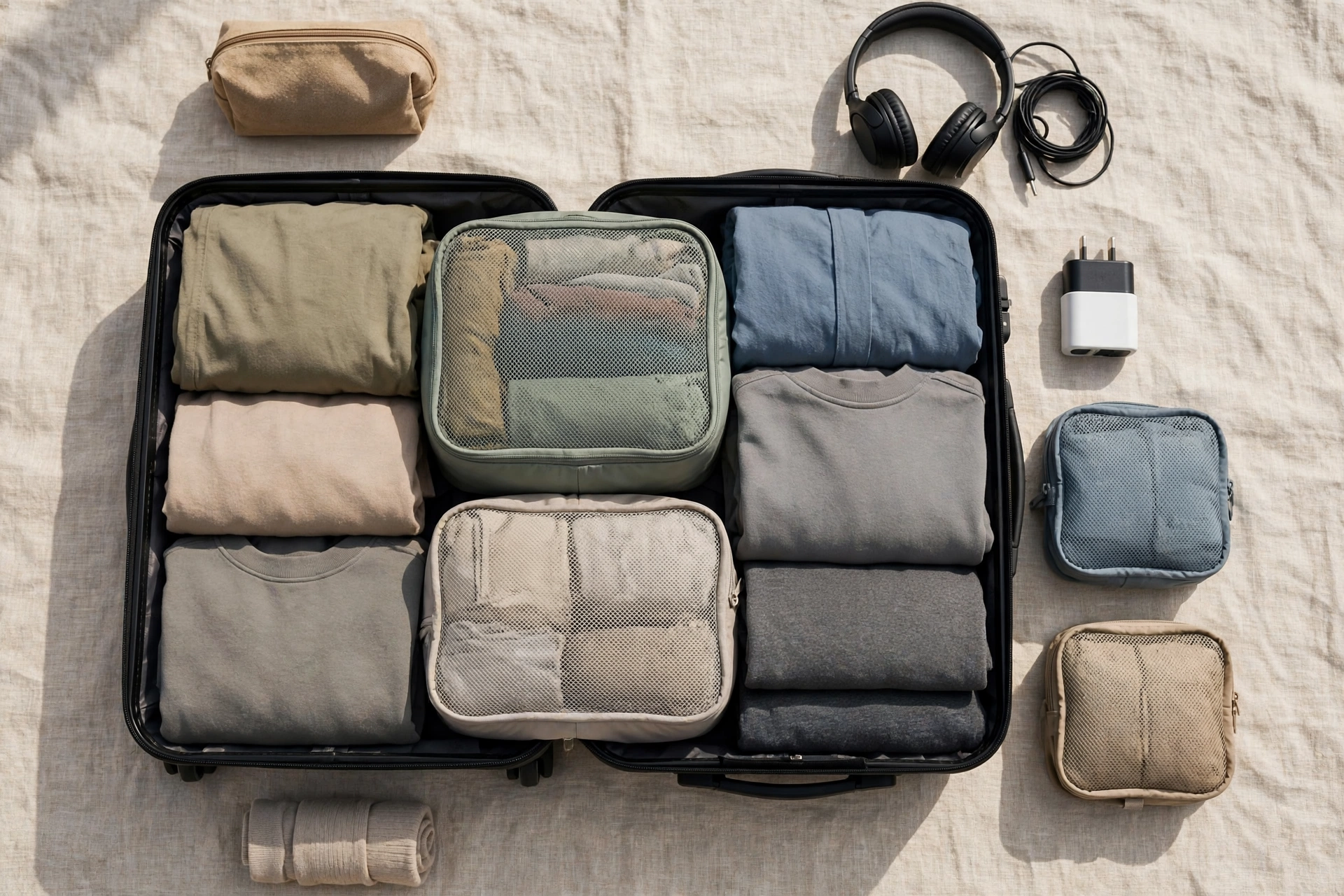
- Going carry-on only eliminates baggage fees and saves hours at airports; packing cubes and wearing your bulkiest items make it easy.
- Incognito mode and booking on a specific weekday are myths; fare alerts and flexible dates are what actually lower prices.
Budget Travel Hacks Compared: Savings Versus Effort
| Hack | What it saves | Effort | Best for |
|---|---|---|---|
| Travel in shoulder season | 30 to 40 percent of total trip cost | Low | Flexible-date travelers |
| Book flights in the sweet-spot window | Meaningful fare differences, often 10 to 20 percent | Low | Every trip |
| Fly midweek instead of weekends | Up to 14 percent on domestic departures | Low | Domestic trips |
| Stay in hostels or apartments | 50 to 80 percent on lodging | Medium | Solo and long-stay travelers |
| Cook some meals, eat local | Up to half the food budget | Medium | Trips longer than a weekend |
| Go carry-on only | 60 to 140 dollars in round-trip baggage fees | Medium | Budget airline routes |
| Set fare and deal alerts | Error fares and flash sales | Low | Planners and spontaneous travelers |
| Use public transit over taxis | Most ground transport spending | Low | City trips |
When Is the Cheapest Time to Book Flights?
Short answer: For domestic flights, book 1 to 3 months before departure, with fares often lowest around five to six weeks out. For international flights, book 2 to 6 months ahead. Flying on a Tuesday or Wednesday is consistently cheaper than flying on a Sunday.
Airlines use dynamic pricing: fares move with demand, competition, and remaining seats, not calendar magic. Travel industry research points to clear patterns: domestic fares bottom out roughly 1 to 3 months before departure, and a Tuesday departure can save up to 14 percent versus Sunday. For international routes, Friday departures often price best, with a 2 to 6 month booking window.
Booking too early is a real trap: six or more months out, discounted fare buckets often have not been released, so you can pay more than someone who books eight weeks later. Booking too late is worse, with leisure fares climbing steeply inside two weeks. Set a price alert on Google Flights, then book when the fare drops into the sweet-spot window. For a deeper system, read our guide on how to find cheap flights.
What Are the Best Hacks for Cheaper Accommodation?
Short answer: Travel in shoulder season, compare hostels and guesthouses alongside hotels, consider apartments with kitchens for longer stays, and check weekly or monthly discounts. Lodging is usually the largest trip expense, so small percentage savings here matter most.
Shoulder season is the highest-leverage accommodation hack: the weeks just before and after peak season bring lower rates, thinner crowds, and often better weather. A beach town in late September or a European city in early April can cost 30 to 40 percent less than the same trip in August.
Match the lodging to the trip. Hostels with private rooms give hotel-like privacy at a fraction of the price and suit solo travelers. Apartments with kitchens pay for themselves on trips longer than a few days by unlocking food savings. For week-plus stays, check weekly and monthly rates, often 20 to 50 percent off nightly prices. Before booking anything non-refundable, compare with a vacation package: bundling flight plus hotel sometimes beats booking separately.
How Can You Save Money on Food While Traveling?
Short answer: Eat your main meal at lunch, shop at local markets, cook breakfast and some dinners if you have a kitchen, and follow locals instead of guidebooks. Food is the easiest budget to halve without feeling deprived.
Dinner in tourist zones is the most expensive meal you can buy; lunch at the same quality level often costs far less. Make lunch your main restaurant meal and keep dinners simple. Markets and street food are the budget traveler’s best friend: fresh, local, and typically a third of sit-down prices. In many countries, the most memorable meals come from a market stall.
With a kitchen, cook breakfast daily and a few dinners per week; a week’s groceries often cost less than two restaurant dinners. Without one, a picnic of bread, cheese, and fruit beats an overpriced hotel breakfast. One more rule: walk three blocks from any major attraction before choosing a restaurant. Prices drop fast with distance, and quality usually rises.
What Packing Hacks Actually Cut Baggage Fees?
Short answer: Fly with carry-on only, wear your bulkiest clothes and shoes on the plane, use packing cubes, and put extras in a neck pillowcase if you are tight on space. Each checked bag costs 30 to 70 dollars each way, so carry-on only saves real money on every trip.
A disciplined carry-on strategy starts with packing cubes, which compress clothes and keep everything organized. Plan a capsule wardrobe: every top matches every bottom, layers handle temperature swings, and you do laundry once mid-trip on longer journeys.
Wear your heaviest items, boots, jacket, and sweater, onto the plane; they do not count against your bag. The pillowcase trick genuinely works on strict budget airlines: a pillowcase stuffed with soft clothes reads as a comfort item, not a bag. Keep a permanent travel kit with chargers, adapter, and travel-size toiletries packed so you never buy duplicates at the airport. For the full system, see our carry-on versus checked baggage comparison.
Which Popular Travel Hacks Are Actually Myths?
Short answer: Incognito mode does not lower flight prices, there is no magic weekday for booking, and skiplagging can get your ticket cancelled. The hacks that work are fare alerts, flexible dates, and loyalty points.
Here is a fact-checked rundown. Incognito browsing has no effect on flight prices; airlines do not raise fares based on your searches. The old “book on Tuesday” rule is dead, though flying on a Tuesday remains cheaper than Sunday. VPN tricks for hotels sometimes work; always compare the final total including taxes.
Skiplagging, booking a longer itinerary and skipping the final leg, saves money but carries real risk: airlines can cancel your return, confiscate miles, or ban repeat offenders, and it only works with carry-on bags. Freezing a water bottle gets it through security only if frozen completely solid. The reliable hacks are boring: fare alerts, flexible dates, and a travel rewards card so points fund future trips.
How Do You Cut Ground Transportation Costs?
Short answer: Default to public transit, walk whatever is walkable, and split rideshares. In most cities, transit passes cost less per day than a single taxi ride.
Ground transport is the budget category people forget to plan. Before you land, look up airport-to-city transit: express trains and buses typically cost a tenth of a taxi. In the city, buy a multi-day transit pass on day one; it pays for itself fast.
Walk aggressively: anything under 30 minutes on foot is free sightseeing, and walking reveals the neighborhoods that make a trip memorable. Split rideshares when you need a car, and for multi-city itineraries compare trains and buses with budget flights, since ground transport often wins once airport time is counted. If you are driving, our guide to planning a road trip on a budget covers fuel, toll, and lodging math in detail.
What Is the Step-by-Step Plan for a Full Budget Trip?
Short answer: Pick shoulder-season dates, set fare alerts early, book flights in the sweet-spot window, choose lodging with a kitchen, plan food around markets and lunch specials, pack carry-on only, and sort ground transit before you land.
Here is the sequence in order:
- Choose flexible dates first: shoulder season plus midweek departures is the single biggest discount available.
- Set fare alerts immediately on Google Flights and a deal service to catch price drops and error fares.
- Book flights in the window: domestic 1 to 3 months out, international 2 to 6 months out, never inside two weeks unless you must.
- Book lodging with free cancellation; lock in a good rate early, then re-check prices before the deadline.
- Plan food and transit: note market locations, lunch spots, and the airport transit route before departure.
- Pack carry-on only: cubes, capsule wardrobe, bulkiest items worn on the plane.
- Sort money and connectivity: a no-foreign-transaction-fee card and a local eSIM beat roaming charges.
Solo travelers face single supplements and safety costs; our solo travel tips for beginners cover how to keep those under control.

Frequently Asked Questions
Is it cheaper to book flights at the last minute?
Rarely. Last-minute leisure fares are usually the most expensive because late bookers have no flexibility. The exceptions are opaque deals, package flash sales, and mistake fares, which you catch with alerts. Book in the sweet-spot window instead of gambling.
Do budget airlines really save money?
Yes, if you play by their rules. The base fare is genuinely cheap; profit comes from baggage fees, seat selection, and onboard sales. Fly carry-on only, bring your own food and water, and skip add-ons: budget carriers are unbeatable on short routes. Add two checked bags and the legacy carrier is often cheaper.
How much can traveling in shoulder season actually save?
Expect 30 to 40 percent off total trip costs versus peak season, with the biggest drops in accommodation and tours, plus thinner crowds. Check each destination’s shoulder months: the Caribbean’s overlaps hurricane season, while the Mediterranean’s is close to perfect.
Is travel insurance worth it on a budget trip?
Often yes: a budget traveler can least afford a disaster. A cancelled flight or medical emergency abroad can cost many times the trip’s price. Compare a basic policy against your trip cost; for the full breakdown, see do I need travel insurance.
How do I travel with only a personal item?
Possible for trips up to about a week with ruthless packing: a capsule wardrobe, mid-trip laundry, solid toiletries, and wearing your bulkiest layers. Our guide on how to travel with personal item only walks through a complete packing list.
Is solo travel more expensive than traveling with others?
Per person, usually yes, since you cannot split rooms, rides, or groceries. But solos get total flexibility on dates and destinations, unlocking the cheapest options, plus easy access to hostel dorms. Groups win on splitting costs; solos win on flexibility.
What is the cheapest way to stay connected abroad?
Buy a local eSIM before you travel; it is far cheaper than roaming and usually cheaper than an airport SIM. Download offline maps, translation packs, and boarding passes over Wi-Fi before you leave, and turn off data roaming the moment you land.
Related Articles
- How to Find Cheap Flights: A Complete Guide
- Carry-On vs Checked Baggage: Which Is Better?
- How to Plan a Road Trip on a Budget
- Solo Travel Tips for Beginners
The Verdict
The best budget travel hacks share one philosophy: cut the costs that never made the trip better, and protect the spending that does. Shoulder-season timing, smart booking windows, hostel stays, market food, carry-on packing, and public transit can halve a typical trip budget. Start with fare alerts and flexible dates; those two habits do most of the work. For more ways to travel smarter, explore the travel guides at DigitalGeekSpot.




1 Comment