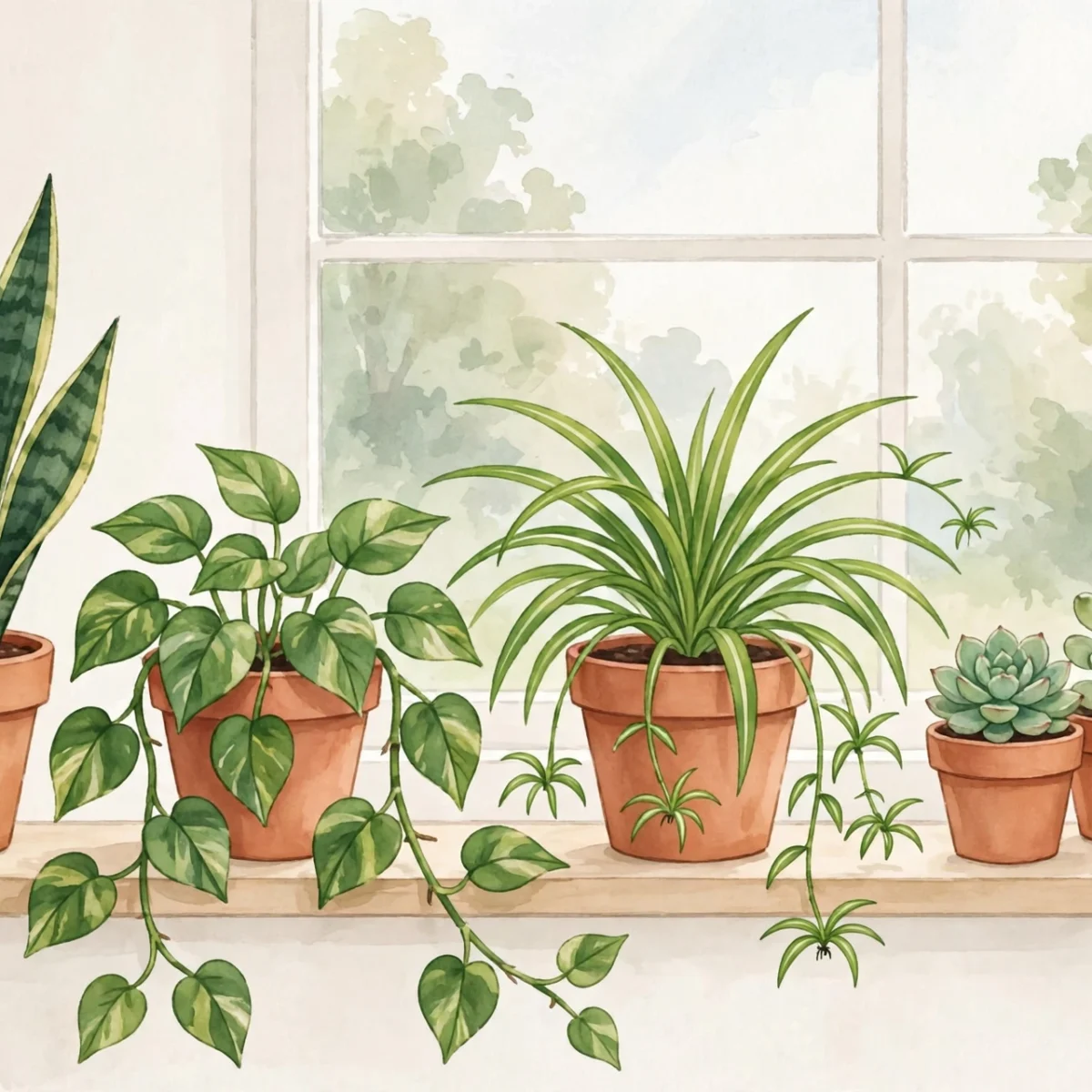
The best indoor plants for beginners are the ones that forgive you. The quick answer: start with a snake plant, pothos, or ZZ plant. These three survive low light, irregular watering, and total beginner mistakes, and most cost between $10 and $60 at garden centers and online shops.
Every year, millions of people buy their first houseplant and kill it within a month, usually by overwatering. This guide fixes that. You will get a ranked list of the easiest indoor plants for beginners, honest care instructions for each (light, water, and what goes wrong), price ranges so you can budget, a comparison table, and the five beginner mistakes that kill most plants. No greenhouse required, no green thumb needed.
Best Beginner Indoor Plants at a Glance
| Plant | Light Needs | Watering | Difficulty | Typical Price |
|---|---|---|---|---|
| Snake Plant | Low to bright | Every 2-4 weeks | Nearly unkillable | $15-$45 |
| Pothos | Low to medium | Every 1-2 weeks | Very easy | $10-$35 |
| ZZ Plant | Low to medium | Every 2-3 weeks | Very easy | $20-$60 |
| Spider Plant | Bright indirect | Weekly | Easy | $10-$25 |
| Peace Lily | Low to medium | Weekly, when dry | Easy | $15-$55 |
| Cast Iron Plant | Low | Every 2-3 weeks | Very easy | $25-$70 |
| Chinese Evergreen | Low to medium | Every 1-2 weeks | Easy | $20-$65 |
| Heartleaf Philodendron | Low to medium | Every 1-2 weeks | Very easy | $10-$30 |
| Parlor Palm | Low to medium | Every 1-2 weeks | Easy | $20-$60 |
| Aloe Vera | Bright light | Every 2-3 weeks | Easy | $8-$25 |
Price ranges above reflect typical US retail listings for standard nursery pot sizes, as shown on current plant retail guides. Prices vary by size, retailer, and region.
What Makes a Plant Good for Beginners?
A beginner-friendly plant tolerates low or inconsistent light, survives missed waterings, and tells you clearly when something is wrong. The plants on this list check those boxes. As a bonus, snake plants, pothos, spider plants, and peace lilies are widely reported to help filter indoor air.
The 10 Best Indoor Plants for Beginners
1. Snake Plant (Sansevieria / Dracaena trifasciata)
The undisputed champion of beginner plants. Snake plants thrive on neglect: they tolerate low light, survive weeks without water, and their stiff upright leaves look sculptural in any room. Water only when the soil is completely dry, roughly every 2 to 4 weeks, and make sure the pot has drainage holes. The number one killer of snake plants is overwatering, not underwatering. Typical price: $15 to $45 depending on size.
2. Pothos (Epipremnum aureum)
Pothos is a fast-growing trailing vine with heart-shaped leaves that adapts to almost any indoor environment. It handles low to medium light, grows in soil or even in water, and only asks for water when the top inch of soil dries out, about every 1 to 2 weeks. Hang it from a shelf, let it trail from a bookcase, or train it up a moss pole. Trim long vines to keep it bushy, and use the cuttings to grow free new plants. Typical price: $10 to $35.
3. ZZ Plant (Zamioculcas zamiifolia)
With glossy, waxy leaves and an almost architectural look, the ZZ plant is a favorite for offices and dim corners. It stores water in its rhizomes, so it tolerates drought and low light with ease, needing water only every 2 to 3 weeks. It grows slowly and stays neat, which means less maintenance and less mess. Typical price: $20 to $60.
4. Spider Plant (Chlorophytum comosum)
Spider plants are beginner classics for a reason. They adapt to different environments, tolerate irregular watering, and reward you by producing little baby plants (“pups”) that dangle from the mother plant and can be potted into new plants for free. Give them bright indirect light and moderate watering, and they grow quickly and cheerfully. Typical price: $10 to $25.
5. Peace Lily (Spathiphyllum)
The peace lily adds elegance with lush green leaves and white blooms, even in low to medium light. Its best beginner feature is communication: it droops visibly when thirsty, so you always know exactly when to water. Water when the top of the soil feels dry, about weekly. Note that peace lilies are toxic to cats and dogs if chewed, so keep them out of pets’ reach. Typical price: $15 to $55.
6. Cast Iron Plant (Aspidistra elatior)
It lives up to its name. The cast iron plant thrives in low light, needs watering only every 2 to 3 weeks, and shrugs off the kind of neglect that kills fussier plants. It grows slowly and steadily in dark corners where almost nothing else survives. Wipe dust off the broad leaves occasionally so the plant can make the most of available light. Typical price: $25 to $70.
7. Chinese Evergreen (Aglaonema)
Chinese evergreens offer decorative, often patterned foliage that tolerates low light better than most colorful plants. They prefer soil that stays lightly moist but drains well, and need watering about every 1 to 2 weeks. An excellent pick if you want visual interest without difficulty. Typical price: $20 to $65.
8. Heartleaf Philodendron
A close cousin of pothos with the same easygoing nature. Heartleaf philodendrons need minimal attention, tolerate low to medium light, and send out long draping vines that look great on bookcases and high shelves. Water when the top inch of soil dries. Like pothos, it propagates easily from cuttings. Typical price: $10 to $30.
9. Parlor Palm (Chamaedorea elegans)
If you want a soft, tropical look without the drama, the parlor palm delivers. It handles low to medium light, needs water every 1 to 2 weeks, and stays compact enough for desks and side tables. It is also one of the few palms considered non-toxic to pets. Typical price: $20 to $60.
10. Aloe Vera
Aloe vera is a low-care succulent with a bonus: its gel is widely used for minor skin soothing. It needs bright light, a sunny windowsill is ideal, and infrequent watering every 2 to 3 weeks. Let the soil dry out completely between waterings, and never let it sit in water. Typical price: $8 to $25.
How to Choose Your First Plant
- Check your light first: Look at where the plant will live. A north-facing corner gets low light, while a spot a few feet from a south or west window gets bright indirect light. Match the plant to the spot, not the other way around. Snake plants, ZZ plants, and cast iron plants are the safest bets for genuinely dark corners.
- Be honest about your watering habits: If you travel or forget things, pick drought-tolerant plants like snake plants, ZZ plants, or aloe. If you are home and attentive, peace lilies and spider plants will thrive.
- Consider pets and kids: Peace lilies, pothos, philodendrons, and ZZ plants are toxic if ingested by pets. Safer choices for pet households include spider plants and parlor palms. When in doubt, keep plants on high shelves.
- Start with one or two: Do not buy ten plants at once. Learn on one forgiving plant, and expand once it is thriving.
Bringing plants home pairs beautifully with an organized, calming space. If your home needs a refresh first, our guide on how to declutter your home is a great place to start.
Beginner Plant Care: The Only Rules That Matter
Light
Most beginner plants want “bright indirect light,” which means near a window but out of harsh direct sunbeams. Low-light-tolerant plants like snake plants and ZZ plants will survive in dim rooms, though they grow more slowly there. If a plant gets leggy or pale, it wants more light. Move it closer to a window gradually.
Water
Overwatering kills more houseplants than all other mistakes combined. The golden rule: check the soil before you water. Stick your finger an inch into the soil. If it feels dry, water thoroughly until water drains from the bottom. If it feels damp, wait. Always use pots with drainage holes, and empty saucers so roots never sit in water.
Soil and Pots
Use a standard indoor potting mix for most plants on this list, and a cactus or succulent mix for aloe vera. Repot only when roots circle the bottom of the pot or poke through drainage holes, usually every 1 to 2 years. When you repot, go just one pot size up.
Humidity and Temperature
Most beginner plants are happy at normal room temperatures and average indoor humidity. Keep them away from heating vents, cold drafts, and air conditioner blasts. A light misting now and then is fine for tropical types like peace lilies, but it is optional, not required.
Feeding
Beginners can skip fertilizer for the first few months. When plants are actively growing in spring and summer, a half-strength liquid houseplant fertilizer once a month is plenty. More is not better, over-fertilizing burns roots.
Building any new habit, plant care included, is easier when you track it. Check out the best habit tracker apps to keep your watering schedule on track.
5 Mistakes That Kill Beginner Plants
Mistake 1: Watering on a Schedule Instead of Checking Soil
“Water every Tuesday” ignores seasons, light, and humidity. Always check the soil first. A plant in a dark corner in winter needs far less water than the same plant by a sunny window in summer.
Mistake 2: No Drainage Holes
Decorative pots without holes trap water at the roots and cause rot. Either use a nursery pot with holes inside the decorative pot, or drill holes. This single fix saves more plants than any fertilizer.
Mistake 3: Too Much Direct Sun
That sunny windowsill can scorch leaves adapted to indirect light. If leaves develop brown, crispy patches, move the plant back a few feet or add a sheer curtain.
Mistake 4: Repotting Too Soon or Too Big
New plants do not need immediate repotting, and jumping to a much larger pot keeps soil wet too long. Wait until roots actually need space, then size up modestly.
Mistake 5: Giving Up After One Yellow Leaf
One yellow leaf is usually an old leaf retiring or a minor watering hiccup, not a death sentence. Remove it, adjust care, and watch new growth. Plants are resilient, give them a chance to recover.
Frequently Asked Questions
What is the absolute easiest indoor plant for a total beginner?
The snake plant. It tolerates low light, needs water only every 2 to 4 weeks, and survives the neglect that kills most other plants. Pothos and the ZZ plant are close runners-up. If you can only buy one plant, make it a snake plant.
How often should I water indoor plants?
There is no universal schedule, because light, pot size, and season all matter. Instead, check the soil: water thoroughly when the top inch feels dry, and wait when it feels damp. For most beginner plants this works out to every 1 to 4 weeks. When in doubt, underwater slightly, most beginner plants recover from dryness far better than from rot.
Can indoor plants really survive in low light?
Some genuinely can. Snake plants, ZZ plants, cast iron plants, and pothos all tolerate low-light conditions, though they grow more slowly there. “Low light” still means some natural light from a window, not a windowless closet. If a plant looks pale and stretched, it is asking for more light.
Which beginner plants are safe for cats and dogs?
Spider plants and parlor palms are widely considered non-toxic to pets. However, popular beginner plants including pothos, philodendrons, peace lilies, ZZ plants, and snake plants are toxic if chewed by pets. Keep those on high shelves or in rooms pets cannot access, and check with your vet if your pet eats part of a plant.
Why are my plant’s leaves turning yellow?
The most common cause is overwatering. Check whether the soil is soggy and whether the pot drains. Other causes include natural aging of lower leaves, too little light, or a recent move. Remove the yellow leaf, correct the likely cause, and watch for healthy new growth before worrying.
Do I need fertilizer for indoor plants?
Not at first. New plants usually arrive in fresh soil with enough nutrients for months. Once plants are actively growing in spring and summer, a half-strength liquid houseplant fertilizer once a month is plenty. Never fertilize a stressed or newly repotted plant.
Final Verdict
The best indoor plants for beginners are snake plants, pothos, and ZZ plants: cheap, forgiving, and attractive in any room. Start with one, match it to your light, water only when the soil is dry, and use a pot with drainage holes. That is genuinely 90 percent of plant care.
Once your first plant is thriving, add a second, try propagating cuttings, or experiment with a peace lily for blooms. The team at DigitalGeekSpot recommends starting with just one plant this weekend and enjoying watching it grow.