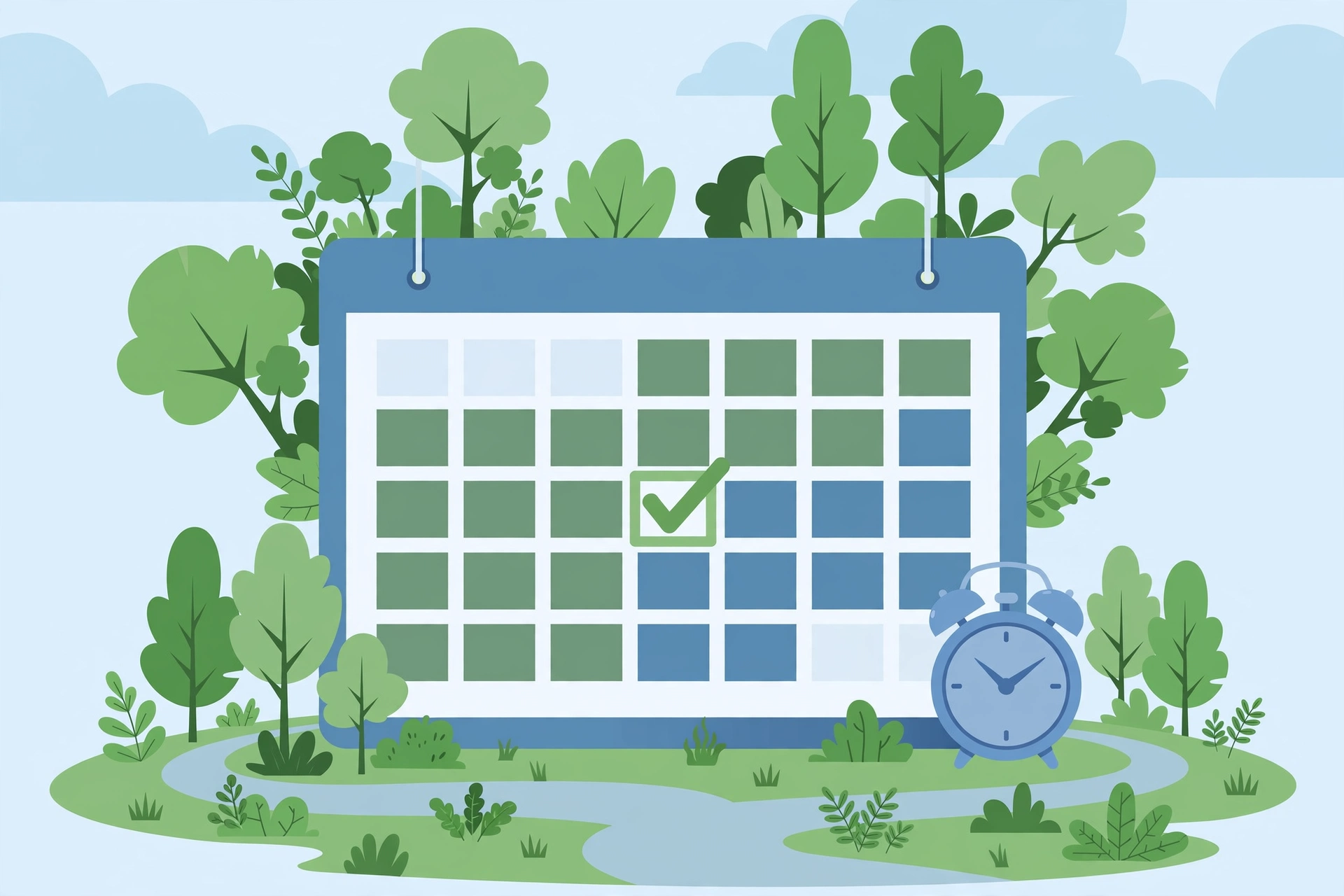
Quick answer: improving your work-life balance comes down to three things, clear boundaries, a real shutdown ritual, and protected time for rest. Set fixed work hours, turn off notifications after work, block deep-work time on your calendar, take your breaks and holidays, and end each day with a ritual that separates work from home. This guide covers the strategies that actually move the needle, whether you work from home, hybrid, or in an office.
At a Glance: The 10 Most Effective Work-Life Balance Strategies
| Strategy | What to do | Time it takes |
|---|---|---|
| Fixed work hours | Define a start and end time, and treat the end time as seriously as the start | Set once, enforce daily |
| Right to disconnect | No email or chat after hours; truly urgent matters go through a phone call | Ongoing habit |
| Shutdown ritual | End each workday with a 10-minute routine: review wins, capture tomorrow’s tasks, close the laptop | 10 minutes daily |
| Deep-work blocks | Block 2 to 3 hour focus chunks on your calendar and mark them busy | Weekly planning |
| Regular breaks | Step away every 60 to 90 minutes; try the Pomodoro technique (25 minutes work, 5 minutes rest) | Daily |
| Take your time off | Use your holidays; they are part of the compensation, not a luxury | Plan quarterly |
| Dedicated workspace | Work in one spot at home so your brain can switch off when you leave it | One-time setup |
| Family time on the calendar | Schedule personal commitments like meetings, not leftovers | Weekly |
| Learn to say no | Decline low-value requests and overcommitment before they wreck your week | Ongoing skill |
| Move and unplug | Daily walks, exercise, and screen-free evenings protect energy long-term | 30 minutes daily |
What Work-Life Balance Actually Means in 2026
Work-life balance is not about a perfect 50/50 split or working fewer hours. It is about having clear, intentional boundaries so that work does not expand to fill every available moment, and rest does not feel like something you are stealing from your job. For remote and hybrid workers especially, the lines have blurred: the commute that used to separate work from home is gone, and the laptop sits on the kitchen table all evening. Balance today is a system you design, not a perk your employer hands you.
It is also not a one-time fix. Balance needs regular adjustment as workloads, seasons, and family situations change. A weekly five-minute check-in with yourself (what drained me this week, what restored me) keeps the system honest.
1. Set Fixed Work Hours and Defend Them
The single highest-impact change most people can make is deciding when work ends and enforcing it. Without a hard stop, work becomes a gas that expands to fill all available space. Set your end time in your calendar, and when it arrives, close the laptop. If colleagues schedule around your hours, communicate them clearly: an email signature line or status message stating your working hours does this quietly. Research consistently finds that remote workers with defined schedules report better focus and balance than those without, and the mechanism is simple: your brain relaxes when it trusts that work has a genuine end.
2. Practice the Right to Disconnect
France introduced right-to-disconnect laws years ago, and the principle has since spread to companies worldwide: nobody should be contacted about work when they are off the clock. Even where no law applies, you can set the policy for yourself. Turn off Slack or Teams notifications after your work hours end, remove work email from your phone (or at least disable its badges), and let people know that genuine emergencies should come through a phone call. Selective responsiveness trains everyone around you: not every message needs an immediate reply, and most things can wait until morning.
3. Build a Daily Shutdown Ritual
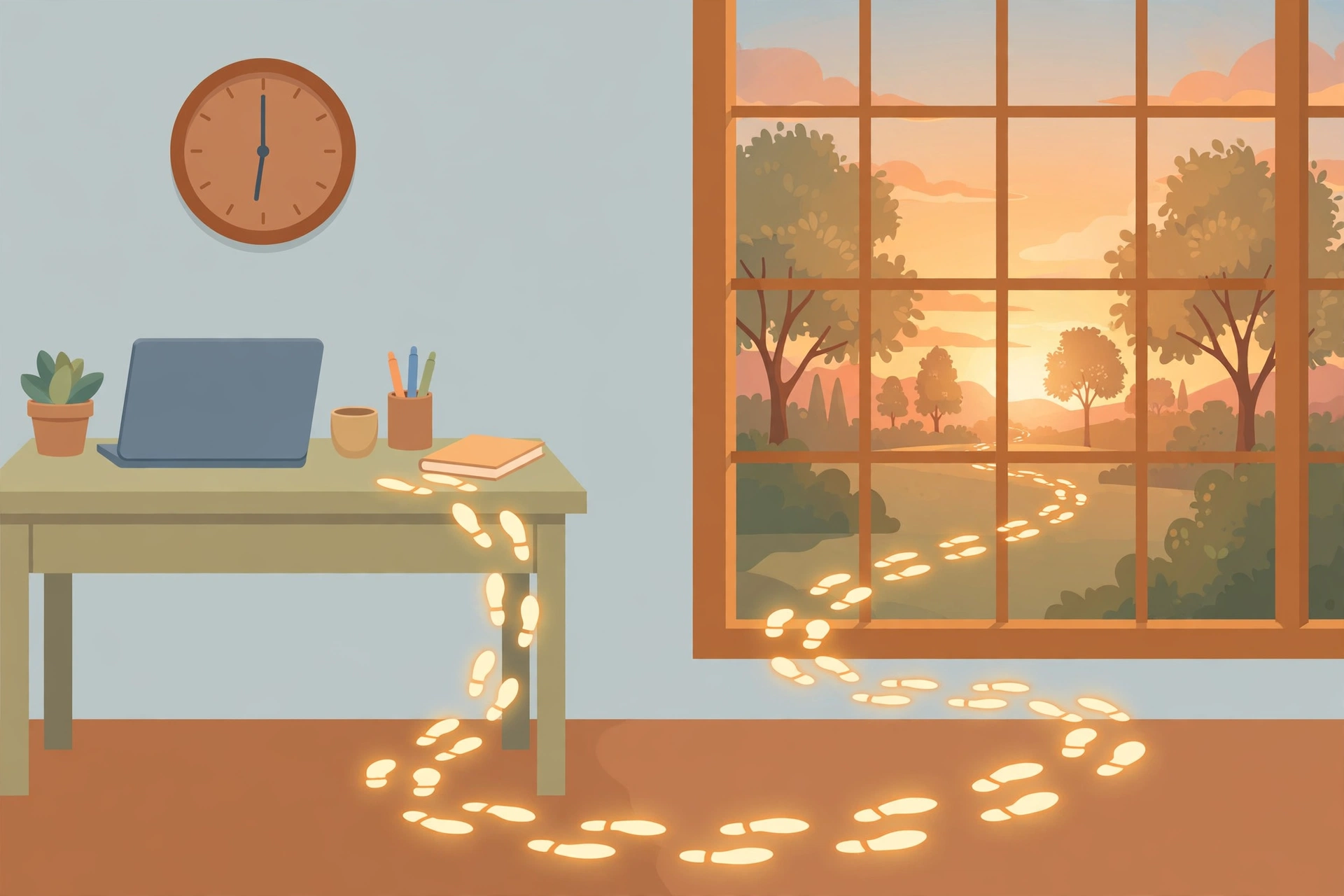
Psychologists note that a ritual marking the end of work significantly improves mental detachment and reduces stress. A good shutdown ritual takes about ten minutes:
- Review the day: note what you accomplished. This creates a sense of closure instead of open loops.
- Capture tomorrow: write down the incomplete tasks and your first priority for the morning. Getting them out of your head is what stops evening rumination.
- Transition physically: close the laptop, change clothes, go for a walk, or tidy the desk. A physical action tells your brain that work is over.
This pairs naturally with a solid morning routine: the shutdown ritual ends the day cleanly so the morning routine can start it well.
4. Protect Deep-Work Time on Your Calendar
Constant interruptions are a hidden driver of overwork: when your day is chopped into 20-minute fragments, real work spills into the evening. Block two to three hour chunks for focused work and mark them as busy. When someone tries to book over them, you can offer another time without explaining that the conflict is your own productivity time. Batch meetings into specific days or windows, and treat your focus blocks like appointments with your most important client, yourself.
5. Take Breaks Before You Need Them
Skipping breaks does not make you more productive; it makes you slower, more error-prone, and more likely to work late to fix mistakes. Schedule short breaks throughout the day: a five-minute stretch, a walk around the block, or lunch away from your desk. The Pomodoro technique is a simple structure that works well: 25 minutes of focused work, then a 5-minute break, with a longer break after four cycles. Even a five to ten minute walk each hour refreshes your mind and supports energy for the afternoon.
6. Take Your Time Off, All of It
Holidays are not a luxury; annual leave is a necessity for recovery. A real break lets you switch off, recharge, and return sharper and more focused. Yet many workers leave days unused every year. Plan your time off quarterly, book at least one real holiday in advance, and when you take it, actually disconnect: set an out-of-office message, hand over anything urgent, and resist the pull of checking in. A vacation spent answering email is not a vacation.
7. Create a Dedicated Workspace
If you work from home, designate one specific area for work, even if it is just a corner of a room. A dedicated workspace helps your brain separate work mode from home mode, reduces distractions, and makes the shutdown ritual physical: when you leave the desk, you leave work. Keep it reasonably ergonomic (chair, screen at eye level, good lighting) so that long-term comfort does not become a hidden source of stress.
8. Put Personal Life on the Calendar
What gets scheduled gets protected. Put family dinners, exercise, hobbies, and downtime on the calendar with the same seriousness as work meetings. A shared family calendar helps everyone coordinate, and it makes personal commitments visible instead of treated as optional leftovers. Some people also keep a personal rule of no meetings on certain evenings or one meeting-free day per week.
9. Say No to Overcommitment
Every yes to a low-value request is a no to something that matters: rest, family, health, or the deep work your job actually requires. Before accepting extra work, check your capacity honestly and decline or negotiate when you are full. Saying no politely and early (I cannot take this on this week, but I could next month) protects both your balance and the quality of what you do commit to.
10. Move, Unplug, and Get Outside
Physical activity is one of the most reliable buffers against work stress. A daily walk, a workout, or even stretching between calls changes your state more than another hour of scrolling. Equally important: real unplugging. Screen-free evenings, tech-free bedrooms, and time outdoors without a phone give your mind the rest that notifications never allow. Small daily investments here compound into noticeably better energy within a couple of weeks.
Work-Life Balance Tips for Remote and Hybrid Workers
Remote work adds specific challenges, because the office is always one room away. A few extra measures help:
- Simulate a commute: a short walk before and after work marks the boundary that a real commute used to provide.
- Dress for work, even lightly: changing out of sleep clothes signals the start of the workday.
- Over-communicate availability: use status indicators so colleagues know when you are heads-down, and set expectations about response times.
- Ask for the flexibility you need: earlier start times, compressed hours, or adjusted meeting windows can matter more than fully remote days. Flexibility looks different for everyone, so ask for your version.
If you travel for work or pleasure, protecting these boundaries on the road matters too. Our guide to budget travel hacks shows how to recharge without overspending, and keeping a light work footprint while traveling makes holidays genuinely restorative.
FAQs About Work-Life Balance
What is the 8-8-8 rule for work-life balance?
The 8-8-8 rule divides the 24-hour day into three parts: 8 hours of work, 8 hours of sleep, and 8 hours of personal time. It is a useful framework, though the exact split matters less than having protected time in each category every day.
How can I set boundaries without hurting my career?
Boundaries set professionally tend to help careers, not hurt them: turn off notifications after hours, respond the next morning, and protect focus time on your calendar. Most managers respect clear communication about availability, especially when your output stays strong.
What is a shutdown ritual?
A shutdown ritual is a short end-of-day routine that tells your brain work is over: review what you accomplished, write down tomorrow’s priorities, then physically transition (close the laptop, change clothes, take a walk). It improves psychological detachment from work and reduces evening stress.
How do I balance work and family life?
Define fixed work hours and communicate them to your family, put family commitments on a shared calendar, create a dedicated workspace so work stays contained, and protect at least one screen-free block of family time daily. Regular check-ins with family members keep the arrangement working.
Is hybrid work better for work-life balance?
It depends on the person. Some research suggests younger workers benefit from partial office time for learning and career growth, while others thrive fully remote with more autonomy. The best arrangement is the one that gives you both flexibility and genuine disconnection at the end of the day.
What are the signs my work-life balance is broken?
Common warning signs: regularly working late, checking email in bed, skipping meals and holidays, feeling guilty about resting, constant fatigue despite sleeping, and losing interest in hobbies. If several of these fit, start with fixed hours and a shutdown ritual, then address workload or expectations.
The Verdict
Improving your work-life balance is not about finding more hours; it is about giving the hours you have clear boundaries. Start with the three highest-impact moves: fixed work hours you actually enforce, a daily shutdown ritual, and notifications off after hours. Add deep-work blocks, real breaks, and scheduled personal time, and the rest compounds from there. Balance is a system you maintain, not a finish line you cross, and as we cover at DigitalGeekSpot, small consistent systems beat occasional grand gestures every time.