


Shopping for CBD can feel like reading a label written in another language. Three terms appear on almost every bottle and product page: full spectrum, broad spectrum, and isolate. They describe how much of the hemp plant made it into the final product, and that single difference affects THC content, taste, price, and even whether the product could cause a failed drug test.
Here is the quick answer. Full spectrum CBD contains CBD plus the hemp plant’s other naturally occurring compounds, including minor cannabinoids, terpenes, and flavonoids, along with trace amounts of THC (legally up to 0.3 percent in the United States under the 2018 Farm Bill). Broad spectrum CBD keeps those extra plant compounds but has the THC removed, so no THC is detected in the finished product. CBD isolate is refined until only CBD remains, typically around 99 percent pure, with all other plant compounds taken out. None of the three is universally better. The right choice depends on whether you need to avoid THC completely, how sensitive you are to the natural hemp taste, and how much the price per milligram matters to you.
| Feature | Full Spectrum | Broad Spectrum | CBD Isolate |
|---|---|---|---|
| THC content | Trace amounts, up to 0.3 percent | THC removed, none detected | None |
| Other cannabinoids (CBG, CBC, and others) | Yes | Yes | No |
| Terpenes and flavonoids | Yes | Yes | No |
| Entourage effect | Strongest, full plant profile | Moderate to strong | None, CBD only |
| Drug test risk | Small but real with daily use | Very low | Negligible with a lab tested batch |
| Taste and smell | Earthy, grassy, strong | Earthy, usually milder | Neutral, nearly flavorless |
| Typical price per mg of CBD | Mid range | Mid to slightly higher | Often highest purity, competitive pricing |
| Best for | Users who want the complete plant profile | Users who want plant compounds without THC | Users who need pure CBD with zero THC |
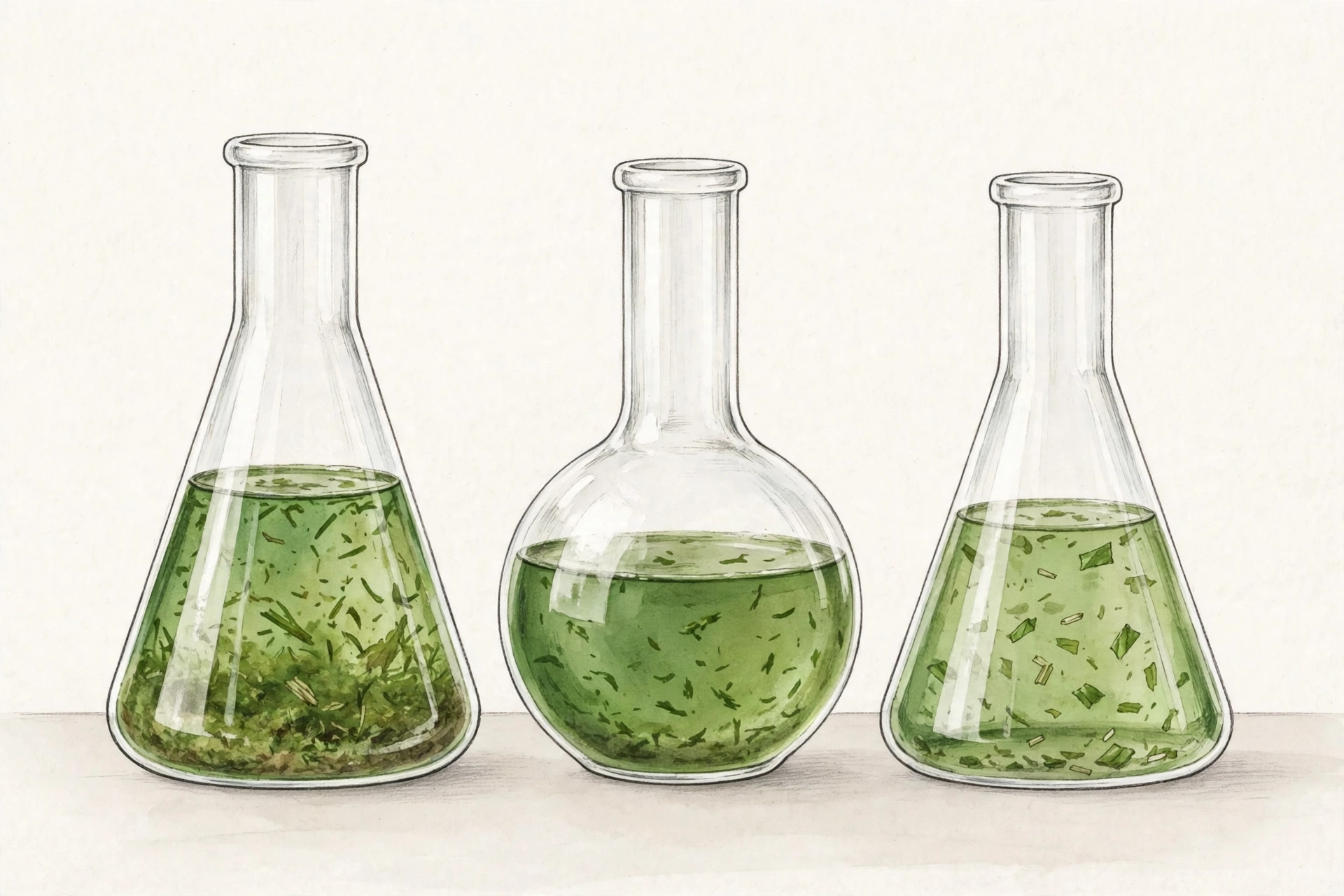
What Is Full Spectrum CBD?
Full spectrum CBD is the least processed of the three types. It is made by extracting oil from the hemp plant while keeping the full range of compounds the plant naturally contains. Alongside CBD, a full spectrum extract includes minor cannabinoids such as CBG (cannabigerol), CBC (cannabichromene), and CBDV (cannabidivarin), plus aromatic terpenes, flavonoids, fatty acids, and other plant compounds. It also contains trace amounts of THC, the psychoactive compound in cannabis. Under the United States 2018 Farm Bill, hemp derived products may legally contain up to 0.3 percent THC by dry weight, and full spectrum products sit within that limit.
Because nothing is selectively removed, full spectrum products have the strongest natural hemp flavor, often described as earthy or grassy, and a noticeable plant smell. Fans of this type choose it specifically for the completeness of the profile: every compound the plant produced is still present in the bottle. The main trade offs are the trace THC content, which matters for drug tested users, and the bold taste, which some people dislike. If you are comparing product formats as well as spectrum types, our CBD gummies vs CBD oil comparison walks through how oils and edibles differ in onset and convenience.
What Is Broad Spectrum CBD?
Broad spectrum CBD starts the same way as full spectrum, as a whole plant extract, but then goes through an additional refinement step that removes the THC. The goal is to keep the supporting cast of cannabinoids, terpenes, and flavonoids while taking THC out of the picture. When a label says THC free, it generally means no THC was detected by the laboratory’s testing equipment, not that every last molecule was mathematically eliminated, so the quality of the manufacturer’s testing matters.
Broad spectrum is often described as the middle ground. It preserves most of the plant compound diversity of full spectrum, which means the taste is still earthy though usually milder, and it appeals to people who want that broader profile but must avoid THC for work, sport, or personal reasons. It tends to cost slightly more per milligram than full spectrum because of the extra processing step required to remove the THC while keeping everything else intact.
What Is CBD Isolate?
CBD isolate is CBD in its purest commercial form. Manufacturers refine hemp extract through repeated purification until all other cannabinoids, terpenes, flavonoids, and plant matter are removed, leaving crystalline CBD powder that tests at around 99 percent purity. That powder can then be added to oils, edibles, capsules, or topicals with exact, predictable CBD content and nothing else from the plant.
Isolate has two standout practical advantages. First, it is essentially flavorless and odorless, which makes it the easiest type to take for people who dislike the hemp taste. Second, dosing is straightforward, because the milligrams on the label refer to pure CBD with no other active plant compounds in the mix. The trade off is that isolate does not offer the entourage effect, since there are no companion compounds to interact with. If you are just starting out, our CBD dosage guide for beginners explains how serving sizes are labeled so you can compare products accurately.
Full Spectrum vs Broad Spectrum vs Isolate: The Key Differences
THC content
This is the single biggest practical difference. Full spectrum products legally contain up to 0.3 percent THC. That sounds tiny, and in a single serving it is, but THC is fat soluble and can accumulate in the body with daily use over time. Broad spectrum products are processed to remove THC, and reputable ones show non detectable THC on their lab reports. Isolate contains no THC at all by design. If avoiding THC is a hard requirement for you, such as for workplace drug testing, the choice narrows to broad spectrum from a trusted manufacturer or isolate.
Cannabinoid and terpene profile
Full spectrum and broad spectrum both contain the hemp plant’s supporting compounds: minor cannabinoids like CBG and CBC, terpenes that give hemp its aroma, and flavonoids. The cannabis plant contains hundreds of distinct compounds, and both of these spectrum types preserve a wide slice of them. Isolate strips all of that away. This matters beyond marketing language, because terpenes and minor cannabinoids are part of what gives each product its character, flavor, and smell. An isolate oil will taste neutral no matter the brand, while two full spectrum oils can taste noticeably different depending on the hemp strain and extraction method.
The entourage effect
You will see the phrase entourage effect on many CBD product pages. It refers to the idea that the hemp plant’s compounds work better together than any single compound works alone, producing a combined result greater than the sum of its parts. Full spectrum offers the strongest version of this proposed synergy because it contains the complete compound profile, broad spectrum offers most of it minus THC, and isolate offers none of it.
It is worth being honest about the science here. The entourage effect is a plausible idea with some supporting preclinical research and at least one notable clinical meta analysis behind it, but it is not a firmly established, precisely measured phenomenon across all uses. Treat it as a reasonable working theory that many experienced users report subjectively, not as a proven medical fact. This article is educational only and makes no claims about health effects.
Drug test risk
Standard workplace drug tests do not screen for CBD. They screen for THC metabolites, mainly THC-COOH, the compound your body produces when it processes THC. CBD itself will not trigger a positive result on a standard panel. The risk comes from the trace THC that can accompany it. With full spectrum products, daily use can build up enough THC metabolites to cross a test’s cutoff threshold, and there are documented cases of this happening. Broad spectrum carries far less risk, and isolate carries the least, assuming the batch was actually tested and the label is accurate. Because the CBD market is not uniformly regulated and mislabeled products exist, a third party lab report is the only real assurance. We cover this topic in much more depth in our guide on how long CBD takes to work, which also touches on how cannabinoids clear from the body over time.
Taste, smell, and texture
Full spectrum oils taste the most like the plant they came from: earthy, grassy, sometimes bitter, with a distinct hemp aroma. Broad spectrum is similar but often a little milder after the extra refinement. Isolate is the clear winner for sensitive palates, with essentially no taste or smell, which is why it is popular in gummies, capsules, and flavored products where the manufacturer wants CBD to disappear into the recipe. If taste is your main complaint with CBD oil, switching spectrum types can help more than switching brands.
Price and value per milligram
Pricing does not follow a simple rule, because brand positioning matters as much as production cost. As a rough pattern, full spectrum often offers the lowest price per milligram of CBD, since it requires the least processing. Broad spectrum usually costs a bit more because THC removal adds a refinement step. Isolate is the purest form and sometimes carries a premium, though its simple production can also make it competitively priced. The smartest comparison is always price per milligram of CBD on the label, not price per bottle, because bottle sizes and concentrations vary widely.
Which Type Should You Choose?
There is no single best type, only the best type for your situation. Work through these common scenarios:
- You face workplace drug testing. Choose broad spectrum from a manufacturer that publishes third party lab reports, or CBD isolate. Avoid full spectrum entirely, since trace THC can accumulate with daily use.
- You want zero THC for personal reasons. Broad spectrum gives you plant compound diversity without THC, while isolate gives you maximum simplicity. Either works.
- You want the complete plant profile. Full spectrum is the obvious pick, as long as you are comfortable with trace THC and the stronger taste.
- You dislike the hemp taste. Isolate is nearly flavorless. Broad spectrum is the next best option.
- You want precise, predictable dosing. Isolate makes the math easy, since every milligram on the label is CBD.
- You are a beginner. Many first time buyers start with broad spectrum or isolate to keep things simple, then experiment from there.
Whatever you choose, buy from companies that publish current third party lab reports, known as certificates of analysis, for every batch. The report should confirm the CBD content, show the THC level, and screen for contaminants like heavy metals and pesticides. In a market where labels are not always accurate, the lab report is the product’s resume.
How to Read Labels and Lab Reports
Labels tell you the marketing story, lab reports tell you the chemical one. Start with the total CBD content in milligrams and the serving size, so you know how many milligrams each dropper or gummy actually delivers. Then check the spectrum type, which should be stated plainly as full spectrum, broad spectrum, or isolate. For full spectrum, look for the THC content. For broad spectrum or isolate, look for THC listed as non detected or 0.00 percent.
On the lab report itself, confirm the batch or lot number matches your product, check that the testing date is recent, and make sure the lab is independent of the manufacturer. Be skeptical of products that make bold health claims on the packaging. In the United States, Epidiolex is the only FDA approved CBD based medication, available by prescription, and other CBD products have not been evaluated for treating specific conditions, so sellers are not permitted to make disease treatment claims. A company that follows the rules on its label is more likely to follow the rules in its lab.
Frequently Asked Questions
Does full spectrum CBD get you high?
At the legally allowed THC levels of up to 0.3 percent, a normal serving of full spectrum CBD does not contain enough THC to cause intoxication for most people. CBD itself is non intoxicating. That said, individual sensitivity varies, and taking very large servings of a full spectrum product increases total THC intake, so start with the serving size on the label.
Can broad spectrum CBD still contain THC?
A properly made broad spectrum product should have no detectable THC, but the result depends on the manufacturer’s process and testing. Lower quality products may retain trace amounts. The certificate of analysis should list THC as non detected. If a company cannot show you that report, treat its THC free claim with skepticism.
Is CBD isolate less effective than full spectrum?
Isolate lacks the companion cannabinoids and terpenes behind the proposed entourage effect, so it does not offer the same whole plant profile. Whether that makes it less effective for a given person is individual and not something this article can claim medically. Many users choose isolate deliberately for its predictability, neutral taste, and zero THC content, and are perfectly happy with that trade.
Which spectrum type is best for beginners?
Most beginners do well starting with broad spectrum or isolate, since both remove THC from the equation and keep the decision simple. Pair that with the label reading basics in our CBD dosage guide for beginners, start with a low serving, and give it several days of consistent use before judging the experience.
Does the spectrum type affect legality?
In the United States, the 2018 Farm Bill removed hemp from the legal definition of marijuana, making hemp derived CBD products with less than 0.3 percent THC federally legal. That covers properly made full spectrum, broad spectrum, and isolate products. However, individual states have their own rules, and laws differ outside the United States, so check your local regulations, especially when traveling.
Which type is least likely to show up on a drug test?
CBD isolate from a lab tested batch carries the lowest risk, followed by broad spectrum. Full spectrum carries the highest risk because of its trace THC content. Remember that standard tests look for THC metabolites, not CBD, and that no product can absolutely guarantee a negative result, so anyone facing testing should weigh the risk carefully.
The Verdict
Full spectrum, broad spectrum, and isolate are three different answers to the same question: how much of the hemp plant do you want in your CBD? Full spectrum keeps everything, including trace THC, and offers the most complete plant profile along with the strongest taste and the highest drug test risk. Broad spectrum keeps the plant compounds while removing THC, making it the middle path for people who want diversity without THC exposure. Isolate strips the extract down to pure CBD, delivering neutral taste, simple dosing, and the lowest THC risk. Match the type to your priorities, verify every claim against a third party lab report, and you will have made an informed choice rather than a guess. For more plain language explainers in this series, DigitalGeekSpot publishes practical CBD guides alongside its wider technology coverage.

Related Articles
- CBD Dosage Guide for Beginners: Key Basics (find it in the DigitalGeekSpot CBD archive)
- CBD Gummies vs CBD Oil: Which Should You Choose? (find it in the DigitalGeekSpot CBD archive)
- How Long Does CBD Take to Work? Onset Times Explained (find it in the DigitalGeekSpot CBD archive)
Note: this article is general educational information about how CBD products are labeled and discussed, not medical advice. Talk to a qualified professional before using CBD, especially if you take medication, are pregnant or nursing, or are subject to drug testing.




1 Comment