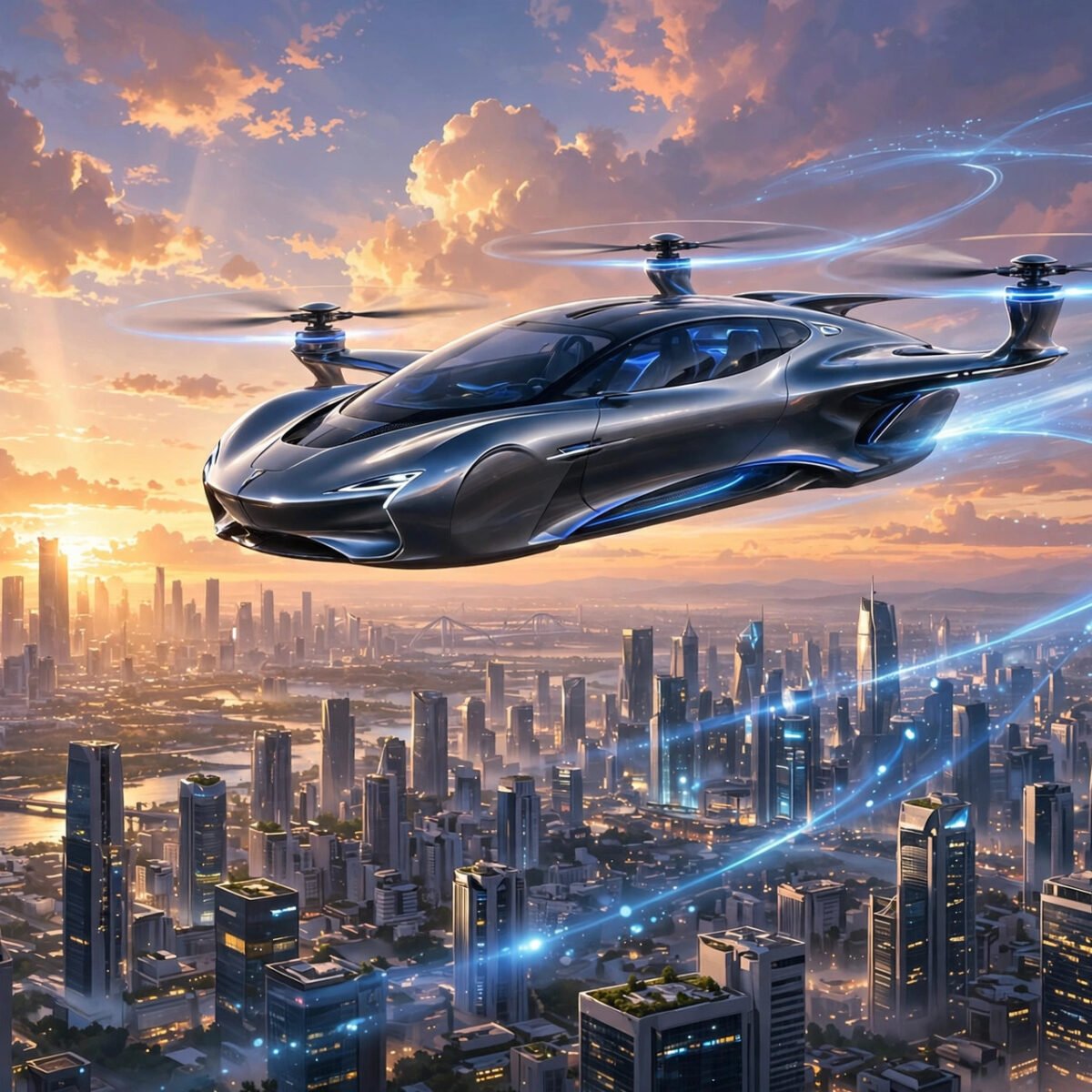
If you have come across the word “jipinfeiche,” you have probably noticed that it looks out of place in English-language writing. The term is Chinese pinyin, and roughly translated it suggests a premium or luxury flying car: “jipin” points to something of top quality, and “feiche” means a flying vehicle. Put together, “jipinfeiche” reads as a descriptive phrase for the kind of high-end personal aircraft that appears in science fiction films and keeps resurfacing in technology headlines.
This article treats “jipinfeiche” as a doorway into a real technology topic: the flying car industry, known in engineering circles as eVTOL, or electric vertical takeoff and landing aircraft. Below, we explain how these vehicles are supposed to work, where the industry stands today, and the safety and regulatory questions that still need answers.
One quick note on the term itself. “Jipinfeiche” is not a brand, a product name, or an established industry term. You will not find it in aerospace textbooks or certification documents. It is best understood as a descriptive Chinese phrase for a premium flying car concept, and the rest of this guide focuses on the real technology behind that idea.
Key Takeaways
- “Jipinfeiche” is Chinese pinyin for a premium flying car concept, not an official product or brand.
- The real technology behind the idea is called eVTOL: electric aircraft that take off and land vertically.
- Prototype eVTOL aircraft have flown, but regular commercial passenger service is not yet a reality.
- Battery energy density, safety redundancy, noise, and regulation are the main barriers before flying cars can scale.
- Any timeline you read for mass adoption should be treated as speculative until services are certified and operating.
Interest in flying cars has risen and fallen for decades, but the current wave is different. It is driven by electric propulsion, which is quieter and mechanically simpler than combustion engines, and by the rapid progress of drone technology, which proved that multiple small electric rotors can lift and stabilize an aircraft. At DigitalGeekSpot, we track these emerging technology trends, and the eVTOL story is one of the most interesting, and most overhyped, to watch.
Before going further, a word on honesty. Much of what is written about flying cars mixes genuine engineering progress with marketing. This guide sticks to what is broadly verifiable about the technology and the industry, and flags speculation where it appears. We have a whole format for decoding unfamiliar internet terms, like our explainer on what Sosoactive is, and this article applies the same skepticism to a Chinese tech phrase that has started circulating online.
What Does “Jipinfeiche” Mean?
In plain terms, “jipinfeiche” appears to mean a luxury or premium flying car. It is a compound of Chinese pinyin rather than an English word, and it does not correspond to any single company, aircraft model, or certified technology.
That matters because unfamiliar foreign-language terms sometimes get treated online as if they name a specific breakthrough product. With “jipinfeiche,” there is no evidence of that. The useful question is not “where can I buy a jipinfeiche” but “what would a premium flying car actually require to exist,” and that question leads directly into eVTOL technology. If you want a reminder of how online descriptions of tech products deserve a second look, our TozMagazine review shows how we approach viral tech claims with independent checks.
How Do Flying Cars and eVTOL Aircraft Actually Work?
Most serious flying car designs are not cars with wings bolted on. They are electric aircraft designed from the start for short urban or regional trips, usually carrying two to six passengers, taking off and landing vertically like a helicopter.
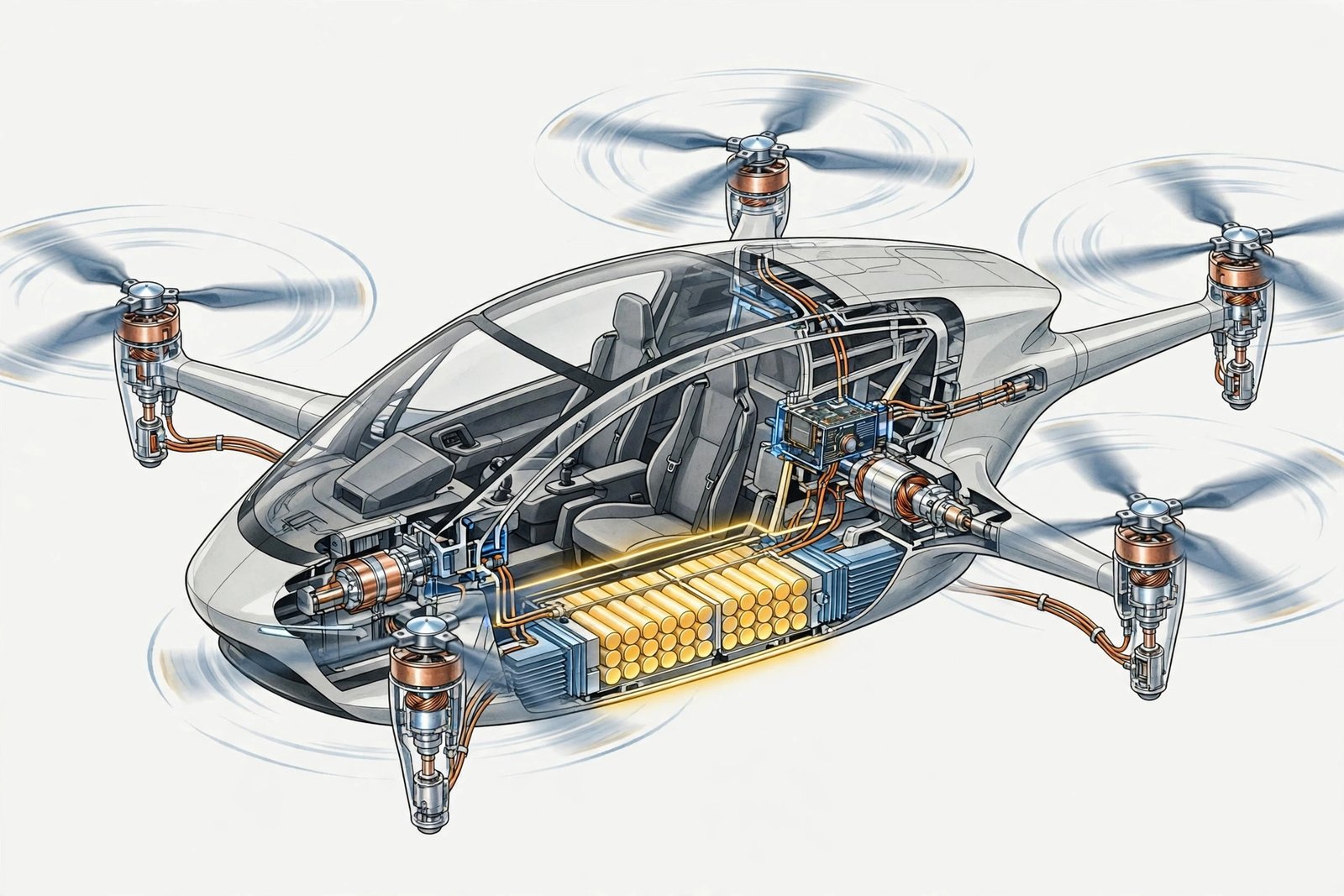
The core idea is distributed electric propulsion. Instead of one or two large engines, an eVTOL uses many small electric motors driving propellers or fans. Electric motors respond almost instantly to control inputs, so a flight computer can adjust each rotor many times per second to keep the aircraft stable. This is the same principle that makes camera drones easy to fly, scaled up to carry people.
The Main Design Approaches
Engineers have converged on a few broad design families. Each trades range, complexity, and noise against the others, and none has clearly won yet:
| Design family | How it flies | Main trade-off |
|---|---|---|
| Multirotor | Many fixed vertical rotors lift the aircraft directly, like a large drone. | Simple and stable, but inefficient in forward flight, so range is limited. |
| Tilt-rotor or tilt-wing | Rotors or the whole wing rotate from vertical (takeoff) to horizontal (cruise). | Much better cruise efficiency, but far more mechanical complexity. |
| Lift-plus-cruise | Separate rotors handle vertical lift while a propeller or fan pushes the aircraft forward. | Simpler transition than tilt designs, with extra weight from the separate systems. |
| Roadable concepts | Designed to both drive on roads and fly, folding or stowing flight surfaces. | Maximum versatility, but heavy compromises for both driving and flying. |
Batteries are the central constraint. Aviation fuel stores far more energy per unit of weight than today’s rechargeable batteries, which is why eVTOL designs focus on short hops rather than long flights. Improvements in battery chemistry would directly extend range, but this is a chemistry problem, not a software problem, so progress is gradual rather than sudden.
What Is the Current State of the Flying Car Industry?
The honest short answer: prototypes exist and have flown, but flying cars are not a commercial transportation option yet. Dozens of companies and research teams around the world have built and test-flown eVTOL demonstrators, and some have progressed to crewed test flights. That is genuine progress, and it is a long way from where the field was a decade ago.
However, test flights and revenue service are very different things. A short test flight proves the aerodynamics work, not that the aircraft can be certified, manufactured at scale, or operated profitably. Each of those is its own multi-year challenge.
What to watch for as real milestones, in rough order:
- Type certification: aviation authorities formally approving an eVTOL design for commercial use. This is the single most important gate.
- Production at scale: moving from hand-built prototypes to repeatable manufacturing with consistent quality.
- Operating economics: ticket prices and utilization rates that make air taxi routes commercially viable, not just technically possible.
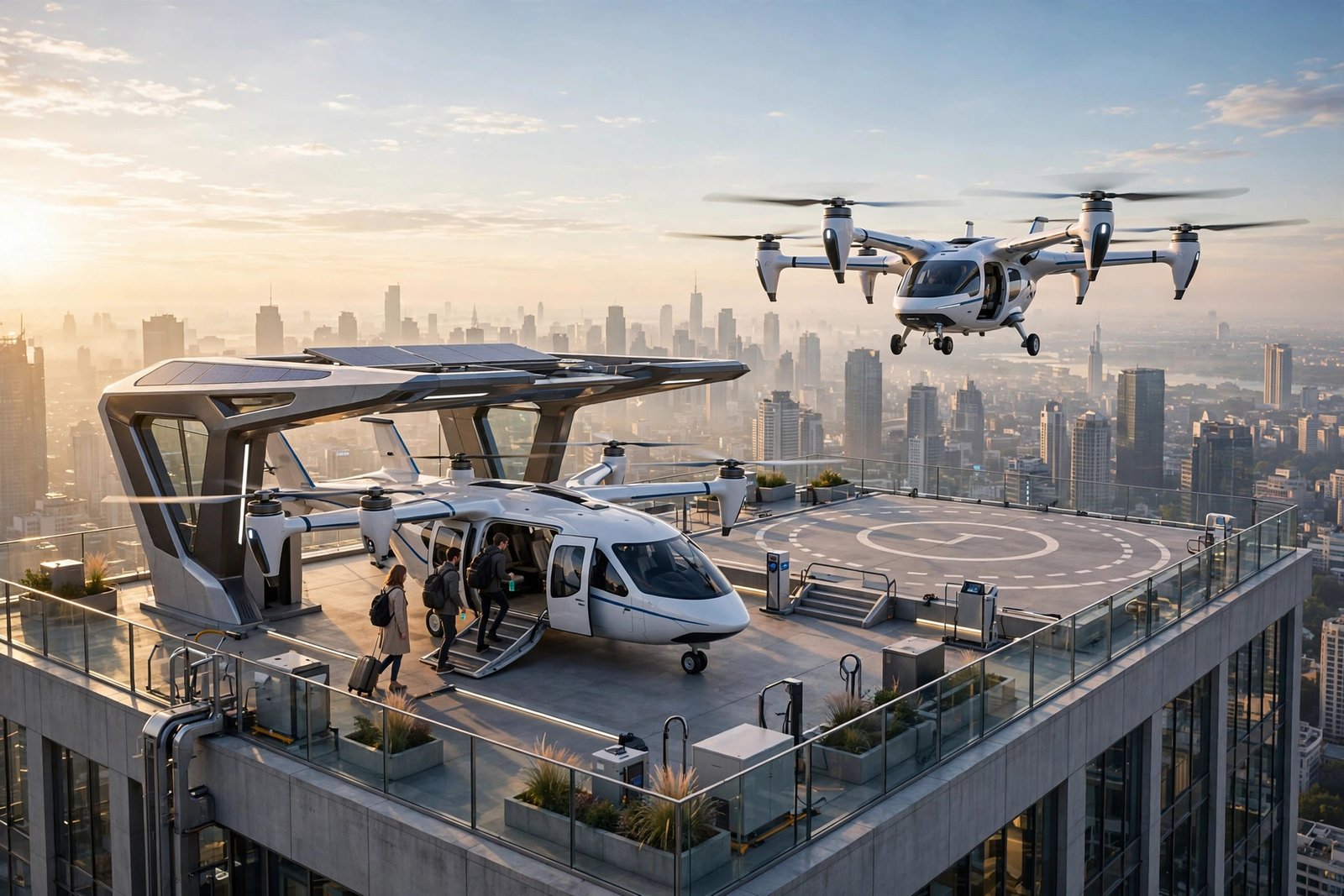
- Infrastructure: vertiports, charging systems, and maintenance facilities in actual cities.
Until the first item is cleared for a specific aircraft and operator, treat every launch date as a target, not a fact.
What Safety Challenges Do Flying Cars Face?
Aviation is unforgiving, and eVTOL designs introduce failure modes that helicopters and airplanes do not share. Regulators and engineers focus on several hard problems:
- Redundancy: with many small rotors, the design must tolerate several motor or rotor failures and still land safely. Distributed propulsion helps here, since losing one of many rotors is less catastrophic than losing a helicopter’s single main rotor, but the control software must handle it flawlessly.
- Battery safety: large lithium battery packs can catch fire if damaged or overheated, and a fire in flight is far more dangerous than one on the ground. Thermal management and containment are critical design areas.
- Noise: many small rotors can be quieter than a helicopter, but a sky full of air taxis over residential areas raises a real noise question that affects public acceptance.
- Weather: small, light aircraft are more vulnerable to wind gusts, icing, and storms than airliners. Early services would likely be limited to good weather, which constrains reliability.
- Autonomy and piloting: most designs start with onboard pilots, but the long-term vision involves high automation or remote piloting. Each step raises new questions about software reliability and human oversight.
- Airspace management: cities would need systems to route many low-altitude flights safely around buildings, other aircraft, and restricted zones. This infrastructure barely exists today.
None of these are obviously unsolvable, but solving all of them simultaneously, to aviation-grade standards, is the work of years.
How Are Regulators Treating Air Taxis?
Aviation regulators in major markets have been developing certification frameworks specifically for eVTOL aircraft, rather than forcing them into rules written for airplanes or helicopters. This is a positive sign: it means regulators take the category seriously. But new frameworks also mean new processes, and certification of a novel aircraft type has historically taken many years even for conventional designs.
Beyond the aircraft itself, regulators must address pilot licensing for a new category of vehicle, maintenance standards, vertiport design rules, and the air traffic systems for low-altitude urban operations. Each of these moves on its own timeline, and commercial service needs all of them, not just one.
The practical takeaway is that regulation is neither a rubber stamp nor a permanent roadblock. It is a slow, deliberate filter, and investors and journalists sometimes underestimate how slow “deliberate” is in aviation.
When Might Flying Cars Become Practical?
Nobody can answer this honestly with a date. What can be said is what “practical” would require: certified aircraft, trained pilots or approved automation, vertiports in real cities, ticket prices ordinary travelers might pay, and a safety record that earns public trust. Today, the industry has prototypes and test programs. The rest is still to come.
A reasonable way to think about it is in phases. Limited demonstration and early commercial routes in a few cities would come first, likely expensive and weather-dependent. Broader service at prices competitive with ground transport would come much later, if ever, and depends heavily on battery improvements and manufacturing scale that have not been demonstrated yet.
Be skeptical of confident predictions about flying cars: this industry has a long history of slipped timelines.
Frequently Asked Questions
Is “jipinfeiche” a real flying car I can buy?
No. It is a Chinese pinyin phrase suggesting a premium flying car, not a product, brand, or company. No certified passenger flying car is available for general purchase today.
What does eVTOL stand for?
Electric vertical takeoff and landing. It describes aircraft that use electric motors to take off and land vertically, without a runway.
How are eVTOL aircraft different from helicopters?
Helicopters use a combustion engine driving one main rotor, while eVTOL designs typically use many small electric motors. eVTOL aircraft are generally expected to be quieter, simpler mechanically, and cheaper to operate, though these advantages are still being proven at scale.
Are any flying cars certified for passengers yet?
Certification programs are underway in several countries, but as of this writing, no eVTOL aircraft has completed full commercial passenger certification and entered regular scheduled service. Check aviation authority announcements rather than company press releases for the current status.
How far can a flying car fly?
Most eVTOL concepts target short cross-city trips, because battery weight limits range. Exact figures vary by design and are unproven in commercial operation, so treat range claims as targets.
Will flying cars be affordable?
Early air taxi services, if they launch, are expected to be premium-priced, closer to helicopter charters than to rideshares. Whether prices ever fall to mass-market levels depends on manufacturing scale, battery costs, and operating efficiency that have not been demonstrated.
What is a vertiport?
A vertiport is a takeoff and landing facility designed for eVTOL aircraft, similar in concept to a heliport but with electric charging infrastructure and facilities for high-frequency passenger operations. Building networks of them is one of the industry’s major infrastructure challenges.
Are flying cars safe?
Test programs operate under strict experimental conditions, but there is no commercial safety record to judge yet. The industry’s safety case rests on redundant rotors, rigorous certification, and conservative operating limits, all of which still need to be proven in real service.
The “jipinfeiche” idea captures the enduring appeal of personal flight, upgraded for an electric age. The technology is advancing, from test flights to certification programs, but the distance from a flying prototype to a flying car you could actually hail will be crossed through batteries, safety engineering, and regulation. For more grounded explainers on emerging tech, browse the rest of DigitalGeekSpot.