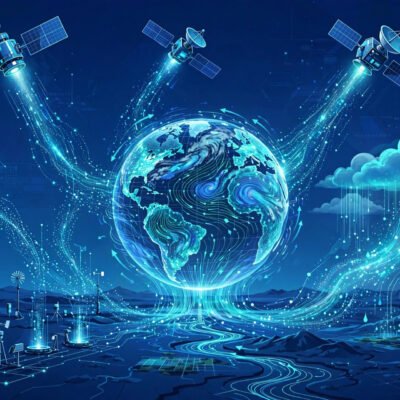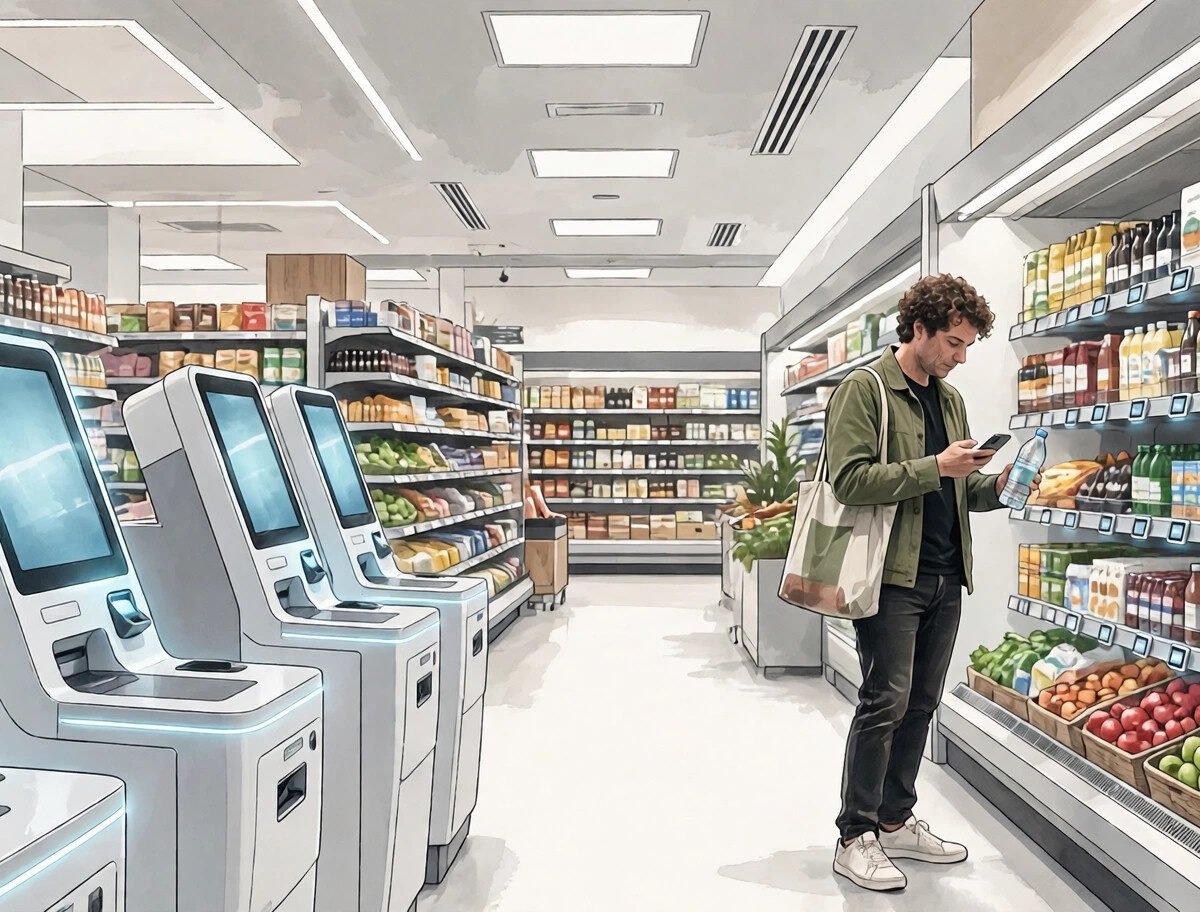
The average supermarket visit used to involve a paper list, a long checkout line, and a cashier who rang up every item by hand. That picture has changed. Walk into almost any large grocery store today and you will see shoppers scanning items with their phones, paying at machines with no cashier, and staff restocking shelves while tablets show what is running low.
This guide explains the main technologies supermarkets use, how each one works in plain language, and what it all means for shoppers. You do not need a technical background to follow along. We will cover checkout systems, inventory management, online ordering, loyalty apps, and the supply chain technology that connects farms and factories to your local store.
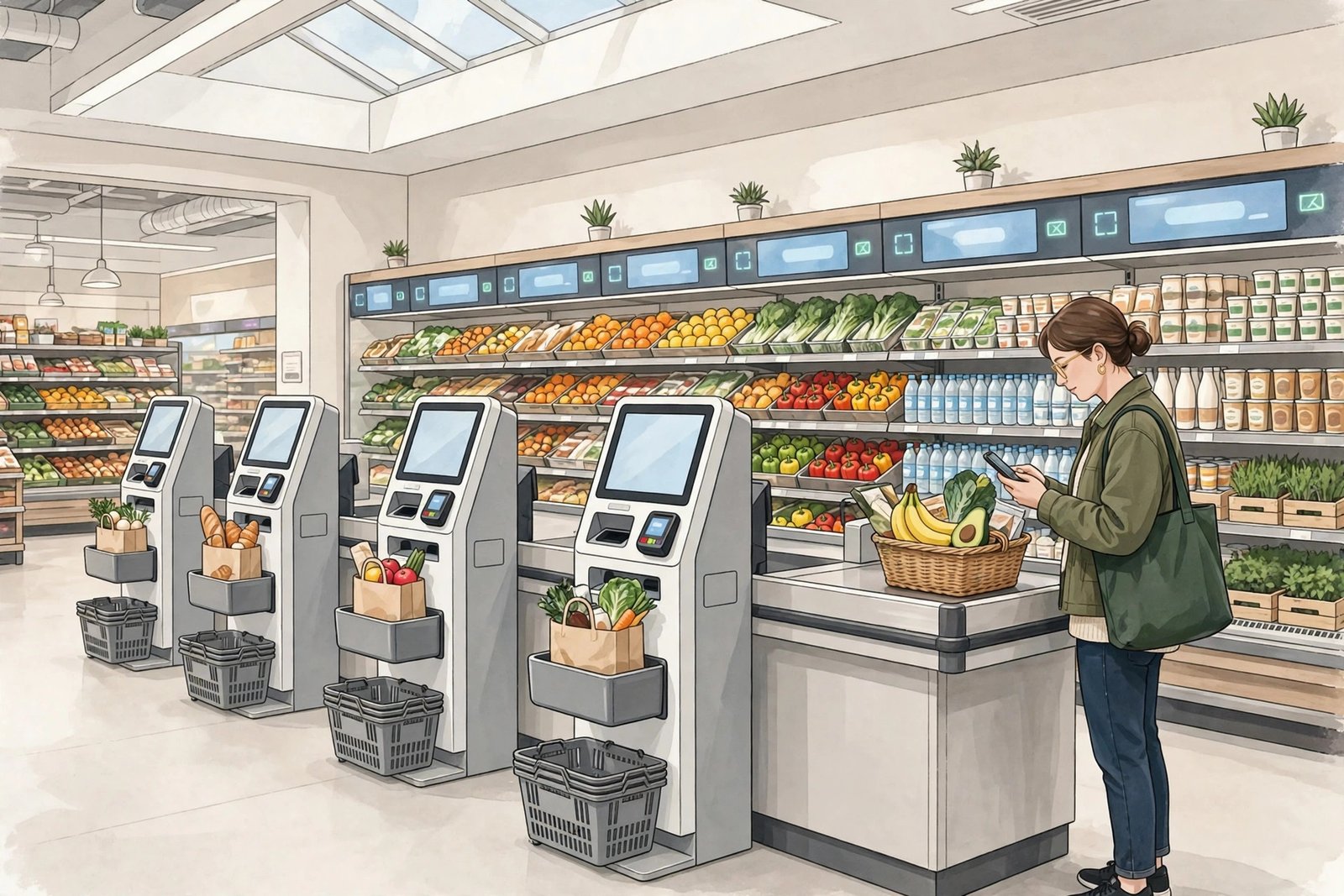
Key Takeaways: Supermarkets run on customer-facing tech (self-checkout, scan-and-go apps, electronic shelf labels) and back-end systems (point-of-sale software, inventory databases, warehouse automation). Every scan and order feeds planning systems that forecast demand and restock shelves. If you searched for “supermaked,” you meant “supermarket,” and this guide covers supermarket technology from checkout to supply chain.
What Is “Supermaked” and Why Does It Appear in Search Results?
“Supermaked” is not a real product, brand, or company. It is almost certainly a typo of the word “supermarket,” typed quickly on a phone keyboard and submitted before the missing letters were noticed. For the rest of this guide, treat “supermaked” as a signpost pointing toward supermarket technology: the systems behind checkout, stock, ordering, and delivery. For more technology explainers like this one, browse the DigitalGeekSpot homepage.
What Technology Do Modern Supermarkets Use?
Modern supermarkets use two layers of technology. The visible layer includes self-checkout kiosks, scan-and-go phone apps, digital price tags, and loyalty apps. The hidden layer includes point-of-sale software, inventory databases, and warehouse automation. Here are the main systems, in the order a shopper usually encounters them:
- Point-of-sale (POS) systems: the registers, card readers, and software that record every sale and send it to the store database.
- Self-checkout and scan-and-go: machines and phone apps that let shoppers scan and pay for items without a cashier.
- Electronic shelf labels: small digital price tags that update prices remotely instead of being swapped by hand.
- Inventory management software: tracks what is in stock, what is selling fast, and what needs reordering.
- Loyalty apps: store accounts on your phone that apply discounts, digital coupons, and reward points.
- Online ordering platforms: websites and apps for grocery pickup or home delivery.
- Warehouse and logistics systems: software and equipment that move goods from suppliers to distribution centers and then to stores.
These systems are connected. A single scan at the till updates the inventory count, feeds the reordering logic, and logs the purchase in a loyalty profile.
How Does Self-Checkout Technology Work?
A self-checkout machine combines a barcode scanner, a touchscreen, a payment terminal, and a weighing scale in the bagging area. You scan each item, the system looks up its price, the scale checks that the scanned item landed in the bag, and you pay by card or cash. Staff supervise several machines at once and step in for age-restricted items or scale mismatches.
The weighing scale is the quiet workhorse of the setup. Every product has an expected weight on file, so when the scale detects something heavier or lighter than expected, it pauses the transaction and calls for help. This catches honest mistakes, like forgetting to scan an item, as well as deliberate ones. The system is not perfect, and stores generally accept a small amount of loss as the cost of faster checkouts.
Scan-and-go takes the same idea further. Shoppers scan barcodes with the store app as they walk the aisles, pay inside the app, and show a code at the exit. Some stores add random audits, where staff re-scan a few items, to keep the system honest. If you are curious about how retail platforms are reviewed, see our Tozy Magazine review.
How Do Supermarkets Keep Track of Inventory?
Every product has a barcode (and sometimes an RFID tag) that acts as its identity. Each sale, delivery, and restock is logged in an inventory database, so the system holds a running count of what should be on the shelf. When the count drops below a set threshold, the software generates a reorder request automatically.
In practice, the running count is never exactly right, so stores run regular cycle counts. Staff walk the aisles with handheld scanners and count selected sections, and the software reconciles the difference. Over time, the system learns from sales history: milk sells faster on weekends, soup spikes in cold months, and promotions empty shelves in days. That history feeds demand forecasting, which adjusts how much gets ordered for each delivery.
Electronic shelf labels play a supporting role. Because the price on the shelf comes from the same database as the price at the till, the store avoids the classic problem of a shelf tag saying one price while the register charges another. When headquarters runs a price change, it can push new prices to hundreds of labels in minutes instead of sending staff to replace paper tags overnight.
What Technology Powers Online Grocery Ordering?
Online grocery runs on ecommerce software adapted for perishable goods. The app or website shows live stock from a specific store, offers time slots for pickup or delivery, and hands the order to fulfillment software. That software assigns a picker, who gathers the items using a phone app that guides them aisle by aisle and suggests substitutions when something is out of stock.
Two fulfillment models dominate. In store-based picking, staff pull items straight off the same shelves shoppers use, which is simple to set up but can crowd the aisles during busy hours. In the dark store model, orders are picked inside small fulfillment centers that are not open to the public, designed purely for speed. Perishables add another layer: refrigerated bags, insulated delivery boxes, and cold vans keep the cold chain intact to the customer door.
Delivery routing software sits behind all of this. It groups orders by neighborhood, assigns drivers, and sequences stops so frozen goods arrive still frozen. Customers usually see only the friendly app screen. For a broader look at how online platforms are structured, check our what is sosoactive explainer.
How Do Loyalty Apps and Personalized Offers Work?
A loyalty app links your purchases to an account. The supermarket records what you buy, then uses that history to send relevant discounts, digital coupons, and reward points. You get lower prices on things you buy; the store gets a clearer picture of shopping habits.
The offers are usually generated by simple rules rather than anything mysterious. Buy baby food regularly, and you will see coupons for diapers. Shop mostly on weekends, and weekend-only deals appear in the app. The data also feeds store planning: if loyalty data shows a neighborhood buying more plant-based products, the store can widen that section with some confidence.
Privacy is the natural concern here. Loyalty programs record linked purchases by design, which is how the discounts work. Most apps let you limit marketing messages or delete your account, and it is sensible to check those settings if you use one.
How Does Supply Chain Technology Get Food to the Shelves?
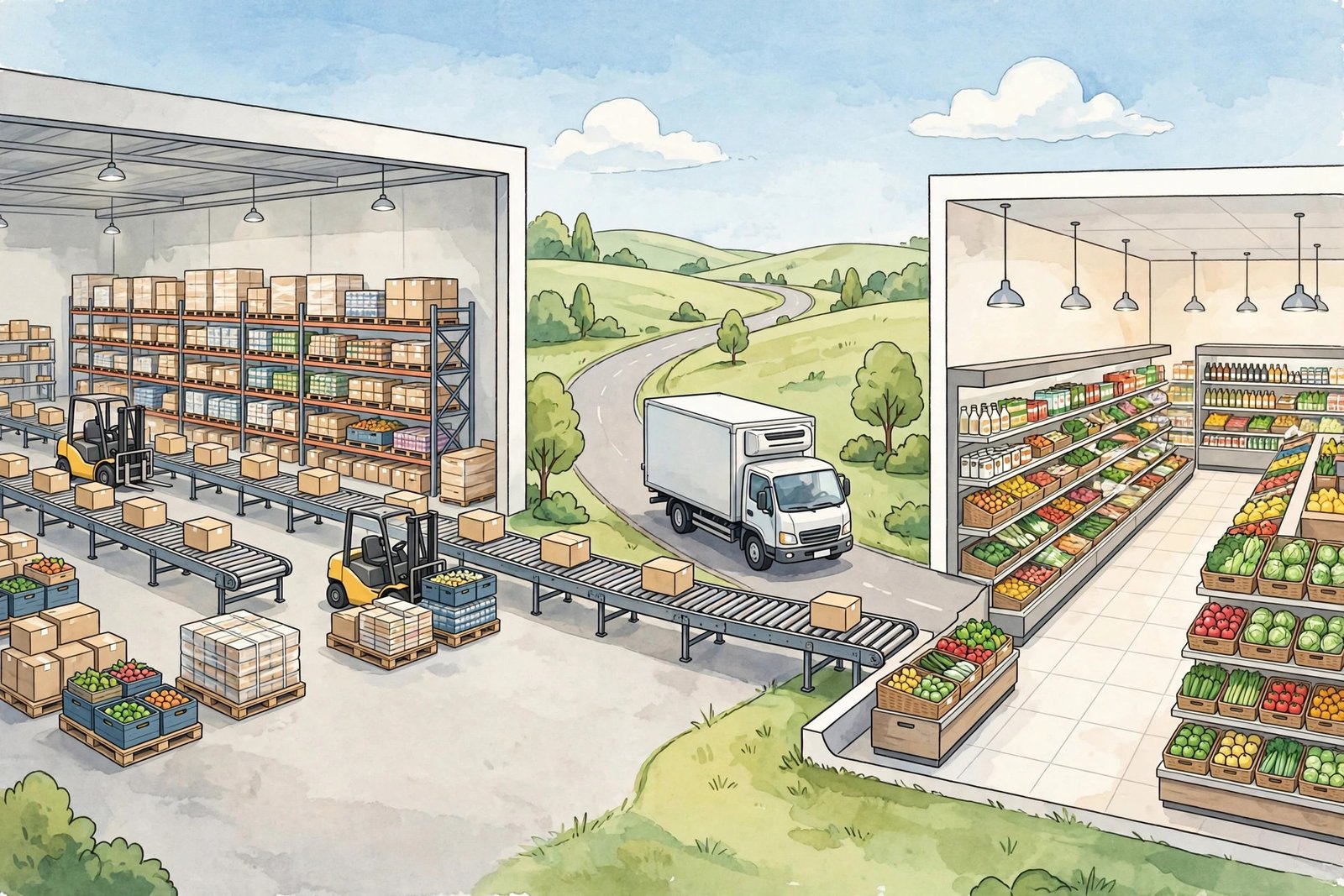
Supermarkets sit at the end of long supply chains. Distribution centers use warehouse management software to receive, sort, and dispatch goods, while transport planning tools choose delivery routes and time windows. Demand forecasting models look at past sales, seasons, and promotions to estimate how much of each product every store will need.
Fresh produce and dairy move on the fastest schedules, often arriving daily, while canned and packaged goods can be planned weeks ahead. At each handoff, from supplier truck to distribution center to store back room, barcode or RFID scans record what arrived and when. That traceability matters most during recalls: if a batch of packaged food is found to be contaminated, the system can identify which stores received it and pull it from shelves quickly.
Automation is growing inside distribution centers. Conveyor systems, automated storage, and robotic pallet movers handle the heavy, repetitive work of moving cases of goods. None of this is visible to shoppers, but it is a big reason a store with thousands of products can restock overnight. Related platform walkthroughs, like our nemin io guide, explain complex backend systems in plain language.
Supermarket Technology at a Glance
The table below summarizes the main technologies, what each one does, and where a shopper actually encounters it.
| Technology | What it does | Where shoppers see it |
|---|---|---|
| POS system | Records sales and processes payments | Every checkout lane, staffed or self-service |
| Self-checkout kiosk | Lets shoppers scan and pay themselves | Checkout area, supervised by one or two staff |
| Scan-and-go app | Turns your phone into a scanner | Aisles and exit, via the store app |
| Electronic shelf labels | Display prices from the central database | On shelves, replacing paper price tags |
| Inventory software | Tracks stock levels and triggers reorders | Invisible, but explains why shelves stay full |
| Online ordering platform | Handles pickup and delivery orders | Store app or website, plus the pickup point |
| Loyalty app | Applies discounts and records purchases | Phone screen at checkout or in the app |
| Warehouse management | Runs distribution centers and dispatch | Invisible, keeps deliveries on schedule |
What Are the Benefits and Downsides for Shoppers?
The benefits are mostly about time and convenience: shorter waits, saved trips through pickup or delivery, accurate shelf prices, and loyalty discounts on everyday items. The honest downsides include a learning curve for new systems, occasional technical failures (a frozen kiosk, an app that will not load), and unease about how much purchase data loyalty programs collect. Knowing how the technology works makes it easier to decide which parts to use and which to skip.
Frequently Asked Questions
Is “supermaked” a real word or a company name?
No. “Supermaked” is a common misspelling of “supermarket.” It is not a brand, product, or company, and this guide uses it as the entry point to explain supermarket technology.
Do self-checkout machines actually save time?
Often, yes, especially for small baskets during busy periods. For large weekly shops, a staffed lane with a fast cashier can be quicker. It depends on the store, the time of day, and how comfortable you are with the machine.
How do supermarkets know when to restock a product?
Every sale is logged against an inventory count, and when the count falls below a threshold, the system creates a reorder request. Sales history and seasonal patterns help the software forecast how much to order.
Are electronic shelf labels used everywhere?
Not everywhere. They are most common in larger chains that can justify the upfront cost, and adoption varies by country and retailer. Many smaller or independent stores still use paper tags.
Can I order groceries online from any supermarket?
Many large chains offer online ordering with pickup or delivery, but availability depends on your area. Smaller independent shops may not offer it at all. Check the store website or app for your location.
Do loyalty apps track everything I buy?
Purchases made with the loyalty account linked are recorded, because that record generates the discounts and points. Most apps include settings to limit marketing messages, and you can usually delete your account.
What is a dark store?
A dark store is a small fulfillment center that looks like a supermarket inside but is not open to the public. Staff pick online orders from its shelves, keeping pickers out of the way of in-store shoppers.
The Bottom Line
A modern supermarket is really two businesses in one: a store you walk through and a data operation you never see. The visible technology, from self-checkout kiosks to loyalty apps, makes shopping faster and more personal. The invisible technology, from inventory databases to warehouse automation, keeps thousands of products flowing onto the shelves every day. Understanding both helps you shop smarter, whether that means skipping the checkout line with scan-and-go or knowing why your favorite brand is always in stock.
Technology in retail keeps evolving, and supermarkets are usually early adopters because margins are thin and efficiency matters. If you found this guide useful, explore more plain-language tech explainers on DigitalGeekSpot, including our Magazine Luiza email format guide.