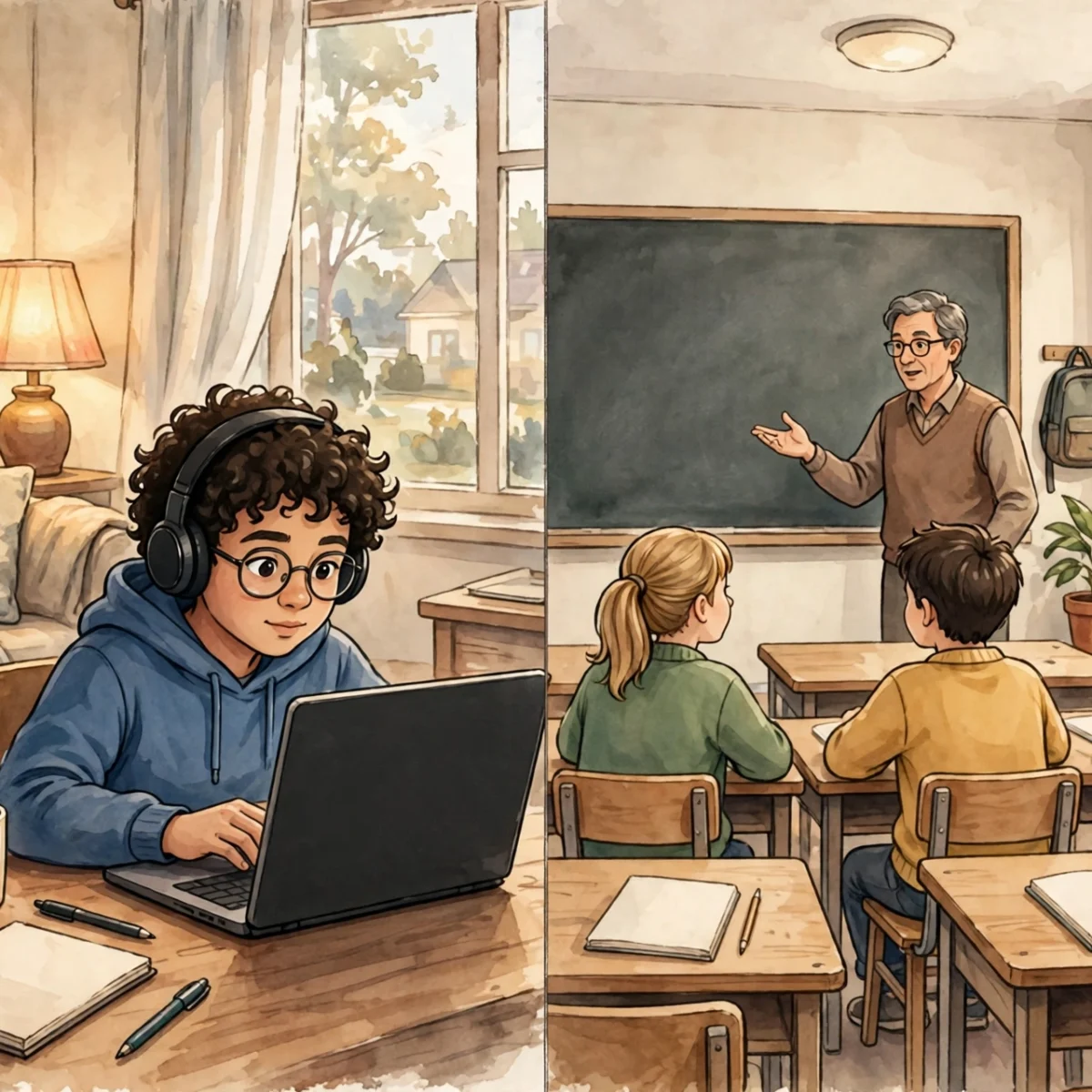
Choosing between online learning vs traditional classroom education is one of the biggest decisions students and parents face today. Both formats can deliver an excellent education, but they work in very different ways. Online learning offers flexibility and access to courses from anywhere, while the traditional classroom provides face-to-face interaction and a structured daily routine.
There is no single right answer for everyone. The best choice depends on the student’s learning style, schedule, goals, and home environment. This guide compares online learning vs traditional classroom education side by side, covering the real pros and cons of each format, so you can make a confident, well-informed decision.
What Online Learning Looks Like Today
Online learning has grown far beyond simple video lessons. Today’s online programs include live virtual classes, interactive assignments, discussion forums, digital labs, and one-on-one video meetings with instructors. Students might attend scheduled live sessions, work through self-paced modules, or combine both approaches in a hybrid model.
Online education now spans every level, from elementary programs and high school courses to college degrees and professional certificates. Some students learn fully online from home, while others take a mix of online and in-person classes. Technology has made it possible to collaborate on group projects, take proctored exams, and build real relationships with teachers and classmates without sharing a physical room. For students who want digital support with their studies, our roundup of the best AI tools for students covers apps that pair well with online coursework.
What the Traditional Classroom Offers
The traditional classroom remains the most familiar model: students gather in a physical room, follow a set daily schedule, and learn directly from a teacher alongside their peers. Lessons unfold in real time, with immediate opportunities to ask questions, join discussions, and participate in hands-on activities like science labs, art projects, and group presentations.
Beyond academics, traditional schools provide a built-in social world. Hallway conversations, lunch tables, clubs, sports teams, and school events all contribute to social development and lasting friendships. The structured environment also helps many students build routines: waking up at a consistent time, moving between classes, and separating school life from home life. For families who value this structure, the classroom model has centuries of proven results behind it.
Advantages of Online Learning
Online learning’s biggest strength is flexibility. Students can often set their own schedules, study at their most productive hours, and revisit recorded lessons as many times as needed. This is a major advantage for students who juggle jobs, family responsibilities, health needs, or intensive extracurricular training.
Access is another key benefit. Online programs remove geography from the equation, letting students take specialized courses, learn from expert instructors, or attend schools that would be impossible to reach in person. Rural students, frequent movers, and those with rare academic interests all gain options they would not otherwise have.
Online learning can also be highly personalized. Adaptive platforms let students move quickly through material they already understand and spend more time where they struggle, instead of keeping pace with an entire class. Many learners also find that the digital format builds valuable skills: time management, self-discipline, written communication, and comfort with technology. Students looking to stay organized while learning online may benefit from productivity platforms; see our comparison of Notion AI vs ClickUp Brain for tools that help manage assignments and notes. You can find more learning resources like these on the DigitalGeekSpot homepage.
Disadvantages of Online Learning
The same flexibility that attracts students can become a drawback without strong self-discipline. Without bells, teachers, and classmates nearby, it is easy to procrastinate, fall behind on assignments, or disengage during lessons. Students who thrive on external structure often struggle in self-paced environments, and parents may need to take a more active supervisory role.
Social interaction is another common concern. While online programs offer discussion boards and video calls, these rarely replace the spontaneous friendships and social learning of a physical school. Younger students especially may miss out on the teamwork, conflict resolution, and nonverbal communication skills that develop naturally in person.
Practical limitations matter too. Online learning requires reliable internet, a suitable device, and a quiet place to study, resources not every household has. Screen fatigue is real during long days of virtual classes. And some subjects, like chemistry labs, performing arts, or hands-on vocational training, are difficult to teach well without physical equipment and in-person supervision.
Advantages of the Traditional Classroom
Face-to-face interaction is the traditional classroom’s greatest asset. Students can read a teacher’s body language, ask a quick question the moment confusion strikes, and learn from classmates’ questions and perspectives. Discussions feel more natural, group work is easier to coordinate, and teachers can spot struggling students and intervene immediately.
Structure and routine benefit many learners. A fixed schedule with clear transitions between subjects helps students develop time management habits and keeps learning momentum steady. The physical separation between school and home also helps students focus: when you walk into a classroom, your brain knows it is time to learn.
Schools also provide resources that are hard to replicate at home: science laboratories, art studios, music rooms, libraries, sports facilities, and specialized equipment. Extracurricular programs, from robotics clubs to theater productions, give students ways to discover passions and build college or career applications. For many families, the community aspect alone, knowing teachers, staff, and other parents in person, is reason enough to choose the classroom.
Disadvantages of the Traditional Classroom
The fixed schedule that helps some students constrains others. Everyone moves at the same pace, which can bore advanced learners and rush those who need more time. Commuting eats into the day, and rigid attendance policies offer little room for appointments, travel, or personal circumstances.
Traditional schooling also limits choice. Students are generally restricted to the courses, teachers, and programs their local school offers. A student passionate about a niche subject may find no class for it, and families unhappy with their zoned school may have few alternatives without moving.
Cost and logistics add up as well: transportation, uniforms or dress codes, school supplies, activity fees, and for private schools, tuition. Classroom environments can also present challenges like overcrowding, distractions from peers, or, in difficult cases, bullying, problems that are harder for parents to monitor than an online dashboard.
Online Learning vs Traditional Classroom: Side-by-Side Comparison
Here is a quick comparison of the two formats across the factors families care about most:
| Factor | Online Learning | Traditional Classroom |
|---|---|---|
| Schedule | Flexible, often self-paced | Fixed daily timetable |
| Location | Learn from anywhere | Must attend in person |
| Social interaction | Virtual, less spontaneous | Daily face-to-face contact |
| Pacing | Personalized to the student | Same pace for the whole class |
| Course choice | Wide, not limited by geography | Limited to local offerings |
| Hands-on subjects | Harder to teach remotely | Labs, studios, and equipment on site |
| Self-discipline needed | High | Moderate, structure is provided |
| Typical costs | Often lower, no commuting | Transport and activity costs add up |
How to Decide Which Format Fits You
Start with an honest assessment of the student. Self-motivated learners who manage their time well and enjoy working independently often thrive online. Students who need social energy, hands-on guidance, and external routine usually do better in a classroom. Learning differences matter too: some students focus better in quiet home settings, while others need the stimulation of a busy classroom.
Parents should consider practical factors as well. Is there a quiet study space and reliable internet at home? Can an adult supervise younger children during the day? What are the academic goals: catching up, getting ahead, or pursuing a specialized interest? Visiting or trialing a program before committing can reveal a lot. Many online schools offer demo lessons, and traditional schools often allow shadow days.
Remember that the choice is not permanent. Many families blend both worlds: online courses for electives or advanced subjects alongside traditional schooling, summer online programs, or a switch between formats as needs change. Students who want free digital helpers for either format can explore our guide to the best free AI tools for studying, writing, and organization.
FAQ
Is online learning as effective as traditional classroom learning?
It can be, but effectiveness depends more on the program’s quality and the student’s engagement than on the format itself. Well-designed online programs with live instruction, interactive assignments, and responsive teachers produce strong results for motivated students. The key is matching the format to the learner rather than assuming one is universally better.
Do colleges accept online high school diplomas?
Yes, colleges generally accept diplomas from accredited online high schools the same way they accept traditional ones. Accreditation is the critical factor, so always verify that an online program is accredited by a recognized agency before enrolling. Keep records of coursework and grades just as you would with any school.
What age is best for starting online learning?
Older students, typically middle school and up, tend to adapt more easily because online learning demands self-direction and basic tech skills. Younger children can succeed online too, but they usually need significant adult supervision and benefit from programs with plenty of live, interactive sessions rather than purely self-paced work.
Can students switch between online and traditional school?
In most cases, yes. Credits from accredited programs usually transfer, though policies vary by district and school. If you think you might switch, keep detailed transcripts and course descriptions, and check the receiving school’s transfer requirements early. Many students move between formats without losing academic progress.
How much does online learning cost compared to traditional school?
Public online programs are often tuition-free like traditional public schools, while private online schools charge tuition that varies widely. Families typically save on commuting, lunches, and some activity costs, but should budget for a reliable computer and internet connection. Compare the total cost of each specific option rather than assuming one format is always cheaper.