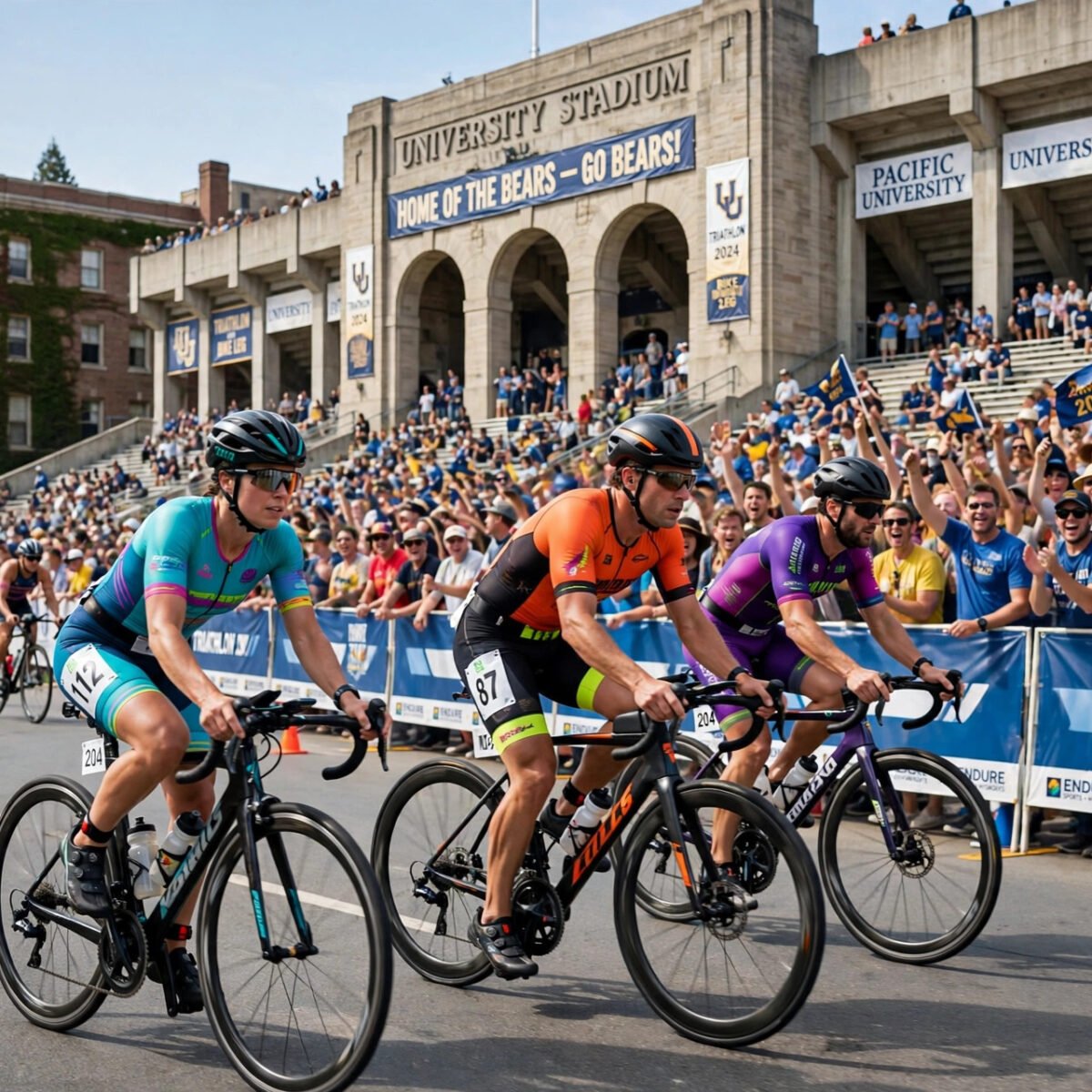
The Trideltathon is one of the longest running charity triathlon events in American college sports, and it has quietly become a model for how campus fundraisers blend athletics, community, and modern event technology. Organized by the women of Delta Delta Delta, the Tri Delta sorority, the race has raised money for children’s hospitals and pediatric charities for more than three decades, with its best known edition held each spring at the University of Tennessee in Knoxville. Part triathlon, part festival, part philanthropy engine, the Trideltathon shows how a well run race can turn sweat into donations.
Key Takeaways
- The Trideltathon is a charity triathlon organized by Tri Delta (Delta Delta Delta) sorority chapters, with proceeds supporting children’s hospitals and pediatric charities.
- The flagship Knoxville event follows a pool triathlon format: a 400 meter indoor pool swim, a 6 mile bike ride, and a 3 mile run through the UT campus.
- Different chapters adapt the format to their community, so some editions use 5K runs or other accessible race formats instead of the full swim bike run sequence.
- Modern race technology, from chip timing and online registration to fitness wearables and live tracking apps, has made charity races like this easier to join and follow.
This guide covers what the Trideltathon is, how the race format works, what technology powers it, and how first time triathletes can prepare, all based on verifiable public information about the event.
What Is the Trideltathon?
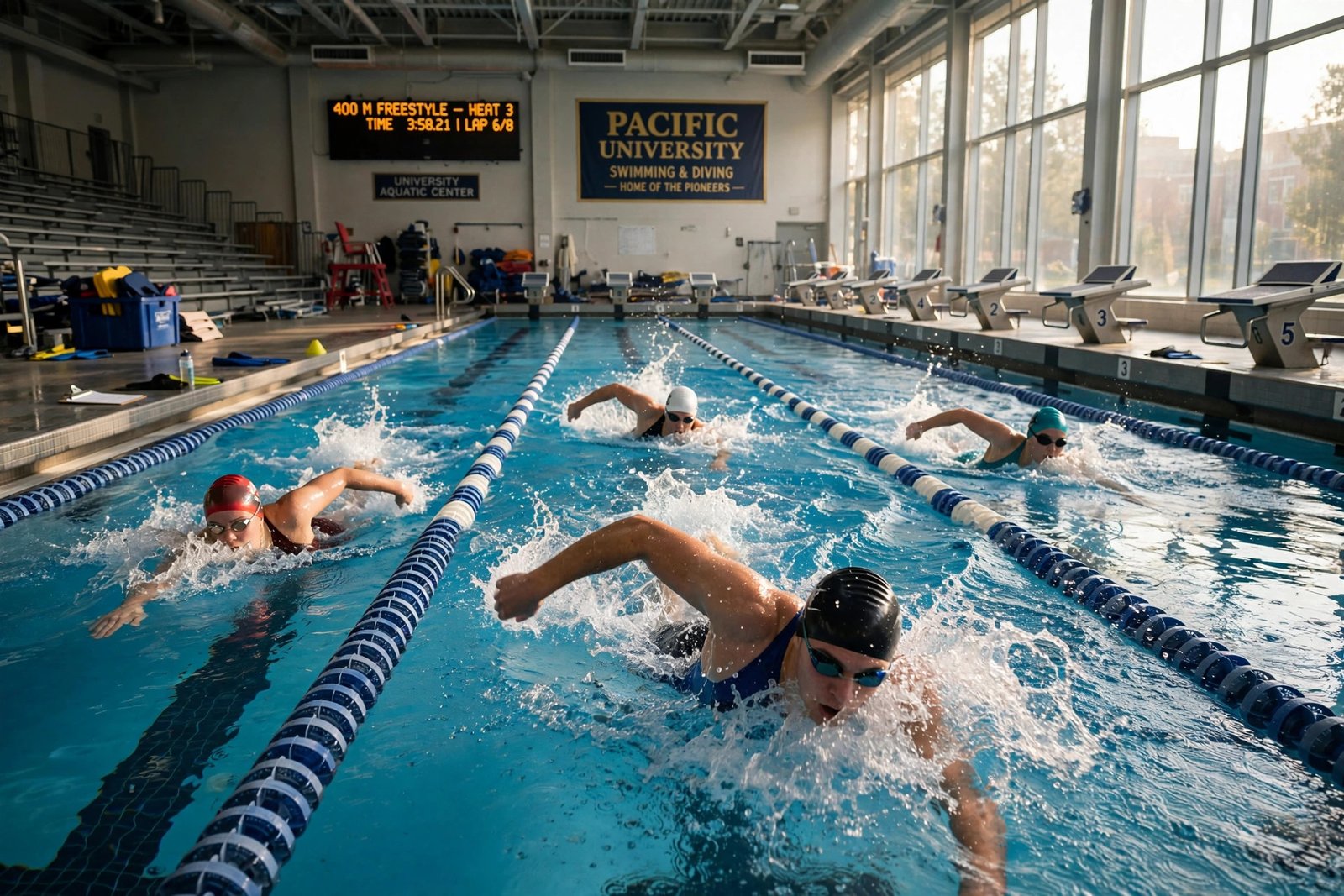
The Trideltathon is a charity triathlon organized by Delta Delta Delta (Tri Delta) sorority chapters at universities in the United States. The core idea is simple: participants swim, bike, and run, and their entry fees plus fundraising go to children’s charities, most notably St. Jude Children’s Research Hospital and local children’s hospitals. It is a fundraiser first and a race second, which shapes everything about how the event feels.
The Knoxville flagship race
The best known edition takes place at the University of Tennessee in Knoxville. Race listings describe it as one of the oldest running pool triathlons in the country, with editions numbering into the 30s, which places its origins in the late 1980s or early 1990s. The Knoxville race is held at the UT Student Aquatic Center, and it follows the classic swim bike run format with a 400 meter indoor pool swim, a 6 mile bike course around campus and Neyland Drive, and a 3 mile run passing Neyland Stadium and Thompson Boling Arena.
The Knoxville event is not sanctioned by USA Triathlon, which keeps costs lower and the atmosphere friendlier. Divisions typically include overall, age group, and relay categories, along with special student pricing. Expected participation has been listed around 350 racers in recent editions, and race day support comes from Tri Delta volunteers, with beginner clinics offered before the event through local running stores.
A flexible charity format
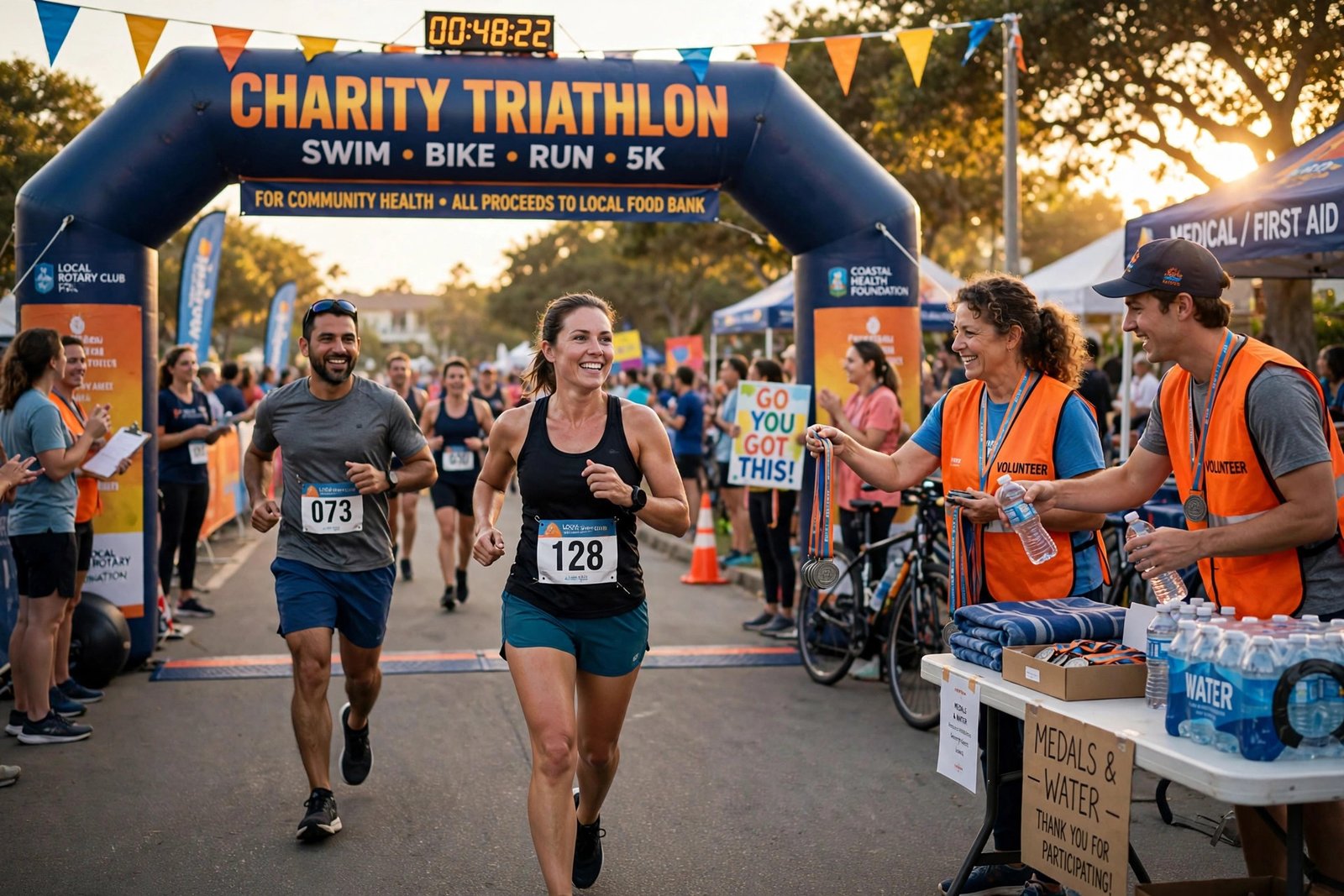
Because the event is a fundraising concept as much as a race, different chapters adapt it to their campus. Some organize 5K run walks instead of a full triathlon, such as the TriDeltaRUN at the University of Tennessee, which benefits East Tennessee Children’s Hospital and Camp Eagles Nest, a summer camp for children with cancer.
How Does the Trideltathon Race Format Work?
In its flagship Knoxville form, the Trideltathon is a pool triathlon: a 400 meter swim in an indoor pool, followed by a 6 mile bike leg and a 3 mile run, with transitions between each discipline counting toward the total race time. The pool format is the defining feature. It makes the race more approachable than an open water triathlon while keeping all three disciplines intact.
The 400 meter pool swim
The swim uses a seeded, interval start rather than a mass start. Swimmers enter the water one at a time at roughly 7 second intervals, with each swimmer crossing between lanes by ducking under the lane rope after each 50 meter length. Swimmers are seeded from fastest to slowest based on their estimated 400 meter swim time, which they submit at registration. This system prevents slower swimmers from being swum over and keeps the pool flowing smoothly.
If you have never done a triathlon swim, the pool format changes everything. You can stand up, touch the wall, and catch your breath at any time, and there are no waves, cold water, or murky depths to manage.
The 6 mile bike leg
After the swim, athletes transition to a 6 mile tour of the UT campus and Neyland Drive. At roughly 10 kilometers, the bike leg is shorter than the 20 kilometer ride of a standard sprint triathlon, and the field includes everything from dedicated road bikes to basic hybrid commuters.
The 3 mile run
The final leg is a 3 mile campus run passing Neyland Stadium and Thompson Boling Arena. The run course is designed to be spectator friendly, with a finish area that doubles as a celebration space with snacks, music, and the awards ceremony.
What Technology Powers the Trideltathon and Modern Triathlons?
Charity races today run on a surprisingly deep technology stack. Pool swim logistics, timed transitions, and fundraising goals all depend on software and hardware that would have been unimaginable when the race started in the late 1980s.
Timing chips and race day software
Most triathlons use RFID timing chips strapped to the ankle. The chip records split times at mats placed at the swim exit, the bike mount, the bike dismount, the run start, and the finish line. Race directors see live standings on a dashboard, and participants usually receive their times by email or text within minutes of finishing.
Online registration and fundraising platforms
Registration for modern charity races typically runs through event platforms, where participants sign up, pick their division, submit their estimated swim time for seeding, and optionally create fundraising pages. The same flow that collects the entry fee can collect donations and manage relay team rosters.
Wearables and training data
On the athlete side, GPS smartwatches and cycling computers have changed how people prepare. Heart rate zones, swim pace per 100 meters, and run cadence are visible in real time, and a smartwatch with pool swim mode can count laps, which is directly useful for practicing the lane crossing format used in the race. Readers interested in this side of the sport can explore more in our guide to starting swimming for fitness.
How the Trideltathon compares to standard triathlon distances
To put the race in context, here is how its distances compare to the most common triathlon formats. The Trideltathon sits close to a sprint triathlon on the swim and run, with a shorter bike leg.
| Race format | Swim | Bike | Run | Typical setting |
|---|---|---|---|---|
| Trideltathon (Knoxville) | 400 m pool | 6 miles (~9.7 km) | 3 miles (~4.8 km) | University campus, charity |
| Super sprint triathlon | 400 m | 10 km | 2.5 km | Clubs, beginners |
| Sprint triathlon | 750 m | 20 km | 5 km | Clubs, local races |
| Olympic triathlon | 1.5 km | 40 km | 10 km | Olympics, international |
| Half Ironman (70.3) | 1.9 km | 90 km | 21.1 km | Endurance athletes |
| Ironman (140.6) | 3.8 km | 180 km | 42.2 km | Elite endurance athletes |
The comparison makes the Trideltathon’s positioning clear: the swim is half of a sprint distance, the bike is roughly half, and the run is slightly under a 5K. That is why a student who swims laps twice a week and owns a decent bike can finish comfortably.
Is the Trideltathon Good for Beginners?
Yes. Among triathlon formats, a pool based charity race like the Trideltathon is one of the friendliest possible introductions to the sport. The pool swim removes open water fear, the interval start removes the chaos of a mass start, the distances are short, the field is welcoming, and the charitable mission takes competitive pressure off the results. Relay divisions make it even easier: one person can swim, another can bike, and a third can run.
- No wetsuit needed: the indoor pool swim means standard swimwear is enough.
- Beginner clinics: editions like Knoxville have offered pre race clinics through local running and triathlon shops.
- Relay option: teams of three can split the disciplines, ideal for friends or families.
- Low pressure field: since it is not a sanctioned championship event, mixed ability fields are the norm.
The one beginner skill worth practicing is the pool swim format: entering on your interval, keeping to your lane, ducking under the rope at each wall, and exiting cleanly. Ten minutes of practice the week before the race makes race morning far less confusing.
How Are Trideltathon Proceeds Used?
The money goes to children’s health causes. Tri Delta’s national philanthropic partners include St. Jude Children’s Research Hospital, and local editions direct proceeds to local children’s charities. The Knoxville race has listed East Tennessee Children’s Hospital as its beneficiary, while the TriDeltaRUN 5K edition supports both the children’s hospital and Camp Eagles Nest, a summer camp for children with cancer.
How Can You Train for a Pool Triathlon Like the Trideltathon?
Eight to twelve weeks is a comfortable runway for a reasonably active beginner. The plan below assumes you can already swim a few laps, ride a bike, and jog a mile.
- Swim twice a week: build to a continuous 400 to 500 meter swim, practicing lane changes if your pool allows it.
- Bike two to three times a week: start with 30 minute easy rides, adding one longer ride weekly toward a comfortable 6 miles.
- Run twice a week: alternate easy runs with run walk intervals until you can cover 3 miles.
- Practice one brick workout: ride the bike immediately followed by a short run, once every week or two.
- Do a transition rehearsal: lay out your gear and practice moving from swim to bike to run quickly.
Trideltathon FAQs
What does the word Trideltathon mean?
It combines Tri Delta, the nickname of the Delta Delta Delta sorority that organizes the event, with marathon style naming borrowed from triathlon. In short, it is Tri Delta’s triathlon.
Is the Trideltathon an official USA Triathlon race?
No. The Knoxville edition is explicitly not USAT sanctioned. That keeps entry costs lower and the atmosphere more relaxed, which suits a charity event.
How far is the Trideltathon?
The Knoxville flagship format is a 400 meter indoor pool swim, a 6 mile bike ride, and a 3 mile run. Chapter adaptations may use different formats, such as a 5K run walk.
Do I need an expensive bike to participate?
No. Charity races welcome all kinds of bikes, from road bikes to hybrids and commuters. The bike just needs to be safe and roadworthy.
Can I do it as part of a relay team?
Yes. Relay divisions are typically offered, letting team members split the swim, bike, and run. It is a great option for beginners.
Where does the entry fee go?
Proceeds support children’s charities, including St. Jude Children’s Research Hospital nationally and local children’s hospitals depending on the chapter. Check the current edition’s race page for the exact beneficiaries.
How long has the Trideltathon been running?
Race listings describe the Knoxville edition as one of the oldest running pool triathlons in the country, with editions numbering into the mid 30s, which points to origins in the late 1980s or early 1990s.
Conclusion
The Trideltathon proves that a race does not need to be long, elite, or expensive to matter. With a short pool based format, a clear charitable mission, and a tech stack that handles timing, registration, and fundraising in the background, it has turned thousands of first time triathletes into finishers and fundraisers. Keep following DigitalGeekSpot for more on where sports and technology meet.