Swimming is one of the best full-body workouts you can do, and learning how to start swimming for fitness is simpler than most beginners expect. You do not need to be a confident swimmer or an athlete to get started. With basic gear, a few fundamental strokes, and a sensible plan, you can turn pool time into a regular fitness habit within a few weeks.
This beginner-friendly guide covers everything you need: the gear to bring, the basic strokes to learn first, how to structure a swim session, and a simple four-week plan to build your endurance safely. It is written for adults who can manage basic water confidence; if you cannot swim at all yet, a few lessons with a qualified instructor are the best first step before following any training plan.
Why Swimming Works So Well for Fitness
Swimming stands out because it trains your whole body at once while being gentle on your joints. The water supports your body weight, so your knees, hips, and back take far less impact than they would during running or jumping. That makes swimming a great option if you are returning to exercise, carrying extra weight, or dealing with achy joints.
At the same time, water provides natural resistance in every direction. Every pull and kick works against that resistance, which builds muscular endurance in your arms, shoulders, chest, back, core, and legs simultaneously. Because swimming raises your heart rate while engaging so much muscle, it is an effective cardiovascular workout too. Many swimmers find that a steady 30-minute swim leaves them pleasantly tired in a way that feels different from gym or road workouts.
There is also a mental side. The rhythm of breathing and stroking, combined with the quiet of being underwater, makes swimming feel meditative for many people. If you find other forms of cardio boring, the variety of strokes, drills, and intervals in swimming can keep things interesting for years.
What You Need Before Your First Session
You do not need much equipment to start swimming for fitness. Here is a simple checklist:
- Swimsuit: a comfortable, well-fitting swimsuit designed for lap swimming. Avoid loose beach shorts or fashion swimwear, which create drag and can be distracting.
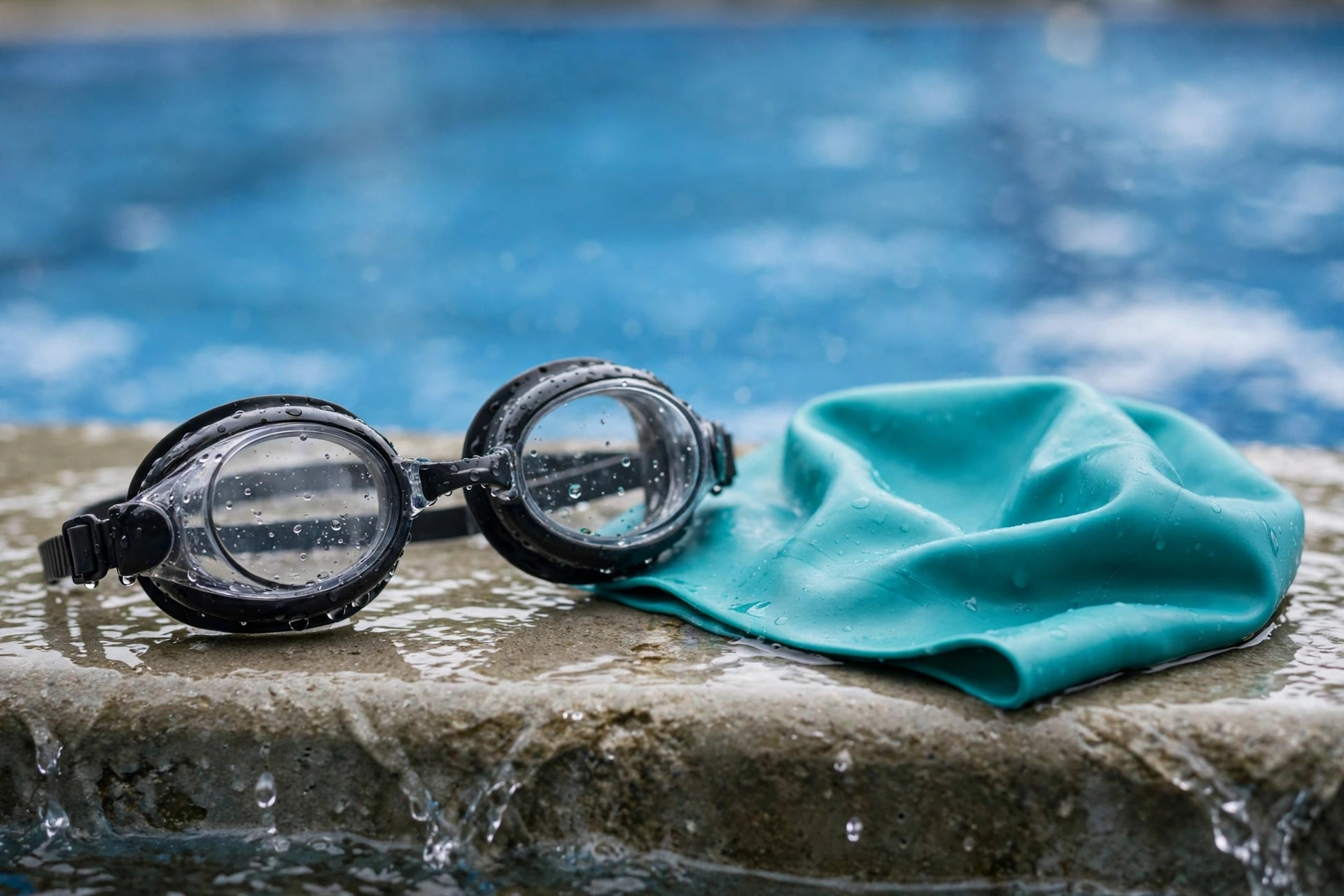
- Goggles: essential for seeing underwater and protecting your eyes from chlorine. Look for a pair that seals comfortably without pressing too hard.
- Swim cap: keeps hair out of your face, reduces drag, and protects hair from chlorine. Silicone caps are durable and comfortable for most people.
- Towel and toiletries: pools usually have showers, so bring what you need to rinse off afterward.
- Water bottle: you still sweat while swimming, even though you do not feel it in the water. Drink before and after your session.
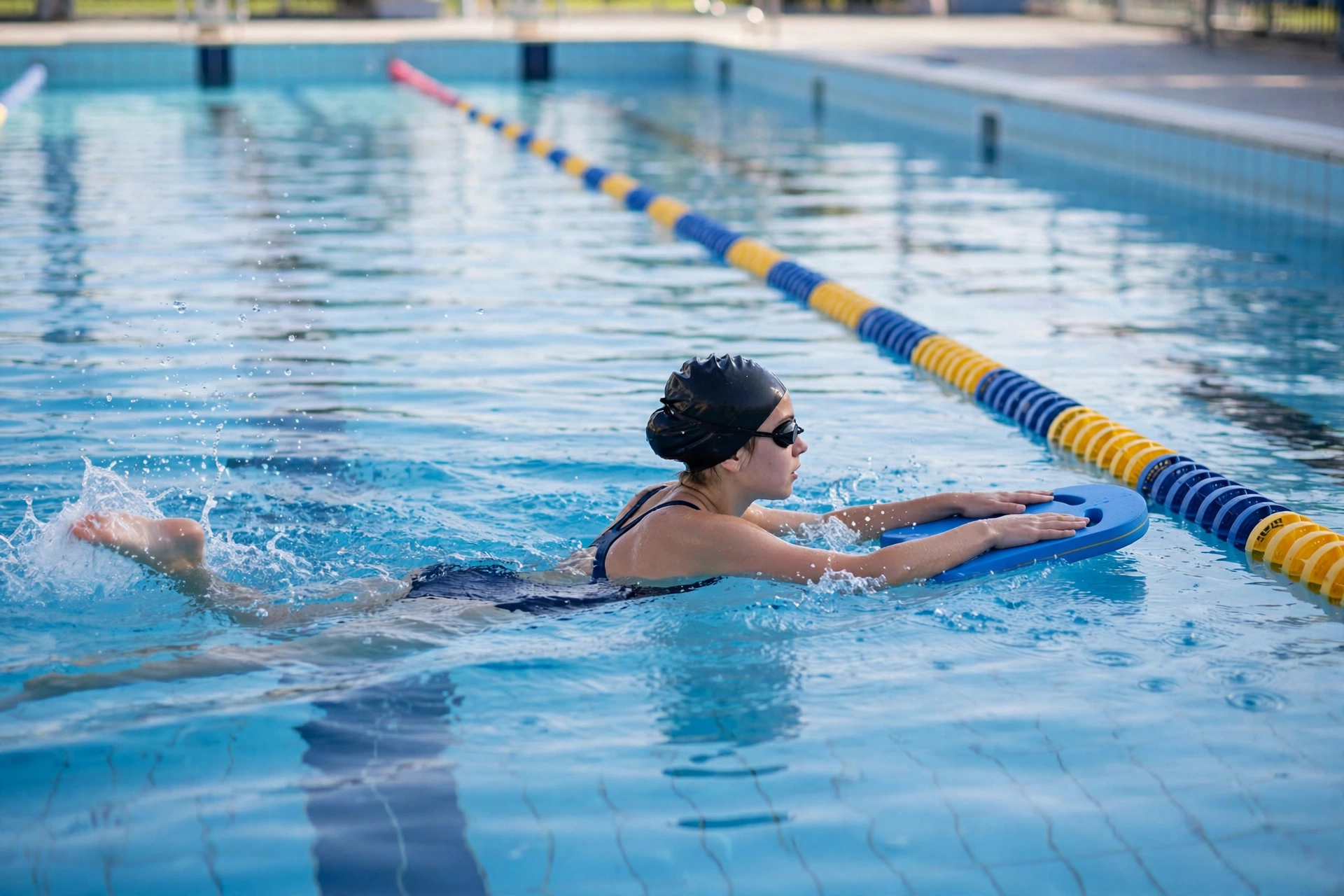
- Kickboard and pull buoy (optional): many pools provide these. A kickboard supports your upper body so you can focus on kicking, while a pull buoy goes between your thighs so you can focus on your arm pull.
Before your first visit, check your pool’s schedule for lap swimming times, lane etiquette rules, and whether lanes are divided by speed. Most pools mark lanes as slow, medium, and fast. As a beginner, start in a slower lane and be ready to share; circle swimming, where swimmers stay to one side of the lane, is the standard way to share.
The Basic Strokes Every Beginner Should Learn
You only need a couple of strokes to start building fitness. Master the basics of these before worrying about advanced technique.
Freestyle (front crawl)
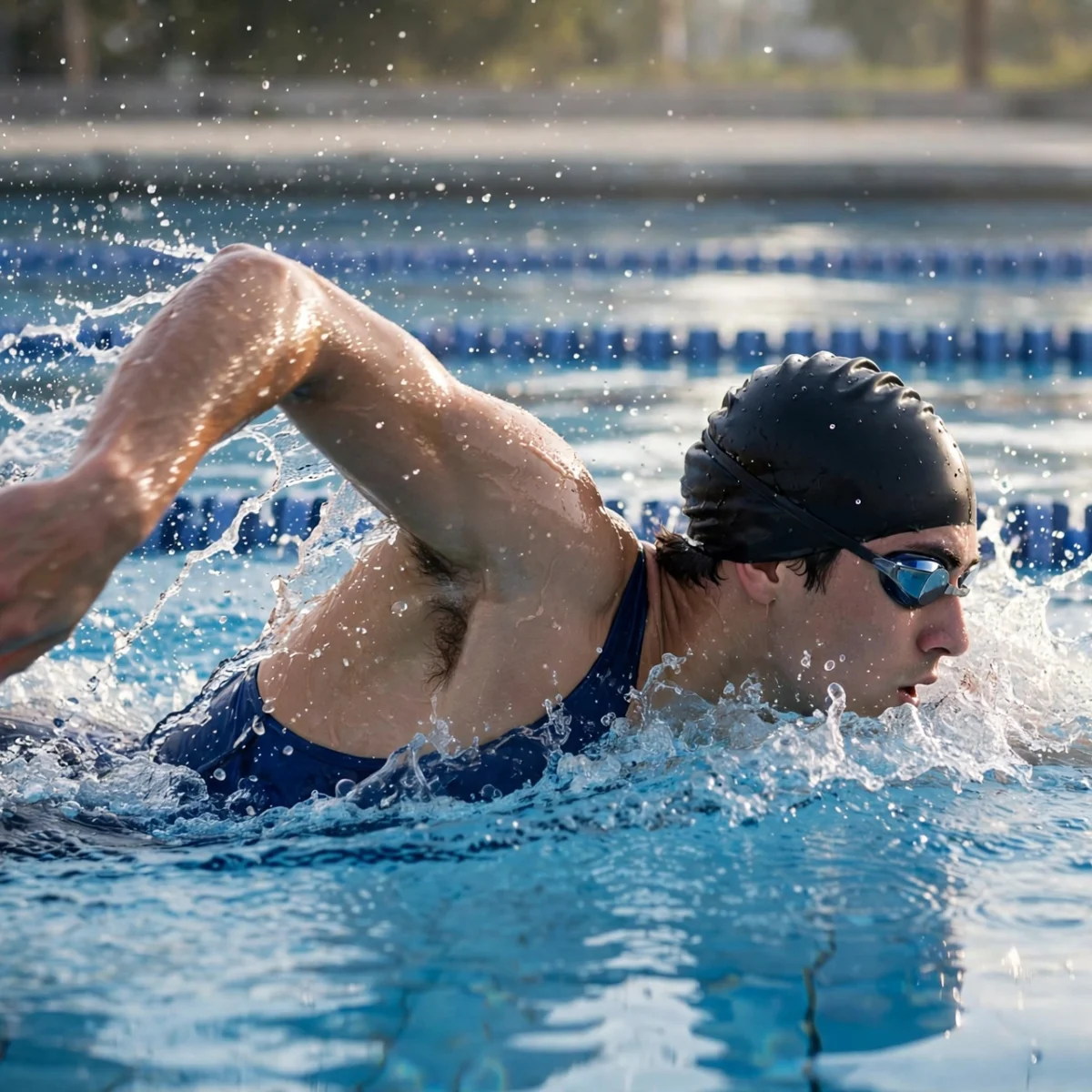
Freestyle is the fastest, most efficient stroke and the backbone of fitness swimming. You lie face down, alternate your arms in a windmill pull, and kick steadily from the hips with relatively straight legs. Breathing happens by turning your head to the side during the arm recovery. Most beginner swim workouts are built mainly around freestyle, so it deserves most of your practice time.
Backstroke
Backstroke is swum on your back with an alternating arm motion similar to freestyle and a steady flutter kick. Because your face stays out of the water, breathing is much easier, which makes backstroke a great recovery stroke between harder freestyle efforts. It is also excellent for posture, since it opens up the chest and shoulders.
Breaststroke
Breaststroke uses a frog-like kick and a sweeping arm pull with your head lifting to breathe each stroke cycle. It is slower than freestyle but many beginners find it the most comfortable stroke at first, because breathing feels natural and you can see where you are going. It is a good choice for warm-ups, cool-downs, and easy recovery laps.
A practical approach is to make freestyle your main stroke, use backstroke or breaststroke for recovery laps, and add short technique drills for whichever stroke feels weakest. You do not need butterfly as a beginner; it is demanding and can wait until your foundation is solid.
How to Structure a Swimming Session
A well-structured session keeps you safe, helps you improve, and makes the time pass quickly. Aim for 30 to 45 minutes total as a beginner, broken into three parts.
Warm-up (5 to 10 minutes): Start with easy swimming to raise your body temperature and loosen up. Swim four to six slow lengths mixing freestyle and your most comfortable stroke. The goal is to feel warm and relaxed, not tired.
Main set (15 to 25 minutes): This is where the training happens. Instead of swimming continuously at one pace, break the distance into shorter repeats with rest. For example, swim one length of freestyle, rest 20 to 30 seconds at the wall, and repeat eight to ten times. Intervals like this let you hold better technique than one long exhausted swim, and they build fitness faster.
Cool-down (5 minutes): Finish with a few easy lengths of backstroke or breaststroke. Swimming gently at the end helps your heart rate come down gradually and leaves you feeling refreshed rather than wiped out.
As you improve, you can lengthen the main set, shorten the rests, or add simple variety such as kicking-only lengths with a kickboard. If you ever feel unsure what to do with a session, returning to this warm-up, intervals, cool-down template always works. For ideas on fueling these sessions, see our guide on what to eat before a workout.
Your First 4-Week Beginner Swimming Plan
This plan assumes you can swim at least a length or two of basic freestyle and are comfortable in deep water. Swim two or three times per week with at least one rest day between sessions. A standard pool length is 25 meters, and one lap usually means down and back, which is two lengths.
Week 1: Get comfortable. Each session: warm up with 4 easy lengths, then swim 8 x 1 length of freestyle with 30 seconds rest between each, then cool down with 4 easy lengths of backstroke or breaststroke. Focus on relaxed breathing, not speed. Total: about 20 to 24 lengths.
Week 2: Add a little volume. Warm up with 4 to 6 easy lengths, then swim 10 x 1 length of freestyle with 25 to 30 seconds rest, then cool down with 4 easy lengths. Try adding 2 lengths of kickboard kicking after the warm-up to build leg endurance. Total: about 24 to 28 lengths.
Week 3: Introduce longer repeats. Warm up with 6 easy lengths, then swim 6 x 2 lengths of freestyle with 30 to 45 seconds rest between repeats, then cool down with 4 easy lengths. Swimming two lengths without stopping builds the continuous-swimming stamina you will need later. Total: about 26 to 30 lengths.
Week 4: Build your continuous swim. Warm up with 6 easy lengths, then swim 4 x 2 lengths with 30 seconds rest, then try 4 continuous lengths of freestyle without stopping, then cool down with 4 easy lengths. Many beginners surprise themselves this week by swimming further than they thought possible. Total: about 30 lengths.
After four weeks, you can keep progressing by gradually adding lengths, trying longer continuous swims, or mixing in interval variety. Easy swimming also pairs nicely with low-intensity cardio goals; if you are curious about training zones, read our explainer on what zone 2 training is and how relaxed swimming can fit into it.
Breathing Basics for New Swimmers
Breathing is the skill that holds most beginners back, more than fitness or strength. In freestyle, the key points are: exhale steadily underwater through your nose or mouth, then turn your head to the side to inhale quickly as your recovering arm passes. Many beginners hold their breath underwater and then gasp, which creates a panicky feeling. Continuous, relaxed exhaling solves most of this.
Practice breathing separately from full swimming. Hold the pool edge and practice turning your head to breathe, or swim short distances focusing only on steady exhaling. A useful drill is swimming freestyle while breathing every three strokes instead of every two, which builds comfort with the rhythm. If breathing still feels chaotic after a few weeks, a single lesson with a coach to fix your breathing pattern is money well spent.
How to Build Endurance in the Pool
Endurance in swimming comes from technique plus gradually increasing volume, not from grinding out exhausting sessions. These principles will keep your progress steady:
- Swim regularly: two to three sessions per week beats one heroic weekend swim. Consistency builds the feel for the water that makes everything easier.
- Increase gradually: add roughly 10 percent more total distance per week. Small jumps let your shoulders and technique adapt without strain.
- Use intervals: repeats with short rests let you swim more total distance with better form than one continuous slog. Good technique at moderate effort builds endurance faster than poor technique at high effort.
- Mix strokes: alternating freestyle with backstroke or breaststroke works different muscles and gives your shoulders a break, letting you stay in the pool longer.
- Do drills: kicking with a board, single-arm freestyle, and catch-up drill all improve efficiency. More efficient swimming means you use less energy per length, which is the real secret of endurance.
- Track your swims: note the total lengths and how you felt. Seeing the numbers climb over weeks is motivating and helps you plan the next step.
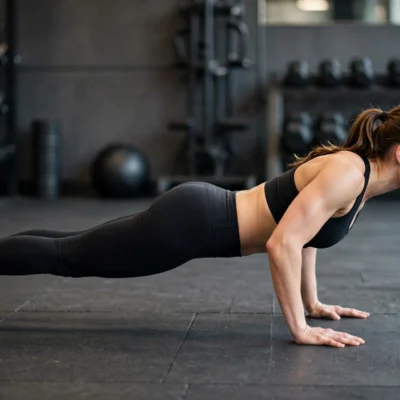
On rest days, light cross-training such as walking or bodyweight exercises complements swimming well. Our home workouts without equipment are an easy option, and some swimmers enjoy music playlists to stay motivated during dryland warm-ups before pool sessions.
Pool Safety and Etiquette for Beginners
A few habits will keep you and your lane-mates safe and happy:
- Never swim alone if you can avoid it, and always follow the lifeguard’s instructions.
- Shower before entering the pool; it is basic hygiene and most pools require it.
- Choose the correct speed lane and be honest about your pace.
- When sharing a lane, circle swim by keeping to the right side, and let faster swimmers pass at the wall.
- Do not push off right in front of another swimmer; wait a few seconds for clear water.
- Stop at the wall, not in the middle of the lane, if you need to rest.
- If you feel dizzy, cramp up, or unusually tired, stop swimming and rest at the wall or get out.
For more fitness and swimming guides like this one, visit the DigitalGeekSpot homepage.
Frequently Asked Questions
How often should a beginner swim for fitness?
Two to three times per week is ideal for most beginners. This gives you enough practice to improve your feel for the water while leaving rest days for recovery. Each session can be 30 to 45 minutes. Once swimming feels comfortable, you can add a fourth session or extend your time in the pool.
How long does it take to get fit from swimming?
Most beginners notice better stamina within three to four weeks of regular swimming, and meaningful fitness gains over two to three months. Progress depends on how often you swim, how structured your sessions are, and your starting fitness. Technique improvements often deliver the biggest early gains, since efficient swimming lets you swim further with the same effort.
Is swimming enough exercise on its own?
Swimming is an excellent cardiovascular and muscular-endurance workout, and for general fitness it can absolutely be your main exercise. That said, it does not load your bones the way weight-bearing exercise does, so adding some walking, bodyweight strength work, or resistance training a couple of times per week rounds out a complete routine.
Do I need lessons before starting?
If you are already comfortable in water and can swim basic freestyle, you can start with the plan in this guide. If you cannot swim a length, are afraid of deep water, or have never learned proper breathing, take a few beginner lessons first. Even two or three sessions with an instructor can fix technique habits that would otherwise slow you down for months.
What should I eat before swimming?
The same general rules as other workouts apply: a balanced meal two to three hours before, or a small carb-based snack 30 to 60 minutes before. Avoid large, heavy, or very fatty meals right before swimming, since the horizontal position and water pressure can make a full stomach uncomfortable. Drink water before and after, since you sweat more in the pool than you realize.