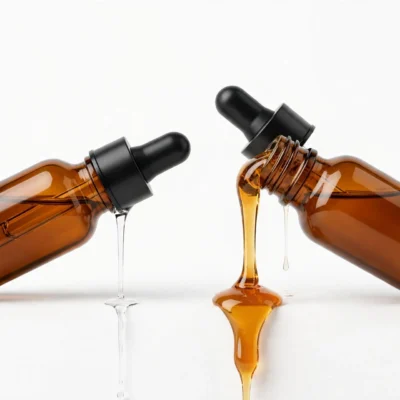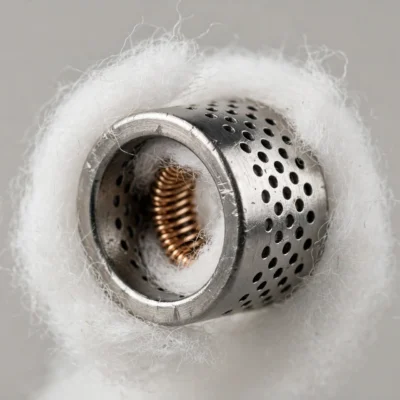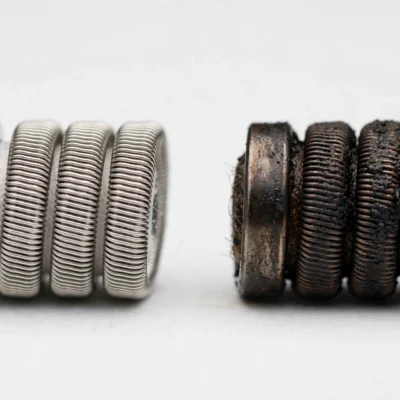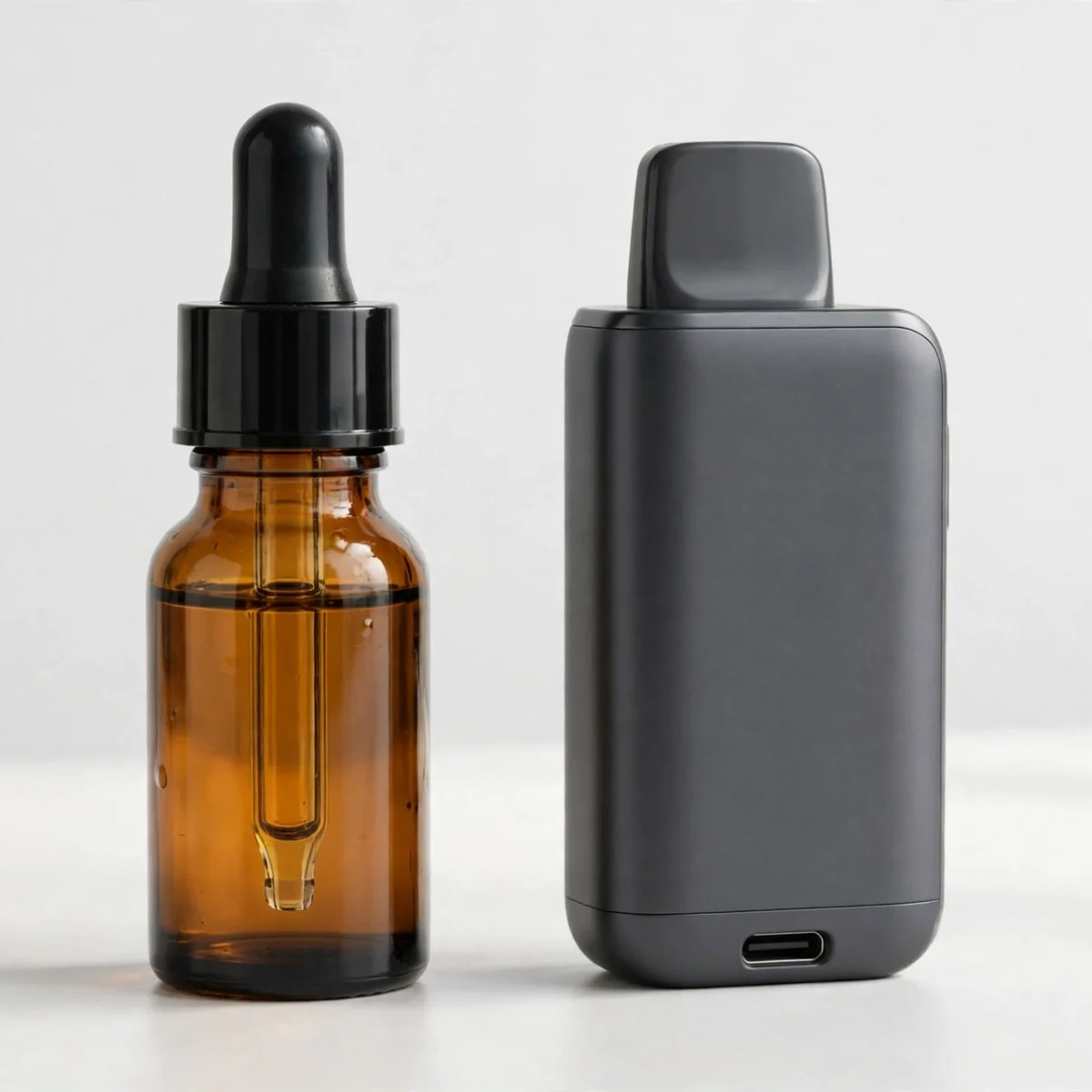
If you have ever browsed e-liquid options as an adult vaper, you may have wondered: what is nic salt? Nicotine salt, usually shortened to nic salt, is a form of nicotine used in many modern e-liquids. It differs from the older freebase nicotine in its chemistry, its smoothness at higher strengths, and the kinds of devices it pairs with. This beginner-friendly guide explains what nic salt is, how it compares to freebase nicotine, which devices it suits, and what to know before you buy.
Nicotine Salts Explained Simply
Nicotine in its natural state, as found in the tobacco leaf, exists in salt form. When manufacturers extract nicotine for e-liquid, they can either convert it into freebase nicotine, which has been the standard for years, or keep it closer to its natural salt state by adding an organic acid, most commonly benzoic acid. The acid lowers the pH of the nicotine, which makes it smoother to inhale even at higher concentrations.
The result is an e-liquid that can carry more nicotine without the harsh throat hit that freebase nicotine produces at comparable strengths. This smoothness is the defining trait of nic salt e-liquid and the reason it became popular with the rise of compact, low-power pod systems in the late 2010s.
Nic Salt vs Freebase Nicotine
The core difference between nic salt and freebase nicotine comes down to pH and throat hit. Freebase nicotine has a higher pH, which makes it feel harsher as the concentration rises. Low-strength freebase e-liquids feel smooth, but high-strength freebase can be rough on the throat.
Nic salt’s lower pH keeps the vapor smoother at higher strengths, and many users report that it absorbs more quickly, giving a faster feeling of satisfaction per puff. That said, “faster” does not mean “stronger in effect”: it simply describes the commonly reported sensation of a quicker onset.
Freebase nicotine, meanwhile, remains the better choice for sub-ohm devices that produce large clouds. In high-power tanks and rebuildable atomizers, the vapor volume is so large that even modest nicotine strengths feel substantial, and freebase’s formulation suits those devices. Freebase also tends to give a more pronounced throat hit, which some adult vapers actively prefer as part of the experience.
In short: nic salt prioritizes smoothness and compact satisfaction, while freebase prioritizes cloud production and throat hit. Neither is universally better; they serve different styles of vaping. For a broader look at how devices differ, see our overview of device types in the Looper vape guide.

Strengths and What They Mean
Nic salt e-liquids are sold in a range of nicotine strengths, generally higher than the strengths typical of freebase e-liquids used for cloud chasing. Product lines commonly offer several strength tiers so adult vapers can choose the level that matches their preferences and prior habits.
Because nic salt is smoother, higher strengths are tolerable in a way that high-strength freebase is not. This is why nic salt became the standard pairing for small pod devices: a few puffs from a compact device can feel satisfying without harshness. If you are choosing a strength, consider your history. Someone coming from frequent smoking habits often gravitates toward the higher end of the range, while an occasional user may prefer the lower end. When in doubt, start lower: you can always move up, and a knowledgeable staff member at a reputable vape shop can help you pick a sensible starting point.
Device Pairing: Which Devices Suit Nic Salt?
Nic salt e-liquid is designed for low-wattage, mouth-to-lung devices. The classic pairing is the refillable pod system: a small, simple device with replaceable or refillable pods and modest power output. Nic salt also dominates the disposable vape market, since disposables are essentially pre-filled, low-power devices.
You should generally avoid using nic salt in high-power sub-ohm tanks and mods. Those devices vaporize much more e-liquid per puff, so a high-strength nic salt would deliver an uncomfortably large amount of nicotine per draw. Check your device’s manual or the e-liquid label for compatibility guidance. The coil resistance is a useful clue: devices with coils above roughly 1.0 ohm are typically built for mouth-to-lung vaping and pair well with nic salt, while sub-ohm coils below 1.0 ohm are meant for freebase e-liquids and bigger clouds.
If you are new to all of this, our beginner buying guide on how to choose your first vape kit walks through device types in more detail.
Pros and Cons of Nic Salt E-Liquid
Like everything in vaping, nic salt has trade-offs. On the plus side, it is smooth at higher strengths, works in discreet and portable devices, and many users find a small number of puffs satisfying, which can mean less frequent vaping sessions. Pod systems that use nic salt are also among the simplest devices to operate, with minimal maintenance.
On the downside, the higher strengths mean you should be mindful about how much you use, especially if you are new. Nic salt is not ideal for cloud chasing, since it is formulated for low-power devices. Flavor selection, while broad, is smaller than the full freebase market, and high-strength nic salt can make a device feel “too much” for light or occasional users. As always, keep all e-liquids, regardless of type, securely stored away from children and pets.

How to Store Nic Salt E-Liquid
Nic salt e-liquid keeps best when stored like any other e-liquid: in a cool, dark place, away from direct sunlight and heat. Light and warmth gradually degrade nicotine and can darken the liquid and dull the flavor. A cupboard or drawer at room temperature is ideal.
Most e-liquids carry a best-before or manufactured date. Unopened bottles generally keep well for a year or more under good conditions, but once opened, aim to use the bottle within a reasonable time for the freshest flavor. If an e-liquid has changed color dramatically, smells off, or tastes harsh and unpleasant compared to when it was new, it is past its best and should be replaced.
For more general vaping guides for adult readers, visit the DigitalGeekSpot homepage.
Nic Salt and Disposable Vapes
If you have used a disposable vape, you have almost certainly vaped nic salt already. The vast majority of disposables use nic salt e-liquid because the format and the formulation are a natural match: small, low-power devices need a smooth, satisfying liquid, and nic salt delivers exactly that.
This is worth knowing because it sets your expectations when you move between formats. If you switch from disposables to a refillable pod system, choosing a nic salt e-liquid will give you the most familiar experience. If you instead pick up a freebase e-liquid in a sub-ohm tank, expect a very different draw: bigger clouds, more throat hit, and lower nicotine strength per milliliter. Neither experience is wrong, but going in blind can be jarring.
Common Myths About Nic Salt
A few misconceptions circulate about nic salt e-liquid. Clearing them up helps you make better choices:
- Myth: nic salt is a synthetic or artificial nicotine. Reality: nic salt is regular nicotine combined with an organic acid to lower its pH. It is not a different drug, just a different formulation.
- Myth: nic salt is only for heavy users. Reality: nic salt comes in a range of strengths, and lower-strength options suit light and occasional users in pod devices.
- Myth: nic salt works in any device. Reality: it is formulated for low-wattage, mouth-to-lung devices. High-power sub-ohm setups vaporize too much liquid per puff for high-strength nic salt.
- Myth: smoother means weaker. Reality: smoothness describes throat feel, not nicotine content. A smooth high-strength liquid still contains that strength of nicotine.
Keeping these distinctions straight makes shopping easier: match the liquid type to the device type first, then choose a strength and flavor you like.
Frequently Asked Questions
What is nic salt in simple terms?
Nic salt is a form of nicotine for e-liquid that stays closer to its natural salt state by adding an organic acid. It vapes more smoothly than freebase nicotine at higher strengths and is typically used in low-power pod devices and disposables.
Is nic salt stronger than freebase nicotine?
Nic salt e-liquids are commonly sold at higher strengths than freebase e-liquids, but strength depends on the specific product you buy, not the type alone. The key difference is smoothness: nic salt stays smooth where freebase would feel harsh.
Can I use nic salt in any vape device?
No. Nic salt is formulated for low-wattage, mouth-to-lung devices such as pod systems. It is not recommended for high-power sub-ohm tanks and mods, which vaporize far more liquid per puff.
Does nic salt give more throat hit?
Generally less. The lower pH of nic salt produces a smoother throat hit than freebase nicotine at comparable strengths, which is why higher-strength nic salt liquids remain comfortable to vape.
How long does nic salt e-liquid last once opened?
Stored in a cool, dark place, an opened bottle keeps well for several months, though flavor is freshest earlier. Unopened bottles typically last a year or more. Replace any liquid that has darkened heavily or tastes off.
Is nic salt only for beginners?
Not at all. While nic salt pairs naturally with simple beginner devices, many experienced adult vapers use nic salt pod systems as discreet, portable setups alongside their larger freebase devices.