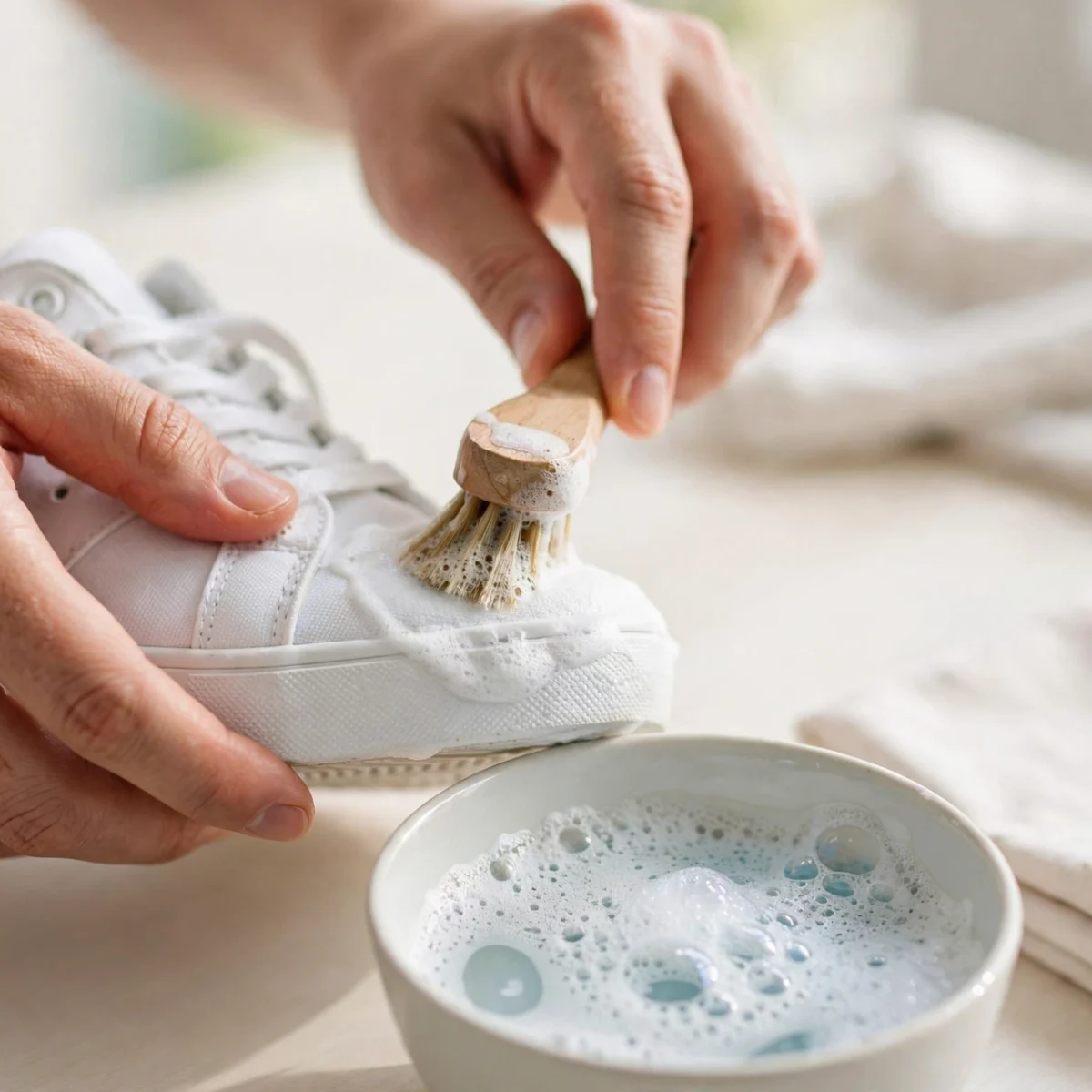
Knowing how to clean white sneakers properly can add years of life to your favorite pair and keep them looking fresh instead of dingy. White sneakers go with nearly everything, which is exactly why they get dirty so fast: scuffs, grass stains, and yellowing soles show up on white more than on any other color. The good news is that most white sneakers can be restored at home with simple supplies, as long as you match your cleaning method to the shoe’s material. This guide covers canvas, leather, and mesh sneakers step by step, plus how to fix yellowing and the mistakes that ruin white shoes.
What You Need Before You Start
Gather your supplies before you begin so you are not hunting for things with wet shoes in your hands. For most white sneakers, you will need a soft-bristle brush or an old toothbrush, a clean cloth or sponge, mild dish soap or laundry detergent, baking soda, white vinegar, and an old towel for drying. A dedicated sneaker cleaning kit works too, but household basics handle most jobs just as well.
Two important prep steps apply to every material. First, remove the laces and insoles and clean them separately; laces can soak in warm soapy water, and insoles can be wiped down and air-dried. Second, knock off loose dirt by tapping the soles together outdoors or brushing the uppers dry before any water touches them. Wetting caked-on mud just turns it into a stain that spreads.
How to Clean Canvas White Sneakers
Canvas is the most common material for classic white sneakers, and it is also the most forgiving to clean. Canvas absorbs water, so it responds well to gentle scrubbing with a paste.
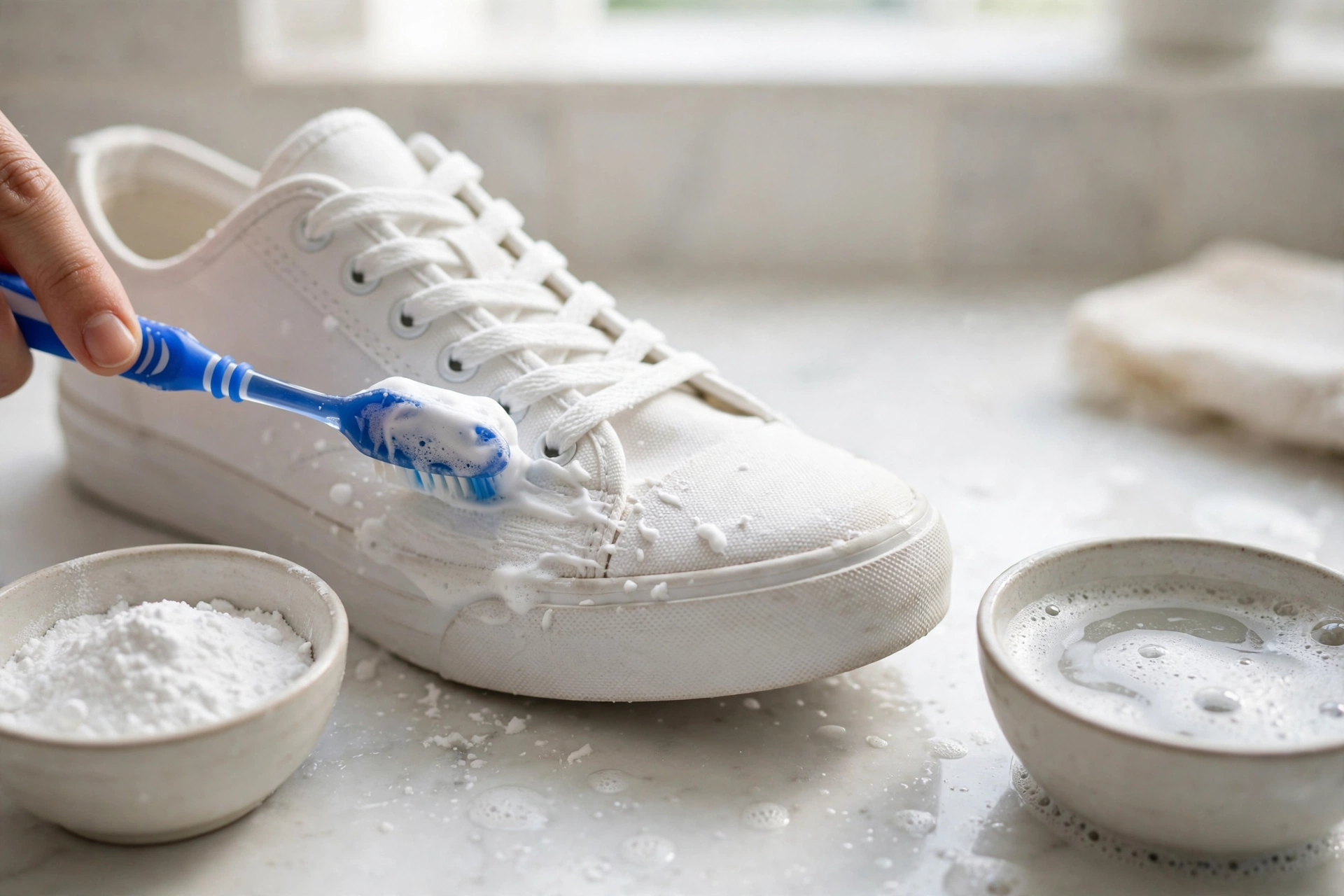
- Make a cleaning paste. Mix one tablespoon of baking soda, one tablespoon of mild dish soap, and just enough warm water to form a thick paste. Baking soda is mildly abrasive, which lifts dirt from the woven fabric without harsh chemicals.
- Apply with a brush. Dip a soft-bristle brush or old toothbrush into the paste and scrub the canvas in small circles. Work section by section, spending extra time on stained areas and the rubber sole edges.
- Wipe clean. Dampen a clean cloth with plain water and wipe away the paste. Rinse the cloth and repeat until no residue remains. Avoid soaking the shoe; canvas dries slowly and trapped moisture can cause odor or yellowing.
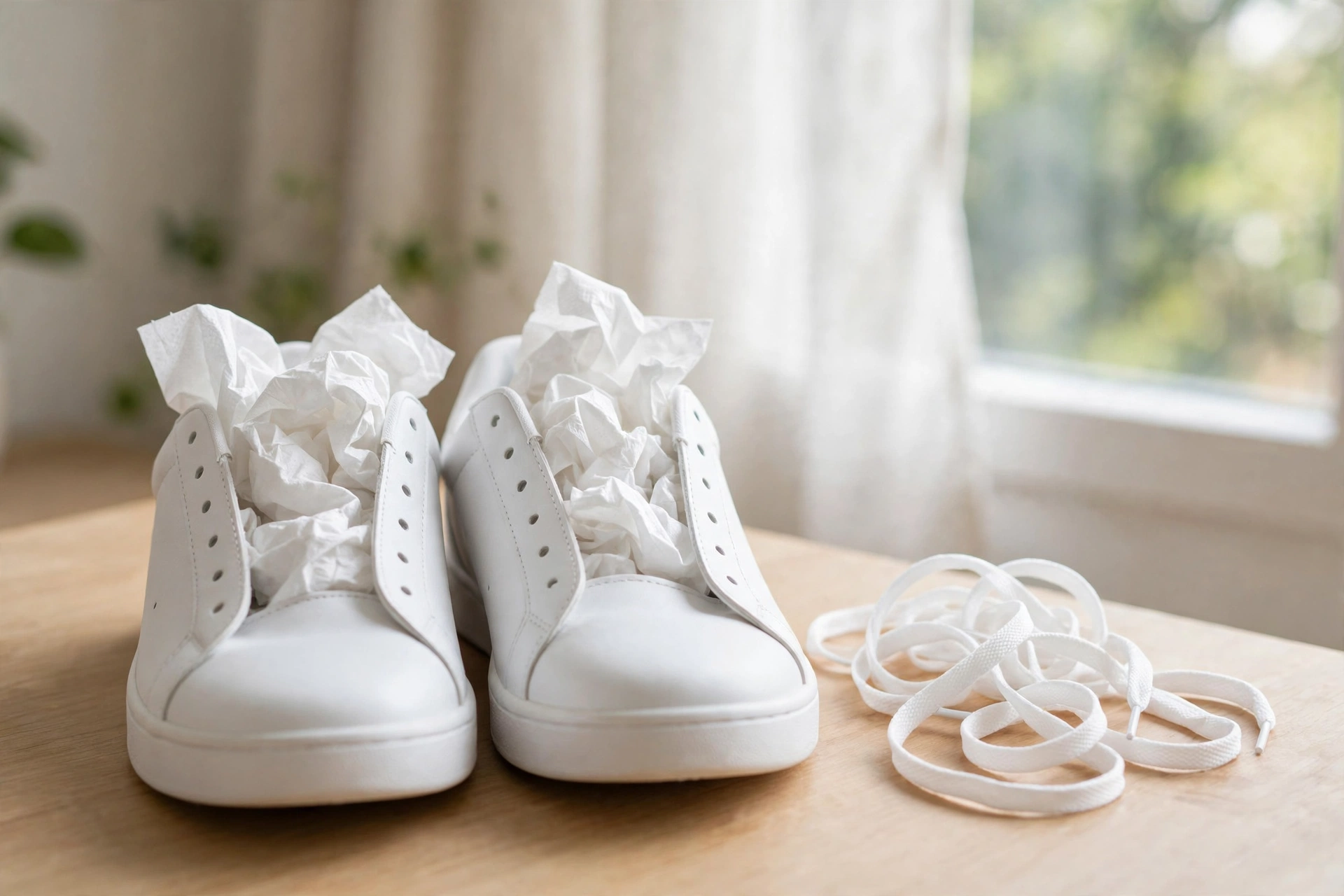
- Dry properly. Stuff the sneakers with white paper towels or clean white cloths to hold their shape, then air-dry them indoors away from direct sunlight and heat. Never use a dryer or radiator, since heat can shrink canvas and yellow the rubber.
For stubborn stains on canvas, a paste of baking soda and white vinegar left on the stain for 15 to 20 minutes before scrubbing often does the trick. Hydrogen peroxide (3 percent, the standard household kind) can also lift set-in marks, but test it on a hidden spot first, as it can slightly lighten some fabrics.
How to Clean Leather White Sneakers
Leather sneakers need a gentler touch than canvas. Too much water or harsh scrubbing can dry out, crack, or discolor the leather, so the goal is controlled cleaning with minimal moisture.
- Wipe down first. Use a dry soft cloth to remove surface dust and loose dirt from the leather uppers.
- Clean with mild soap. Mix a few drops of mild dish soap or saddle soap into warm water, dip a soft cloth into the solution, wring it out well, and wipe the leather in gentle circles. The cloth should be damp, not dripping.
- Tackle scuffs. For black scuff marks, a pencil eraser or a dab of non-gel white toothpaste on a soft cloth works surprisingly well. Rub gently, then wipe away residue with a damp cloth.
- Condition the leather. Once dry, apply a small amount of leather conditioner with a clean cloth. This step is easy to skip but important: cleaning strips natural oils from leather, and conditioner restores moisture so the shoes stay supple instead of cracking.
- Air-dry away from heat. Let leather sneakers dry at room temperature. Direct heat causes leather to dry out and can yellow white finishes.
Never soak leather sneakers or put them in the washing machine. If your leather sneakers have suede or nubuck panels, use a dry suede brush and a suede eraser instead of any wet method, since water stains those materials permanently.
How to Clean Mesh White Sneakers
Mesh uppers, common on running and lifestyle sneakers, are delicate. The open weave traps dirt easily but tears if scrubbed aggressively, so patience matters more than pressure here.
- Dry brush first. Use a soft brush to sweep loose dirt out of the mesh. Brushing dry prevents dirt from grinding deeper into the weave.
- Use a gentle solution. Mix warm water with a small amount of mild laundry detergent. Dip a soft cloth or soft brush in, wring thoroughly, and clean the mesh with light, straight strokes rather than circles, which can snag the fabric.
- Rinse carefully. Wipe with a cloth dampened in clean water to remove soap. Leftover detergent attracts dirt faster, so be thorough but gentle.
- Air-dry with shape support. Stuff with white paper towels and dry indoors at room temperature. Mesh dries faster than canvas, but keep shoes out of direct sun to prevent yellowing.
For mesh with set-in stains, a diluted white vinegar solution (one part vinegar to two parts water) applied with a cloth can help lift discoloration. Avoid bleach entirely on mesh; it weakens the fibers and almost always causes yellowing.
How to Fix Yellowing on White Sneakers
Yellowing is the most frustrating white-sneaker problem. It usually comes from three causes: bleach exposure, drying in direct sunlight, or detergent residue left in the fabric that oxidizes over time. Here is how to address it:
- Baking soda and peroxide paste. Mix baking soda with a small amount of 3 percent hydrogen peroxide into a paste, apply it to the yellowed areas, and let the shoes sit in indirect light for a few hours. Then wipe clean and air-dry indoors. This is the most reliable home remedy for yellowed soles and canvas.
- White vinegar soak for soles. For yellowed rubber soles, wipe them with undiluted white vinegar, let it sit for 10 minutes, then scrub with a brush and rinse. Vinegar dissolves the oxidation layer on rubber effectively.
- Prevention beats cure. Rinse soap out completely every time you clean, dry shoes indoors away from sunlight, and skip bleach entirely. These three habits prevent most yellowing before it starts.
If yellowing is severe and home methods do not restore the shoes, a white sneaker paint or midsole marker designed for shoe restoration can cover the discoloration. These products are widely available and, applied carefully, can make old soles look new again.
Can You Put White Sneakers in the Washing Machine?
This is the question everyone asks, and the honest answer is: it depends on the shoe. Sturdy canvas sneakers without leather trim or glued decorative elements can usually survive a machine wash on a gentle, cold cycle inside a mesh laundry bag, with the laces and insoles removed. Even then, machine washing shortens a shoe’s lifespan and can warp its shape.
Leather sneakers, mesh running shoes, and any pair with suede panels, reflective details, or heavy glued construction should never go in the washing machine. The agitation, heat, and prolonged soaking damage adhesives, warp leather, and tear mesh. Hand cleaning takes a little longer but is always the safer choice, and it is the method shoe care professionals recommend for anything beyond basic canvas.
Mistakes That Ruin White Sneakers
Well-meaning cleaning efforts cause a surprising amount of damage. Avoid these common errors:
- Using bleach. Chlorine bleach is the number one cause of yellowing on white sneakers. It breaks down fabrics and rubber, and the damage is often permanent. Use baking soda, vinegar, or peroxide instead.
- Drying in direct sunlight or on a radiator. Heat and UV rays yellow white materials and can shrink or warp shoes. Always air-dry indoors at room temperature.
- Scrubbing mesh or suede aggressively. Hard scrubbing tears mesh weave and permanently marks suede. Match your pressure to the material.
- Using colored cloths or paper. Dyes can transfer onto damp white fabric. Stick to white cloths, white paper towels, and clear or white cleaning products.
- Skipping the rinse. Leftover soap residue attracts dirt and oxidizes into yellow stains. Always wipe or rinse until the water runs clear.
- Cleaning suede with water. Water stains suede and nubuck permanently. Use a dry suede brush and eraser, and a suede protector spray afterward.
White sneakers are a wardrobe workhorse, pairing with everything from jeans to dresses. If you are building outfits around them, these casual outfit ideas for women show how versatile a clean white pair can be, and keeping up with women’s fashion trends can inspire fresh ways to style them each season.
How to Keep White Sneakers White Longer
Cleaning restores white sneakers, but prevention keeps them looking new between cleanings. A water and stain repellent spray designed for shoes creates an invisible barrier that makes dirt and liquids bead up instead of soaking in. Apply it to clean, dry shoes and reapply every few weeks with regular wear.
Rotate your shoes so no single pair takes daily abuse, wipe them down with a damp cloth after wearing them in dirty conditions, and store them away from direct sunlight. Small habits like these mean you will need deep cleans far less often. For general household cleaning wisdom that applies the same gentle principles, you may enjoy this guide to cleaning with baking soda. And for more style guides on the DigitalGeekSpot homepage, you will find plenty of wardrobe care and outfit inspiration.
Frequently Asked Questions
How often should you clean white sneakers?
A quick wipe-down after dirty outings plus a deeper clean every two to four weeks of regular wear keeps white sneakers looking fresh. Shoes worn daily in all weather may need attention more often, while occasional-wear pairs can go longer between cleans.
Why do white sneakers turn yellow after washing?
Yellowing after washing is usually caused by leftover detergent residue oxidizing, drying in direct sunlight, or using bleach. Rinse soap out completely, dry indoors away from sun and heat, and never use chlorine bleach on sneakers.
Can baking soda damage white sneakers?
Baking soda is safe for canvas, leather, and rubber when used as a gentle paste with water. It is mildly abrasive, so use light pressure on delicate mesh and always wipe away residue fully to avoid a chalky film.
How do you clean white shoelaces?
Remove the laces and soak them in warm water with a little laundry detergent or dish soap for 20 to 30 minutes, then scrub with an old toothbrush, rinse, and air-dry. For very dingy laces, add a tablespoon of baking soda to the soak. Replacement laces are inexpensive if yours are beyond saving.
Is it safe to use a magic eraser on white sneakers?
Magic erasers work well on rubber soles and midsoles for scuffs, since they are mildly abrasive. Use them gently and avoid leather uppers, as repeated use can dull or damage the finish.