Deciding what to wear to a job interview is one of the most stressful parts of the job hunt, and for good reason: your outfit shapes first impressions before you say a word. The right interview look signals that you understand the company’s culture, take the opportunity seriously, and pay attention to detail. The wrong one can distract from your qualifications. This guide breaks down interview outfits by industry dress code, with practical advice for both men and women, plus universal do’s and don’ts that apply everywhere.
The Golden Rule: Match the Company, Then Go One Step Up
The single most useful principle for interview dressing is to research the company’s dress code and then dress one level more formal than the everyday norm. If employees wear jeans and t-shirts, you wear smart casual: dark jeans or chinos with a blazer, or a neat blouse with tailored trousers. If the office is business casual, you go business formal. If it is already formal, you match that polish precisely.
How do you find out the dress code? Check the company’s website and social media for team photos, look at employee photos on LinkedIn, and read the job description for clues. When in doubt, it is always safer to be slightly overdressed than underdressed. An interviewer will never fault you for looking polished, but showing up too casual can read as not taking the role seriously.
Whatever you choose, your clothes should be clean, pressed, and well-fitting. Fit matters more than brand or price: an affordable outfit that fits properly looks far more professional than an expensive one that does not. If you are refreshing your everyday wardrobe too, these casual outfit ideas for women can help you build a closet where interview pieces mix easily with daily wear.
Corporate and Finance: Traditional Business Formal
For banking, law, consulting, insurance, and traditional corporate roles, business formal remains the standard. This is the most conservative interview dress code, and precision matters.
For women: A tailored suit in navy, charcoal, or black, with either matching trousers or a knee-length skirt. Underneath, a simple blouse or shell in white, cream, or a muted tone. Closed-toe pumps or professional flats with a low heel. Keep jewelry minimal: stud earrings, a simple watch, one ring.
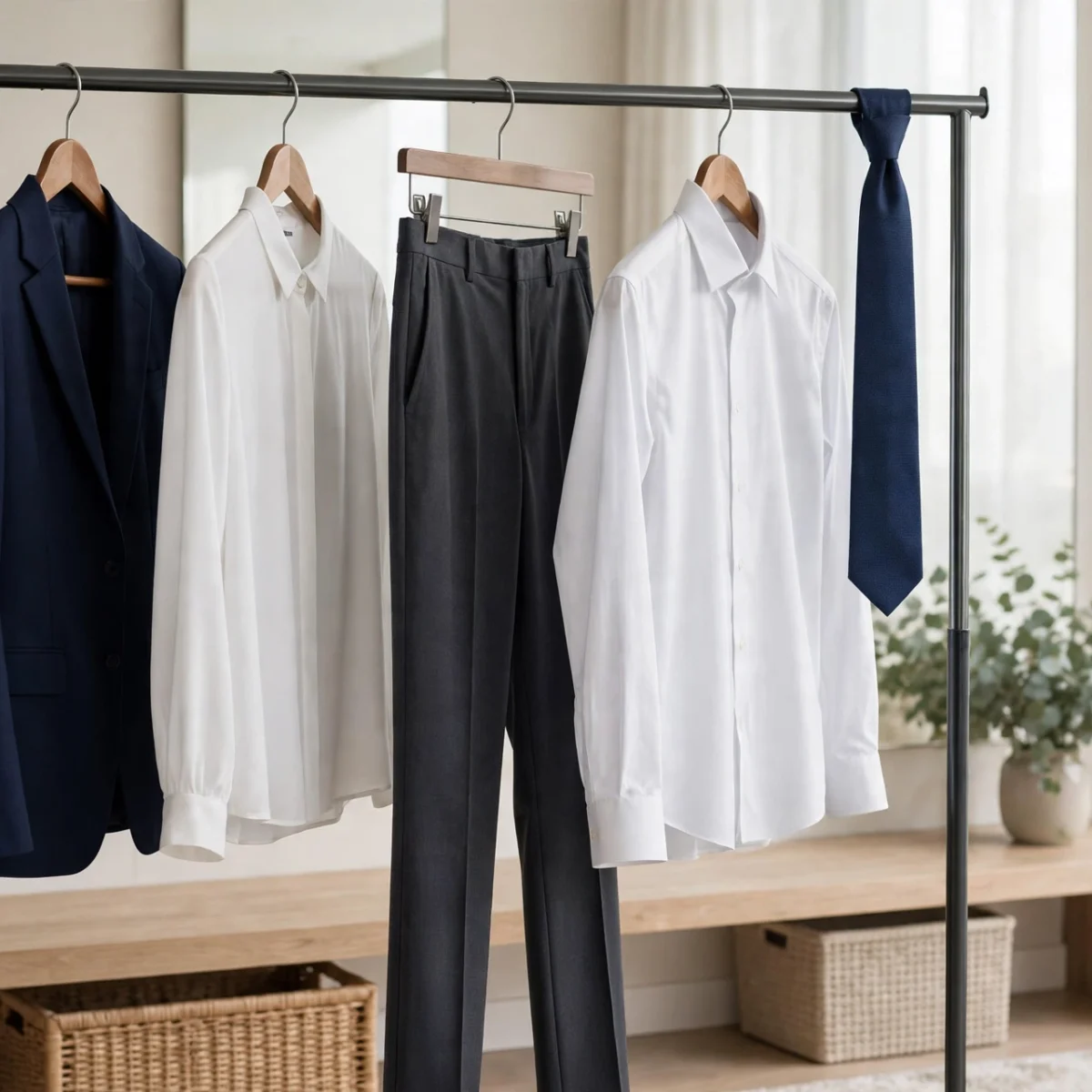
For men: A well-fitting suit in navy, charcoal, or dark gray, a crisp white or light blue dress shirt, a conservative tie, and polished leather dress shoes in black or brown. A matching belt and minimal accessories complete the look.
In these industries, classic and understated wins. Avoid bold patterns, bright colors, and trendy details. Your competence should be the most memorable thing about you, not your outfit.
Business Casual Industries: Polished but Approachable
Many modern workplaces, including marketing agencies, nonprofits, education, healthcare administration, and mid-size tech companies, operate in business casual. For interviews here, aim for polished business casual with a slightly formal lean.
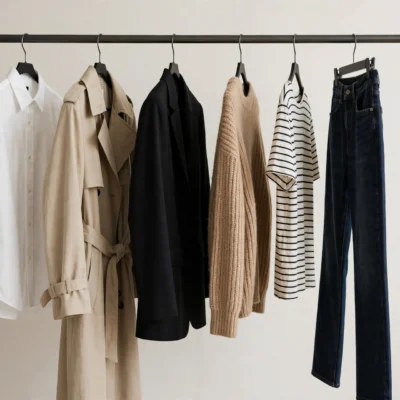
For women: Tailored trousers or a knee-length skirt with a blouse or knit top, plus a blazer or structured cardigan. A simple sheath dress with a blazer also works well. Closed-toe flats, loafers, or low heels. You can introduce a little more color or a subtle pattern here than in formal industries.
For men: Chinos or dress trousers with a button-down shirt, optionally with a blazer or sport coat. A tie is usually unnecessary but not wrong; when uncertain, bring one and decide based on the room. Clean leather shoes or polished loafers.
The key in business casual settings is looking intentional. Every piece should look deliberate, not like you grabbed the nicest thing from a casual closet. Iron or steam everything, and make sure shoes are clean.

Creative Industries and Startups: Smart Casual with Personality
Design studios, media companies, advertising, fashion, and startups often have relaxed dress codes, but interviews still call for effort. The goal is to look like yourself at your most polished, with a touch of personality that shows you understand creative culture.
For women: Dark jeans or tailored trousers with a stylish blouse, a knit top with a blazer, or a modern midi dress. Clean sneakers or fashionable flats can work in truly casual startups, but when in doubt, choose loafers or low boots. One or two expressive accessories, an interesting bag, distinctive jewelry, show personality without overwhelming.
For men: Dark jeans or chinos with a button-down shirt or quality polo, optionally layered with a casual blazer or neat sweater. Clean minimal sneakers are acceptable at casual startups; otherwise choose loafers or desert boots. Grooming should be sharp even when the clothes are relaxed.
Even in relaxed industries, avoid anything you would wear to the gym, the beach, or a nightclub. “Casual” at work still means neat, clean, and put-together. If you follow women’s fashion trends, this is the interview setting where you can most naturally incorporate current styles, as long as the overall effect stays professional.
What to Wear to a Job Interview: Men
Across industries, a few principles keep men’s interview outfits sharp. Invest in fit first: trousers should break cleanly at the shoe, jacket sleeves should show a quarter to half inch of shirt cuff, and shirts should not pull at the buttons or billow at the waist. A tailor can adjust an affordable suit or blazer dramatically for a modest price.
Stick to a restrained color palette: navy, gray, white, and light blue are universally safe. Make sure shoes are polished and match the belt. Keep facial hair neatly groomed, nails trimmed, and cologne minimal or skipped entirely. Bring a simple portfolio or bag rather than a backpack, and leave the outerwear, like a bulky winter coat, in the waiting area rather than dragging it into the interview room.
What to Wear to a Job Interview: Women
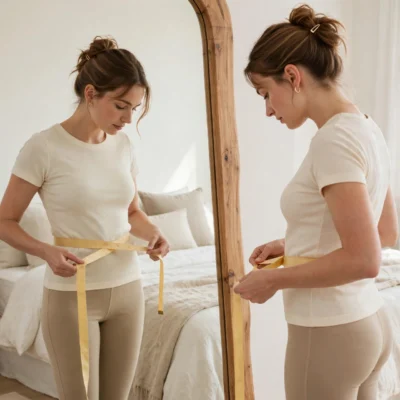
For women, versatility is an advantage: dresses, suits, and separates all work when chosen well. Prioritize fit and comfort, since fidgeting with a too-tight waistband or slipping straps undermines confidence. Test your outfit by sitting down, walking, and raising your arms; if anything shifts, gaps, or rides up, choose something else.
Necklines should be modest, hemlines at or near the knee, and fabrics should not wrinkle excessively during a commute. Keep makeup natural and professional, nails neat with neutral polish or none, and perfume light or absent. Choose a structured bag that holds your resume copies, a notebook, and a pen without looking overstuffed.
If you wear a dress or skirt, consider the commute and the office temperature: layers like a blazer solve both modesty and comfort concerns. And remember that a well-chosen interview outfit often becomes a work wardrobe staple afterward, so choose pieces you will wear again.
Virtual Interview Outfits
Video interviews deserve the same care as in-person ones, with a few camera-specific adjustments. Dress fully, not just from the waist up; you never know when you will need to stand. Solid colors and simple patterns read best on camera, while busy prints, thin stripes, and stark white can shimmer or blow out on video.
Check your background and lighting before the call. Sit facing a window or a soft light source, position the camera at eye level, and do a test recording to check how your outfit looks on screen. The same dress code rules apply: match the company culture and go one step up.

Interview Outfit Do’s and Don’ts
Do:
- Try on your full outfit, including shoes, at least a day before the interview.
- Iron or steam everything the night before and hang it ready.
- Choose comfort alongside polish; confidence shows when you are not distracted by your clothes.
- Bring a lint roller and use it right before you walk in.
- Keep jewelry, makeup, and fragrance subtle.
- Carry copies of your resume in a neat folder or portfolio.
Don’t:
- Wear anything brand new that you have not test-driven for comfort.
- Show up in wrinkled, stained, or ill-fitting clothes.
- Wear strong perfume or cologne; interview rooms are small and scent is divisive.
- Choose distracting accessories: noisy bracelets, oversized logos, or flashy ties draw attention away from your answers.
- Wear sunglasses on your head, hats, or overly casual footwear like flip-flops.
- Overdo trends; one current piece is plenty in a professional setting.
The Night Before: Your Interview Checklist
Lay out your complete outfit the night before: clothes, shoes, bag, and accessories. Check the weather forecast and plan outerwear accordingly. Charge your phone, print extra resumes, and plan your route with buffer time. Getting these logistics handled in advance means you wake up calm and focused on the interview itself, not on finding a matching belt.
If something does not feel right when you try the outfit on, trust that instinct and switch to your backup option. Discomfort, whether physical or psychological, will distract you during the interview. You want to walk in thinking about the role, not about your waistband. For more style guides on the DigitalGeekSpot homepage, including wardrobe building and everyday outfit ideas, you will find resources to keep you looking sharp well beyond interview day.
Frequently Asked Questions
Is it better to be overdressed or underdressed for an interview?
Slightly overdressed is almost always safer. Being polished signals respect for the opportunity, while showing up too casual can suggest you did not take the interview seriously. The one-step-up rule, dressing a notch above the company’s daily norm, keeps you in the right zone.
Can you wear jeans to a job interview?
Dark, well-fitting jeans without rips or fading can work for interviews at casual startups and creative companies, paired with a blazer or polished top. For corporate, finance, or formal industries, skip jeans entirely in favor of trousers or a suit.
What colors are best for interview outfits?
Navy, charcoal, black, gray, white, and cream are the safest choices across industries. Muted blues and earth tones also read as professional. Save bright colors and bold patterns for accents, or for creative industries where personality is part of the evaluation.
Should you wear a suit to every interview?
No. A full suit is ideal for traditional corporate roles but can look out of place at a casual startup. Match the company’s culture: suit for formal industries, blazer and separates for business casual, smart casual for creative fields. Research is more important than a default uniform.
What should you avoid wearing to an interview?
Avoid anything too casual (gym clothes, flip-flops, ripped jeans), too revealing (short hemlines, plunging necklines), too flashy (loud patterns, heavy fragrance, noisy jewelry), and anything wrinkled, stained, or ill-fitting. When uncertain about an item, leave it out.