Introduction
CBD vs THC: key differences explained starts with one fact: CBD (cannabidiol) and THC (tetrahydrocannabinol) come from the same plant, Cannabis sativa, but only THC produces a high. CBD does not cause intoxication, THC binds directly to CB1 receptors in the brain and causes euphoria, and the legal line in the United States rests on a 0.3 percent delta-9 THC limit for hemp. The two compounds share the chemical formula C21H30O2, yet a small difference in molecular shape changes how each one fits the body’s receptors. That difference drives effects, side effects, legal status and drug-test risk. This guide compares CBD and THC on chemistry, effects, medical uses, legality, drug tests, product types and safety, then gives a short checklist for choosing between them.
Key Takeaways
- THC produces a high, CBD does not, because THC activates CB1 receptors and CBD does not switch them on in the same way.
- Both share the formula C21H30O2, but their atom arrangement differs, which changes receptor fit.
- Hemp-derived CBD with no more than 0.3 percent delta-9 THC is federally legal in the United States, while marijuana-derived products face state-by-state rules.
- Full-spectrum CBD can trigger a positive drug test, because trace THC can build up with regular use.
Table of Contents
What is CBD? What is THC? How do CBD and THC work in the body? CBD vs THC: key differences explained. Does CBD get you high? Which works better for pain, sleep and anxiety? Is CBD legal and is THC legal? Can CBD make you fail a drug test? What product types carry CBD and THC? How do you choose between CBD and THC? What side effects should you watch for? CBD and THC together: what happens? Conclusion. Frequently asked questions.
What is CBD?
CBD is a non-intoxicating cannabinoid from the cannabis plant that does not produce a high. CBD is short for cannabidiol. CBD appears in both hemp and marijuana plants, but commercial CBD products in the United States usually come from hemp, because hemp is defined by low THC content. The World Health Organization (WHO, 2018) found no evidence of abuse or dependence potential for CBD in humans. The only CBD medicine approved by the US Food and Drug Administration (FDA) is Epidiolex, a prescription cannabidiol solution for certain rare seizure disorders, including Lennox-Gastaut syndrome and Dravet syndrome. Other CBD uses, such as anxiety, pain and sleep, are studied but not proven to the same standard. Readers can check the cannabidiol profile on Wikipedia for the approved uses and the limits of current research.
CBD products fall into three groups. Full-spectrum CBD keeps the plant’s full range of cannabinoids, including trace THC up to 0.3 percent. Broad-spectrum CBD keeps several cannabinoids but has THC removed. CBD isolate is purified CBD with no other cannabinoids. Labels do not always match lab results, so a batch-specific Certificate of Analysis (COA) from an independent lab is the only check that counts.
What is THC?
THC is the main psychoactive compound in cannabis, and THC is the compound that causes the cannabis high. THC is short for delta-9-tetrahydrocannabinol. THC was first isolated and described in 1964 by Yehiel Gaoni and Raphael Mechoulam. THC acts as a partial agonist at CB1 and CB2 receptors, which means THC switches those receptors on, but only partly. The CB1 effect in the brain drives euphoria, altered perception, increased appetite and impaired short-term memory. The pharmaceutical form of THC, dronabinol, is approved in the United States for chemotherapy-induced nausea and HIV/AIDS-related appetite loss. THC is also used in medical cannabis programs for chronic pain and muscle spasticity in multiple sclerosis. Readers can check the tetrahydrocannabinol profile on Wikipedia for the approved medical uses and the side-effect list.
THC appears in cannabis flower, edibles, tinctures, oils, capsules and vape products. Edibles deserve a separate warning, because onset is slow and effects last longer than inhaled THC. Inhaled THC acts within minutes and lasts 2 to 4 hours. Oral THC can take 30 minutes to 2 hours to act and can last 4 to 10 hours. A common mistake is taking a second edible dose before the first dose has acted, which leads to a stronger effect than planned. Start low, wait, and do not mix THC with alcohol or sedatives.
How do CBD and THC work in the body?
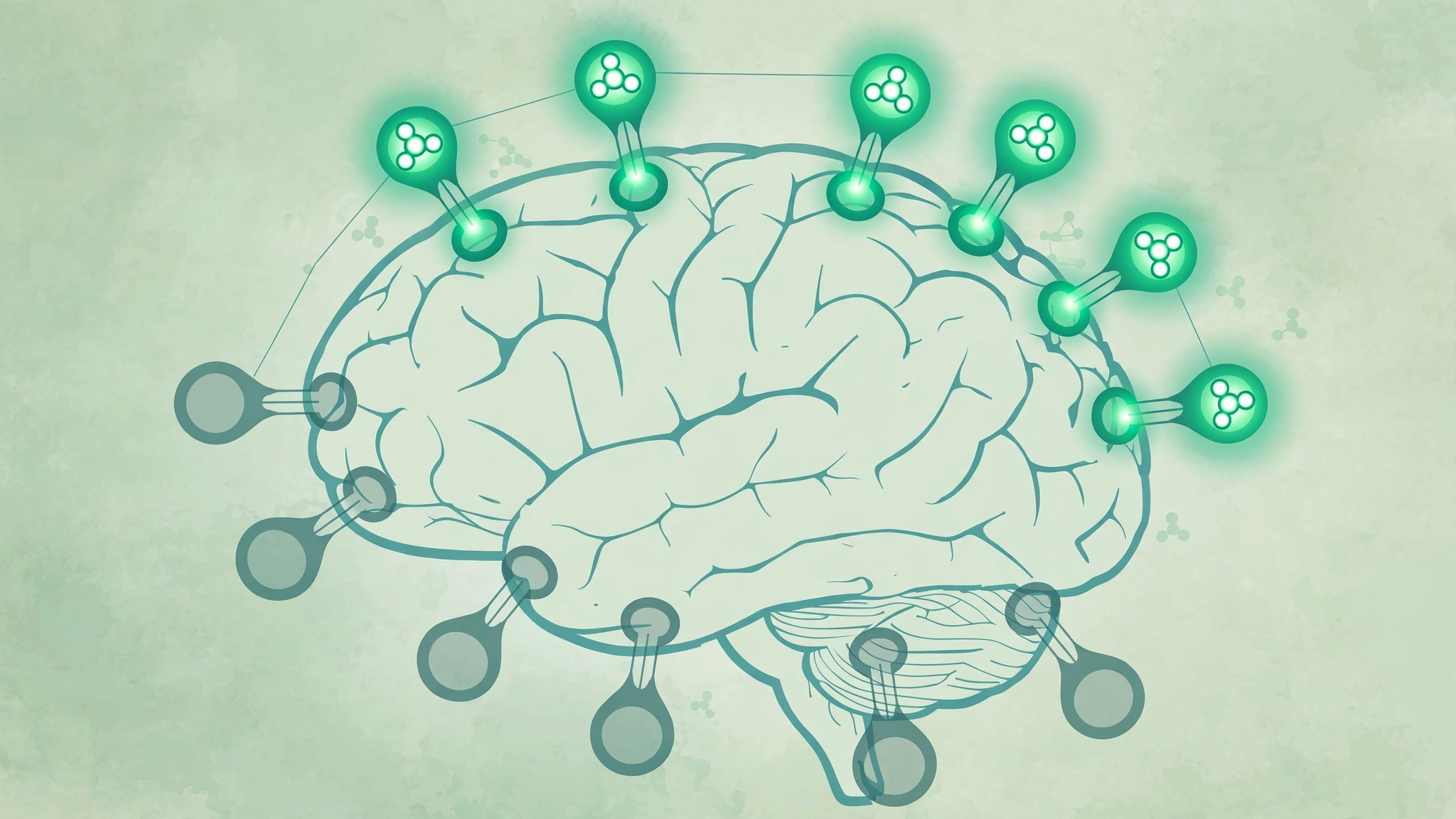
CBD and THC work through the endocannabinoid system, a signalling network that helps regulate mood, appetite, sleep, memory and pain. The endocannabinoid system uses receptors called CB1 and CB2. CB1 receptors sit mainly in the brain and central nervous system. CB2 receptors sit mainly in immune cells and peripheral tissues.
THC binds directly to CB1 receptors and activates them. That direct activation is the core reason THC causes a high. CBD has very low affinity for CB1 receptors, which means CBD does not bind to CB1 receptors in the same direct way and does not switch them on. CBD influences the endocannabinoid system indirectly, by changing how the body’s own signals are broken down. The shared formula confuses many readers, so the shape point needs plain language. CBD and THC both contain 21 carbon atoms, 30 hydrogen atoms and 2 oxygen atoms. In THC, one ring of atoms is closed. In CBD, that ring is open. The closed ring gives THC a shape that fits the CB1 receptor. The open ring gives CBD a shape that does not fit the same way.
CBD vs THC: key differences explained
CBD vs THC: key differences explained in one line: THC intoxicates and CBD does not, and that single difference shapes legality, testing, driving and medical use.
| Feature | CBD | THC |
|---|---|---|
| Full name | Cannabidiol | Delta-9-tetrahydrocannabinol |
| Chemical formula | C21H30O2 | C21H30O2 |
| Psychoactive high | No | Yes |
| Main receptor action | Indirect influence on CB1 and CB2 | Direct partial activation of CB1 and CB2 |
| Main plant source | Hemp in most commercial products | Marijuana in most products, also present in hemp at trace levels |
| Common uses studied | Seizures (FDA approved), anxiety, pain, inflammation, sleep | Nausea, appetite loss, chronic pain, spasticity, insomnia |
| US federal legality | Legal from hemp with no more than 0.3 percent delta-9 THC | Illegal federally from marijuana, with state medical and adult-use exceptions |
| Drug test | Not tested for directly, but trace THC in full-spectrum products can trigger a positive result | Tested for, through the metabolite THC-COOH |
| Driving | No impairment shown in controlled trials | Impaired driving in the first hours after use |
| Dependence risk | No abuse potential found in humans (WHO, 2018) | About 9 percent of cannabis users develop dependence, per a widely cited estimate |
| Common side effects | Drowsiness, dry mouth, diarrhoea, reduced appetite, liver enzyme changes at high doses | Dry mouth, red eyes, dizziness, anxiety, paranoia, impaired memory and coordination |
The dependence row covers cannabis use in general, not CBD use, and risk rises with frequency and dose. This comparison is published by Digital Geek Spot as part of its CBD coverage, and the CBD guides on Digital Geek Spot cover CBD oils, legality and benefits in separate articles.
Does CBD get you high?
No, CBD does not get you high. CBD does not activate CB1 receptors the way THC does, so CBD cannot produce euphoria, altered perception or the loss of coordination linked to THC. A person who feels intoxicated after a CBD product has likely taken a product with more THC than the label states, or a product that contains another intoxicating cannabinoid such as delta-8 THC. That labelling gap is a real risk, and it is a strong reason to check a COA before buying. High CBD doses can cause drowsiness, and a drowsy driver is still an unsafe driver. Test any new product at home, at a low dose, on a day with no driving or safety-critical work. Pregnant or breastfeeding readers should avoid CBD, because safety data for those cases are lacking.
Which works better for pain, sleep and anxiety?
Neither compound wins on all three symptoms, because the evidence differs by symptom and by product. For pain, THC has stronger evidence for chronic nerve pain and cancer-related pain in medical cannabis programs, while CBD has weaker but growing evidence for inflammatory pain. For sleep, THC can shorten the time to fall asleep, but regular THC use can disturb sleep quality and dreaming, and stopping THC can cause rebound insomnia. CBD may help sleep indirectly by easing anxiety, but direct evidence for CBD as a sleep aid is still thin. For anxiety, CBD has the more promising early evidence, with several small trials showing reduced anxiety in public-speaking and social-anxiety settings, while THC can raise anxiety, especially at high doses or in people prone to anxiety. This article gives general information only, not medical advice, and a clinician should review any plan to use CBD or THC for a health condition.
Is CBD legal and is THC legal?
CBD from hemp is federally legal in the United States when delta-9 THC stays at or below 0.3 percent on a dry-weight basis, while THC from marijuana remains federally illegal, with state laws creating exceptions. The 2018 Farm Bill removed hemp from the federal Controlled Substances Act and set the 0.3 percent line. That line is a plant definition, not a safety finding. CBD from marijuana, which carries more than 0.3 percent THC, is still federally illegal, even in states with legal cannabis. State law then adds a second layer. Some states allow adult-use marijuana, some allow medical marijuana only, and some restrict hemp-derived cannabinoids such as delta-8 THC. A product that is legal in one state can be illegal in the next state, and travelling with cannabis products across state lines carries legal risk even between two legal states.
Readers who want the full legal picture for CBD should read the guide on whether CBD oil is legal and what the rules cover. Three practical rules cover most cases. First, check the law in your own state before buying, because state rules change often. Second, check the law at your destination before travelling with any cannabis product. Third, check workplace rules separately, because an employer can ban THC even when state law allows it.
Can CBD make you fail a drug test?
Yes, CBD can make you fail a drug test, if the CBD product contains THC. Standard workplace drug tests do not test for CBD. Standard tests look for THC-COOH, the main metabolite the body makes after THC use. Pure CBD isolate, made and labelled correctly, should not trigger a positive result, because isolate contains no THC. Full-spectrum CBD is the risk case, because full-spectrum products legally contain up to 0.3 percent delta-9 THC, and regular use can let THC metabolites build up to a detectable level. Broad-spectrum CBD sits in the middle: THC is removed in processing, but poor processing can leave trace THC behind, so the risk is lower than full-spectrum but not zero.
Four steps lower the risk, but no step removes it fully for a tested worker. First, choose isolate when a drug test is possible, and verify the COA shows no detected THC. Second, keep the product packaging, the COA and the purchase receipt, so a positive result can be explained with documents. Third, stop use well before a known test date, because THC metabolites clear slowly. Federal safety-sensitive roles follow federal rules that ban THC regardless of source. For those roles, the only safe choice is to avoid THC-containing products entirely.
What product types carry CBD and THC?
CBD and THC both appear in oils, capsules, gummies, topicals and vape products, but onset, duration and risk differ by product type. Oils and tinctures act in 15 to 45 minutes under the tongue and last 4 to 6 hours. Capsules and gummies act in 30 minutes to 2 hours and last 6 to 8 hours, because digestion and liver processing slow the onset. For THC products, the safest start is a low dose, such as 2.5 mg of THC, with a wait of at least 2 hours for edibles before any second dose. No dose in this guide is a recommendation.
How do you choose between CBD and THC?
Choose CBD when intoxication, driving, drug tests or workplace rules rule out THC, and choose THC only when a medical need or a legal adult-use setting justifies the high and its risks. Use this checklist: check your drug-test status first; check your driving and safety duties; check your state law and your destination law; check your health conditions and medicines; check the product COA; match the symptom to the evidence, not to marketing; start low, use one product at a time, and keep notes on dose, timing and effect.
Teachers, drivers, pilots, healthcare workers, machine operators and anyone in a safety-sensitive role should treat THC as off-limits during work periods and before shifts, even when state law allows it. Employers can set drug policies that are stricter than state law, and federal contractors follow federal rules. When any rule is unclear, CBD isolate is the lower-risk option, and no THC product is the lowest-risk option.
What side effects should you watch for?
THC side effects centre on intoxication, memory, coordination and anxiety, while CBD side effects centre on drowsiness, stomach upset and medicine interactions. THC side effects include dry mouth, red eyes, dizziness, impaired short-term memory, slower reaction time, increased heart rate, anxiety, paranoia and, at high doses, panic or psychosis-like symptoms. Regular heavy THC use can lead to dependence, and stopping after heavy use can cause irritability, sleep problems and reduced appetite. Long-term heavy use in adolescence is linked to worse outcomes for memory and mental health, which is why medical guidance advises against THC use by adolescents except for a clear medical reason under supervision. CBD side effects are milder but not absent. CBD can cause drowsiness, dry mouth, diarrhoea, reduced appetite and changes in liver enzymes, especially at high doses or with medicines that affect the liver. CBD can raise blood levels of several medicines, including some blood thinners, seizure medicines and sedatives, by slowing liver breakdown. Stop use and seek care for severe vomiting, chest pain, fainting, severe anxiety, hallucinations or signs of an allergic reaction.
CBD and THC together: what happens?
CBD and THC together can soften the rough edges of THC, but the combination still causes a high when THC is present. Several studies show CBD can reduce THC-linked anxiety and psychosis-like symptoms, and users often report a calmer high with balanced products. Balanced products with roughly equal CBD and THC are common in medical cannabis programs for pain and spasticity, because the CBD component may allow a useful THC dose with less anxiety. Combined use still carries THC risks. A balanced product still impairs driving, still shows on a drug test and still carries dependence risk with regular use. CBD does not cancel THC, and CBD does not make THC safe for a safety-sensitive job.
Conclusion
CBD vs THC: key differences explained comes down to receptor action, intoxication and the 0.3 percent hemp line. THC binds CB1 receptors directly and causes a high, with medical uses for nausea, appetite loss, pain and spasticity, and with costs in memory, coordination, anxiety and drug-test risk. CBD influences the endocannabinoid system indirectly, does not cause a high, and carries FDA approval only for certain seizure disorders, with other uses still under study. Hemp-derived CBD is federally legal in the United States at or below 0.3 percent delta-9 THC, while marijuana-derived THC remains federally illegal with state exceptions. Full-spectrum CBD can trigger a positive drug test, isolate carries the lowest test risk, and no product choice removes the need to check state law, workplace rules and medicine interactions. Choose by test status, driving duties, health needs and verified lab results, not by marketing claims.
For a plain-language starting point on the CBD side, read the guide on what CBD oil is and how it works. That guide covers CBD basics, product types and dosing questions in one place, and it pairs well with this comparison.
Frequently asked questions
Is CBD the same as THC?
No, CBD is not the same as THC. CBD (cannabidiol) does not cause a high, while THC (tetrahydrocannabinol) causes the cannabis high by activating CB1 receptors in the brain. Both compounds come from Cannabis sativa and share the formula C21H30O2, but their molecular shape differs, which changes receptor fit and effects.
Will CBD show up on a drug test?
No, CBD itself does not show up on a standard drug test, but full-spectrum CBD can cause a positive result. Standard tests look for THC-COOH, a THC metabolite, and full-spectrum products contain up to 0.3 percent THC. Regular use can build THC metabolites to a detectable level, so tested workers should choose verified isolate.
Is CBD legal in the United States?
Yes, hemp-derived CBD is federally legal in the United States when delta-9 THC stays at or below 0.3 percent on a dry-weight basis. CBD from marijuana remains federally illegal, and state rules vary for both hemp and marijuana products. Check your state law and workplace rules before buying or using any CBD product.
Does THC help with pain better than CBD?
THC has stronger evidence than CBD for some types of chronic pain, especially nerve pain, in medical cannabis programs. CBD has weaker evidence for pain but fewer intoxicating side effects. Neither compound is a proven cure for pain, and the better choice depends on the pain type, other health conditions and drug-test or driving limits.
Can you take CBD and THC together?
Yes, CBD and THC can be taken together, and balanced products are common in medical cannabis programs. CBD may reduce THC-linked anxiety, but the combination still causes a high, still impairs driving and still shows on a drug test. CBD does not cancel THC risks, so combined use needs the same safety checks as THC alone.
Is CBD safe for daily use?
CBD is generally well tolerated, but daily use is not risk-free. CBD can cause drowsiness, stomach upset and liver enzyme changes, and CBD can interact with prescription medicines. Daily users should use tested products, watch for side effects and ask a clinician to review medicine interactions before long-term use.