Written by James Foster for Digital Geek Spot. Last updated: November 2026.
CBD for chronic pain has weak support in controlled trials. A 2024 review of 16 randomized trials found 15 showed no pain benefit over placebo, and a 2026 Cochrane review found no clear evidence that CBD-dominant medicines relieve chronic nerve pain. Some people report relief, and small studies on topical CBD and fibromyalgia surveys show promise, but CBD alone is not a proven pain treatment.
Chronic pain drives more CBD sales than any other reason, yet the research record tells a careful story. This guide covers what CBD is, what trials show for each pain type, how CBD compares with THC, which form has better evidence, what doses studies used, the safety risks, how to read a label, and which treatments hold stronger evidence. Every claim below names its source and year.
Key Takeaways
- CBD alone has not beaten placebo in most controlled pain trials: 15 of 16 randomized trials in a 2024 review showed no benefit (Source: Moore et al., 2024).
- A 2026 Cochrane review of 21 trials with 2,187 adults found no clear evidence that CBD-dominant medicines relieve chronic nerve pain.
- Topical CBD has the most positive small-trial signal, with one 29-person trial showing less sharp nerve pain after 4 weeks.
- Fibromyalgia surveys report perceived improvement, but no large randomized trial confirms it.
- High oral doses can raise liver enzymes: 5.6 percent of healthy adults on 350 mg per day had liver enzymes rise above 3 times normal in a 2025 FDA-run trial.
- Only about 26 percent of CBD products carry accurate labels, so a third-party lab report matters more than the brand name (Source: Bonn-Miller et al., 2017).
Table of Contents
- What Is CBD and How Does It Work for Pain?
- Does CBD Help Chronic Pain? What the Research Says
- What Does the Evidence Show for Each Type of Chronic Pain?
- CBD vs THC for Pain: What Is the Difference?
- Oral CBD vs Topical CBD: Which Form Has Better Evidence?
- How Much CBD Do Pain Studies Use?
- Is CBD Safe for Chronic Pain?
- How to Read a CBD Label and Lab Report Before You Buy
- Should You Try CBD for Chronic Pain?
- What Has Stronger Evidence Than CBD for Chronic Pain?
- Frequently Asked Questions
What Is CBD and How Does It Work for Pain?
CBD, short for cannabidiol, is a non-intoxicating compound from the Cannabis sativa plant that interacts with the endocannabinoid system, a network of receptors and signaling molecules that helps regulate pain, inflammation, mood and sleep. CBD does not produce a high. The high from cannabis comes from THC (tetrahydrocannabinol), a different compound. CBD products come as oils, capsules, gummies, creams and vapes, and the form changes how much CBD reaches the blood.
The body runs an endocannabinoid system with two main receptors. CB1 receptors sit mostly in the brain and nervous system, and CB2 receptors sit mostly in immune tissue. CBD binds weakly to both receptors. CBD works through indirect routes instead: it slows the breakdown of the body’s own cannabinoids and affects serotonin and TRPV1 receptors that carry pain signals. Lab studies show CBD can lower inflammation markers, and animal studies show it can reduce pain behavior, but those effects have not translated into clear pain relief in human trials.
The cannabidiol page on Wikipedia lists CBD as a phytocannabinoid with one approved medical use: the prescription drug Epidiolex treats two rare forms of epilepsy. No CBD product holds FDA approval as a pain treatment. Hemp-derived CBD is legal in the United States at the federal level when it holds less than 0.3 percent THC, but rules vary by state, and the FDA has warned sellers who claim CBD treats pain.
Our CBD guides on Digital Geek Spot cover CBD, THC and the other major cannabinoids in plain language. For the basics of how CBD oil works in the body, read What Is CBD Oil and How Does It Work?
Does CBD Help Chronic Pain? What the Research Says
CBD alone does not reliably help chronic pain, based on the best controlled trials available in 2026. The strongest summary comes from a 2024 review in the Journal of Pain, which examined 16 randomized, placebo-controlled trials of CBD across 12 pain conditions and found 15 showed no greater pain relief than placebo (Source: Moore et al., 2024). The review authors concluded that current evidence suggests CBD for pain is expensive, ineffective and possibly harmful at high doses.
A 2026 Cochrane review reached a similar verdict for nerve pain. The review pooled 21 trials with 2,187 adults and found no clear evidence that CBD-dominant medicines relieve chronic neuropathic pain, with low or very low certainty evidence. THC-dominant medicines also lacked clear evidence of meaningful pain relief, and they caused more nervous system side effects such as dizziness.
A review led by Dr. Roger Chou at Oregon Health and Science University, published in the Annals of Internal Medicine in December 2025, analyzed 25 clinical trials and found products with mainly or only CBD showed almost no ability to manage pain. High-THC products showed small short-term gains, about 0.5 to 1 point on a 10-point scale, with moderate to large increases in dizziness, sedation and nausea.
The gap between survey reports and trial results has a known cause. In a balanced-placebo experiment, CBD did not lower pain intensity, and the relief people felt tracked what they were told they were taking (Source: De Vita et al.). Expectation shapes pain reports, and controlled trials remove that effect, so the benefit mostly disappears.
That does not mean CBD does nothing for anyone. Small trials and surveys point to narrow cases where CBD may help, and the next section gives the verdict for each pain type, one by one.
What Does the Evidence Show for Each Type of Chronic Pain?
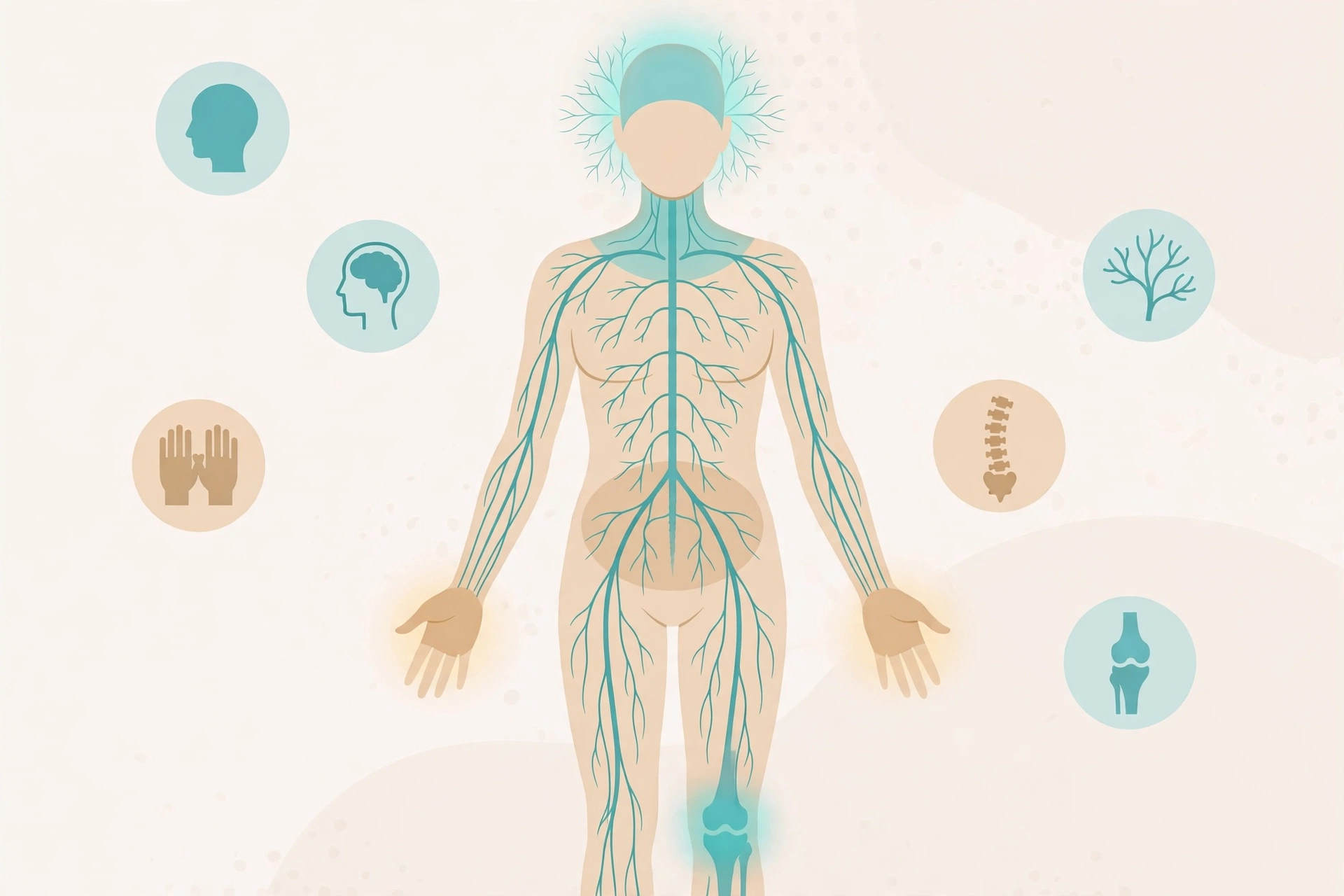
The evidence for CBD varies sharply by pain type, and no type has strong support from large human trials. The table below grades each type on the human evidence available in 2026.
| Pain type | Evidence grade | What the research shows |
|---|---|---|
| Arthritis and joint pain | Weak, animal data only | Rat studies show less joint swelling and pain behavior; human trials have not repeated the result |
| Nerve pain (neuropathic) | Very weak | 2026 Cochrane review of 21 trials found no clear benefit from CBD-dominant medicines |
| Fibromyalgia | Weak, survey data only | A 2021 survey of 2,701 patients found perceived improvement; no large randomized trial confirms it |
| Back pain | Weak | A 2021 trial of 100 emergency patients with acute low back pain found no benefit from CBD |
| Migraine and headache | Very weak | No randomized trials of CBD for migraine exist; evidence is limited to case reports and surveys |
Arthritis and Joint Pain
CBD has the strongest preclinical base for joint pain, and the weakest human record. Two rat studies drive the optimism. Hammell 2016 found a transdermal CBD gel reduced joint swelling and pain-related behavior in rats with induced knee arthritis, without evident side effects. Philpott 2017 found CBD given at the joint prevented osteoarthritis-related inflammation, pain and nerve damage in a rat model. Human trials tell a different story. A trial of high-dose oral CBD at 600 mg per day in knee osteoarthritis found no pain benefit and raised liver enzymes in some participants (Source: MDPI review, 2025). No human trial has shown CBD beats placebo for arthritis pain.
Nerve Pain
CBD alone has almost no support for nerve pain. The 2026 Cochrane review pooled 21 trials with 2,187 adults with chronic neuropathic pain and found no clear evidence that CBD-dominant medicines relieve pain. Most trials that did show benefit for nerve pain used THC plus CBD products, not CBD alone. The Mucke 2018 systematic review of cannabinoids for neuropathic pain reached a similar split: cannabis-based medicines helped some patients, but the products in those trials held THC. A small 2020 trial of topical CBD for peripheral nerve pain in 29 people found less sharp and intense pain after 4 weeks, but the sample was small and the result needs a larger trial to confirm it.
Fibromyalgia
Fibromyalgia has the most positive survey data and no confirming trial. Boehnke 2021 surveyed 2,701 fibromyalgia patients, and CBD users generally reported slight to much improvement across symptoms, most commonly pain. Surveys cannot prove cause, since people who feel better keep using a product and people who feel worse stop. No large randomized trial of CBD for fibromyalgia exists, so the survey result stays a lead for research, not proof of benefit. Small trials of THC-rich oils in fibromyalgia improved fatigue and daily function, but those products held THC, not CBD alone.
Back Pain
CBD has no trial support for back pain. The CANBACK trial in Australia in 2021 gave CBD or placebo to 100 emergency department patients with acute low back pain and found no benefit. No randomized trial has tested CBD for chronic low back pain. Back pain responds best to movement, physical therapy and time, and the treatments with trial support sit in the final sections of this guide.
Migraine and Headache
No randomized trial of CBD for migraine exists. The evidence is limited to case reports, surveys and small studies of whole cannabis, which holds THC. Migraine research has tested other cannabinoids, but CBD alone has no trial record for headache or migraine. People with migraine who try CBD do so without trial support, and the drug interaction risks in the safety section apply to them as well.
CBD vs THC for Pain: What Is the Difference?
CBD and THC differ in one key way for pain: THC has small trial support for short-term pain relief, while CBD alone has almost none. Both compounds come from the cannabis plant, but THC causes intoxication and CBD does not. The table below compares them on the points that matter for pain.
| Feature | CBD | THC |
|---|---|---|
| Intoxication | None | Yes, causes a high |
| Trial support for chronic pain | Almost none for CBD alone | Small short-term benefit, about 0.5 to 1 point on a 10-point scale |
| Products in most positive trials | Rarely the tested product | THC plus CBD sprays and THC-only prescription drugs |
| Common side effects | Drowsiness, diarrhea, reduced appetite, liver enzyme rises at high doses | Dizziness, sedation, nausea, impaired memory and coordination |
| Legal status (US) | Hemp CBD legal federally under 0.3 percent THC | Controlled substance federally, legal only in regulated state programs |
| FDA approved use | Epidiolex for rare epilepsy only | Dronabinol and nabilone for nausea and appetite loss |
Most trials that show pain benefit from cannabis medicines used whole-plant cannabis or THC plus CBD products, not CBD isolate. Nabiximols, a THC plus CBD mouth spray, is the best studied of these products, and it is licensed in the United Kingdom only for muscle spasticity in multiple sclerosis, not for general pain. The Chou 2025 review found the small pain benefit from high-THC products came with moderate to large increases in dizziness, sedation and nausea, so the trade-off is real.
Our full comparison of the two compounds goes deeper into effects, testing and safety: CBD vs THC: Key Differences Explained.
Oral CBD vs Topical CBD: Which Form Has Better Evidence?
Topical CBD has better trial support than oral CBD for pain, though the support is still thin. Oral CBD faces a hard problem: the liver breaks down most of a swallowed dose before it reaches the blood, so blood levels stay low and vary widely between people. Topical CBD goes on the skin over the painful area, and very little reaches the blood, which also means very little interacts with other medicines.
The most positive CBD pain trial used a topical product. A 2020 trial in the United States gave 29 people with peripheral nerve pain either CBD oil on the skin or a placebo oil for 4 weeks, and the CBD group reported less sharp and intense pain than the placebo group. The trial was small, and no large trial has repeated it, but it is the only randomized CBD trial with a clear positive result for pain.
Oral CBD has no comparable win. The 2024 review of 16 trials covered oral CBD across 12 pain conditions and found 15 showed no benefit over placebo, with doses from 6 mg to 1,600 mg per day. A 2023 systematic review of topical CBD found the same pattern: small positive signals, small samples, and no large trial to confirm them.
The endocannabinoid system page on Wikipedia describes CB1 and CB2 receptors in skin tissue, which is the proposed route for topical CBD. CBD is highly fat soluble, which makes it slow to cross the skin barrier into deeper tissue, so a cream may reach surface nerves and joints near the skin while doing little for deep muscle or joint pain. A balm carries a lower risk of drug interactions than an oral product, which is a real advantage for people who take several medicines.
How Much CBD Do Pain Studies Use?
Pain studies have used oral CBD doses from 6 mg to 1,600 mg per day, with no dose showing clear benefit. The wide range is itself a finding: researchers have tested low doses, high doses and everything between, and no dose range has produced a consistent win over placebo. The table below lists the doses used in the main trials and reviews.
| Study | Dose | Duration | Result |
|---|---|---|---|
| Moore et al. review, 2024 | 6 to 1,600 mg per day | Single dose to 12 weeks | 15 of 16 trials showed no benefit over placebo |
| FDA-run liver trial, 2025 | 5 mg per kg per day, about 350 mg for a 70 kg adult | 4 weeks | 5.6 percent had liver enzymes rise above 3 times normal |
| Knee osteoarthritis trial | 600 mg per day | Several weeks | No pain benefit, raised liver enzymes |
| Topical nerve pain trial, 2020 | CBD oil on skin, dose not standardized | 4 weeks | Less sharp and intense pain than placebo |
| CANBACK back pain trial, 2021 | 400 mg single dose | Single dose | No benefit for acute low back pain |
No proven dose for pain exists, and no official body has set one. Higher doses bring more side effects, especially liver enzyme rises and drowsiness, without better pain relief. People who try CBD usually start low and raise the dose slowly, but that approach has no trial support either. This article gives no dosing instruction: anyone who uses CBD for pain should talk to a doctor first, especially if they take other medicines.
Is CBD Safe for Chronic Pain?
CBD is relatively low risk at low doses for short periods, and the risk rises with dose, duration and other medicines. The common side effects are drowsiness, diarrhea, reduced appetite and mood changes. The serious risks are liver injury and drug interactions, and both grow at the doses people use for pain.
Liver risk is dose dependent. In a 2025 randomized trial run with the FDA, 201 healthy adults took CBD at 5 mg per kg per day, about 350 mg for a 70 kg adult, or placebo for 4 weeks. About 5.6 percent of those on CBD had liver enzyme levels rise to more than 3 times normal, compared with none on placebo. The knee osteoarthritis trial at 600 mg per day also raised liver enzymes. People with liver disease, and people who drink alcohol regularly, face higher risk.
Drug interactions are the bigger day-to-day risk. CBD inhibits the CYP450 liver enzymes that break down many medicines. The medicines that need a doctor’s check before any CBD use include:
- Blood thinners such as warfarin, since CBD can raise bleeding risk
- Epilepsy medicines such as clobazam, since CBD raises their blood levels
- Sedating drugs, opioids and alcohol, since CBD adds drowsiness
- Some antidepressants and heart medicines that use the same liver pathway
- Gabapentinoids such as gabapentin and pregabalin, since combined sedation rises
The FDA warns about added drowsiness when CBD is taken with sedating drugs or alcohol. People who take prescription pain medicines should never stop or change a dose to make room for CBD without a doctor’s input.
Product quality is a separate safety problem. In the most cited labeling study, only about 26 percent of CBD products were accurately labeled, nearly 70 percent were mislabeled, and roughly 1 in 5 contained THC that was not disclosed (Source: Bonn-Miller et al., 2017). A product with undisclosed THC can cause a failed drug test and unwanted intoxication.
CBD is not recommended during pregnancy or breastfeeding, and children should not use CBD for pain outside a doctor’s care. The FDA has approved CBD only as Epidiolex for two rare forms of epilepsy, and that approval does not extend to pain.
How to Read a CBD Label and Lab Report Before You Buy

A third-party lab report, called a certificate of analysis (COA), matters more than the brand name or the label claims. The label tells you what the seller claims, and the COA tells you what an independent lab found. Use this checklist before buying any CBD product for pain.
- Find the COA. A real product links to a lab report by batch number or QR code on the label.
- Match the batch number on the bottle to the batch number on the report.
- Check the CBD amount per serving against the label claim, and allow a small margin only.
- Check the THC amount. Full-spectrum products hold up to 0.3 percent THC by law, and that amount can still show on a drug test.
- Check the spectrum type. Isolate holds CBD only, broad-spectrum holds CBD plus other cannabinoids without THC, and full-spectrum holds CBD plus THC under 0.3 percent.
- Check the contaminant screen. The report should test for pesticides, heavy metals, solvents and mold.
- Check the lab name and date. The lab should be independent of the seller, and the report should be less than 12 months old.
- Skip products with no COA, a COA from the seller’s own lab, or a report that does not match the batch.
For a full walkthrough of lab reports, read How to Read a CBD Lab Report. Products sold as CBD oil sometimes hold hemp seed oil instead, which has no CBD at all, and the label check above catches that swap.
Should You Try CBD for Chronic Pain?
A CBD trial is reasonable only for some people, and the decision depends on pain type, medicines and expectations. Use this guide to decide.
Try a cautious trial only if all of these apply:
- Your pain type has at least a small positive signal, such as nerve pain treated with a topical product
- You take no blood thinner, epilepsy medicine or sedating drug, or your doctor has cleared the combination
- You have no liver disease and you drink little or no alcohol
- You can buy a product with a matching third-party COA
- You accept that the likely result is no benefit, and you will stop if nothing changes in 4 weeks
Skip CBD and talk to a doctor first if any of these apply:
- You take warfarin or another blood thinner
- You take epilepsy medicine, opioids or several sedating drugs
- You have liver disease or raised liver enzymes
- You are pregnant or breastfeeding
- You face drug testing at work, since some products hold undisclosed THC
- You plan to replace a prescribed pain medicine with CBD
Set a clear test before you start: pick one pain score, such as morning pain on a 0 to 10 scale, and record it daily for 2 weeks before CBD and 4 weeks during use. Stop if the score does not move, if side effects appear, or if the cost feels out of proportion to the result. Digital Geek Spot covers CBD research in plain language so readers can weigh the evidence before they spend money on a product.
What Has Stronger Evidence Than CBD for Chronic Pain?
Exercise, physical therapy, topical NSAIDs and cognitive behavioral therapy all hold stronger trial support for chronic pain than CBD. The 2021 BMJ clinical practice guideline on cannabis and cannabinoids for chronic pain could only give a weak recommendation to trial non-inhaled cannabinoids when standard care falls short, and it put the benefit at about 1 in 10 people treated. The treatments below have larger and better confirmed effects.
- Exercise and physical therapy. Regular movement, strength work and guided physical therapy reduce pain and improve function in back pain, arthritis and fibromyalgia, with large trials behind them.
- Topical NSAIDs. Diclofenac gel beats placebo for hand and knee osteoarthritis pain, with fewer stomach risks than oral NSAIDs.
- Cognitive behavioral therapy (CBT). CBT for chronic pain reduces pain intensity and improves daily function, and it helps people sleep better.
- Heat, cold and weight management. Heat and cold ease flare-ups, and weight loss lowers load on knee and hip joints.
- Prescription medicines. Doctors can prescribe medicines matched to the pain type, such as duloxetine for fibromyalgia or gabapentinoids for nerve pain, with known doses and monitoring.
A pain plan that combines movement, sleep, stress management and a medicine matched to the pain type beats any single product. CBD sits at the edge of that plan, not at the center.
Frequently Asked Questions
Does CBD work for chronic pain?
No, CBD alone has not been shown to work reliably for chronic pain. A 2024 review found 15 of 16 randomized trials showed no benefit over placebo, and a 2026 Cochrane review found no clear evidence for nerve pain. Some people report relief, and topical CBD has a small positive signal, but CBD is not a proven pain treatment.
What type of CBD is best for pain?
Topical CBD has the best trial signal for pain, based on one small 29-person trial for nerve pain that found less sharp pain after 4 weeks. Oral CBD has no trial win for any pain type. Full-spectrum, broad-spectrum and isolate products have never been compared head to head for pain, so no spectrum type can claim better evidence.
How long does it take for CBD to work for pain?
Oral CBD takes 1 to 2 hours to reach peak blood levels, and topical CBD works locally within an hour for some users. Trials ran 4 to 12 weeks, and the 4-week topical trial is the only one with a positive result. Judge CBD after 4 weeks of steady use, not after one dose.
Is CBD safe to take every day for pain?
Low-dose CBD is low risk for short periods, but daily use at pain doses raises liver enzymes in some people. A 2025 FDA-run trial found 5.6 percent of healthy adults on about 350 mg per day had liver enzymes rise above 3 times normal in 4 weeks. Daily users on other medicines should get liver tests and a doctor’s check.
Can CBD replace my pain medication?
No, CBD cannot replace prescribed pain medicine. No trial shows CBD matches the effect of standard pain treatments, and stopping a prescription drug to use CBD can make pain worse and cause withdrawal. Anyone who wants to change pain medicine should talk to a doctor first and never stop a drug suddenly.
Will CBD show up on a drug test?
Yes, CBD can cause a failed drug test. About 1 in 5 CBD products hold undisclosed THC, and full-spectrum products legally hold up to 0.3 percent THC. Regular use can build enough THC metabolites to trigger a positive result. People facing drug tests should use only isolate products with a matching lab report, or skip CBD.
Conclusion
CBD for chronic pain: what research says is clear on the main point and open on the details. Controlled trials show CBD alone does not reliably relieve chronic pain, with 15 of 16 randomized trials finding no benefit over placebo and a 2026 Cochrane review finding no clear evidence for nerve pain. Small signals exist for topical CBD and fibromyalgia surveys, but no large trial confirms them. High oral doses carry liver risks, and CBD interacts with blood thinners, epilepsy medicines and sedating drugs. A careful buyer checks the lab report, picks a topical product for nerve pain, sets a 4-week test with a daily pain score, and stops when nothing changes. Treatments with stronger evidence, such as exercise, physical therapy, topical NSAIDs and CBT, deserve the first slot in any pain plan. Talk to a doctor before trying CBD, especially with other medicines in use.
Read How to Read a CBD Lab Report before you buy any CBD product, so the label claims match what an independent lab actually found.
This article is educational and is not medical advice. Talk to a doctor before using CBD, especially if you take prescription medicines, have liver disease, or are pregnant or breastfeeding.