Written by James Foster for Digital Geek Spot.
Last updated: October 2026.
Introduction
Best CBD dosage for beginners is 5 to 10 mg once per day for the first few days, then a slow increase of 5 mg at a time, with several days at each new level, until the lowest dose that gives the wanted result is found. Cannabidiol (CBD) is a compound from the cannabis plant that does not cause a high, and beginners use it in oils, gummies, capsules, and creams. This guide covers the starting dose, the math for reading a bottle label, the differences between product formats, a week by week titration plan, weight based starting ranges, goal based doses, spectrum types, side effects, and product safety checks. It also covers the mistakes that push beginners to a dose that is higher than needed, and the signs that mean a dose should stay put, drop back, or be discussed with a clinician.
Key Takeaways
- Best CBD dosage for beginners starts at 5 to 10 mg once per day.
- Hold each dose for 3 to 5 days before any increase.
- Increase by 5 mg at a time, and stop at the lowest dose that works.
- Read the label as mg per ml, not as the total mg on the bottle.
- Check for medication use, liver conditions, pregnancy, and drug testing before starting.
- Keep a daily dose journal with dose, time, product, and result.
Table of Contents
- What Is the Best CBD Dosage for Beginners?
- How Much CBD Should a Beginner Take on Day One?
- How Do You Calculate CBD Dose From a Bottle Label?
- Which CBD Product Format Fits a Beginner Best?
- How Do You Increase Your CBD Dose Safely?
- Does Body Weight Change the Best CBD Dosage for Beginners?
- What CBD Dose Fits Sleep, Stress, and Discomfort Goals?
- Full Spectrum, Broad Spectrum, or Isolate: Which One Should a Beginner Pick?
- What Side Effects Should Beginners Watch For?
- How Do You Pick a Safe Beginner CBD Product?
- Common Beginner Mistakes to Avoid
- Frequently Asked Questions
- Conclusion
What Is the Best CBD Dosage for Beginners?
Best CBD dosage for beginners is 5 to 10 mg of CBD once per day at the start, held for 3 to 5 days, then raised in 5 mg steps only when the current dose gives no clear result and causes no side effects. Cannabidiol (CBD) is a phytocannabinoid from the cannabis plant, and CBD products sold as supplements are not approved medicines for sleep, stress, or pain. No single dose fits every adult, because body weight, metabolism, product format, and individual sensitivity change the result. Current beginner guides overlap on the start: several put the first dose at 5 to 10 mg per day, while others start at 10 to 20 mg per day for general use. The lower end gives a beginner room to learn how one product feels before the dose grows, and it makes side effects easy to fix with a small cut.
A useful rule is to change one variable at a time: keep the same product, format, and time of day while the dose changes, and keep a dose journal with date, product, format, mg, time, and a short note on result. Digital Geek Spot covers CBD topics for general readers who want plain numbers and clear steps, and this guide follows that same approach with worked examples in every section.
How Much CBD Should a Beginner Take on Day One?
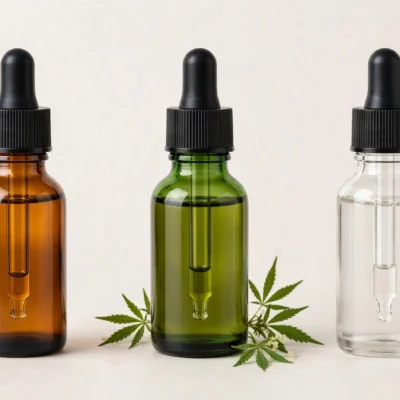
A beginner should take 5 to 10 mg of CBD once on day one, at a time that matches the goal, and then wait a full day before judging the result. A morning dose suits a daytime goal, and an evening dose suits a sleep goal. A single 10 mg gummy is the simplest day one dose, because the mg count is printed on the pack and no measuring is needed. An oil dose needs measuring: a 500 mg bottle in 30 ml gives about 17 mg per full 1 ml dropper, so a half dropper gives about 8 mg. A 1000 mg bottle in 30 ml gives about 33 mg per full dropper, so a quarter dropper gives about 8 mg. Those two examples show why the bottle total alone misleads beginners.
Day one is a test, not a verdict. CBD taken under the tongue starts working in 15 to 45 minutes, while gummies and capsules take 30 to 90 minutes because digestion comes first. A beginner should not take a second dose one hour after the first dose just because nothing is felt yet, because the first dose may still be on its way. One dose per day for the first 3 to 5 days gives a clean baseline. If the first dose causes drowsiness, dry mouth, or stomach upset, the next dose should drop to half, or pause for one day, before any new plan is set.
How Do You Calculate CBD Dose From a Bottle Label?
To calculate a CBD dose from a bottle label, divide the total CBD mg on the label by the bottle size in ml, and the result is the mg per ml. A 500 mg bottle in 30 ml gives 17 mg per ml. A 1000 mg bottle in 30 ml gives 33 mg per ml. A 500 mg bottle in 10 ml gives 50 mg per ml. A full dropper holds about 1 ml, and a standard dropper holds about 20 drops, so dividing mg per ml by 20 gives mg per drop. The table below gives worked examples for the bottle sizes beginners meet most often.
| Bottle label | Bottle size | CBD per ml | CBD per half dropper |
|---|---|---|---|
| 500 mg | 30 ml | 17 mg | 8 mg |
| 1000 mg | 30 ml | 33 mg | 17 mg |
| 1500 mg | 30 ml | 50 mg | 25 mg |
| 500 mg | 10 ml | 50 mg | 25 mg |
| 1000 mg | 10 ml | 100 mg | 50 mg |
A 10 ml bottle is much stronger per dropper than a 30 ml bottle with the same total mg, and that fact trips up many beginners. Write the mg per ml in the dose journal on day one, and use that number for every later dose. For gummies and capsules, the math is simpler: read the mg per piece on the pack, and cut a gummy only when the maker says the piece can be cut evenly. For topicals, the mg on the pack does not translate to a body wide dose, because a cream acts where it is applied.
Which CBD Product Format Fits a Beginner Best?
An oil or a gummy fits a beginner best, because an oil gives flexible measuring in small steps and a gummy gives a fixed, pre-measured dose with no measuring at all. Oils taken under the tongue act in 15 to 45 minutes and last 4 to 6 hours. Gummies and capsules act in 30 to 90 minutes and last 4 to 8 hours. Capsules suit a beginner who wants a fixed dose with no taste, but a capsule cannot be split into a smaller step. Vapes act in under 5 minutes and last 1 to 3 hours, but dosing a vape in exact mg is hard, so vapes are a weak first choice for a beginner who wants a measured dose. Topicals suit local use only.
| Format | Starting dose | Onset | Duration | Dose control |
|---|---|---|---|---|
| CBD oil under the tongue | 5 to 10 mg | 15 to 45 minutes | 4 to 6 hours | Strong, measured by dropper |
| CBD gummy | 10 mg, one piece | 30 to 90 minutes | 4 to 8 hours | Strong, fixed per piece |
| CBD capsule | 10 to 25 mg, one piece | 30 to 90 minutes | 4 to 8 hours | Fixed, cannot split |
| CBD topical | Pea sized amount on skin | Varies | 4 to 6 hours local | Weak, local only |
A beginner should pick one format and stay with it for at least 2 weeks. Switching from oil to gummies mid titration changes onset, duration, and absorption, and the journal then compares two different products instead of two doses. Food changes absorption too, so a beginner should take each dose in the same food state each day.
How Do You Increase Your CBD Dose Safely?
A beginner increases a CBD dose safely by raising the dose 5 mg at a time, holding each new dose for 3 to 5 days, and stopping at the lowest dose that gives the wanted result. The table below gives a 4 week plan for a beginner who starts at 10 mg and needs more. A beginner who starts at 5 mg follows the same steps, one level lower at each stage. A beginner who finds the wanted result at any stage stays at that dose and does not keep climbing.
| Week | Daily dose | What to check before the next step |
|---|---|---|
| Week 1 | 10 mg once per day | Sleep, calm, discomfort, side effects |
| Week 2 | 15 mg once per day | Any gain over week 1, any new side effect |
| Week 3 | 20 mg once per day, or 10 mg twice per day | Morning grogginess, daytime sleepiness |
| Week 4 | 25 mg once per day, or split across the day | Stable result for 3 days in a row |
Splitting a dose across the day suits a beginner who wants steady coverage: 10 mg in the morning and 10 mg in the evening gives 20 mg per day with a smoother profile than one 20 mg dose. A split dose also suits a beginner who feels drowsy after one larger dose. CBD effects build over days of steady use, and many users report a clearer result after 2 to 4 weeks than after day one. A beginner who doubles the dose after one quiet day skips the levels where a smaller dose would have worked. A dose increase should pause when a side effect appears, and the dose should drop back to the last level that caused no side effect.
Does Body Weight Change the Best CBD Dosage for Beginners?
Body weight changes the best CBD dosage for beginners in a modest way, with lighter adults starting lower and heavier adults sometimes needing a higher dose, but weight alone never sets the dose. A commonly cited weight based guide uses 0.2 mg of CBD per kg of body weight as a starting point: a 70 kg adult starts at about 14 mg per day, a 50 kg adult starts at about 10 mg per day, and a 90 kg adult starts at about 18 mg per day. The table below turns that guide into weight bands, and each band still starts inside the safe beginner range.
| Body weight | Weight based starting point | Suggested beginner start |
|---|---|---|
| Under 60 kg | About 10 mg per day | 5 to 10 mg per day |
| 60 to 80 kg | About 12 to 16 mg per day | 10 mg per day |
| 80 to 100 kg | About 16 to 20 mg per day | 10 to 15 mg per day |
| Over 100 kg | About 20 mg per day | 10 to 15 mg per day |
Weight is one factor among several. Metabolism, prior cannabis use, liver health, and the goal for use all shift the result. The UK Food Standards Agency advises healthy adults to take no more than 10 mg of CBD per day from food products, and that advice sits below the 15 to 50 mg range many users report as their working dose (Source: UK Food Standards Agency guidance, as reported in current beginner guides). A beginner who wants to go past 10 mg per day should weigh that guidance, check medication use, and talk to a clinician when a health condition or a prescription drug is in the picture.
What CBD Dose Fits Sleep, Stress, and Discomfort Goals?
Sleep, stress, and discomfort goals fit different starting doses, with stress and general wellness starting lowest, sleep starting a step higher in the evening, and discomfort starting with a split dose across the day. The table below gives starting ranges drawn from current beginner guides, and each range still begins with a low dose held for several days.
| Goal | Starting dose | Timing |
|---|---|---|
| General wellness | 5 to 10 mg per day | Same time each day |
| Stress and daytime calm | 10 to 20 mg per day | Morning, or split morning and midday |
| Sleep support | 15 to 30 mg per day | 30 to 60 minutes before bed |
| Discomfort support | 15 to 25 mg, twice per day | Morning and evening |
A sleep dose taken too early in the evening may wear off before bed, and a daytime dose taken too late may carry sleepiness into the night, so timing matters as much as mg. A beginner chasing sleep should fix the bedtime dose time first, then adjust mg. A beginner chasing daytime calm should watch for the trade off: a dose that calms also sedates at higher levels, and daytime sleepiness is the signal to drop back 5 mg. Clinical research on CBD for anxiety has used much higher doses, often 300 mg per day or more under supervision, but those doses are not beginner doses and they are not a target for home use. A beginner dose stays in the 5 to 50 mg per day band.
Full Spectrum, Broad Spectrum, or Isolate: Which One Should a Beginner Pick?
A beginner who wants zero THC should pick CBD isolate, and a beginner who wants the full plant profile should pick full spectrum only after accepting the trace THC and the drug test risk. CBD isolate holds CBD alone, with no other cannabinoids and no THC. Broad spectrum holds CBD plus other cannabinoids and plant compounds, with THC removed or reduced to trace levels. Full spectrum holds CBD plus other cannabinoids, terpenes, and THC at or below 0.3 percent by dry weight under US federal hemp rules. Some users report a stronger result from full spectrum at a lower dose, an effect linked to the combined action of plant compounds, but that claim rests on user reports and early research, not on a proven dose rule.
Drug testing decides the pick for many beginners. Standard workplace tests screen for THC metabolites, not for CBD. Isolate products carry no THC, so an isolate product is the safest pick for a tested worker. Full spectrum products carry trace THC, and regular or high dose use can in rare cases trigger a positive test. Broad spectrum sits between the two, but a broad spectrum label still needs a lab report to prove the THC claim. A beginner who faces testing should pick isolate and keep the lab report for the exact batch.
What Side Effects Should Beginners Watch For?
Beginners should watch for drowsiness, dry mouth, reduced appetite, stomach upset, and loose stools, and should treat any of those signs as a signal to hold or drop the dose. Most side effects at beginner doses are mild and pass when the dose drops by 5 to 10 mg. Drowsiness is the most common sign of a dose that is too high for daytime use, and it is also the sign that a sleep dose may be set a step too high for the morning after. Dry mouth and mild nausea respond to water, food, and a lower next dose. A side effect that lasts more than 48 hours after a dose cut, or a side effect that grows worse at a lower dose, needs a clinician check, not another home adjustment.
Medication interaction is the side effect beginners miss most often. CBD uses the CYP450 liver enzyme pathway, a pathway shared by many prescription drugs, including some blood thinners, seizure medicines, and sedatives. CBD can raise or lower the blood level of a drug that uses that pathway, so a beginner who takes any prescription drug should talk to a clinician or pharmacist before the first dose. Liver health matters too: high dose CBD has been linked in research to liver enzyme changes, and a beginner with liver disease should get clinician advice first. Pregnancy and breastfeeding rule out CBD for now, because safety data for those groups is missing. For background on how CBD works in the body, read the page on cannabidiol.
How Do You Pick a Safe Beginner CBD Product?
A beginner picks a safe CBD product by checking 5 items before buying: a current Certificate of Analysis (COA) for the exact batch, a CBD mg count that matches the COA, a THC level inside the legal limit, a contaminant panel, and a clear label. A COA is a lab report from an independent, accredited lab. The batch or lot number on the COA must match the number on the bottle. A company that cannot produce a COA for the batch in hand fails the check, and the beginner should pick a different product. The contaminant panel should cover heavy metals, pesticides, microbial contamination, and residual solvents, not cannabinoid content alone. A label should state CBD mg per bottle, CBD mg per serving, serving size, spectrum type, and a full ingredient list.
Price and strength also need a beginner check. A 3000 mg or 6000 mg bottle is a poor first bottle, because one dropper holds 100 mg or 200 mg, and a beginner dose of 5 to 10 mg becomes a fraction of a dropper that is hard to measure. A 500 mg or 1000 mg bottle in 30 ml gives a beginner friendly mg per dropper, and a gummy pack with 10 mg per piece gives the simplest measuring of all. A product that passes all 5 checks still needs the titration plan: a clean lab report proves the bottle holds what the label says.
Common Beginner Mistakes to Avoid
Common beginner mistakes are starting too high, doubling a dose after one quiet day, switching products mid titration, and taking a second dose before the first dose has had time to act. A beginner who starts at 50 mg because a friend uses 50 mg skips every level where a lower dose might have worked. A beginner who takes a gummy, feels nothing after one hour, and takes a second gummy, stacks two doses that peak together later. A beginner who switches from oil to gummies in week 2 restarts the learning curve, because onset and duration change with the format. A beginner who takes CBD at a random time each day, with random food, builds a journal that cannot show a pattern. Buying mistakes add to the list: trusting a large total mg number, skipping the COA, and picking full spectrum while facing a drug test. The fix is the same in all cases: one product, one format, one time of day, one dose journal, 5 mg steps, and 3 to 5 days per step. For a related guide on how CBD oil may fit sleep and calm goals, read CBD oil benefits for anxiety and sleep.
Frequently Asked Questions
How much CBD should a beginner take each day?
A beginner should take 5 to 10 mg of CBD once per day at the start. Hold that dose for 3 to 5 days, then raise it by 5 mg only when no clear result appears and no side effect shows. Most beginners land in the 10 to 50 mg per day band after slow titration.
Is 10 mg of CBD enough for a beginner?
Yes, 10 mg of CBD is enough for many beginners as a starting dose. Some beginners feel a result at 10 mg, and some need a slow climb to 20 mg or 30 mg. A result that appears at 10 mg is a reason to stay at 10 mg, not a reason to climb higher.
Can a beginner take CBD every day?
Yes, a beginner can take CBD every day, and steady daily use gives a clearer result than random use. Many users report a clearer result after 2 to 4 weeks of daily use. A beginner who takes a prescription drug should check with a clinician first, because CBD shares a liver enzyme pathway with many drugs.
How long does it take for CBD to work for a beginner?
CBD oil under the tongue starts working in 15 to 45 minutes, and gummies and capsules start working in 30 to 90 minutes. A full picture of the result takes longer: steady daily use over 2 to 4 weeks shows more than any single day. A beginner should not judge a dose from day one alone.
Will CBD make a beginner feel high?
No, CBD alone does not cause a high, because CBD is not intoxicating in the way THC is. CBD isolate holds no THC. Full spectrum CBD holds trace THC at or below 0.3 percent, and that trace amount does not cause a high at beginner doses, but it can matter for drug testing.
Is best CBD dosage for beginners safe with other medicines?
No, best CBD dosage for beginners is not automatically safe with other medicines, because CBD can change how some prescription drugs are processed in the liver. A beginner who takes blood thinners, seizure medicines, sedatives, or any daily prescription drug should talk to a clinician or pharmacist before the first dose, and should never stop a prescribed medicine to make room for CBD.
Conclusion
Best CBD dosage for beginners is 5 to 10 mg once per day, raised by 5 mg steps with 3 to 5 days at each level, until the lowest dose that gives the wanted result is found. The plan in this guide gives a beginner every tool for that climb: label math, format choice, a week by week table, weight bands, goal based ranges, spectrum choice, side effect signs, and a 5 point product check. A dose journal turns the plan into personal data, and personal data beats any generic chart. A beginner who respects the low start, the slow climb, and the clinician check for medicines, liver health, pregnancy, and drug testing gets the best chance of a good result at the lowest dose. This guide is general information, not medical advice, and a clinician should advise any beginner with a health condition or a prescription drug. Explore more CBD guides in the CBD category, and for a plain explainer of the compound itself, read what CBD oil is and how it works.