Many crypto users lose funds simply by sending assets on the wrong network. You can avoid this costly mistake by verifying network compatibility before every transaction. Always confirm the recipient’s supported network and match it with your wallet’s withdrawal options to ensure your transfer arrives safely.
Understanding Blockchain Networks and Compatibility
Every blockchain operates as a separate system with its own rules and infrastructure. Sending crypto means choosing the right network that matches both the sender’s and receiver’s wallets. Use the wrong one, and your funds may not arrive-or worse, disappear. Always confirm network compatibility before initiating any transfer.
Differentiating Between Mainnets and Layer 2 Solutions
Mainnets are independent blockchains like Bitcoin or Ethereum that process transactions on their own. Layer 2 solutions, such as Arbitrum or Optimism, run on top of mainnets to improve speed and reduce fees. You must send assets using the same layer the recipient expects, or the transaction will fail.
Identifying Native Tokens versus Wrapped Assets
Native tokens exist by default on their original blockchain-ETH on Ethereum, for example. Wrapped assets are representations of a token on a different chain, like WETH, which allows ETH to function on other networks. Confusing the two can lead to lost funds if sent to incompatible addresses.
Wrapped tokens are created through a process that locks the original asset and mints a tokenized version on another chain. When you hold WETH instead of ETH, you’re using a version adapted for specific platforms or smart contracts. Always verify whether your wallet expects the native or wrapped form before sending, especially when moving between exchanges or decentralized apps.
Critical Factors to Evaluate Before Every Transfer
Always confirm the receiving wallet supports the network you’re using to avoid irreversible losses.
- Verify the recipient’s wallet accepts the specific cryptocurrency and network
- Check current transaction fees and blockchain congestion
- Ensure your wallet software is updated
- Double-check the address format matches the network
This protects your funds and ensures a successful transfer.
Verifying Receiving Wallet Network Support
You must ensure the recipient’s wallet is compatible with the network you plan to use. Sending crypto via an unsupported network often results in lost funds. This prevents your transaction from being recognized or received.
Assessing Transaction Fees and Gas Requirements
Fees vary significantly across networks and can spike during peak times. You need to check real-time gas rates to avoid overpaying or getting stuck transactions. This helps maintain cost efficiency and timely confirmations.
Network fees are dynamic and depend on congestion and transaction size. On Ethereum, for example, gas prices reflect how much users are currently bidding to get their transactions processed. You can use blockchain explorers or wallet tools to estimate accurate fees before confirming. Ignoring this step may lead to delays or unexpectedly high costs, especially during high-traffic periods.
How to Select the Matching Network on Exchanges
Choosing the right network when withdrawing crypto is something only you control. Exchanges list available networks for each coin-always match the withdrawal network to the deposit network of your destination wallet. A mismatch means your funds may not arrive or could be lost permanently. Double-check every detail before confirming.
Aligning Withdrawal Networks with Deposit Protocols
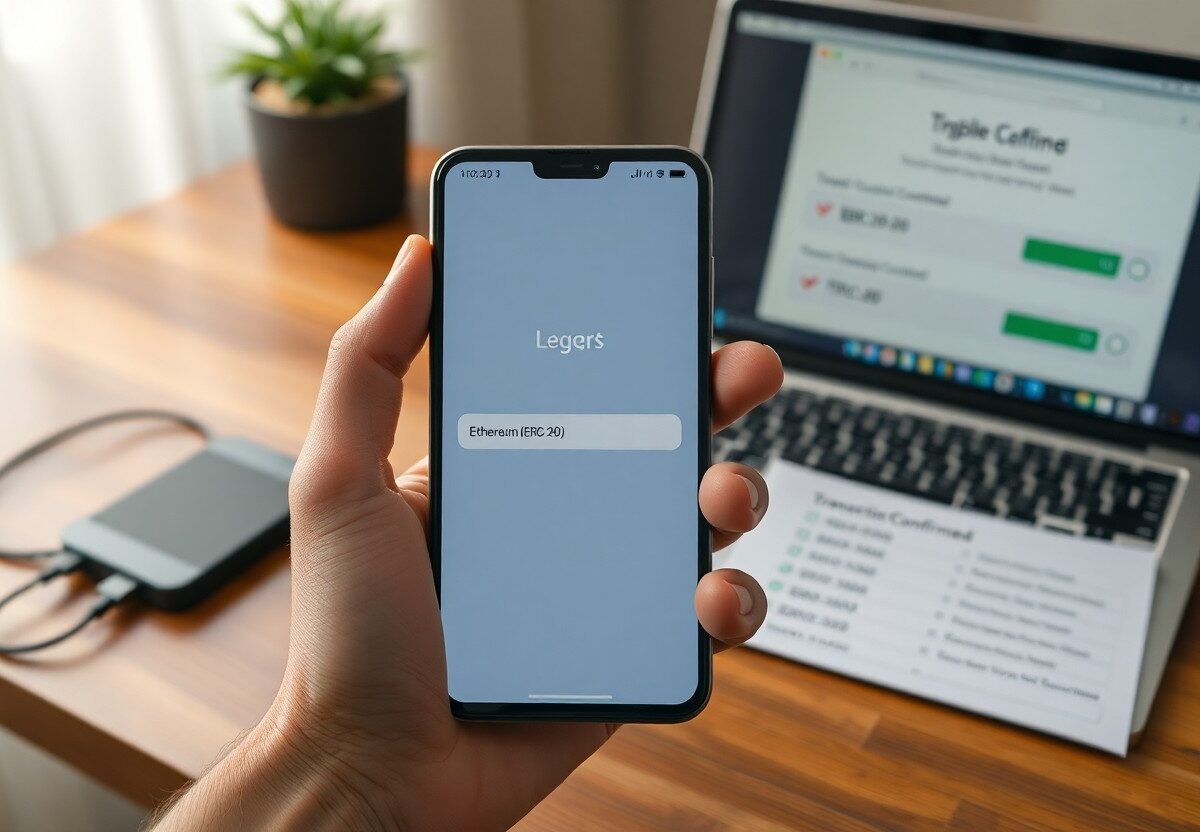
You must verify the receiving wallet supports the same network you’re using to send. For example, withdrawing USDT via Tron (TRC20) to a wallet that only accepts ERC20 will result in lost funds. Always confirm deposit protocols with your wallet provider before initiating any transaction.
Avoiding Common Network Mismatch Errors
Most lost crypto stems from selecting the wrong network during withdrawal. If you send ETH on BSC instead of Ethereum Mainnet, the transaction fails. Your funds might vanish into an unrecoverable address. Always cross-check network names, symbols, and fees before confirming.
Wrong network selections happen more often than you think, especially with stablecoins like USDT that operate on multiple chains. Exchanges display network options clearly, but users rush and pick the cheapest or fastest without verifying compatibility. A small oversight leads to irreversible losses-take 30 seconds to confirm the correct network each time. Your wallet’s deposit address often indicates which network it accepts, so use that as your guide.
Expert Tips for Ensuring Transaction Security
Always verify the recipient’s address and matching network before confirming.
- Double-check wallet addresses character by character
- Use trusted wallets with built-in network validation
- Confirm network compatibility with the recipient
Any mistake in these steps can result in irreversible loss.
Executing Small Test Transfers
Start with a minimal amount to confirm the transaction works as expected. This lets you verify the address and network without risking a large sum. If the test transfer arrives successfully, proceed with the full amount.
Utilizing QR Codes and Address Whitelisting
Scan QR codes directly from trusted sources to avoid manual entry errors. Whitelist frequently used addresses in your wallet settings to reduce the risk of sending funds to incorrect destinations.
QR codes eliminate the need to manually type long wallet addresses, cutting down on human error. When combined with address whitelisting, you create a verified list of destinations your wallet can send to, adding a layer of protection against accidental misdirected transfers. Always confirm the network tied to each whitelisted address.
How to Navigate Cross-Chain Bridges Safely
Using cross-chain bridges demands attention to detail and protocol trustworthiness. You must verify both the source and destination networks before initiating any transfer. Always confirm the bridge supports the exact token standard you’re moving. Mistakes in network selection often lead to irreversible fund loss. Double-check wallet addresses and token types on both sides of the bridge.
Selecting Reputable Interoperability Protocols
Trust begins with choosing well-audited, widely adopted protocols. Look for bridges with transparent codebases, active development, and a history of secure operations. Check community feedback and on-chain volume trends. Avoid new or unaudited platforms, even if they offer lower fees. Popularity alone isn’t enough-security metrics matter more. Knowing
- the team behind the protocol is doxxed and experienced
- smart contracts have passed multiple third-party audits
- there’s a bug bounty program in place
- the bridge has operated without major exploits for over a year
Knowing these factors reduces your exposure to malicious or faulty systems.
Managing Slippage and Liquidity Factors
Slippage can erode your returns during cross-chain swaps, especially with large amounts. Low liquidity on the destination chain may result in poor exchange rates or failed transactions. Always review the estimated output before confirming. Some bridges display price impact warnings-pay attention to them. Knowing
- popular bridges often maintain deeper liquidity pools
- peak usage times can increase slippage due to congestion
- smaller tokens may lack sufficient pairing reserves
- you can split large transfers into smaller batches to reduce impact
Knowing how liquidity affects your swap helps you time transfers and choose optimal routes, preserving more of your funds.
Managing Common Transfer Risks and Errors
Every crypto transfer carries potential pitfalls, especially when networks don’t align. You can avoid costly mistakes by double-checking network compatibility before confirming any transaction. Most errors stem from selecting the wrong chain, so always verify the recipient’s supported network and use the correct wallet address format.
Procedures for Recovering Funds on Compatible EVM Chains
Some recovery options exist if you send funds to the right address but on a different EVM chain, like moving ETH from Ethereum to an Arbitrum-only wallet. You may retrieve assets by accessing the same private key or seed phrase on the correct network’s compatible wallet interface.
Understanding the Limitations of Irreversible Transactions
Once confirmed, blockchain transactions cannot be undone. You bear full responsibility for verifying details before sending. No central authority can reverse a transfer, even if sent to the wrong address or network, making accuracy necessary every single time.
Blockchains are designed to be tamper-proof, which means your transaction is final the moment it’s added to the ledger. If you send crypto to an unsupported network or incorrect wallet, the assets are effectively lost. This permanence is not a flaw-it’s a core feature. You must treat every transfer with the same care as handling physical cash. Tools like network warnings in wallets help, but they can’t override user error. Always confirm the network and address match exactly before proceeding.
Conclusion
Considering all points, you must always verify the recipient’s address and match the correct network before sending crypto. Using the wrong network can result in permanent loss of funds. Double-check wallet compatibility and network details every time. Your attention to detail protects your assets and ensures successful, secure transactions.
FAQ
Q: What happens if I send crypto on the wrong network?
A: Sending cryptocurrency on the wrong network can result in permanent loss of funds. For example, if you send Binance Coin (BNB) intended for the BSC (Binance Smart Chain) network to an address using the BEP2 network, the transaction will not be recognized by the receiving chain.
The funds may appear stuck or vanish from your wallet because they were sent to a network the recipient wallet doesn’t support. Not all networks are compatible, and once confirmed, blockchain transactions cannot be reversed. Always verify the correct network with the recipient or exchange before sending.
Q: How do I know which network to use when sending crypto?
A: The correct network depends on the recipient’s wallet or exchange requirements. For instance, if you’re sending USDT to a Binance user, you must confirm whether they need it via TRC20 (Tron), ERC20 (Ethereum), or BEP20 (Binance Smart Chain).
Exchanges usually provide a deposit address along with the supported network. Never assume the network-always check the receiving platform’s deposit instructions. Wallets like Trust Wallet or MetaMask also prompt you to select a network when pasting an address, helping prevent mistakes.
Q: Can I recover crypto sent on the wrong network?
A: Recovery is not guaranteed and depends on the platforms involved. If you send funds to the correct address but on the wrong network, some centralized exchanges or services may be able to retrieve them if they control the receiving wallet.
You’ll need to contact their support team with the transaction ID and details. However, if the transaction went to a private wallet on an unsupported chain, recovery is nearly impossible. Always test with a small amount first when sending to a new address and double-check network settings in your wallet before confirming.