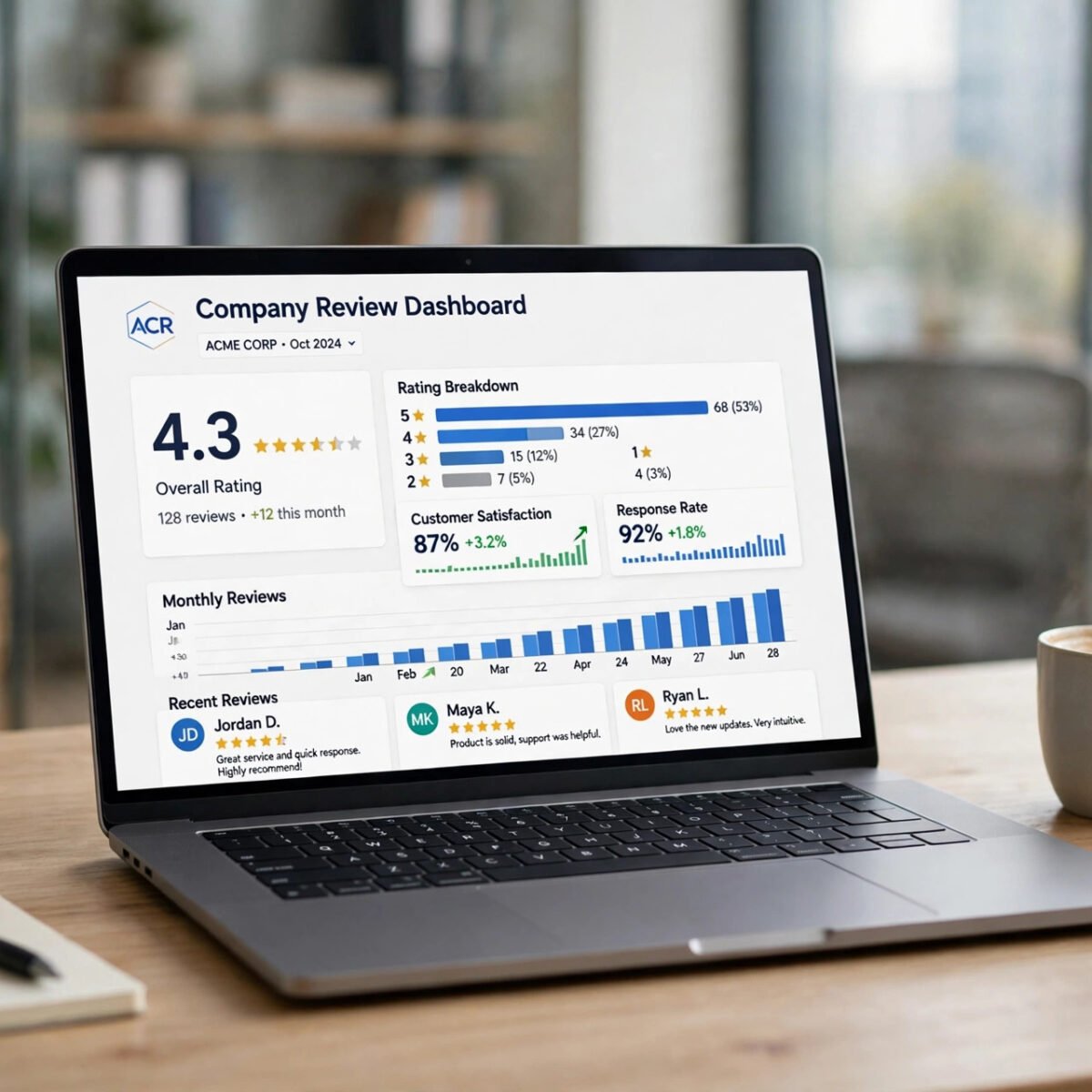
Whether you are hunting for a new job, evaluating a business partner, or preparing B2B outreach, the company across the table matters as much as the opportunity itself. A polished careers page and a confident sales deck tell you what a company wants you to believe. Employee reviews, customer feedback, news coverage, and financial signals tell you the rest.
This guide shows you how to research a target company’s reviews and build a simple research dossier you can reuse for every application, partnership, or pitch. You will learn where to find trustworthy reviews, which red flags deserve your attention, how to check whether reviews are authentic, and how to organize your findings into a clear checklist. If you want to start with the company’s own website, our guide to target company URL research covers that first step in detail.
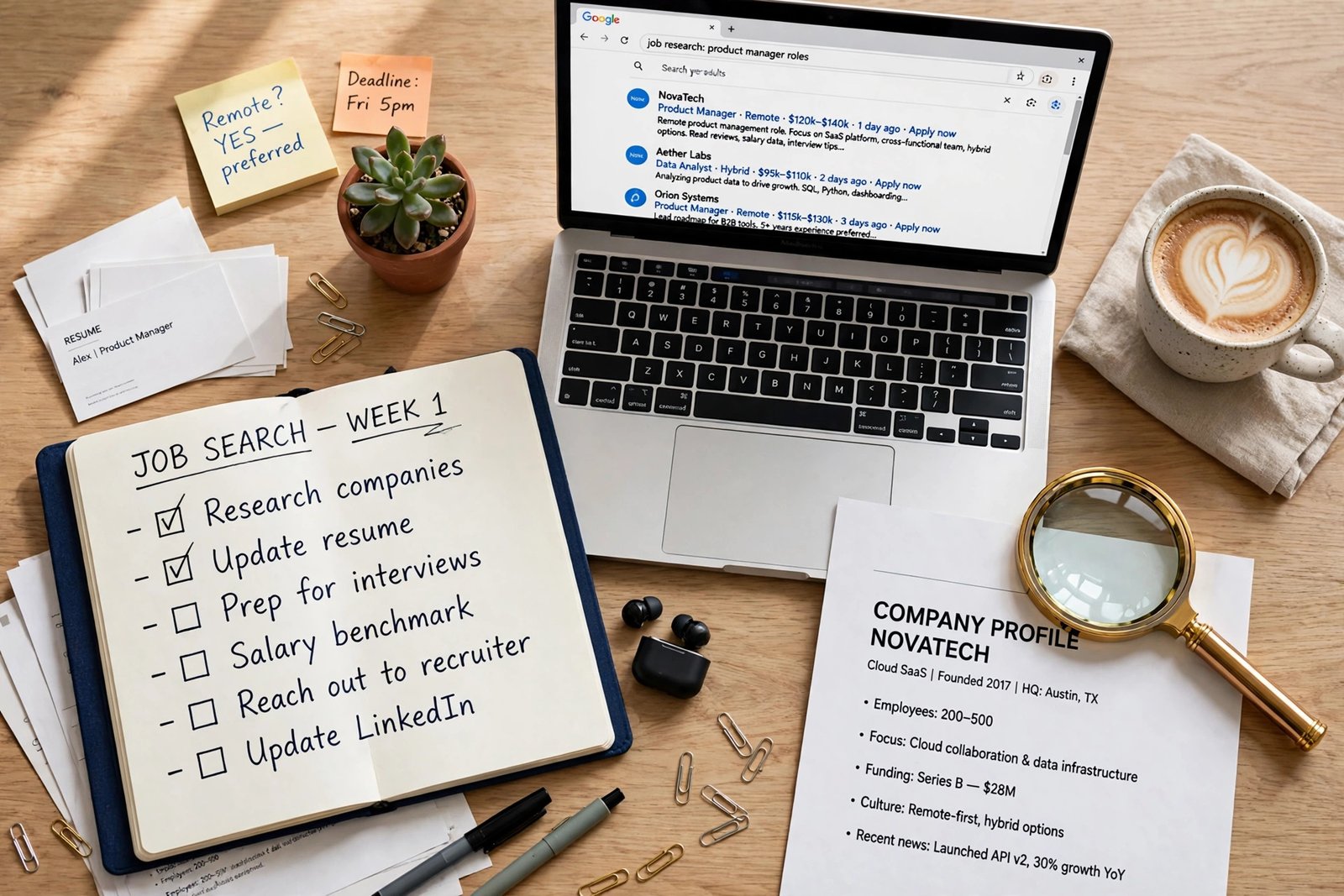
Key Takeaways
A research dossier is a short, organized file that collects everything you learn about a target company before you apply, partner, or pitch. Start with employee reviews on Glassdoor and Indeed, customer reviews on Google and Trustpilot, and the business profile on the Better Business Bureau website. Add LinkedIn profiles, recent news, and any financial signals you can verify. Trust patterns across sources rather than single reviews, and weigh recency, the reviewer’s role, and the level of detail. Save your findings in a reusable checklist so each new target takes less time to evaluate.
What Is a Research Dossier for a Target Company?
A research dossier is a one to two page briefing you write for yourself before engaging with a company. It summarizes the company’s reputation, culture, stability, and track record in one place, so you can walk into an interview or a sales call with informed questions instead of guesses.
A useful dossier usually covers five areas: employee reviews and workplace culture, customer reviews and service reputation, leadership and company news, financial health signals, and your own fit assessment. You do not need perfect information for each section. The goal is to spot deal-breakers early and find talking points that show you did your homework.
How Do You Research a Target Company Before Applying?
The most reliable method is to work through the same sequence every time: review sites first, then social and professional profiles, then news and financials. A fixed order keeps you from skipping steps when you are short on time.
- Scan employee review sites for patterns in management, workload, pay, and turnover.
- Read customer reviews to see how the company treats the people who pay it.
- Check the company’s LinkedIn page for headcount trends, recent hires, and leadership changes.
- Search recent news for funding rounds, layoffs, lawsuits, or awards from the past year.
- Look for financial signals such as job posting volume, office expansions, or public filings.
- Write your fit summary in two or three sentences: what attracts you and what concerns you.
Where Can You Find Reliable Company Reviews?
No single review site tells the whole story, because each one attracts a different audience. Employee review platforms skew toward workplace culture, while customer platforms reflect product and service quality. Checking several sources gives you a balanced picture.
- Glassdoor: employee reviews, salary reports, and interview experiences. Useful for culture, management, and work life balance.
- Indeed company pages: employee reviews plus active job listings, which reveal hiring volume and role turnover.
- Trustpilot: customer reviews of products and services, common for e-commerce and service businesses.
- Google reviews: customer feedback tied to physical locations, helpful for local businesses and franchises.
- Better Business Bureau: complaint histories and accreditation status for US businesses, with company responses on record.
- Facebook and social mentions: unfiltered customer comments that sometimes surface issues review sites miss.

Which Review Sources Should You Trust Most?
Different sources serve different questions. Use this comparison to match each platform to what you need to learn before you decide.
| Source | Best For | Watch Out For |
|---|---|---|
| Glassdoor | Workplace culture, salaries, interview difficulty | Reviews can skew negative since happy employees review less often |
| Indeed | Employee sentiment plus live hiring activity | Short reviews with little detail are common |
| Trustpilot | Customer service and product experience | Businesses can invite reviews, which may tilt ratings upward |
| Google reviews | Local reputation and in-person experience | Single-location spikes can distort the overall picture |
| Better Business Bureau | Complaint patterns and how the company responds | Coverage is strongest for US consumer-facing businesses |
| Leadership stability, growth, and employee tenure | Profiles are self-reported and naturally polished |
What Red Flags Should You Look for in Company Reviews?
Individual complaints happen at every company. Red flags are patterns: the same problem described by different people, in different roles, over several months. When you see a pattern, treat it as signal.
- Repeated mentions of high turnover or teams that are always hiring for the same roles.
- Complaints about delayed or missing pay, which can point to cash flow trouble.
- Management described as unresponsive across departments and time periods.
- A sudden burst of five-star reviews with vague wording, which may be solicited rather than organic.
- Unanswered negative reviews, suggesting the company does not engage with feedback.
- Safety or ethics concerns raised more than once, which deserve extra verification before you proceed.
How Do You Verify That Company Reviews Are Authentic?
Fake and incentivized reviews exist on every platform, so verification is a core part of any company reviews check. Authentic reviews usually share a few traits: specific details about a role or experience, balanced language that mentions both positives and negatives, and a reviewer history that looks human rather than manufactured.
- Compare wording across reviews. Identical phrases or the same unusual compliments repeated many times can indicate templated submissions.
- Check reviewer profiles. Accounts with a single review and no history deserve more skepticism than established reviewers.
- Look at review timing. A cluster of glowing reviews posted within days of a bad news cycle may be damage control.
- Cross-check the facts. If reviews mention layoffs, leadership changes, or office closures, see whether news articles or LinkedIn confirm them.
- Read the middle ratings. Three-star reviews tend to be the most balanced, since they come from people with mixed but genuine experiences.
How Do You Build a Target Company Research Checklist?
A checklist turns your research dossier from a one-off effort into a repeatable habit. Keep it in a notes app or a simple document, and fill in each line with a sentence or two plus the source link.
- Company basics: founding year, headquarters, size, and ownership (private, public, or startup).
- Employee reviews: overall sentiment on Glassdoor and Indeed, plus the top three recurring themes.
- Customer reviews: overall sentiment on Google, Trustpilot, or the BBB, plus the top three recurring themes.
- Leadership: CEO and key executives, their tenure, and any recent departures.
- News from the last 12 months: funding, layoffs, lawsuits, awards, and major product launches.
- Hiring signals: number of open roles, which departments are growing, and how long listings stay open.
- Financial health: revenue trends, funding status, or public filings where available.
- Culture notes: the values stated on the careers page versus what reviewers actually describe.
- Your fit summary: two sentences on why this company interests you and one open concern to ask about.
How Do You Check a Company’s Financial Health?
You do not need an accounting degree to spot basic financial signals. Public companies publish earnings reports and filings, while private companies leave clues in their hiring behavior, funding announcements, and press coverage.
- Public companies: skim recent earnings summaries and investor news for revenue direction and profitability.
- Startups: check funding announcements and the date of the last round. A long gap without news can mean a lean period.
- Hiring velocity: steady, role-diverse hiring suggests growth, while frozen listings or repeated reposts of the same role can signal churn.
- Office and expansion news: new locations or product lines point to investment, while closures and sell-offs point the other way.
- Reviewer mentions of pay issues: repeated reports of late salaries or cut bonuses are a serious warning sign worth verifying through additional sources.
How Can LinkedIn and News Help You Research Company Culture?
Review sites tell you what people say, while LinkedIn and news show you what the company does. Together they reveal whether the stated culture matches reality.
- Employee tenure: browse current employee profiles to see how long people stay. Short average tenure often matches turnover complaints in reviews.
- Leadership changes: frequent executive departures can explain the cultural instability that reviewers describe.
- Content activity: how a company presents itself publicly matters too. Seeing how companies stay active on LinkedIn can show whether their employer brand is maintained or neglected.
- News tone: look for patterns in coverage over the past year, such as awards for workplace culture on one side or labor disputes on the other.
- Alumni paths: where former employees go next tells you how the market values experience gained at that company.
Once your research is complete and you land the interview, preparation continues with practical details like what to wear to a job interview. For more practical technology guides like this one, visit the DigitalGeekSpot homepage.
Frequently Asked Questions
How long does it take to research a target company?
A focused pass takes 30 to 60 minutes: about 15 minutes on review sites, 10 on LinkedIn, 10 on news, and the rest writing your summary. With a reusable checklist, later dossiers go faster because you know exactly where to look.
Should I trust a company with mostly five-star reviews?
Be cautious rather than reassured. Genuine companies usually show a mix of ratings, because no workplace pleases everyone. A wall of vague five-star reviews with similar wording deserves the authenticity checks described above before you trust it.
What if a company has almost no reviews online?
Small and young companies often have thin review histories, which is normal rather than suspicious. Lean harder on LinkedIn, news coverage, direct conversations with current or former employees, and the questions you ask during the interview itself.
Is it okay to mention reviews in a job interview?
Yes, when you frame them as curiosity rather than accusation. Try phrasing like “I noticed reviewers often praise the learning opportunities here. How does the team support growth in this role?” This shows preparation without putting the interviewer on the defensive.
How often should I update a research dossier?
Refresh it whenever you re-engage: before each interview round, before accepting an offer, or quarterly for a long-term partnership target. Reviews and news change quickly, and a dossier older than a few months can miss important developments.
Can I use the same dossier format for B2B outreach?
Absolutely. Swap the fit summary for a pitch angle section that notes the company’s pain points, recent initiatives, and the right decision maker to contact. The review and news research underneath stays exactly the same.