

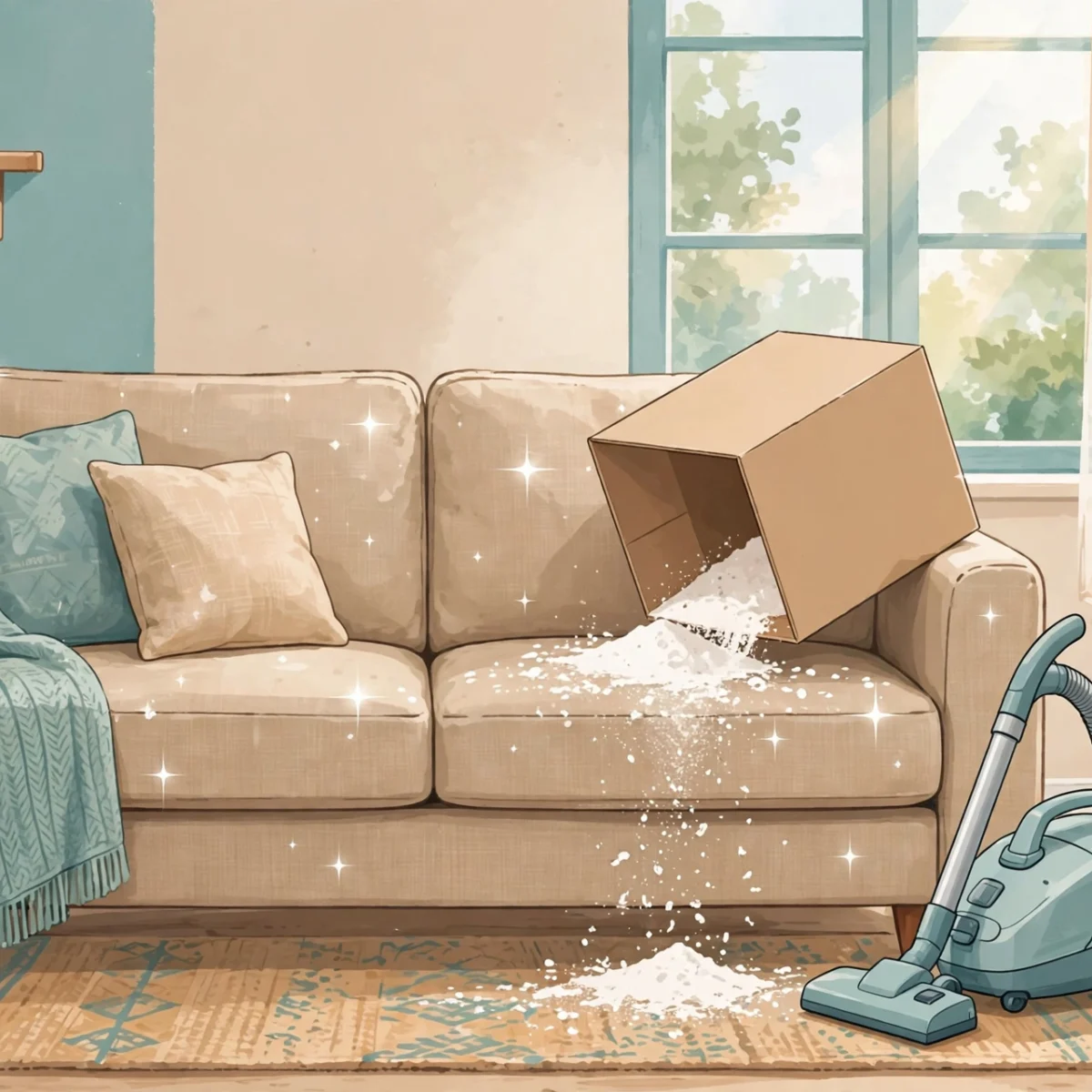
To clean a fabric couch with baking soda, vacuum the couch first, sprinkle a generous layer of plain baking soda over the fabric, let it sit for 15 to 30 minutes (up to overnight for stubborn odors), then vacuum it all up. That is the whole method, no scrubbing, no harsh chemicals, no professional equipment. Baking soda (sodium bicarbonate) absorbs odors and lifts light surface grime from upholstery fibers, and it costs almost nothing.
This guide walks you through the full process step by step: checking your couch’s cleaning code, prepping the fabric, applying the baking soda correctly, handling common stains, drying everything properly, and, just as important, the mistakes to avoid. Whether your sofa smells like pets, takeout, or just years of everyday life, this is the cheapest refresh it can get. Written by DigitalGeekSpot for 2026.
Why Baking Soda Works on Fabric Couches
Baking soda is a mild alkali and a natural deodorizer. It does two useful things on upholstery. First, it absorbs odors rather than masking them, odor molecules get trapped in the powder’s fine particles, and when you vacuum the powder away, the smells go with it. That is why it outperforms scented sprays, which mostly layer perfume over the problem.
Second, it has a very light abrasive and grease-lifting action. Sodium bicarbonate dissolves partially in moisture and helps break down light surface grime, body oils, and mild stains. It will not remove deep-set stains the way a solvent-based cleaner can, but for everyday dinginess and the dull film that builds up on frequently used cushions, it is genuinely effective. It is also non-toxic, color-safe on most fabrics, and safe around kids and pets once vacuumed up, three reasons it beats most chemical upholstery cleaners for a routine refresh.
One honest limitation: baking soda is a maintenance cleaner, not a miracle restorer. Heavily soiled, grease-soaked, or water-damaged cushions need more than powder. We cover those cases below so you know when to escalate.
Before You Start: Check Your Couch’s Cleaning Code
Almost every upholstered couch has a tag under the seat cushions or on the frame with a cleaning code. This one letter determines what is safe to use:
| Code | Meaning | Baking soda method |
|---|---|---|
| W | Water-based cleaners OK | Fully safe, dry or damp method |
| S | Solvent-based cleaners only | Dry baking soda only; never add water |
| WS (or SW) | Water or solvent cleaners OK | Fully safe, dry or damp method |
| X | Vacuum only, no cleaners | Dry sprinkle only, or skip and vacuum only |
Key rule: on S- or X-coded fabrics, never mix the baking soda with water or use damp cloths. Water can leave rings and watermarks on solvent-only fabrics. Dry baking soda plus vacuuming is safe on all of them, because the powder is fully removed mechanically rather than dissolving into the fibers.
Also spot-test first: pick a hidden area (the back of a cushion or the rear panel), apply a small amount of baking soda, wait 30 minutes, vacuum it off, and check for discoloration. On 99% of fabrics nothing will happen, but the 30 seconds of caution are free.
What You Will Need
- Plain baking soda (sodium bicarbonate), one to two boxes for a standard three-seat sofa
- A vacuum cleaner with an upholstery attachment (and ideally a crevice tool)
- A soft-bristle brush or old toothbrush (optional, for working powder into textured weaves)
- Clean, dry white cloths or towels
- A spray bottle with plain water (only for W/WS-coded fabrics)
- A sieve or shaker (a large salt shaker or a flour sifter works perfectly for even coverage)
Use plain, unscented baking soda only. Scented “carpet powders” and baking soda blends with added fragrance contain perfumes and sometimes dyes that can irritate allergies and stain light fabrics. The generic orange box is exactly what you want.
Step 1: Vacuum and Prep the Couch
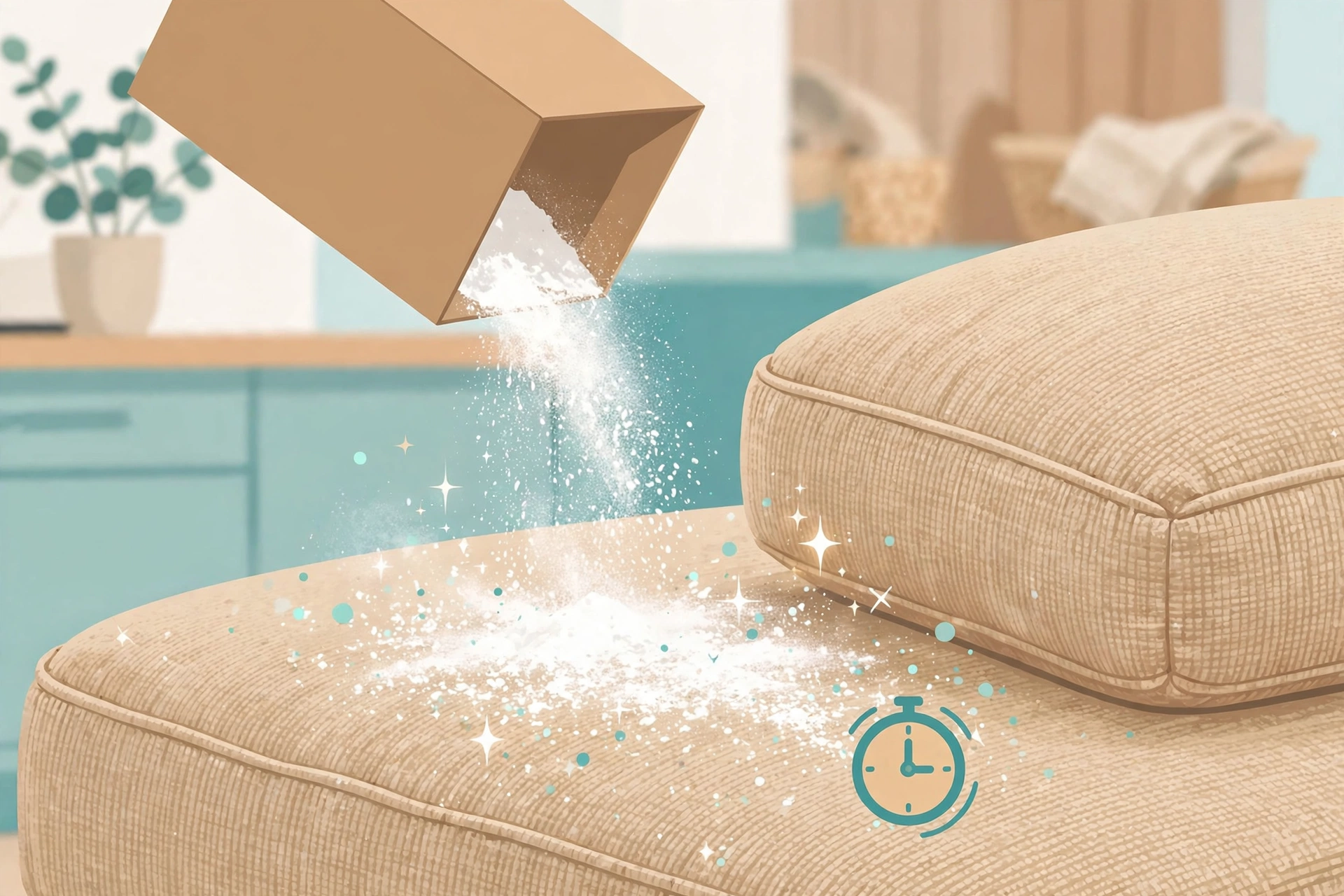
Never apply baking soda to a dusty couch, you will just make paste out of the dirt. Start by removing all cushions, throws, and pillows. Vacuum every surface: seat decks, backs, arms, and especially the crevices where cushions meet the frame, where crumbs and dust collect. Use the crevice tool along seams and the upholstery brush on the fabric faces.
Flip loose cushions and vacuum both sides. If cushions have removable covers that are machine-washable, washing those separately is even better, then use the baking soda method on the non-removable frame and the cushion inserts’ outer surfaces. Take a photo of your couch before you start; it makes the “after” satisfying and helps you spot any spots you missed.
Step 2: Apply the Baking Soda
Load baking soda into a sieve or shaker and dust a thin, even layer over the entire couch: seat cushions, back cushions, arms, and any upholstered sides. Aim for complete, light coverage, a dusting, not a snowdrift. A thick pile does not work better; it just wastes powder and takes longer to vacuum.
For textured or nubby fabrics, gently work the powder into the weave with a soft brush so it reaches the fibers where odors hide. For flat weaves, sprinkling alone is enough. Pay extra attention to the areas that get the most contact: seat centers, armrests, and headrests, where body oils accumulate. If you are targeting a specific stain, pile a slightly thicker layer directly on the spot.
Step 3: Let It Sit
Give the baking soda time to work. 15 to 30 minutes is enough for a light refresh; for pet odors, smoke smell, or a couch that has never been deep-cleaned, leave it for several hours or overnight. There is no harm in a longer dwell time on dry fabric, the powder is inert and will not damage fibers.
Keep pets and kids off the couch during the wait (mostly so they do not track white powder through the house). If you are leaving it overnight, toss a clean sheet over the couch to keep the powder in place and dust off the fabric.
Step 4: Vacuum It All Up
Vacuum thoroughly with the upholstery attachment, going over every surface slowly and in multiple directions so the brush lifts powder out of the weave. Then do a second pass with the crevice tool along seams, piping, and tufting, where powder hides. Removing all the powder is the most important step, leftover baking soda can attract moisture, feel gritty, and leave white residue on dark fabrics.
On dark-colored couches, check in good light before you call it done. If you see a white haze, vacuum once more. A slightly damp (wrung-out) white cloth wiped over W/WS fabrics picks up any last traces, but skip this on S-coded fabrics.
Step 5: Dry and Freshen
If you used the dry method, the couch is ready to use immediately. If you used any damp cloth work on W/WS fabrics, let the cushions air-dry completely before sitting down, sitting on damp upholstery compresses fibers and can trap musty smells. Open windows or run a fan to speed drying; aim for a few hours of airflow. Never use a hair dryer on hot, which can shrink or pucker some fabrics.
Finish with a fresh-air bonus: if the weather allows, stand removable cushions outside in sunlight for an hour. UV light is a natural deodorizer and the airflow finishes the job the baking soda started.
How to Tackle Stains with Baking Soda
For light, fresh stains, baking soda works as a spot treatment. The method depends on the stain:
- Grease or food stains: Blot (never rub) with a dry cloth first, then cover generously with baking soda and leave for 30 minutes. The powder draws out some of the oil. Vacuum, then assess, repeat once if needed.
- Pet accidents: Blot up as much liquid as possible with towels first. Then apply baking soda thickly to neutralize odor, leave for several hours, and vacuum. Baking soda handles the smell; enzyme cleaners (used afterward, on W/WS fabrics) handle the biological stain.
- Drink spills (coffee, juice, wine): Blot immediately, sprinkle baking soda to absorb remaining liquid and odor, wait 20–30 minutes, vacuum. Fresh spills respond well; dried-in wine usually needs a dedicated upholstery stain remover.
- Sweat and body-oil marks on armrests: Sprinkle, brush in lightly with a soft brush, leave for an hour, vacuum. This is one of baking soda’s best use cases.
- Mystery odors: Do the full-couch overnight treatment. If the smell persists after two treatments, the odor source is probably inside the cushion (foam or batting), and no surface treatment will fix it.
For fresh stains on clothing and other fabrics, the same spot-treatment logic applies, our guide comparing sweatshirt vs hoodie fabrics is a good reference for which garment materials respond to this kind of treatment.
What NOT to Do
- Do not use water on S- or X-coded fabrics. Watermarks and rings on solvent-only upholstery can be permanent.
- Do not scrub aggressively. Scrubbing pushes stains deeper and pills or damages fabric. Blot and sprinkle; let chemistry do the work.
- Do not use scented carpet powders as a substitute. Added fragrances and dyes can stain and irritate, plain baking soda only.
- Do not leave the couch damp. Moisture trapped in cushions breeds mildew. Always air-dry fully.
- Do not expect it to fix water damage or mold. If your couch has been soaked, warped, or smells musty deep inside, surface deodorizing is not enough, learn how to assess water damage before deciding whether the piece is salvageable.
- Do not mix baking soda with vinegar on the couch and leave it. The fizzing looks fun but leaves residue; if you use the combo, it must be rinsed, which you cannot properly do on upholstery.
Related Articles
- Sweatshirt vs Hoodie: What’s the Difference? (Fabric & Care Guide)
- Assessing Water Damage: What to Look For in Your Home
- CBD Gummies Health Benefits: What the Evidence Says
- Songs to Listen to When Alone: A Curated Playlist Guide
Frequently Asked Questions
How long should I leave baking soda on my couch?
15 to 30 minutes for a routine refresh; several hours or overnight for strong odors like pet smell or smoke. Longer dwell time is safe on dry fabric and works better on stubborn smells.
Will baking soda discolor my fabric couch?
On the vast majority of fabrics, no, baking soda is color-safe. Still, spot-test on a hidden area first, especially on dark or delicate fabrics, and vacuum up all residue to avoid a white haze.
Can I use baking soda on a leather couch?
It is not recommended. Baking soda’s mild alkalinity can dry out and damage leather finishes. Use a cleaner made specifically for leather instead.
Does baking soda remove stains or just odors?
Mostly odors, plus light surface grime and fresh grease spots. It will not remove set-in stains, dye transfers, or deep soiling, those need a targeted upholstery cleaner or professional treatment.
How often should I do this?
A light baking soda refresh every 2–3 months keeps odors from building up. Households with pets or kids may benefit from doing it monthly on the most-used seats.
Can I vacuum baking soda with a regular vacuum?
Yes, any vacuum with an upholstery attachment works. Just make sure the filter is clean first, and empty the dust cup or bag afterward, since fine powder fills it fast.
Conclusion
Cleaning a fabric couch with baking soda is one of those rare household tricks that is both cheap and genuinely effective: vacuum, sprinkle, wait, vacuum again. It deodorizes, lifts light grime, and costs less than a dollar per treatment, no chemicals, no equipment, no risk on most fabrics. Add it to your cleaning rotation every couple of months and your sofa will stay fresher far longer. For more practical home and lifestyle guides, keep reading DigitalGeekSpot.




7 Comments