Leggings at brunch, joggers at the airport, sneakers with a blazer: athletic-inspired clothing has moved far beyond the gym. But not all sporty clothing is the same, and understanding the athleisure vs sportswear distinction helps you dress appropriately for both workouts and everyday life. This guide explains what sets the two apart, where they overlap, and how to style athletic-inspired looks for casual settings without looking like you just left a training session.
At a glance, sportswear is clothing engineered for athletic performance, while athleisure is clothing inspired by athletic wear but designed for everyday casual life. The difference shows up in fabric technology, fit, and intent. Once you can spot it, you will know exactly when to reach for each, and how to blend them. If you enjoy relaxed casual dressing, these casual outfit ideas for women offer more ways to build comfortable everyday outfits.
What Is Sportswear?
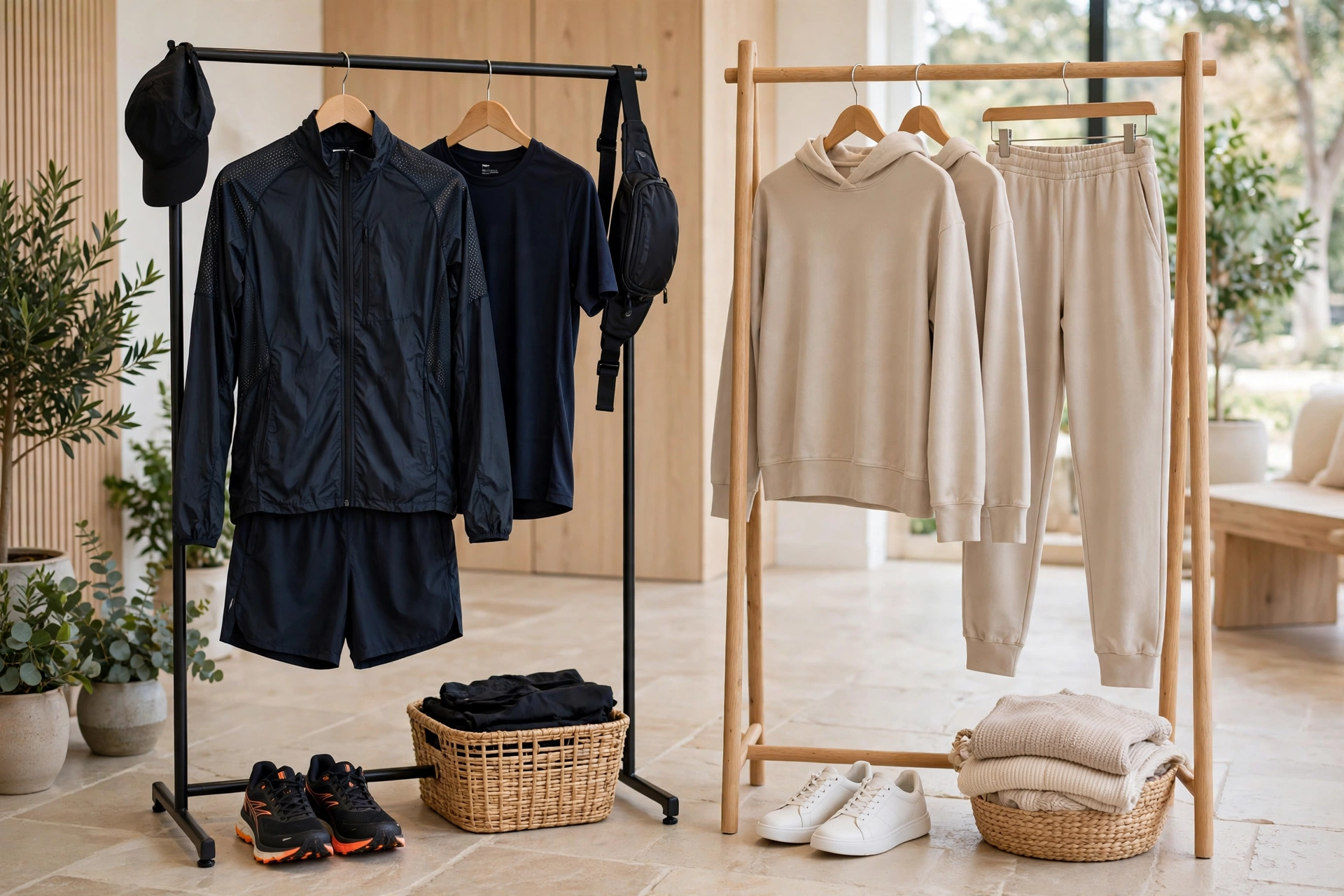
Sportswear refers to garments designed specifically for physical activity. Think running shorts, compression leggings, moisture-wicking training tees, basketball shoes, and track jackets built for warmups. Every design choice serves performance: sweat management, range of motion, temperature regulation, support, and durability under movement.
Sportswear fabrics are technical. Polyester and nylon blends with elastane provide stretch and moisture wicking. Mesh panels add ventilation. Compression fits support muscles. Seams are placed to avoid chafing during repetitive motion. Reflective details improve visibility for outdoor training. The aesthetic is functional first, and it often includes sport-specific features like drawstring waists, zip pockets sized for a phone, and bold team-style branding.
True sportswear shines during exercise and can look out of place elsewhere. Wearing head-to-toe technical training gear to a restaurant or office reads as underdressed, because the garments signal workout mode rather than social intention.
What Is Athleisure?
Athleisure takes the comfort and visual language of athletic wear and redesigns it for daily life. The category includes joggers cut like trousers, leggings in ponte or structured knits, quarter-zip pullovers, sleek sneakers, and hoodies tailored with cleaner lines. The look borrows from sport, but the construction prioritizes all-day comfort and casual style over athletic performance.
The fabrics tell the story. Athleisure often uses cotton blends, French terry, and softer knits rather than hardcore performance synthetics. Fits are relaxed but considered, with details like ribbed cuffs, hidden pockets, and minimal branding that make pieces look at home in cafes, schools, and casual workplaces. Wondering how the knit layers in athleisure compare? This sweatshirt vs hoodie breakdown explains the differences that matter for casual outfits.
Athleisure grew as workplaces and social life became more casual, and as fabric technology made comfort-driven clothing look polished. It fills the gap between gym clothes and traditional casual wear: more put-together than sweats, more relaxed than jeans and a button-down.
Athleisure vs Sportswear: Key Differences
- Purpose: sportswear is built for exercise; athleisure is built for everyday casual wear with an athletic aesthetic.
- Fabrics: sportswear uses technical performance fabrics with moisture wicking and compression; athleisure uses softer, comfort-first fabrics like cotton blends and French terry.
- Fit: sportswear fits are engineered around movement, often compression or sport-specific cuts; athleisure fits are relaxed and lifestyle-oriented.
- Details: sportswear includes reflective elements, ventilation zones, and sport-specific features; athleisure favors clean lines, minimal branding, and versatile styling details.
- Setting: sportswear belongs at the gym, on the track, or on the field; athleisure works for errands, travel, casual social plans, and relaxed offices.
The overlap is real: many brands sell hybrid pieces, and plenty of people wear sportswear casually. The distinction matters most when the setting calls for intention. A sleek athleisure outfit signals casual polish; full training kit signals you are heading to or from a workout.
How to Wear Athleisure Without Looking Like You Skipped the Gym
The difference between stylish athleisure and looking underdressed comes down to polish. These tips keep athletic-inspired outfits firmly in the casual-style camp.
Choose elevated basics
Swap gym leggings for structured joggers or ponte leggings, and trade the old training tee for a clean, well-fitting tee or quarter-zip in a neutral color. Monochrome or tonal outfits, like all-black or navy with gray, look instantly more intentional than mismatched brights.
Mind your footwear
Sleek, minimal sneakers in white, black, or neutral tones anchor athleisure outfits. Bulky running shoes with neon accents push the look back toward the gym. Keep sneakers clean: scuffed, worn-out trainers undermine the whole outfit.
Add one structured piece
A denim jacket, an oversized blazer, or a longline coat over athleisure basics transforms the outfit. The structured layer adds the intention that separates street style from workout wear. Even a tidy crossbody bag instead of a gym duffel makes a difference.
Keep it fitted, not sloppy
Athleisure should skim the body, not swim on it. Joggers with tapered ankles, tops that hit at the hip, and layers that do not bunch all read as styled. Oversized is fine as a deliberate choice, but wrinkled, stretched-out pieces just look tired.
Grooming counts
Neat hair, simple accessories, and clean shoes do heavy lifting in athleisure. The clothes are casual, so the finishing details carry the polish. A watch, minimal jewelry, or sunglasses signal that the relaxed outfit was a choice.
Athleisure Outfit Formulas
Everyday errands
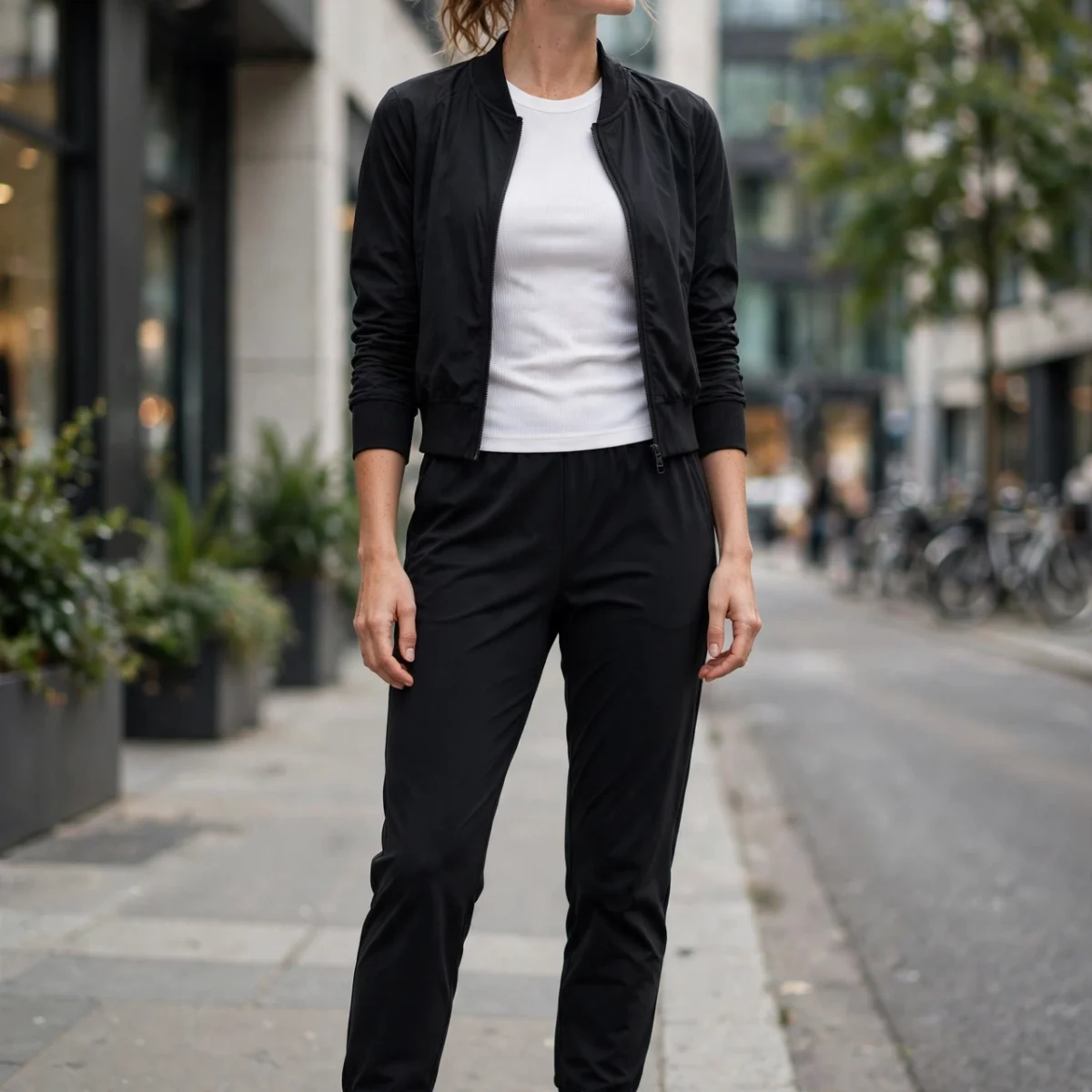
Black tapered joggers, a white fitted tee, a cropped zip-up jacket, and clean white sneakers. Add a crossbody bag and sunglasses for a put-together casual look.
Casual office or coworking
Dark ponte leggings or sleek joggers, an oversized knit sweater, and minimal leather sneakers. Top with a structured wool-blend coat in cooler months. Keep colors neutral and branding invisible.
Travel day
A matching athleisure set in a neutral tone with a longline cardigan and slip-on sneakers. Coordinated sets look deliberate and photograph well, and the comfort is unbeatable on long journeys.
Evening casual
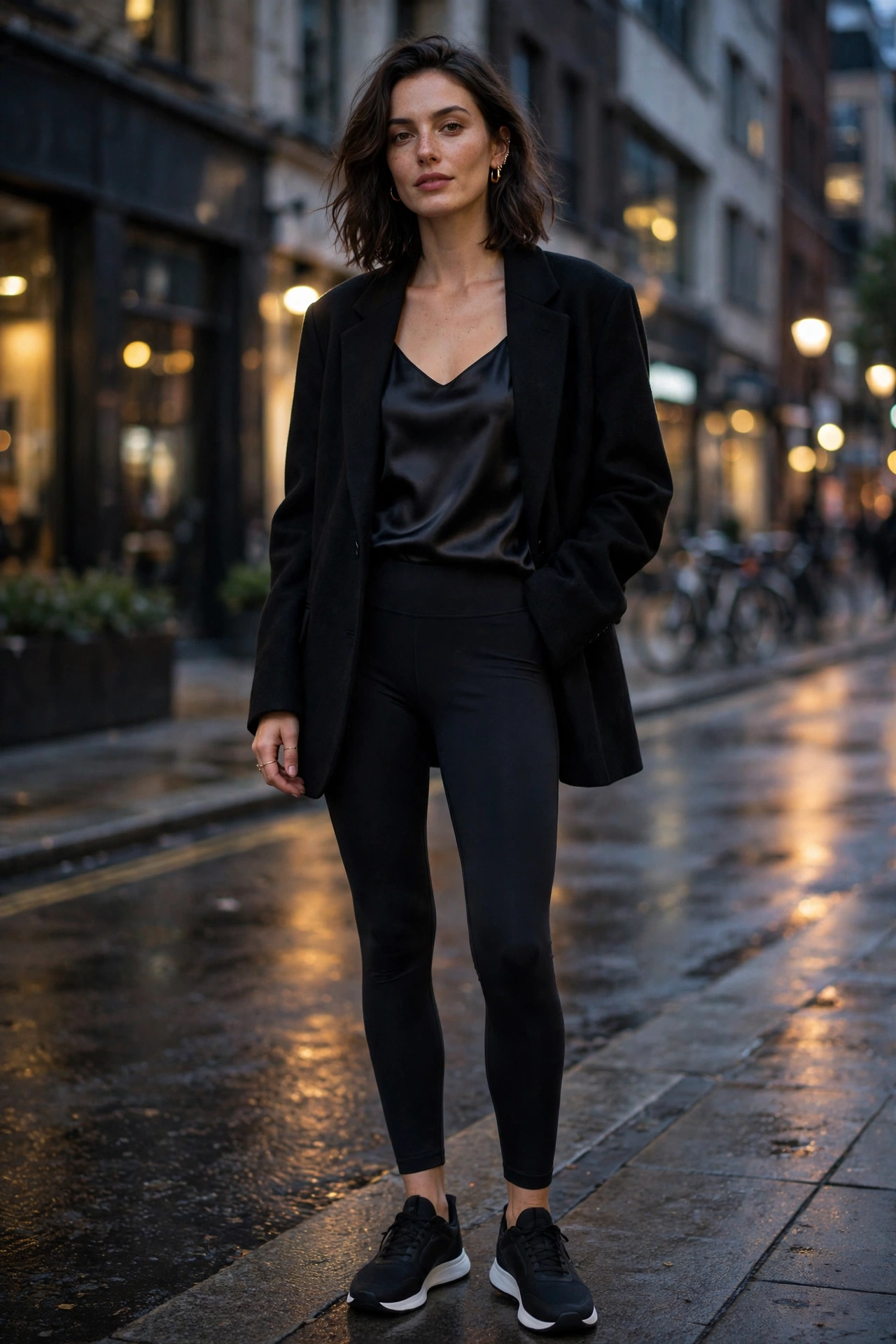
Black leggings, a silky camisole or fitted mock-neck top, an oversized blazer, and sleek sneakers or fashion trainers. The blazer elevates the whole look into dinner-appropriate territory.
Building an Athleisure Capsule Wardrobe
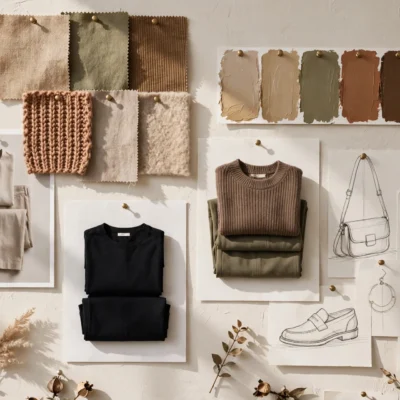
You do not need a closet full of activewear to nail the athleisure look. A small capsule of versatile pieces covers nearly every casual situation.
Start with bottoms: one pair of black tapered joggers and one pair of dark leggings or ponte pants. Both pair with everything and suit multiple settings. For tops, add two clean fitted tees in white and gray, a quarter-zip pullover in navy or black, and a neutral hoodie or crewneck sweatshirt. A matching set in a neutral tone is a worthwhile addition, since coordinated sets always look deliberate.
For outerwear, one structured layer transforms the whole capsule: an oversized blazer, a denim jacket, or a longline coat, depending on your climate and taste. Finish with one pair of minimal white sneakers and one pair of sleek black trainers. Keep every piece free of large logos and loud graphics so everything mixes and matches.
With this foundation, getting dressed takes minutes. Swap the top, change the layer, or switch the shoe, and the same base pieces produce a week of different outfits. When pieces wear out, replace them one at a time rather than overhauling the wardrobe, and the capsule keeps working season after season.
When to Choose Sportswear Instead
Athleisure is not a substitute for real workout gear. For running, training, team sports, or any sustained exercise, proper sportswear performs better and lasts longer. Technical fabrics manage sweat, compression supports muscles, and sport-specific cuts prevent chafing and restriction. Wearing cotton-blend athleisure for intense workouts leads to discomfort and faster wear.
The practical approach is to own both: dedicated sportswear for training days and athleisure for everything else. Keeping the categories separate also extends the life of each, since gym sessions are harder on fabric than daily wear. For more ideas on building a versatile casual wardrobe around comfortable pieces, browse more style guides on the DigitalGeekSpot homepage.
Frequently Asked Questions
What is the difference between athleisure and sportswear?
Sportswear is engineered for athletic performance with technical fabrics and sport-specific features. Athleisure borrows the athletic aesthetic but is designed for everyday casual wear, using softer fabrics and lifestyle-oriented fits.
Can you wear athleisure to work?
In casual and creative workplaces, yes, if it is polished: neutral colors, clean sneakers, minimal branding, and ideally one structured layer like a blazer. Traditional or formal offices still call for business casual instead.
Is athleisure appropriate for working out?
Light activity like walking or yoga is fine, but for intense training, proper sportswear with moisture-wicking technical fabrics performs better and is more comfortable.
What shoes go with athleisure?
Clean, minimal sneakers in neutral colors are the go-to. Avoid worn-out running shoes or overly technical trainers with bright colors if you want the outfit to read as casual style rather than gym wear.
How do I make athleisure look more expensive?
Stick to a neutral or tonal palette, choose pieces with minimal branding, ensure a clean fit, add one structured layer, and keep shoes spotless. Coordinated sets also look more premium than mismatched pieces.
Are leggings athleisure or sportswear?
It depends on the pair. Technical compression leggings with performance fabrics are sportswear. Ponte, cotton-blend, or structured leggings designed for daily wear fall into athleisure.