What Is an NFT? A Simple Explanation for Beginners
What is an NFT? The letters stand for non-fungible token, which is a type of digital asset recorded on a blockchain that represents ownership of something unique. Unlike regular cryptocurrencies, where every coin is interchangeable with every other coin, each NFT is one of a kind, or at least one of a strictly limited set. That uniqueness is the whole point.
NFTs became widely known through digital art sales, but the concept goes far beyond pictures. In this beginner friendly guide, you will learn how NFTs work, what owning one actually means, where they are used, and the most common misconceptions, all in plain language with no hype.
Non-Fungible Means Unique
To understand NFTs, start with the word fungible. A fungible thing is interchangeable: one dollar bill is as good as another, and one bitcoin is identical to every other bitcoin. It does not matter which one you hold. A non-fungible thing is unique: a concert ticket for a specific seat, a deed to a particular house, or an original painting. Swapping it for a different one would not give you the same thing.
An NFT takes this idea of uniqueness and puts it on a blockchain. The token itself is a small piece of data with a unique identifier, recorded on a public ledger that anyone can verify. Because the blockchain record is permanent and transparent, anyone can check which wallet owns a given NFT and trace its history of previous owners.
Most NFTs live on blockchains that support smart contracts, with Ethereum being the best known. The smart contract defines the rules for the token: its unique ID, how it can be transferred, and often a link to the associated content, such as an image, video, or music file. If you are curious about how tokens come into existence at all, our beginner guide on how to make a crypto coin explains the underlying mechanics.
How NFTs Actually Work
Creating an NFT is called minting. When someone mints an NFT, a smart contract writes a new token onto the blockchain with its unique identifier and metadata. The metadata typically includes a name, a description, and a link pointing to the associated media file. Paying the network’s transaction fee, often called gas, is part of the minting process.
An important technical detail: in most cases, the image or video itself is not stored directly on the blockchain, because storing large files there would be extremely expensive. Instead, the token contains a link to where the file lives, which might be decentralized storage or a regular server. This distinction matters, because if the linked file disappears, the token remains but the content it points to may not.
Transferring an NFT works like any blockchain transaction. The current owner signs a transaction sending the token to a new wallet address, the network confirms it, and the public record updates. Marketplaces make this process user friendly by handling the listing, bidding, and transfer steps behind a simple interface, while the blockchain underneath does the actual work of recording ownership.
What Do You Actually Own When You Buy an NFT?
This is the most misunderstood part of NFTs, so it deserves a clear answer. When you buy an NFT, you own the token itself: the unique blockchain record proving that your wallet holds that specific token. What you do not automatically get is copyright over the associated artwork, exclusive control of the image, or the ability to stop others from viewing or copying the picture.
Think of it like owning an autographed poster of a famous photograph. You own that particular poster and the signature on it, but you do not own the photograph’s copyright, and other people can still buy their own posters or view the image online. Similarly, anyone can right click and save an NFT image, but only one wallet holds the token the creator originally issued.
The exact rights vary by project. Some NFT collections grant buyers broad commercial rights to the artwork, while others grant almost none. The terms are usually spelled out in the project’s license or terms of service, not in the token itself. Always read what rights are included before assuming, and never treat an NFT purchase as an investment with expected returns. For more plain language explainers on crypto concepts, browse the DigitalGeekSpot homepage.
Common Uses of NFTs Beyond Digital Art
Digital art put NFTs on the map, but developers have applied the same uniqueness property to many other things. Understanding these uses shows why the technology is interesting independent of any particular price trend.
- Collectibles and trading cards. Digital trading cards and collectible series use NFTs to guarantee scarcity and verifiable ownership, much like physical cards but with built-in authenticity.
- Gaming items. Some games represent in-game items, characters, or land as NFTs, so players truly own them and can trade them outside the game. Adoption varies widely by game.
- Event tickets. NFT tickets can reduce counterfeiting, since each ticket’s authenticity is verifiable on the blockchain, and organizers can program rules like resale limits into the token.
- Membership and access passes. Communities and clubs issue NFTs as membership tokens, where holding the token in your wallet unlocks private chats, events, or content.
- Identity and credentials. Experimental projects use non-transferable NFTs, sometimes called soulbound tokens, to represent diplomas, certifications, or reputation that should stay attached to one person.
- Music and media. Musicians have released songs and albums as NFTs, sometimes with perks like backstage access attached, exploring new ways to connect with audiences.
How NFT Marketplaces Work
NFT marketplaces are websites where people list, buy, and sell NFTs. To use one, you connect a self-custody crypto wallet, browse listings, and place bids or buy at a fixed price. When a sale completes, a smart contract transfers the NFT to your wallet and the payment to the seller, with the marketplace taking a fee.
Before buying anything, verify authenticity carefully. Scammers create fake collections that copy the names and artwork of popular projects, hoping buyers will not notice the difference. Always check that you are interacting with the official collection, usually by verifying the contract address through the project’s official channels rather than trusting search results or links sent to you.
Also factor in the full cost. Beyond the listed price, you will pay blockchain transaction fees and possibly marketplace fees. On busy networks these can be significant relative to the item’s price, so a cheap NFT is not always a cheap purchase overall. Our guide on how to send crypto on the correct network covers the network basics that apply to NFT transactions too.
Common Misconceptions About NFTs
Several myths about NFTs persist, and clearing them up helps beginners think about the technology realistically.
Myth: Buying an NFT means buying the copyright. As explained above, the token and the copyright are separate. Unless the project’s license explicitly transfers rights, the creator keeps the copyright.
Myth: NFTs are just overpriced JPEGs with no purpose. The image is only one application. The underlying innovation is verifiable digital uniqueness and ownership, which has uses in ticketing, gaming, identity, and more, regardless of what any particular artwork sells for.
Myth: If I screenshot an NFT, I own it. Saving the image gives you a copy of the picture, not the token. Ownership in the NFT sense means holding the blockchain token in your wallet, which the screenshot does not provide.
Myth: All NFTs are scams. Like any new technology, the space attracts both legitimate builders and scammers. Skepticism toward specific projects is healthy, but it is a mistake to dismiss the entire concept because bad actors exist. Learning the red flags of crypto schemes, such as those in our BitQL platform exposé, helps you tell the difference.
Risks to Know Before Getting Involved
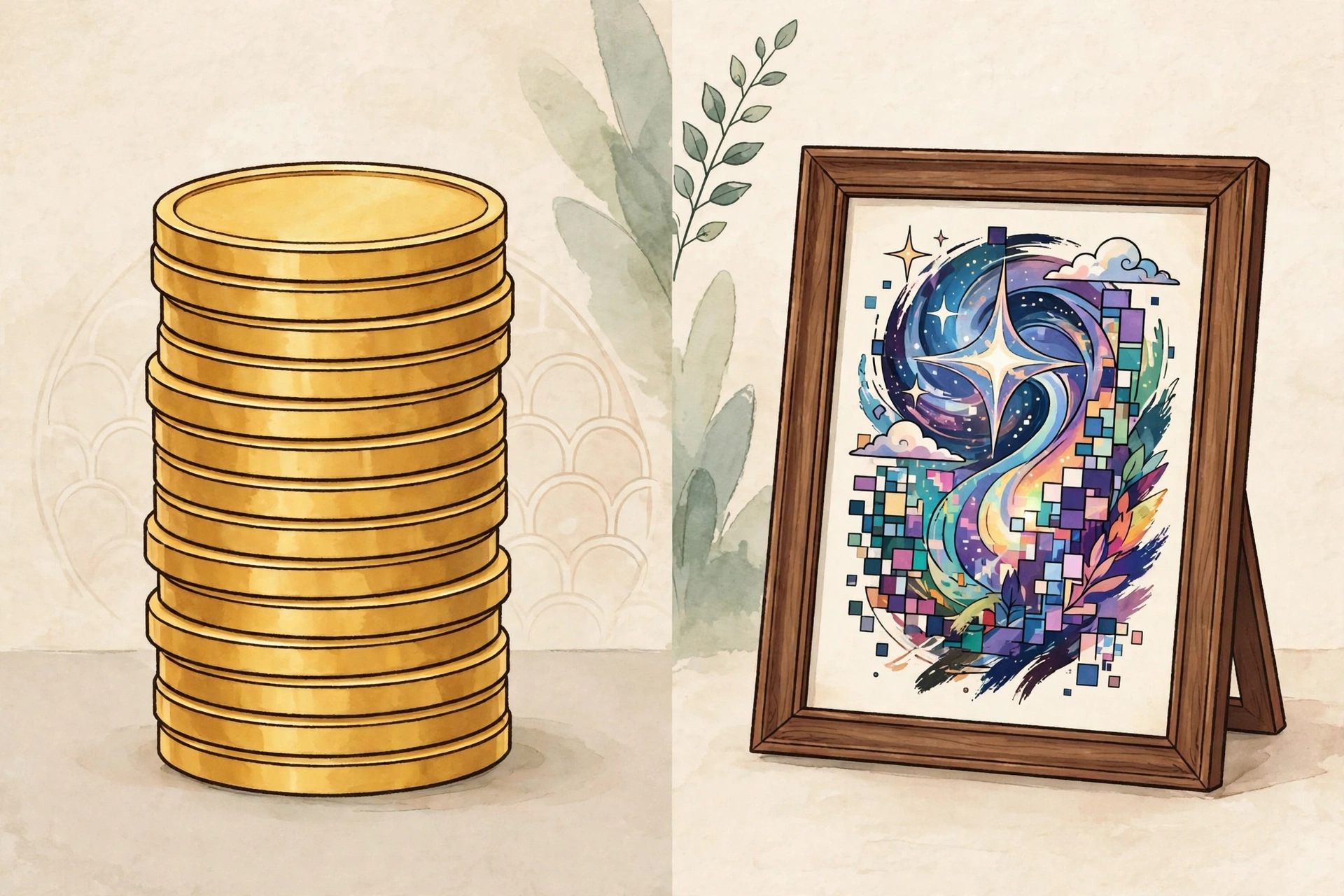
NFTs carry the general risks of crypto plus some of their own. Prices are highly volatile and driven by trends, so an NFT bought today may be worth far less tomorrow, or nothing at all. Liquidity is often thin: unlike major cryptocurrencies, there may be no buyer when you want to sell.
Fraud is common, from counterfeit collections to phishing sites that drain wallets when you connect them. Never connect your wallet to an unfamiliar site, and consider using a separate wallet with limited funds for experimenting. Finally, the regulatory and tax treatment of NFTs varies by jurisdiction and is still evolving, so research your local rules before trading.
None of this is investment advice. The goal of this guide is to help you understand what NFTs are, not to suggest you buy any. If you do explore further, start with education, use tiny amounts, and treat every unexpected message or too good offer as suspicious until proven otherwise.
Frequently Asked Questions About NFTs
Why would anyone pay for an NFT when the image is free to view?
Buyers are paying for the verifiable token, not exclusive access to the image. Motivations vary: collecting, supporting a creator, speculating on resale, or accessing perks tied to ownership. Whether that is worth the price is a personal judgment, not a technical fact.
Can an NFT be copied or duplicated?
The image can be copied endlessly, but the token cannot be duplicated. Each NFT has a unique identifier on the blockchain, and only one wallet holds it at a time. Copies of the picture do not affect who owns the token.
Do NFTs have to be art?
No. Anything unique or scarce can be represented as an NFT: game items, tickets, memberships, certificates, and more. Art was simply the first use case to capture public attention.
What blockchain are most NFTs on?
Ethereum hosts the largest share of well known NFT projects, but many other blockchains support NFTs too, often with lower transaction fees. The choice of blockchain affects costs, wallet compatibility, and which marketplaces you can use.
Can I create my own NFT?
Yes. Minting tools on various marketplaces let anyone turn a digital file into an NFT, usually for a network fee. Creating one is easy; getting anyone to care about it is the hard part.
Are NFTs bad for the environment?
This concern dates to when major NFT blockchains used energy intensive consensus mechanisms. Ethereum has since moved to a far less energy intensive system, and many NFT focused chains were designed to be efficient. Energy use now varies greatly by blockchain.