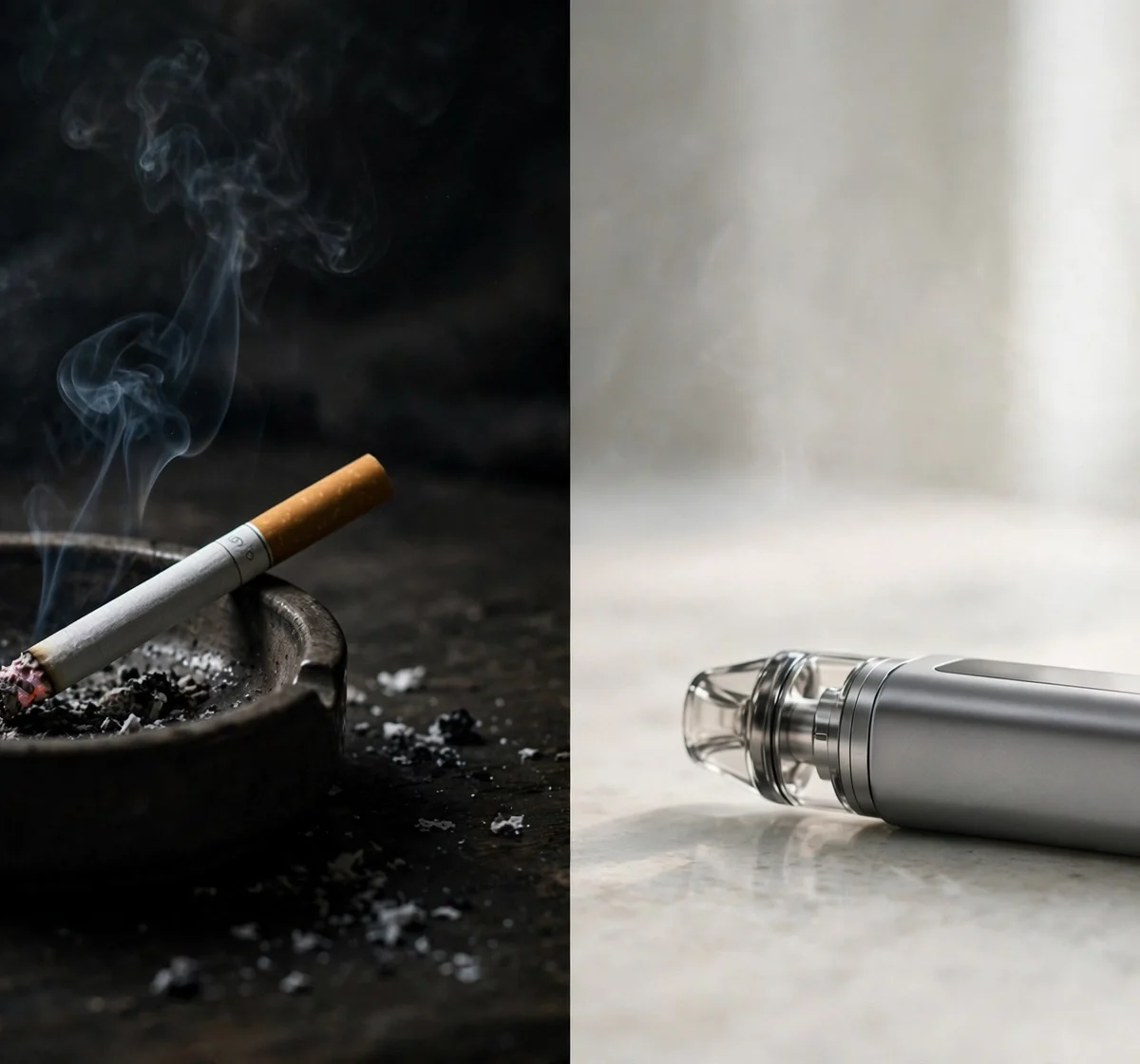
Vaping and smoking both deliver nicotine but work in fundamentally different ways: cigarettes burn tobacco at 600 to 900 degrees Celsius, producing smoke that contains tar, carbon monoxide, and thousands of combustion byproducts, while vapes heat a liquid to around 200 degrees Celsius, producing an aerosol without combustion, tobacco leaf, tar, or carbon monoxide. Cigarette smoke contains over 7,000 chemicals, including at least 70 known carcinogens, according to the CDC, while vape aerosol contains far fewer compounds, though it is not harmless and its long-term effects are still being studied. Both products are addictive, restricted to adults of legal age, and carry health risks.
This article is for informational purposes only. It does not encourage vaping or smoking. Nicotine is addictive, and neither product is safe.
Key Takeaways
- The core difference is combustion: cigarettes burn tobacco; vapes heat liquid into an aerosol with no burning, no tar, and no carbon monoxide.
- Cigarette smoke contains over 7,000 chemicals with at least 70 known carcinogens (CDC); vape aerosol contains substantially fewer compounds, but long-term data is still developing.
- Nicotine is the addictive common denominator in both products; some vapes allow adjustable or zero nicotine, while cigarettes always contain it.
- A pack-a-day cigarette habit typically costs thousands per year; vaping usually costs less over time, especially with refillable devices.
- Secondhand cigarette smoke is a documented serious health hazard; secondhand vape aerosol exposes bystanders to far lower levels of toxicants but is not risk-free.
- Public health agencies differ by country: the UK’s NHS includes vaping in stop-smoking guidance for adult smokers, while the US FDA has not authorized any vape as a smoking-cessation device.
- Youth, pregnant people, and non-smokers should not use either product.
How Do Vapes and Cigarettes Each Work?
A cigarette is shredded tobacco wrapped in paper with a filter. Lighting it triggers combustion at roughly 600 to 900 degrees Celsius, and the smoker inhales the resulting smoke, a complex mixture of gases and fine particles carrying nicotine to the lungs and brain within seconds, along with tar, carbon monoxide, and thousands of other chemicals created by burning.
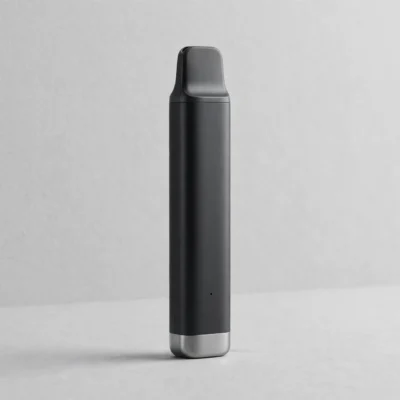
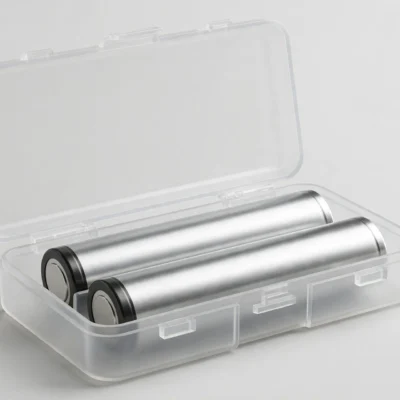
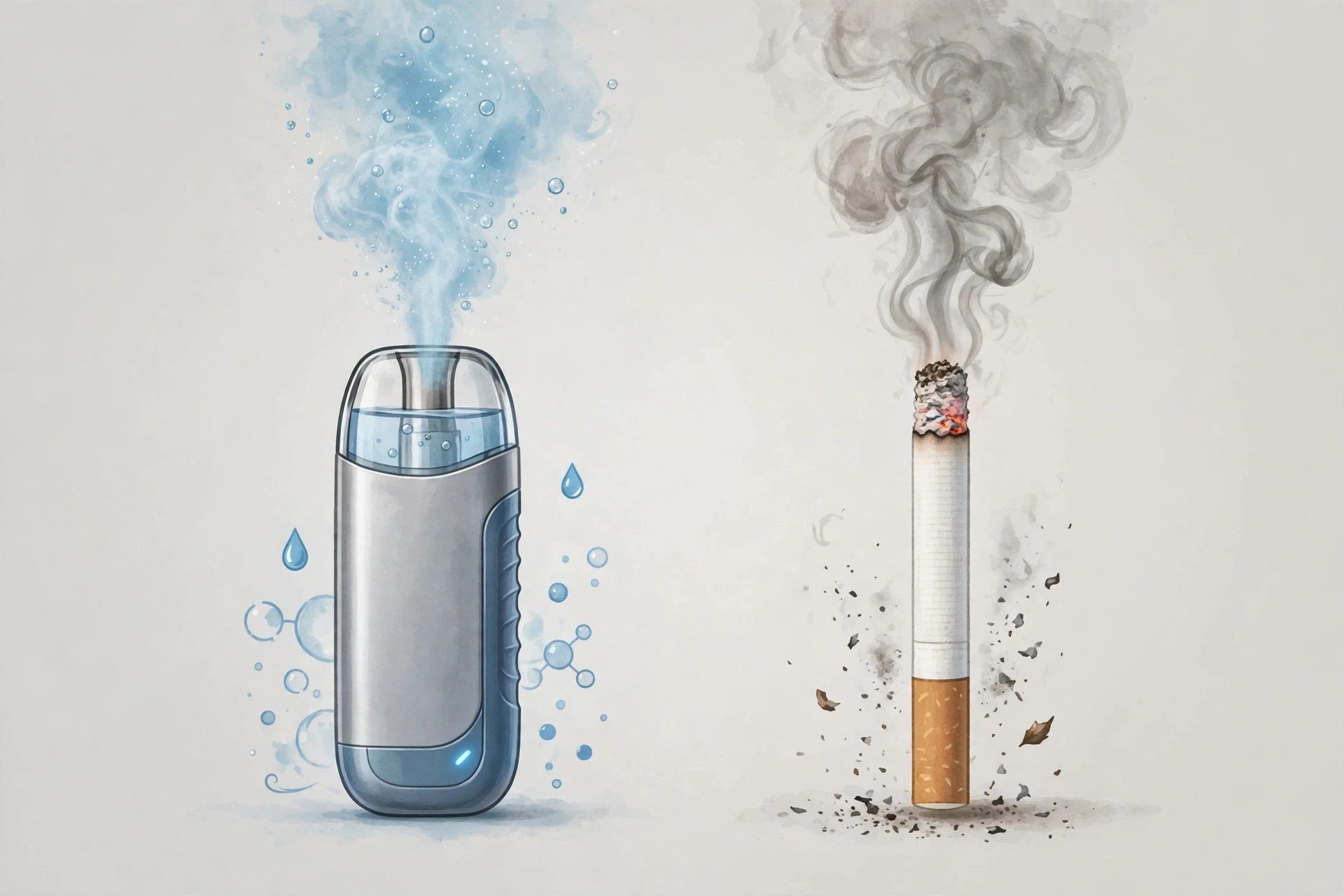
A vape device takes a different route. A battery powers a coil that heats e-liquid, usually a mix of propylene glycol, vegetable glycerin, flavorings, and optionally nicotine, to about 200 degrees Celsius. The liquid becomes an aerosol that the user inhales. There is no tobacco leaf, no ash, no burning, and no smoke. The practical upshot is that everything harmful about cigarettes that comes specifically from burning, tar, carbon monoxide, and most of the 7,000 chemicals, has no equivalent in vaping, which is why the comparison always starts with combustion. For the hardware details, see our disposable vs refillable vape comparison.
Vape vs Cigarettes: Full Comparison
| Factor | Cigarettes | Vapes |
|---|---|---|
| Mechanism | Combustion of tobacco (600-900 C) | Heating of e-liquid (around 200 C), no combustion |
| Tobacco content | Yes | No tobacco leaf |
| Tar and carbon monoxide | Yes, both present | Neither produced |
| Chemical count | Over 7,000 in smoke; 70+ known carcinogens (CDC) | Far fewer; base liquids, flavorings, nicotine, plus trace heating byproducts |
| Nicotine | Always present; fixed delivery | Adjustable strengths; zero-nicotine options exist |
| Odor | Strong, clings to clothes and rooms | Usually milder and dissipates faster |
| Secondhand exposure | Serious documented hazard to bystanders | Lower toxicant levels; not risk-free |
| Typical annual cost (pack-a-day equivalent) | Often $2,000-$5,000+ depending on location | Often lower; refillable setups cheapest long-term |
| Environmental waste | Cigarette butts are the most littered item worldwide | Batteries and plastics; e-waste concern |
| Legal age (US) | 21 | 21 |
What Chemicals Are Involved in Each?
Cigarette smoke’s chemical load is well documented. The CDC reports more than 7,000 chemicals in tobacco smoke, including at least 70 that are known to cause cancer, among them benzene, formaldehyde, arsenic, cadmium, hydrogen cyanide, lead, and ammonia. Tar, the sticky residue, coats the lungs, and carbon monoxide binds to hemoglobin, reducing oxygen delivery throughout the body.
Vape aerosol is chemically simpler but not chemical-free. Standard e-liquid contains vegetable glycerin, propylene glycol, flavoring compounds, and usually nicotine. When heated, small amounts of additional compounds such as formaldehyde and acrolein can form, but published measurements place these at levels far below those in cigarette smoke. Counterfeit or unregulated liquids are a separate concern, as they bypass the testing that regulated products undergo. The honest summary: fewer toxicants by a wide margin, but “fewer” is not “none,” and decades-long studies do not yet exist.
What Does the Research Say About Relative Harm?
This is where careful reading matters. Multiple public health reviews have concluded that vaping exposes users to substantially lower levels of toxicants than smoking. The UK’s National Health Service continues to describe vaping as far less harmful than cigarettes for adult smokers who switch completely, and includes e-cigarettes in its stop-smoking services. The often-quoted “95 percent less harmful” figure comes from a 2015 Public Health England evidence review; it is an expert estimate, not a measured clinical outcome, and it remains debated.
Balancing that, every major health authority stresses three caveats: vaping is not harmless, its long-term effects are still unknown because the products have existed for barely two decades, and youth uptake is a serious concern. In the US, the FDA has not authorized any vaping product as a smoking-cessation device, though it does authorize some products for sale under tobacco regulation. Readers should treat confident claims in either direction, “totally safe” or “just as bad as smoking,” as marketing or myth rather than science.
Nicotine: The Common Denominator
Nicotine is the addictive substance in both products, and dependence is the main reason people struggle to stop either one. Cigarettes deliver nicotine in a fixed, rapid dose with every puff. Vapes vary: disposable devices commonly use nicotine salt formulations between 20 and 50 mg/mL in markets where permitted, which deliver nicotine smoothly at high concentrations, while refillable systems let users step strengths down gradually, including to zero.
Adjustable nicotine is a double-edged fact. It gives adult users control that cigarettes never offered, but high-strength nicotine salts can also deepen dependence quickly, particularly among young users. Nicotine itself raises heart rate and blood pressure and is harmful during pregnancy and adolescence regardless of delivery method. Anyone who does not already use nicotine gains nothing by starting, in any form.
How Do the Costs Compare?
Smoking is among the most expensive legal habits. In the US, pack prices vary by state, and a pack-a-day smoker commonly spends several thousand dollars per year; published estimates frequently land between $2,000 and $5,000 annually depending on local taxes. Over a decade, the cumulative cost is staggering, before counting any health-related expenses.
Vaping costs break into hardware and consumables. A refillable starter kit typically costs $30 to $100 upfront, with e-liquid running roughly $10 to $20 per bottle; many analyses put annual refillable vaping costs in the low hundreds of dollars. Disposable vapes sit between the two: cheaper to start than a kit, pricier per milliliter than bottled liquid. For a direct device comparison, see disposable vs refillable vape. Exact figures depend heavily on usage and local prices, so treat any single number as illustrative, not exact.
What About Secondhand Exposure and the Environment?
Secondhand cigarette smoke is one of the most studied indoor pollutants in history, with documented links to lung cancer, heart disease, and respiratory illness in non-smokers, including children. There is no safe level of exposure, which is why indoor smoking bans exist worldwide.
Secondhand vape aerosol exposes bystanders to nicotine and fine particles at levels far lower than cigarette smoke, but “lower” again is not “zero,” and research on chronic exposure continues. Most jurisdictions restrict vaping wherever smoking is banned.
Environmentally, both products pollute differently. Cigarette butts are consistently ranked among the most littered items on the planet, leaching toxins as filters break down. Vapes contribute lithium batteries and plastics to the waste stream; each disposable device is effectively a small piece of e-waste. Neither industry has a clean record, and proper disposal, butts in bins, vapes in e-waste recycling, is the minimum responsible behavior. Our vape battery safety tips cover handling and recycling of vape cells.
Who Should Not Use Either Product?
Clear lines exist. Young people should not vape or smoke: nicotine harms adolescent brain development, and youth vaping rates remain a public health priority. Pregnant and breastfeeding people should avoid both, since nicotine affects fetal development. Non-smokers and non-vapers should not start either product; there is no health benefit to initiating nicotine use. People with heart or lung conditions should discuss any nicotine product with their doctor. At DigitalGeekSpot we present consumer comparisons factually, and on this topic the facts point one group toward neither product.
Frequently Asked Questions
Is vaping worse than smoking cigarettes?
Current evidence indicates vaping exposes users to far fewer toxicants than smoking because there is no combustion, tar, or carbon monoxide. However, vaping is not harmless, long-term data is still developing, and both products are addictive. Health authorities universally advise non-smokers not to start either.
How many cigarettes is one vape equal to?
There is no exact conversion. Nicotine delivery depends on the device, liquid strength, puff duration, and user behavior. Comparisons based on puff counts are especially unreliable because manufacturers calculate them from short test draws. The honest answer is that equivalence claims are marketing, not measurement.
Can vaping help you quit smoking?
Some clinical trials and the UK’s NHS support e-cigarettes as a quit aid for adult smokers, generally within structured stop-smoking services. The US FDA, however, has not authorized any vaping product as a cessation device. Anyone trying to quit should discuss all options, including approved nicotine replacement therapies and prescription medications, with a healthcare professional.
Does vaping cause cancer?
No long-term study has established a direct causal link between vaping and cancer. Cigarette smoking, by contrast, is a leading preventable cause of cancer. Some vape aerosols contain trace carcinogenic compounds at levels far below cigarette smoke, but the absence of long-term data means risk cannot be fully quantified yet.
What is EVALI?
EVALI (e-cigarette or vaping product use-associated lung injury) was a 2019 outbreak of severe lung illness in the US, linked primarily to vitamin E acetate in illicit THC vaping products, not to standard nicotine e-liquids. It underscored the danger of unregulated products rather than regulated ones, but it remains a cautionary episode.
Is secondhand vape harmful?
Bystander exposure to vape aerosol involves far lower toxicant levels than secondhand cigarette smoke, which is a well-documented serious hazard. Vape aerosol is not risk-free, though, and most clean-air laws treat vaping like smoking in indoor public spaces.
Which is cheaper, vaping or smoking?
Vaping is usually cheaper over time. A pack-a-day smoking habit often costs thousands per year, while refillable vaping typically costs hundreds annually after the initial hardware purchase. Disposables fall in between. Actual spending depends on local prices and consumption.
Is it safe to vape around children or pets?
No. Keep all vaping products, especially flavored liquids and small devices, away from children and pets. Nicotine liquid can be toxic if ingested, and device batteries pose choking and chemical hazards. Store everything locked away and out of reach.
Related Articles
- Disposable vs Refillable Vape
- How Long Does a Disposable Vape Last?
- Vape Battery Safety Tips
- Can You Bring a Vape on a Plane?
The Bottom Line
Vaping and smoking share nicotine and little else. Combustion makes cigarettes uniquely loaded with tar, carbon monoxide, and thousands of chemicals, while vaping removes the burning but introduces its own uncertainties, including unknown long-term effects and youth appeal. The evidence supports vaping as the less harmful option for adult smokers who switch completely, and supports neither product for anyone else. Whoever you are, the decision deserves facts rather than slogans, and now you have them.