Walking into a weight room for the first time, or even carving out a workout corner at home, can feel intimidating. Rows of machines, racks of dumbbells, and a hundred conflicting opinions online make it hard to know where to begin. The good news is that starting strength training is far simpler than the fitness industry makes it sound. You do not need a gym membership, a coach, or a complicated program to get stronger.
Strength training simply means making your muscles work against resistance, and that resistance can come from your own body weight, dumbbells, resistance bands, or machines. Done consistently, it makes everyday life easier, from carrying groceries to climbing stairs, and it supports healthy bones, better posture, and steadier energy through the day. It also pairs well with other activities, so runners and people who train at home often add a couple of strength days to their weekly routine. Unlike complicated fitness trends, the basics of strength training have stayed the same for decades because they keep working.
To start strength training as a beginner, do a full-body workout two or three days per week using five basic moves: squats, push-ups, rows, glute bridges, and planks. Begin with 2 to 3 sets of 8 to 12 reps per exercise, focus on clean form, rest about 60 seconds between sets, and add reps or weight gradually each week.
Key Takeaways
- Train 2 to 3 non-consecutive days per week for 20 to 30 minutes per session.
- Master five foundational moves before adding weight or complexity.
- Start light and put form first; mild soreness is normal, sharp pain is not.
- Make workouts slightly harder every week or two by adding reps, sets, or weight.
- Sleep, rest days, and protein-rich whole foods support your recovery and progress.
Strength Training Equipment Compared: What Do Beginners Actually Need?
Many beginners assume they need a gym membership or an expensive home setup, but the truth is that any form of resistance works. Each option has strengths, and most beginners do best starting with the cheapest tool and upgrading only when they outgrow it.
| Equipment | Cost | Best For | Beginner Friendliness |
|---|---|---|---|
| Bodyweight | Free | Learning movement patterns and training anywhere | Excellent |
| Resistance bands | Low | Gentle, joint-friendly resistance and travel workouts | Very good |
| Dumbbells | Low to moderate | Home workouts with easy, gradual progression | Very good |
| Gym machines | Membership | Guided movement paths and heavier loads later on | Good |
You can build real strength with bodyweight alone for your first several weeks. If you train at home with zero gear, our guide on home workouts without equipment shows how to structure a complete session using only your body.
What Is the Best Beginner Strength Training Workout?
The best beginner workout is a simple full-body routine built on five compound movements that together train every major muscle group. Compound exercises work several joints and muscles at once, so you get more done in less time, which is exactly what a beginner schedule needs.
Your First Strength Workout (About 30 Minutes)
Warm up with 5 minutes of light cardio, such as marching in place or brisk walking, then perform 2 to 3 rounds of the following circuit:
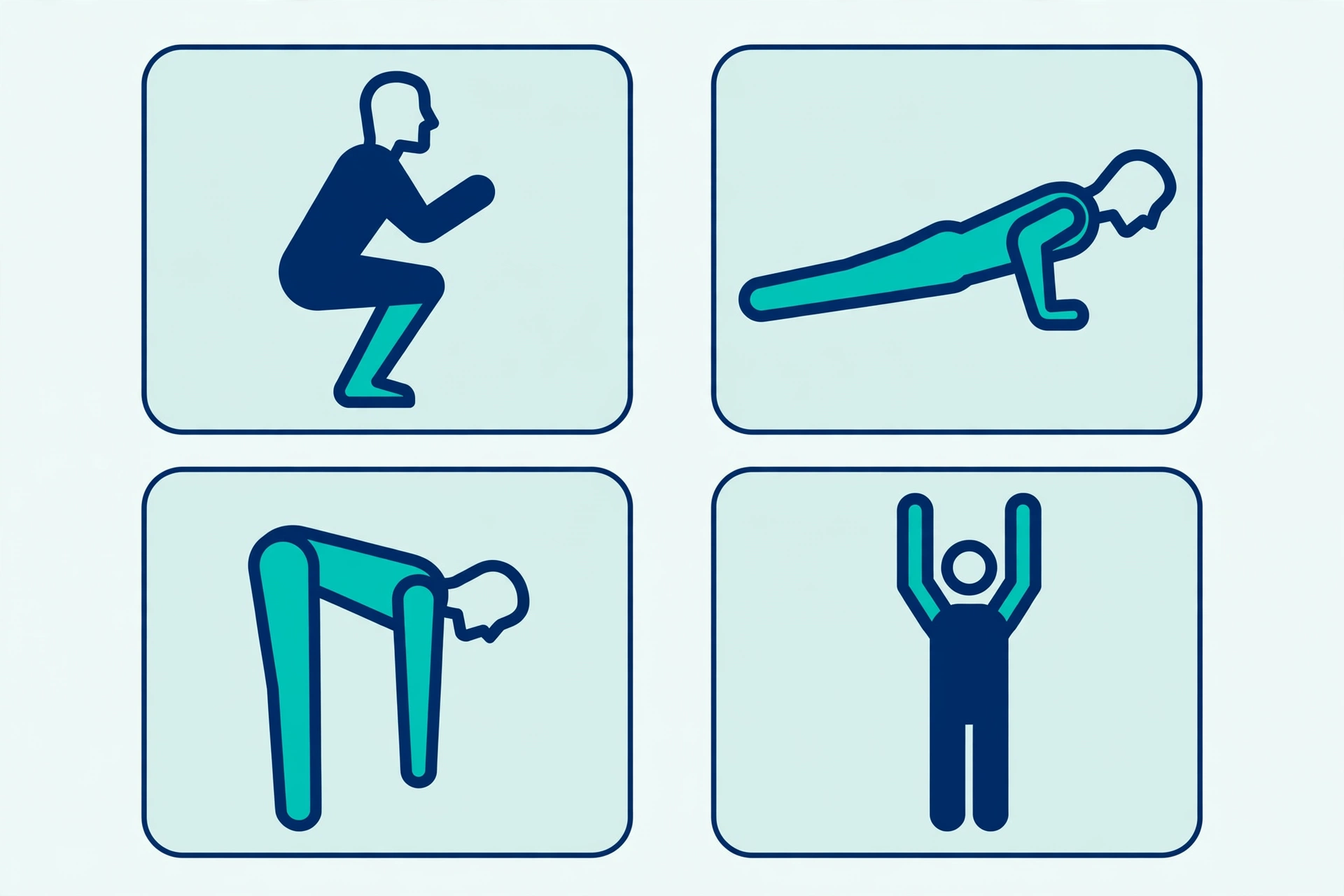
- Bodyweight squats: 3 sets of 10 to 15 reps (legs and glutes)
- Push-ups (full or on your knees): 3 sets of 8 to 12 reps (chest, shoulders, arms)
- Bent-over rows (dumbbells, a band, or a loaded backpack): 3 sets of 10 reps per side (back and biceps)
- Glute bridges: 3 sets of 15 reps (glutes and lower back)
- Plank: 3 holds of 20 to 30 seconds (core)
Rest 60 seconds between sets and about 2 minutes between exercises. Finish with 5 minutes of gentle stretching for the muscles you worked. This single routine, repeated twice a week, is enough to build a solid strength foundation during your first month or two.
How Many Days a Week Should a Beginner Do Strength Training?
Two to three non-consecutive days per week is the sweet spot for beginners. Muscles grow stronger during rest, not during the workout itself, so the days between sessions matter just as much as the training days.
A simple weekly schedule looks like this: strength training on Monday, Wednesday, and Friday, with walking, easy cycling, or gentle stretching on the other days. If running is your main sport, do strength work on your easy days or after short runs. Our guide on how to improve running stamina for beginners explains how to balance endurance and strength work without overdoing either.
How Do Beginners Learn Proper Form and Avoid Injury?
Good form is the single most important skill a beginner can develop. It directs the work to the right muscles and keeps your joints safe, which matters far more than how much weight you lift.
Master each movement with your body weight or very light resistance first. Film yourself from the side or check a mirror, and only add weight when the movement feels smooth and controlled. If you are ever unsure about a lift, a single session with a qualified trainer or a reputable instructional video can fix most form problems quickly.
- Warm up for 5 minutes before every session to prepare your joints and muscles.
- Brace your core on every rep, as if someone were about to tap your stomach.
- Control the lowering phase of each rep, taking 2 to 3 seconds to come down.
- Breathe out on the effort and in on the easier part of the rep.
- Train through a full, comfortable range of motion, never forcing a joint past pain.
- Stop immediately for sharp, shooting, or joint pain; mild muscle burn is different from pain.
Keeping a simple training log also helps beginners stay safe and see progress. Write down the exercises, sets, reps, and weights you used each session. When you can look back and see that last month 10 push-ups felt hard and today 12 feel easy, you will know exactly when it is time to progress.
Should Beginners Use Free Weights or Machines?
Both work well, so the best choice is whichever one you will use consistently. Free weights such as dumbbells teach balance and coordination because your body stabilizes the load, while machines guide the weight along a fixed path, which some beginners find reassuring.
Most beginners get the best results from a simple progression: start with bodyweight exercises, add resistance bands or a pair of light dumbbells after a few weeks, and use gym machines later if you join a gym and want heavier loads with a built-in safety net. No single tool is mandatory for building strength as a beginner.
What Is Progressive Overload and How Do Beginners Apply It?
Progressive overload is the principle behind all strength gains: you make your workouts slightly harder over time so your muscles keep adapting. Without it, your body gets comfortable and progress stalls. The good news is that beginners can apply it in tiny, safe steps.
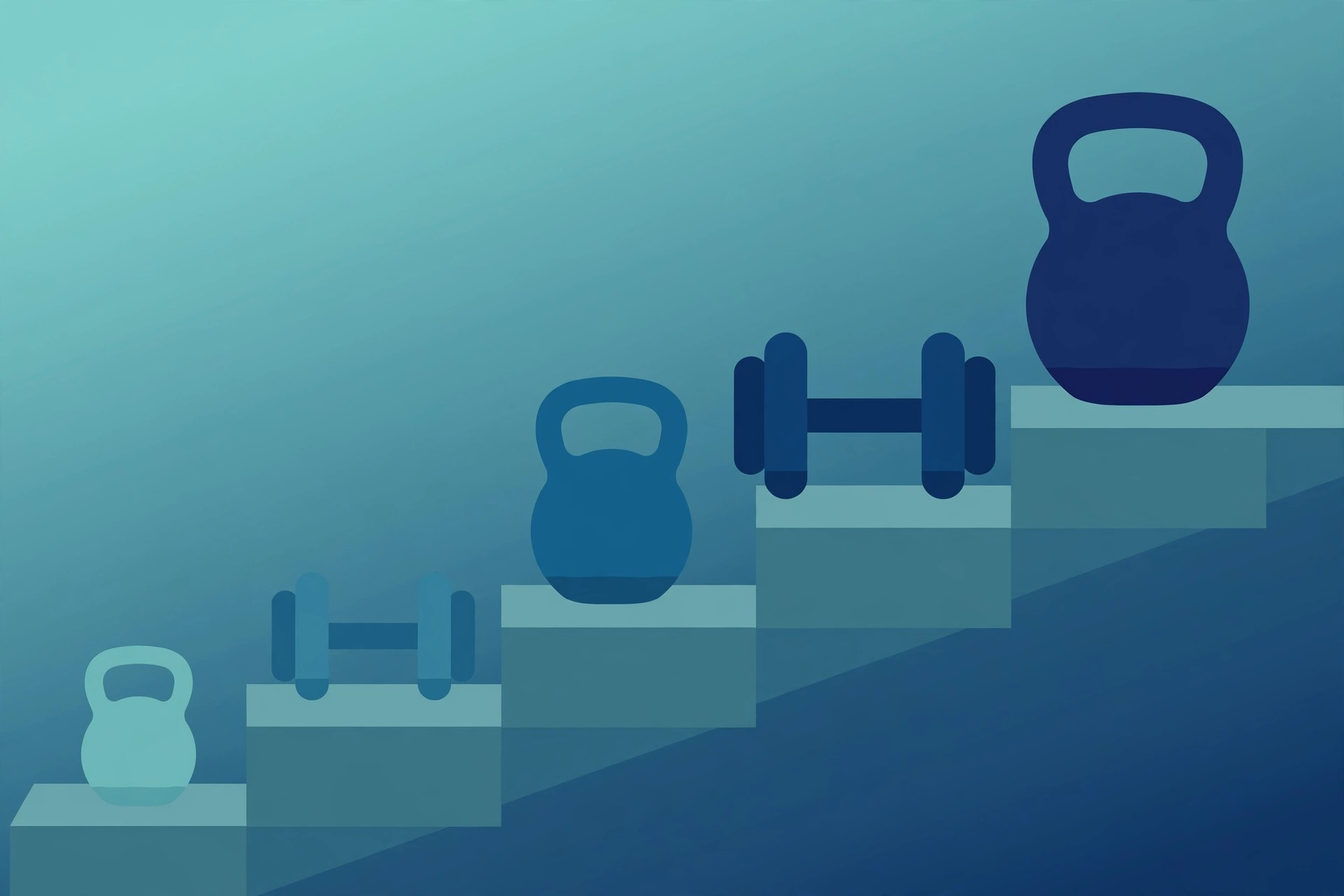
- Add reps: go from 8 to 10, then 10 to 12 reps with the same weight.
- Add sets: move from 2 sets to 3 sets of an exercise.
- Add weight: use a slightly heavier dumbbell or a thicker band.
- Slow the tempo: take longer on the lowering phase or hold the plank a few seconds more.
A practical example: if you do 3 sets of 10 bodyweight squats this week, aim for 3 sets of 12 next week, and the week after, hold a light dumbbell while squatting. Progress one variable at a time and keep your form clean at every step.
How Long Does It Take to See Results From Strength Training?
Most beginners feel noticeably stronger within 3 to 4 weeks, and visible muscle changes usually take 8 to 12 weeks of consistent training. Early strength gains come mostly from your nervous system learning to use your muscles better, while visible muscle growth follows more slowly.
Consistency matters far more than intensity. Two or three short sessions every week beat one heroic workout followed by a week off. Support your training with protein-rich whole foods such as eggs, dairy, beans, lentils, fish, chicken, or tofu, drink plenty of water, and sleep 7 to 9 hours a night, since muscles rebuild during rest.
Frequently Asked Questions
Can I start strength training at home without any equipment?
Yes. Bodyweight exercises like squats, push-ups, glute bridges, and planks build genuine strength for the first several weeks. When those become easy, add a resistance band or a pair of adjustable dumbbells to keep progressing.
Is strength training safe for teenagers?
Yes, with adult supervision and light loads focused on form. Teens should avoid maximal lifts and train with guidance. For younger children, confidence-building activities matter more than structured training, so see our guide on the best sports for kids confidence.
Should I do cardio before or after strength training?
Do the workout that matches your main goal first. If strength is the priority, lift first and keep cardio light afterward. If endurance matters more, run or cycle first and lift on separate days when you can.
How long should a beginner strength workout last?
About 20 to 30 minutes is plenty, including a 5-minute warm-up and a short cool-down. Shorter, focused sessions done consistently outperform long, exhausting workouts you dread repeating.
Will lifting weights make me bulky?
Not as a beginner. Building large muscles takes years of heavy training and a deliberate calorie surplus. What beginners gain first is strength, better posture, and a firmer, more toned look.
Do beginners need protein powder?
No. Most beginners get enough protein from regular meals that include eggs, dairy, beans, lentils, fish, chicken, or tofu. Supplements are optional and never a substitute for consistent training.
What should I eat before and after a strength workout?
Eat a light snack with some carbs 1 to 2 hours before training, such as a banana or toast, and drink water during the session. Afterward, have a balanced meal with protein and carbs within a couple of hours.
Does muscle soreness mean the workout worked?
Not necessarily. Mild soreness in the first weeks is normal as your body adapts, but it fades as you get fitter. Lack of soreness does not mean a workout failed, and sharp or joint pain is never a good sign.
Verdict
Starting strength training as a beginner comes down to a simple formula: five basic movements, two or three short sessions per week, good form, and gradual progression. You do not need a gym, fancy equipment, or a perfect plan. Pick the routine in this guide, stay consistent for two months, and you will be stronger in ways you can feel in daily life, from easier stairs to better posture at your desk. For more beginner-friendly fitness guides, keep exploring the Sports section here at DigitalGeekSpot.