

Vape Wattage Guide for Beginners: The Quick Answer
Wattage is the amount of power your device sends to the coil, and it controls how hot the coil gets. The quick answer for beginners: always start at the lowest wattage printed on your coil and increase slowly until the flavor and vapor feel right. Most beginner-friendly setups run between 10 and 40 watts, while larger sub-ohm tanks run 40 to 80 watts or more. There is no single correct number; the right wattage is the one inside your coil’s recommended range that tastes best to you.
This guide from DigitalGeekSpot explains what wattage does, how to find your starting point, and how to dial in a comfortable setting step by step. It is strictly informational and describes standard device operation. Vaping products are intended for adults of legal smoking age only.
Wattage Ranges by Device Type
| Device or Coil Type | Typical Wattage Range | Vaping Style |
|---|---|---|
| Disposable vapes and fixed-power pods | Fixed, usually 7 to 15W | Mouth-to-lung, no adjustment needed |
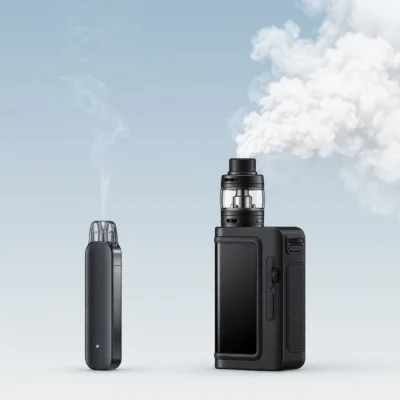
| Refillable pod systems | 10 to 25W | Mouth-to-lung or restricted direct-lung |
| Pen-style kits | 15 to 40W | Mouth-to-lung or light direct-lung |
| Sub-ohm tanks | 40 to 80W | Direct-lung, dense vapor |
| High-power mods and rebuildables | 60 to 200W plus | Direct-lung, advanced users |

What Wattage Means in Vaping
A watt is a unit of electrical power. When you set your device to 20 watts, you are telling the battery to deliver 20 watts of power to the coil. More watts mean a hotter coil, which vaporizes e-liquid faster. Less watts mean a cooler coil and gentler vapor. Almost every adjustable device lets you change wattage with plus and minus buttons, and the screen shows the current setting.
You do not need an engineering background to use wattage settings well. The practical rule is simple: the coil manufacturer prints a recommended range on the coil, and your job is to pick a comfortable spot inside that range.
How Wattage Affects Your Vape
Changing the wattage changes four things at once:
- Vapor amount: higher wattage produces more vapor per puff because more liquid is vaporized.
- Warmth: higher wattage makes the vapor warmer; lower wattage keeps it cooler.
- Flavor intensity: flavor usually peaks somewhere in the middle of the range. Too low can taste weak, too high can taste harsh or burnt.
- Battery drain and coil wear: higher wattage drains the battery faster and wears coils out sooner.
- What Is a Disposable Vape? A Beginner’s Guide
- Vape vs Cigarettes: Key Differences Explained
- How to Clean a Vape Tank: Step-by-Step
Because of these trade-offs, more power is not automatically better. Many vapers prefer the lower half of their coil’s range for smoother flavor and longer battery life.
Finding Your Coil’s Recommended Wattage Range
Nearly every replaceable coil has its recommended range printed or etched on its side, in a format like “0.4 ohm, 25 to 35W.” This range is set by the manufacturer based on the coil’s wire thickness, wick size, and design. It is the single most useful number in this entire guide.
If the range is not printed on the coil, check the coil’s packaging, the manufacturer’s website, or your device manual. Never guess blindly: running a 15-watt pod coil at 60 watts will burn it almost instantly, while running a 70-watt sub-ohm coil at 15 watts will produce almost no vapor.
Step by Step: Dialing In Your Wattage
Step 1: Start at the Bottom of the Range
Set your device to the lowest number in the coil’s recommended range. If the coil says 25 to 35W, start at 25W. If it gives a single best rating, start a few watts below it. Make sure the coil is primed and the tank has e-liquid before you begin.
Step 2: Take a Few Test Puffs
Take three or four normal puffs and pay attention to the flavor, warmth, and vapor. At the bottom of the range the vape may feel mild or slightly cool. That is expected and it is your baseline.
Step 3: Increase in Small Steps
Raise the wattage by 2 to 5 watts at a time, taking a couple of puffs after each step. You will notice the vapor getting warmer and denser and the flavor getting stronger. Keep going until you find the spot that tastes best to you.
Step 4: Stop at the Sweet Spot
The sweet spot is the setting where flavor is full, the vapor feels comfortable, and there is no harshness. For most coils it sits somewhere in the middle to upper-middle of the recommended range. Once you find it, leave the setting alone. There is no prize for running at the maximum.
Step 5: Adjust for New E-Liquids
Different e-liquids can taste best at slightly different settings, especially when switching between flavor profiles or PG/VG ratios. When you change liquids, repeat the ramp-up process briefly rather than assuming the old setting still fits.
Wattage Ranges by Device Type in Detail
Disposables and Fixed-Power Pods
These devices choose the wattage for you. The manufacturer matches the power output to the built-in coil, so there is nothing to adjust and nothing to get wrong. This is why disposables and simple pods are the easiest starting point for beginners.
Refillable Pod Systems (10 to 25W)
Small refillable pods run at low power and are designed for mouth-to-lung vaping, which mimics the draw of a cigarette. Coils in this range are usually 0.6 to 1.2 ohms. Low wattage means long battery life and efficient e-liquid use.
Pen-Style Kits (15 to 40W)
Pen kits sit between pods and full-size tanks. They offer a bit more vapor and often have a single-button adjustable output or a few preset power levels. They suit vapers who want more performance without a bulky device.
Sub-Ohm Tanks (40 to 80W)
Sub-ohm means the coil resistance is below 1.0 ohm, which allows higher power. These tanks produce dense vapor and strong flavor at the cost of faster battery drain and e-liquid use. They are direct-lung devices and pair with high-VG e-liquids.
High-Power Mods (60W and Up)
Large box mods with external batteries can reach 100 to 200 watts or more. This territory is for experienced users with rebuildable atomizers who understand battery safety. Beginners have no reason to go here until they are comfortable with the basics.
Mouth-to-Lung vs. Direct-Lung Wattage
Your inhaling style and wattage go together. Mouth-to-lung (MTL) means drawing vapor into the mouth first, then inhaling, like sipping through a straw. MTL uses higher-resistance coils and low wattage, typically 10 to 25 watts. Direct-lung (DL) means inhaling straight into the lungs, like taking a deep breath. DL uses low-resistance coils and higher wattage, typically 40 watts and up. Most beginners start with MTL because it is gentler and uses less e-liquid, then explore DL later if they want bigger vapor.
Wattage, Voltage, and Resistance: The Basics
You will see three numbers on most device screens: watts, volts, and ohms. Ohms measure the coil’s resistance, volts measure the electrical pressure, and watts measure the resulting power. They are linked by Ohm’s law, but in practice you only need to know this: lower-resistance coils generally handle higher wattage, and higher-resistance coils need lower wattage. Modern regulated devices handle the math automatically. You set the watts, and the device adjusts the volts to match the coil. Temperature control mode is a separate advanced feature that limits coil temperature instead of power; beginners can safely ignore it until later.
Signs Your Wattage Is Too High
- A harsh, hot, or burnt taste, even with a fresh coil
- The vapor feels uncomfortably warm on the throat
- The tank gets noticeably hot during use
- E-liquid and battery drain much faster than expected
- Spitback, where hot droplets pop up through the mouthpiece
If you notice these, turn the wattage down in small steps until the vape feels smooth again. If the burnt taste persists after lowering the power, the coil’s cotton may already be scorched and the coil needs replacing.
Signs Your Wattage Is Too Low
- Very little vapor, even with long puffs
- Weak, washed-out flavor
- Gurgling, because liquid is not vaporizing fast enough and pools in the coil
- The device feels like it is barely doing anything
The fix is the mirror image: raise the wattage gradually until vapor and flavor come alive, staying inside the coil’s recommended range.
Battery Life and Wattage
Wattage and battery life have a direct relationship: doubling the wattage roughly halves the number of puffs per charge. A pod running at 12 watts can last all day on a small battery, while a sub-ohm tank at 70 watts may need recharging or a battery swap by the afternoon. This is another reason the sweet spot matters more than the maximum. If battery life is a priority, favor the lower end of your coil’s range.
Beginner Mistakes to Avoid
- Starting at maximum wattage: the most common beginner error. Always start low and work up.
- Ignoring the coil’s printed range: the manufacturer tested it; trust the numbers on the coil.
- Changing wattage on a dry tank: never raise power when the tank is nearly empty. Low liquid plus high power burns coils fast.
- Copying someone else’s setting: a wattage that is perfect for one coil can destroy another. Settings are coil-specific, not universal.
- Chasing bigger clouds immediately: high wattage without the right coil, liquid, and technique just produces harshness.

FAQs
What is the best wattage for a beginner?
There is no universal best wattage. Start at the lowest number printed on your coil, which for most beginner kits is between 10 and 25 watts, and increase in small steps until the flavor and vapor feel right.
Can the wrong wattage damage my device?
Extreme settings can damage the coil, and in rare cases stress the battery. Staying inside the coil’s recommended range and using the manufacturer’s batteries and charger keeps you within the device’s designed limits.
Why does my vape taste burnt at the recommended wattage?
The usual causes are an unprimed or worn-out coil, a nearly empty tank, or a very sweet e-liquid gunking up the coil. Try a fresh, properly primed coil at the bottom of the range before assuming the setting is wrong.
Does higher wattage use more e-liquid?
Yes. More power vaporizes more liquid per puff, so high-wattage vaping goes through bottles noticeably faster than low-wattage mouth-to-lung vaping.
Should I use wattage mode or temperature control mode?
Beginners should use wattage mode. It is simpler, works with all standard coils, and is what coil wattage ranges are written for. Temperature control is an advanced feature for specific wire types.
Do disposable vapes have adjustable wattage?
Most do not. Standard disposables run at a fixed wattage chosen by the manufacturer. Some newer rechargeable disposables and pod devices offer adjustable power, in which case the same start-low principle applies.
Conclusion
Vape wattage is simpler than it looks: read the range printed on your coil, start at the bottom, and nudge upward in small steps until you find your sweet spot. Respect the trade-offs between vapor, flavor, battery life, and coil longevity, and match your power to your device type and inhaling style. Master this one skill and every other setting on the device becomes easier to understand. If you travel with your kit, it is also worth knowing the airline rules for vape batteries and devices, since wattage and battery rules are closely related.
2 Comments