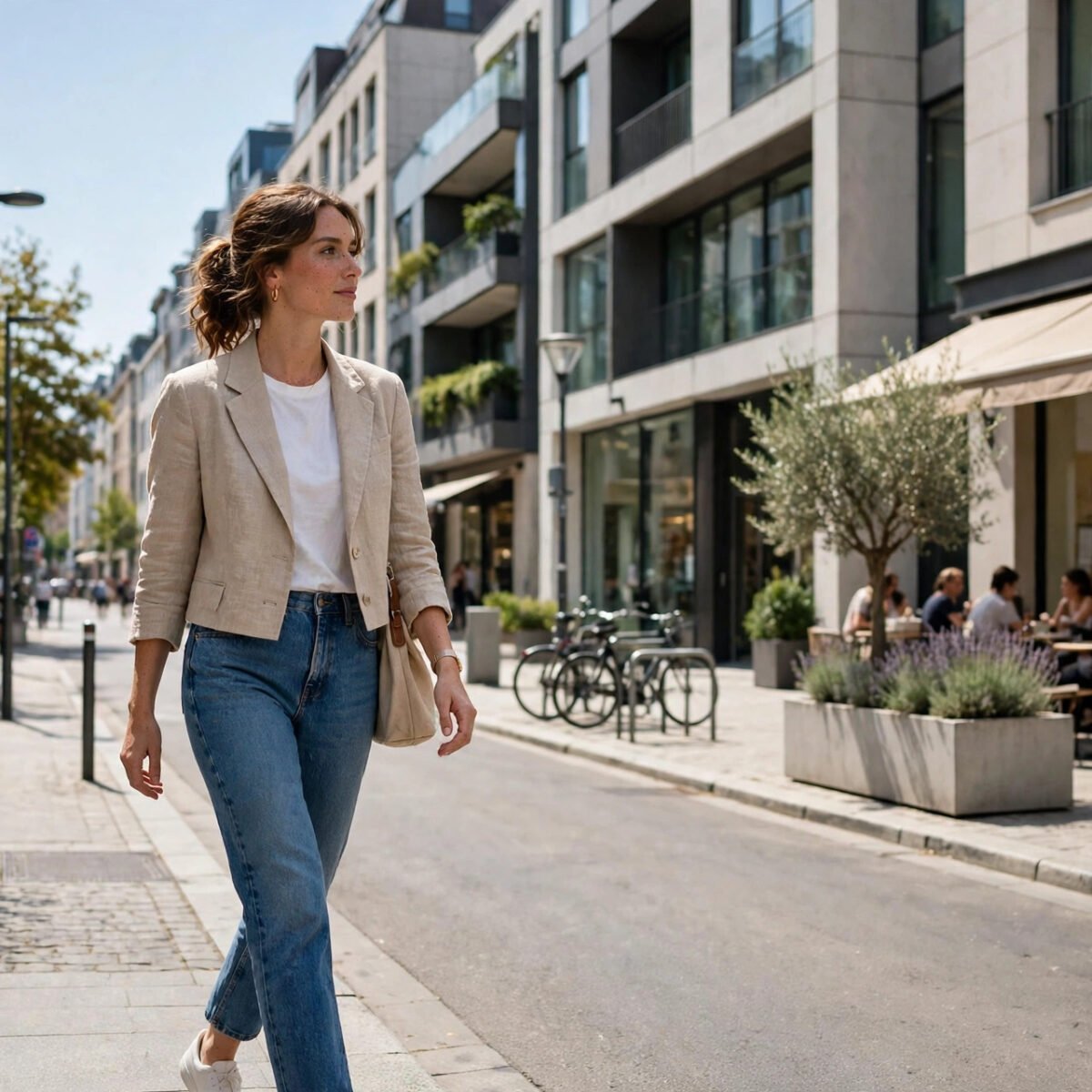
If you have been browsing fashion blogs or European street style photos lately, you may have come across a word that sounds playful but refers to something genuinely useful: blazertje. The term belongs to a relaxed, modern way of dressing that keeps the polish of classic tailoring while dropping the stiffness.
A blazertje is a lightweight, shorter, softer version of the traditional blazer. It is designed for comfort and versatility rather than formality, and it works across casual weekends, creative workplaces, and travel days. This guide explains what a blazertje is, where the name comes from, how it differs from a regular blazer, and how to style one for everyday life.
Key Takeaways
- What is a blazertje? A blazertje is a lightweight, relaxed mini blazer. The Dutch word literally means “little blazer,” and it describes a softer, shorter, less formal alternative to classic tailoring.
- How does it differ from a blazer? It uses breathable fabrics like linen or cotton, skips heavy shoulder padding and full linings, and favors a cropped or relaxed fit with a minimal or open front.
- Who can wear it? Anyone. Unisex cuts and inclusive sizing make it adaptable for many body types, and it works for men and women alike.
- How do you style it? Pair it with jeans and a t-shirt for weekends, tailored trousers and a button-down for smart casual offices, or layer it over knitwear in cooler weather.
- Is it office appropriate? Yes, in business casual settings when styled with tailored pieces in neutral colors.
What Is a Blazertje, Exactly?
A blazertje is a cropped or short-cut blazer made from light, breathable fabric and finished with soft, unstructured construction. It keeps the recognizable blazer silhouette, lapels, buttons, a clean front line, but removes the formality. Think of it as the blazer you reach for when a full suit jacket feels like too much.
The blazertje rose to attention as wardrobes shifted toward comfort-first dressing. People still wanted something that looked intentional and put together, but rigid wool blazers with padded shoulders did not fit long commutes, casual Fridays, or weekend errands. The blazertje filled that gap. It is worth noting that most of what is written about the blazertje comes from fashion blogs and street style coverage rather than official trend reports, so treat its popularity as a grassroots style movement, not a certified industry category.
Where Does the Word Blazertje Come From?
The word blazertje comes from Dutch. It combines “blazer” with the diminutive suffix “-tje,” which means “little.” The literal translation is “little blazer.”
Dutch speakers use diminutives often, not only to shrink a word but to make it sound affectionate and approachable. That spirit carried into the garment itself. Where the classic blazer can feel authoritative or corporate, the blazertje sounds and feels friendlier, something wearable rather than imposing. This reflects a broader Dutch fashion philosophy that values practical, functional clothing without sacrificing a sense of style.
Traditional blazers trace back to 19th-century Britain, where they began as rowing club jackets before becoming business staples. The blazertje evolved much later, as urban lifestyles demanded clothing that could move between settings. It is not a rejection of the blazer, it is a reinterpretation for modern life, where one jacket might need to cover a morning meeting, an afternoon coffee, and an evening out.
How Is a Blazertje Different From a Regular Blazer?
A blazertje differs from a regular blazer in fabric, construction, fit, and purpose. The table below summarizes the main distinctions.
| Feature | Traditional Blazer | Blazertje |
|---|---|---|
| Fabric | Heavy wool or suiting blends | Linen, cotton, jersey, or light wool blends |
| Lining | Fully lined | Unlined or lightly lined |
| Shoulders | Padded and structured | Soft, natural, or dropped |
| Fit and length | Longer, tailored, sometimes boxy | Cropped, relaxed, or slim |
| Front closure | Buttoned single or double breasted | Minimal, open front, or few buttons |
| Formality | Formal and office ready | Smart casual and everyday |
| Best occasions | Business, events, suits | Weekends, travel, creative workplaces |
The most practical difference is how the garment feels on your body. A blazertje drapes rather than molds, which makes it comfortable for long days. It also packs better for travel, since unlined cotton or linen does not wrinkle into stiff creases the way a structured wool jacket can.
What Fabrics Work Best for a Blazertje?
The fabric defines the blazertje more than anything else. The best options are breathable, flexible materials that hold a soft shape without stiffness.
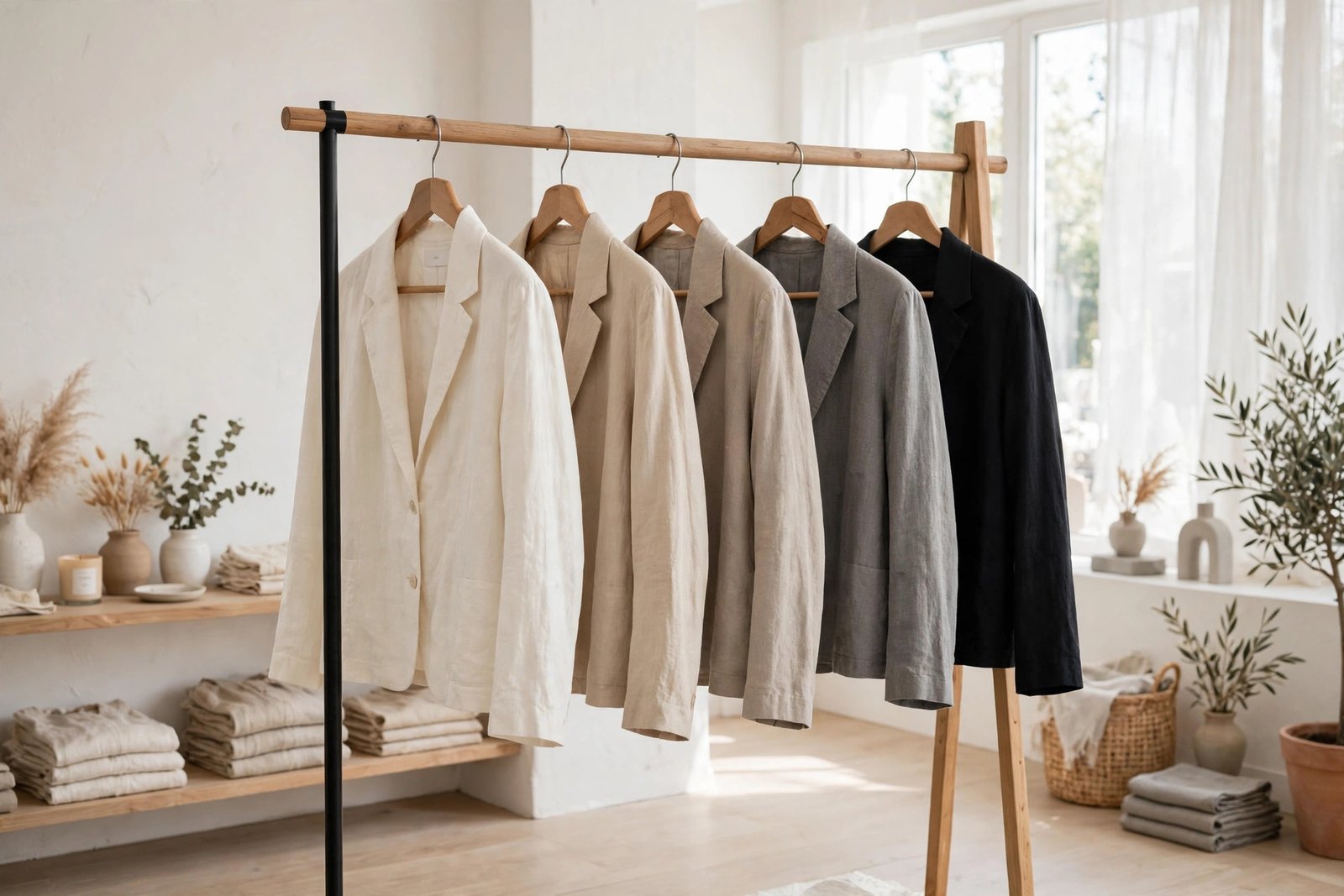
- Linen: The classic summer choice. Linen breathes beautifully in heat and gives the blazertje its signature relaxed texture. Expect some natural creasing, which is part of the look.
- Cotton and cotton blends: Durable, easy to wash, and comfortable year round. Cotton blazertjes are the most versatile everyday option.
- Jersey and soft knits: The most casual option, almost like a cardigan with a blazer shape. Ideal for travel and weekends.
- Lightweight wool blends: A good bridge for spring and autumn. They add a touch more structure while staying softer than traditional suiting wool.
- Viscose and lyocell blends: Smooth, drapey fabrics that work well for dressier versions of the style.
Season matters when choosing. Linen and light cotton shine in warm weather, while wool blends, tweed, and bouclé-style knits make the blazertje wearable through autumn and winter. Before buying, check the care label. Many cotton and linen versions can be gently machine washed, while wool and delicate fabrics usually need dry cleaning.
How Do You Style a Blazertje for Different Occasions?
Styling a blazertje is straightforward because the garment is built for mixing. The rule of thumb is to balance its structure: pair it with relaxed pieces for casual looks, and with tailored pieces when you want to look sharper.
Casual weekends
Wear a blazertje open over a plain t-shirt with jeans and clean sneakers or loafers. A sand or cream linen blazertje does the same work as a denim jacket but looks a step more polished, making it a natural swap for readers who already browse denim jacket outfit ideas. Keep accessories minimal so the jacket stays the focal point.
Smart casual offices and meetings
For business casual settings, combine a neutral-toned blazertje with tailored trousers or a pencil skirt and a button-down shirt or fine knit top. Stick to dark navy, charcoal, black, or beige. This is where the blazertje earns its keep, it reads as professional without the weight of a full suit. Readers refining their work wardrobe can compare notes with a business casual for men guide for complementary basics.
Evenings and social occasions
Dress a blazertje up by wearing it over a dress, a silk-style blouse, or dark slim trousers with heeled boots. Deeper colors and richer fabrics like bouclé or viscose blends feel more evening appropriate. A single statement accessory, such as a scarf or bold earrings, is enough. Avoid stacking too many bold pieces at once.
Cooler weather layering
Layer a blazertje over a hoodie, a chunky knit, or a turtleneck when temperatures drop. The cropped cut sits neatly over longer layers. Those who like relaxed proportions can take cues from guides on how to style oversized clothes, since the same balance principles apply.
Is a Blazertje Right for Your Body Type and Lifestyle?
Yes, for most people, and that is part of its appeal. The cropped length tends to define the waist, which flatters many figures, while relaxed and unisex cuts work for broader body types. Because there is no rigid tailoring forcing a specific shape, the garment adapts to you rather than the other way around.
A few practical pointers help you get the fit right:
- The shoulder seam should sit at or just past your natural shoulder, never pulled tight.
- The jacket should end at the waist or hip, whichever feels most balanced with your proportions.
- You should be able to layer a light sweater underneath without the seams straining.
- If you are between sizes, sizing up usually looks better with this style, since structure is not the point.
Lifestyle matters more than body type. If your days mix office time with errands, travel, or social plans, a blazertje’s versatility pays off. It also fits well into a minimalist wardrobe philosophy, where a few flexible pieces cover many occasions. Readers working on that approach may appreciate ideas on how to build a capsule wardrobe, since a neutral blazertje is a strong candidate for a capsule layer.
How Do You Care for a Blazertje So It Lasts?
Good care keeps a blazertje looking sharp for years. Because construction is lighter than a classic blazer, a little attention goes a long way.
- Read the fabric care label first. Cotton and linen versions often tolerate gentle machine washing, while wool, bouclé, and delicate blends usually require dry cleaning.
- Store it on a padded or contoured hanger to protect the soft shoulder line.
- Steam out wrinkles instead of ironing directly, especially on linen and viscose, to avoid shiny marks.
- Spot clean small stains quickly rather than washing the whole garment every time.
- Before buying, check the stitching, buttons, and buttonholes. Solid hardware and clean seams signal a piece that will survive regular wear.
Rotating between two blazertjes in different colors or fabrics also extends their life, since each one gets rest days between wears.
Where Does the Blazertje Fit in the Bigger Style Picture?
The blazertje sits at the intersection of several ongoing shifts in how people dress: the rise of smart casual workplaces, the preference for comfort without sloppiness, and the move toward smaller, more intentional wardrobes. It is gender neutral in practice, sustainable in spirit when it replaces the need for multiple occasion-specific jackets, and flexible enough to carry a personal style rather than dictate one.
It is also an easy entry point if you are still defining your look. If you are exploring what suits you, pairing a blazertje with pieces you already own is a low-risk experiment, and guides on how to find your personal style or casual outfit ideas for women can help you build outfits around it.
For more everyday fashion and lifestyle guides, you can browse the latest articles on the DigitalGeekSpot homepage.
Frequently Asked Questions
What does blazertje mean in English?
Blazertje is Dutch for “little blazer.” It combines “blazer” with the diminutive suffix “-tje,” which conveys smallness and affection, and it describes a lightweight, relaxed version of the classic blazer.
Is a blazertje the same as a cropped blazer?
They overlap but are not identical. Many blazertjes are cropped, but the term also covers the fabric and construction: breathable materials, soft shoulders, and minimal lining. A cropped blazer in heavy structured wool would not really qualify as a blazertje.
Can you wear a blazertje to the office?
Yes, in business casual and creative workplaces. Choose neutral colors, pair it with tailored trousers or a skirt, and keep the rest of the outfit polished. For strictly formal dress codes, a traditional blazer remains the safer choice.
What should you wear under a blazertje?
Almost anything works: a t-shirt for casual days, a button-down or blouse for smarter looks, a fine knit or turtleneck in cold weather, and a simple dress for evenings. The open, relaxed cut makes layering easy.
Which fabrics are best for a blazertje in summer?
Linen and light cotton are the best summer fabrics. They breathe well, stay comfortable in heat, and suit the relaxed character of the style. Check the care label, since many of these can be gently machine washed.
Do blazertjes suit men as well as women?
Yes. The style is widely worn by both men and women, and many designs are intentionally unisex. Fit advice is the same: soft shoulders, comfortable length, and room to layer.
How do you keep a blazertje looking sharp?
Hang it on a padded hanger, steam rather than iron out wrinkles, follow the fabric care label, and spot clean small stains. Checking stitching and buttons before you buy also helps, since quality construction lasts longer.
The Bottom Line
The blazertje is a small idea with a big payoff: a blazer that behaves like everyday clothing. It brings the structure people associate with looking put together, while staying light, comfortable, and easy to style across occasions. Whether you are refreshing a work wardrobe, packing for a trip, or simply curious about the Dutch word you keep seeing online, a well-chosen blazertje is a practical addition that works harder than its modest size suggests.