Oversized clothing can look effortlessly cool or completely sloppy, and the difference comes down to intention. Learning how to style oversized clothes is really about learning proportion: balancing volume in one area with structure in another, so the outfit reads as a deliberate fashion choice rather than a sizing mistake. This guide covers the core principles, practical tricks like tucking and layering, and outfit ideas that make relaxed fits work for everyday wear.
The appeal is easy to understand. Oversized silhouettes are comfortable, forgiving, and right at home in modern streetwear and casual fashion. But without some strategy, an oversized shirt over baggy jeans with chunky shoes can swallow your frame entirely. The good news is that a few simple rules make oversized styling reliable, and once they click you can wear relaxed fits with confidence. If you want a broader view of relaxed dressing, these casual outfit ideas for women show similar balance principles in action.
The Golden Rule: Balance Volume With Structure
The single most important principle of oversized styling is contrast. If one piece is voluminous, something else in the outfit should be fitted or structured. This keeps your silhouette readable instead of shapeless.
That contrast can show up in several ways. Pair an oversized top with slim or straight-leg bottoms, or wear wide-leg trousers with a fitted top. You can also create structure through styling: a tucked shirt, a defined waist, rolled sleeves, or a structured outer layer. The goal is not to eliminate the oversized look, it is to frame it.
A common mistake is wearing oversized pieces head to toe with no anchor. One relaxed garment is a style choice. Everything relaxed at once is a pajama silhouette. Choose one hero piece per outfit and build around it.
Start With One Oversized Piece
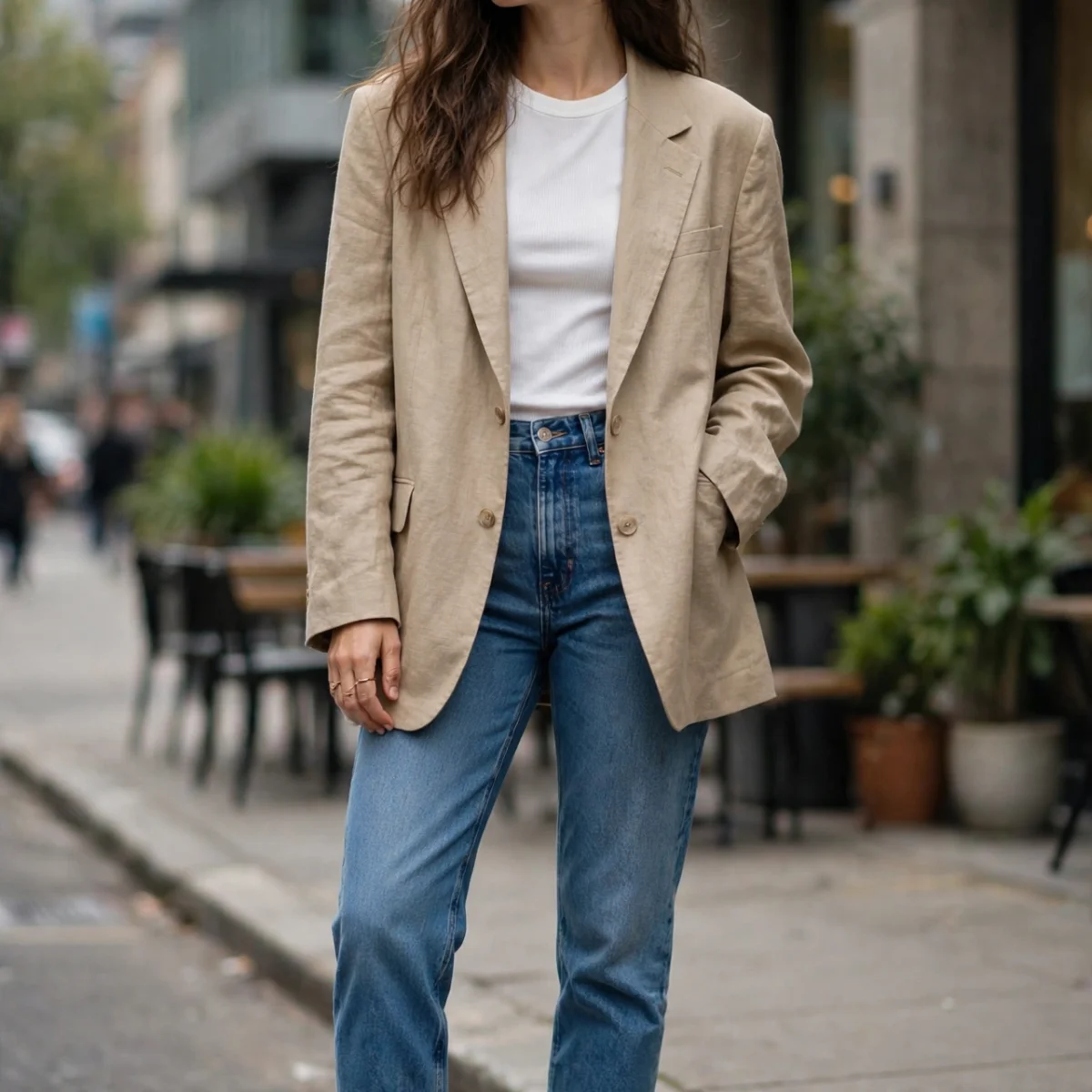
If you are new to the look, begin with a single oversized item and keep everything else close to your usual fit. An oversized button-down with straight-leg jeans and clean sneakers is an easy entry point. An oversized blazer over a fitted top and slim trousers reads polished rather than sloppy.
As you get comfortable, you can experiment with two relaxed pieces, provided they differ in texture or are separated by a defined waist or a structured shoe. For example, wide-leg trousers with a boxy cropped jacket works because the shorter jacket reveals the waistline and the trousers fall cleanly to the shoe.
Tucking Techniques That Define Your Shape
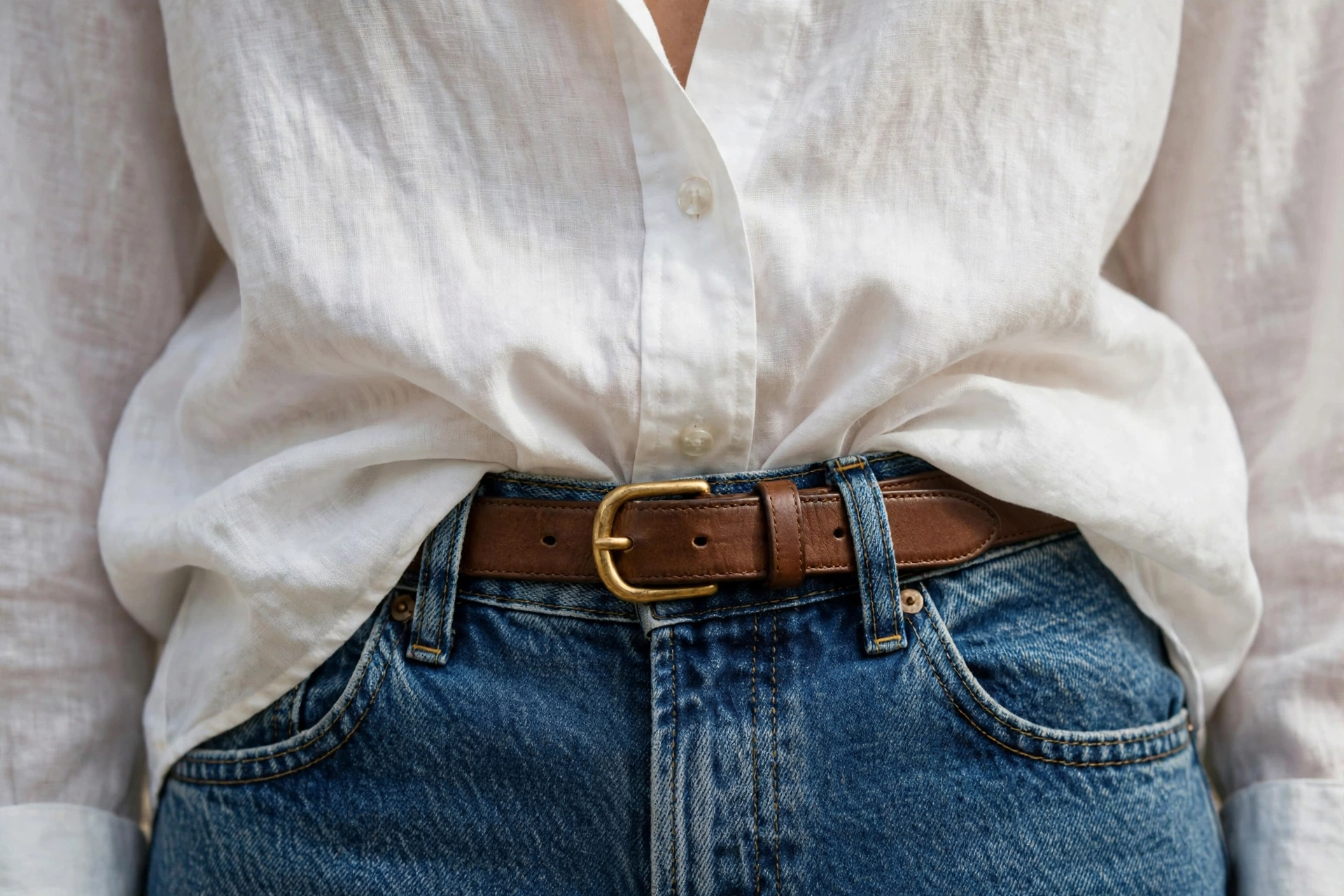
Tucking is the fastest way to make oversized tops look intentional. A full tuck of an oversized shirt into high-waisted trousers or jeans creates a clean waistline and shows off your proportions. It works especially well with oversized button-downs and boxy tees.
The front tuck, sometimes called the half tuck, is a more relaxed option. Tuck just the front of the shirt and leave the back loose. This adds shape while keeping the effortless feel of the oversized piece. It pairs well with jeans, chinos, and casual skirts.
For knitwear, try the sweater tuck: tuck the front hem of an oversized sweater into the waistband of your bottoms. The slight blousing over the tuck looks relaxed and styled at the same time. A belt over the tuck adds even more definition and turns the waist into a focal point.
Layering Without Adding Bulk
Layering is a natural partner for oversized clothing, but it needs a plan or you will add bulk in the wrong places. The key is varying lengths and keeping inner layers relatively slim.
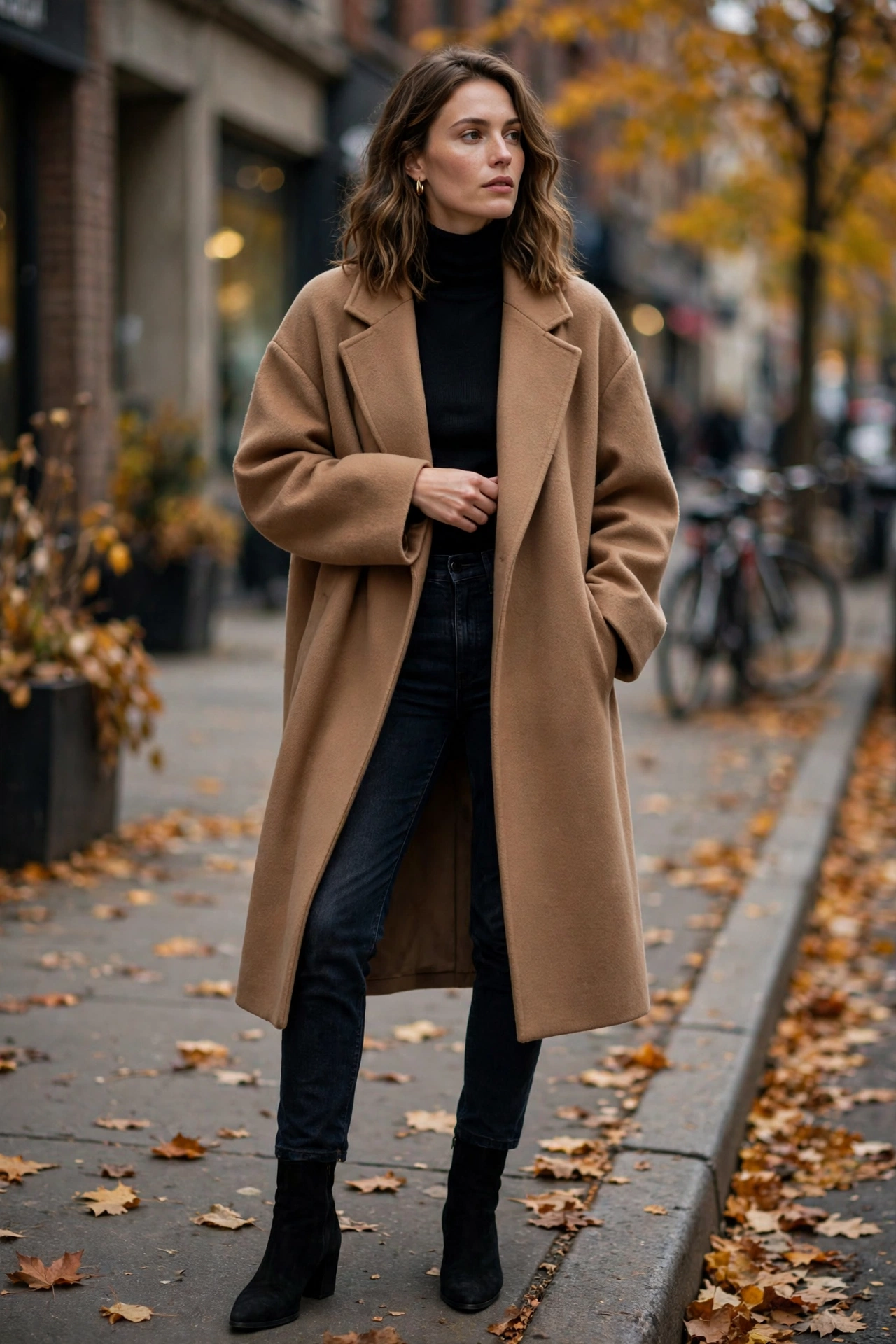
Try a long oversized coat over a fitted turtleneck and straight trousers: the slim base layer keeps the coat from overwhelming you. Or wear an oversized shirt open as a layer over a fitted tank or tee, letting the inner layer define your torso while the shirt adds relaxed movement.
Pay attention to where layers end. When a jacket, shirt, and top all end at the same hemline, the eye sees one big block. Stagger the hems so each layer is visible, which creates depth and makes the outfit look considered. Rolling or pushing up the sleeves of an oversized jacket also reveals your wrists, which visually slims the arms and adds a casual, rolled-up confidence.
Fit Contrasts: Playing With Proportion
Proportion play is where oversized styling gets fun. The classic formulas all rely on contrast:
- Oversized top, slim bottom: a boxy shirt or slouchy sweater with skinny or straight-leg jeans, leggings, or tailored trousers. This is the most flattering and foolproof combination.
- Fitted top, oversized bottom: a tucked-in fitted tee with wide-leg trousers or baggy jeans. The defined top keeps the volume below the waist looking deliberate.
- Oversized outerwear, streamlined base: a long coat or roomy blazer over a simple fitted outfit. The outer layer becomes the statement while the base keeps you grounded.
- Cropped and oversized: a boxy cropped jacket with high-waisted wide trousers. The exposed waistline breaks up the volume and adds shape.
Footwear finishes the proportion story. Chunky shoes can balance wide trousers, while sleek sneakers or boots keep an oversized top from dragging the outfit down. Ankle-baring hems with low-profile shoes also help by showing a sliver of skin, which breaks up large blocks of fabric.
Fabric and Drape Matter More Than You Think
Not all oversized pieces behave the same way. Fabric weight and drape determine whether a relaxed garment looks elegant or like a tent. Soft, fluid fabrics such as fine knits, washed cotton, linen, and silk blends fall gracefully and skim the body. Stiff, heavy fabrics in oversized cuts hold their shape outward and add visual bulk.
When shopping oversized, look for garments designed to be oversized rather than simply sized up. True oversized designs adjust the shoulder placement, sleeve width, and body proportions so the garment drapes correctly. A shirt that is just two sizes too big often has shoulders that droop past your arms and sleeves that cover your hands, which reads as sloppy rather than stylish.
Wrinkle-prone fabrics also work against the look. Oversized linen can look artfully rumpled, but an oversized shirt in a fabric that creases badly will look unkempt by midday. A quick steam or iron keeps relaxed fits looking intentional.
Oversized Outfit Ideas for Everyday
Weekend casual
An oversized graphic-free sweatshirt with straight-leg jeans and white sneakers. Do a front tuck to define the waist. Curious how sweatshirts differ from hoodies in casual outfits? Read this sweatshirt vs hoodie comparison before choosing your layer.
Smart casual
An oversized blazer in a neutral tone over a fitted black top, straight trousers, and loafers. Push up the sleeves slightly and add simple jewelry. The blazer brings structure while the relaxed cut keeps it modern.
Layered fall look
A long oversized wool-blend coat over a fitted turtleneck, slim dark jeans, and ankle boots. Keep the inner layers dark and simple so the coat is the star.
Summer relaxed
An oversized linen shirt worn open over a fitted tank, with tailored shorts or cropped trousers and flat sandals. Roll the sleeves to the elbow for a breezy, put-together feel.
Mistakes That Make Oversized Look Sloppy
- Wearing everything oversized at once. Without a single fitted or structured element, the outfit loses all shape.
- Ignoring the shoulders. Shoulder seams that fall far past your natural shoulder can look like borrowed clothes unless the garment is designed that way.
- Skipping the tuck. An untucked oversized top over relaxed bottoms hides your waist entirely. Even a partial tuck helps.
- Choosing the wrong shoes. Overly delicate shoes can disappear under wide hems, while enormous shoes plus enormous clothes can overwhelm a smaller frame. Aim for balance.
- Forgetting grooming and accessories. Relaxed clothes with polished hair, clean shoes, and one intentional accessory read as fashion. The same clothes without those details read as lazy.
Tailoring Tricks for Oversized Pieces
You do not need a tailor to refine oversized clothes, though a tailor can work wonders on an oversized blazer by nipping the waist or shortening sleeves. Simple at-home tricks go a long way: use a belt to cinch an oversized shirt dress or coat, knot the hem of an oversized tee at the side for shape, or cuff wide trousers once to show ankle and shoe.
Accessories also add intention. A structured handbag contrasts nicely with soft oversized clothing. A scarf or statement necklace draws the eye upward and breaks up a large expanse of fabric. Even sunglasses and a watch signal that the relaxed fit was a choice, not an accident. For more inspiration on building balanced casual wardrobes, browse more style guides on the DigitalGeekSpot homepage.
Frequently Asked Questions
How do I wear oversized clothes without looking sloppy?
Balance volume with structure: pair one oversized piece with fitted items, define your waist with a tuck or belt, and keep shoes clean and intentional. Fit contrast is the core principle.
Should I size up or buy clothes designed as oversized?
Buy pieces designed with an oversized cut when possible. They are proportioned for the look, with adjusted shoulders and sleeves. Simply sizing up often leads to drooping shoulders and sleeves that are too long.
Can petite people wear oversized clothing?
Yes. Choose one oversized piece rather than several, show some skin at the wrists or ankles to break up volume, and keep hems from pooling. Cropped oversized jackets and front tucks work particularly well.
What is the best way to tuck an oversized shirt?
A full tuck into high-waisted bottoms gives the cleanest line. A front or half tuck keeps things relaxed while still defining the waist. For sweaters, tuck just the front hem and let the rest blouse slightly.
Do oversized clothes suit formal occasions?
Oversized tailoring, like a relaxed blazer, can work for smart-casual events when the rest of the outfit is refined. Fully oversized casual pieces are best kept to casual settings.
How do I layer oversized clothes in winter?
Keep base layers slim, vary the lengths of each layer so hems do not stack, and let one statement outer layer carry the volume. A fitted turtleneck under an oversized coat is a reliable winter formula.