Business casual sits in one of the trickiest spots in menswear: more polished than weekend wear, but not as formal as a suit and tie. If you have ever stared into your closet wondering whether jeans, a blazer, or sneakers are acceptable, this business casual men guide is for you. Below you will find a clear definition, the building blocks of the dress code, outfit formulas for common office situations, and the classic do’s and don’ts that keep you looking sharp without overdressing.
The core idea is simple. Business casual means neat, intentional clothing that would be appropriate in a professional setting. Think chinos or tailored trousers instead of shorts, a collared shirt or knit polo instead of a graphic tee, and clean leather shoes instead of gym sneakers. Once you understand that middle ground, putting together outfits becomes almost automatic. For even more casual inspiration beyond office hours, take a look at these casual outfit ideas to see how the same principles of smart casual dressing translate across wardrobes.
What Business Casual Actually Means for Men
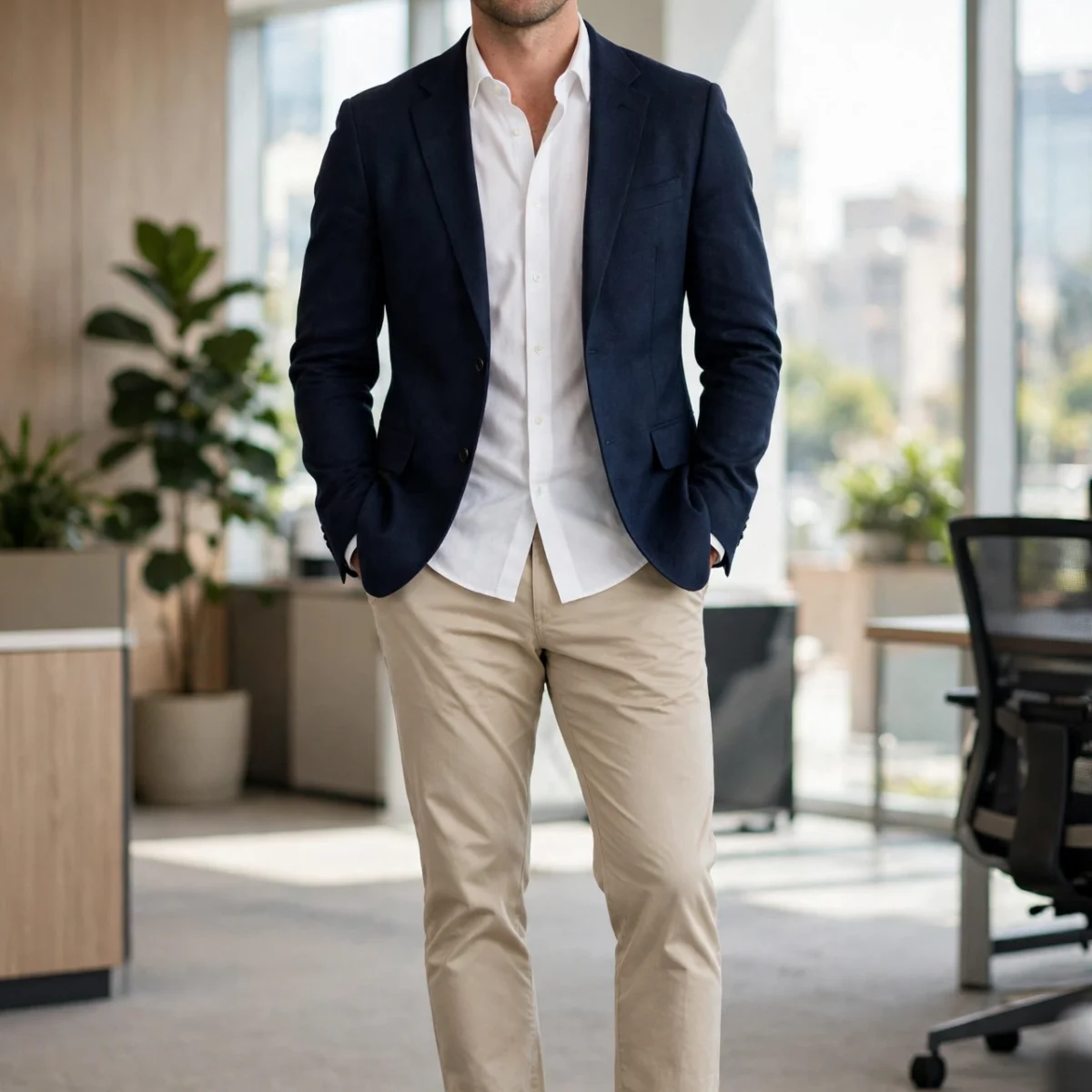
Business casual is not a uniform, it is a range. At the formal end, it can include a sports coat, dress shirt, and tailored trousers. At the casual end, it can mean a quality polo with dark chinos. The right spot on that spectrum depends on your industry, your office culture, and the occasion.
A helpful way to think about it: dress for the most formal person you might meet that day, then relax it by one step. If your day involves a client meeting, lean toward a blazer. If it is a normal desk day with no meetings, a pressed shirt and chinos are perfectly fine.
Industries also matter. Finance and law firms tend to interpret business casual closer to traditional suiting, while tech companies, agencies, and creative fields allow more room for dark denim and minimalist sneakers. When you are unsure, observe what senior colleagues wear and match that level.
The Building Blocks of a Business Casual Wardrobe
You do not need a huge closet to dress business casual well. A small set of versatile pieces covers nearly every situation.
Shirts
Oxford cloth button-downs are the workhorse. They look crisp untucked or tucked in, and they pair with everything from chinos to a blazer. Keep a few in white, light blue, and subtle patterns like micro-checks or thin stripes. Knit polos in solid colors work for warmer days or more relaxed offices. T-shirts, even plain ones, generally fall outside business casual unless your office is very casual.
Trousers
Chinos are the foundation. Stick to neutral colors like navy, khaki, gray, and olive. Wool-blend dress trousers or tailored cotton trousers step things up for meeting-heavy days. Dark, unwashed jeans can work in relaxed business casual environments, but they should be free of rips, fading, and distressing.
Layers
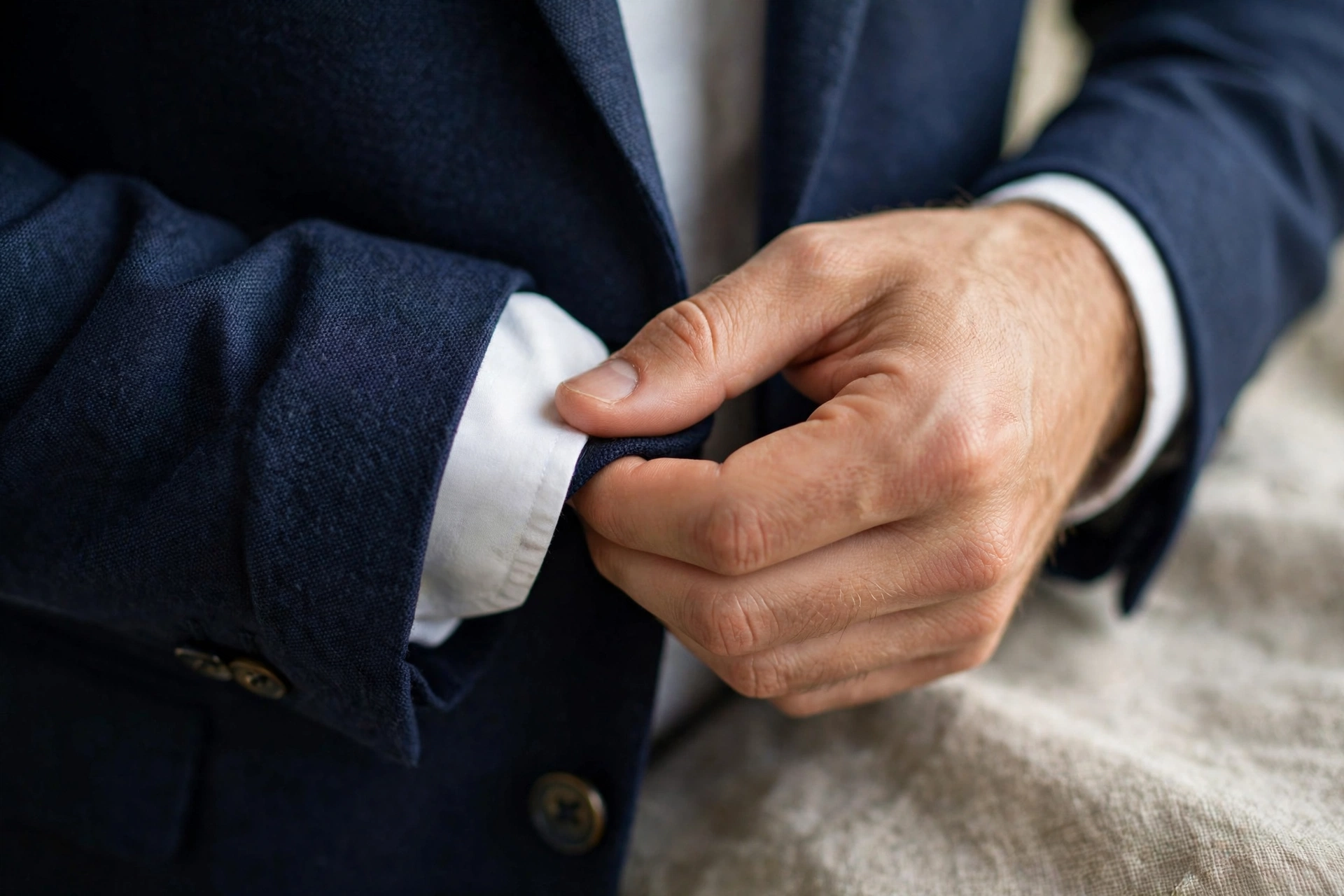
A well-fitting blazer or sports coat is the fastest way to look intentional. Unstructured blazers in navy or gray are flexible enough to wear over shirts or lightweight sweaters. In cooler weather, merino crew-neck or V-neck sweaters over a collared shirt create a classic business casual silhouette. Wondering how different knit layers compare? This breakdown of sweatshirt vs hoodie explains which styles work in smart settings and which belong to the weekend.
Shoes
Leather loafers, derbies, and Chelsea boots are safe choices. Clean, minimal leather sneakers in white, black, or gray are acceptable in many modern offices, but gym sneakers with bright colors and athletic soles usually cross the line. Shoes should always be clean and in good repair, since worn footwear undermines an otherwise polished outfit.
Business Casual Outfit Formulas
When you are short on time, formulas remove the guesswork. Combine one piece from each category and you will be office-ready.
The everyday office formula
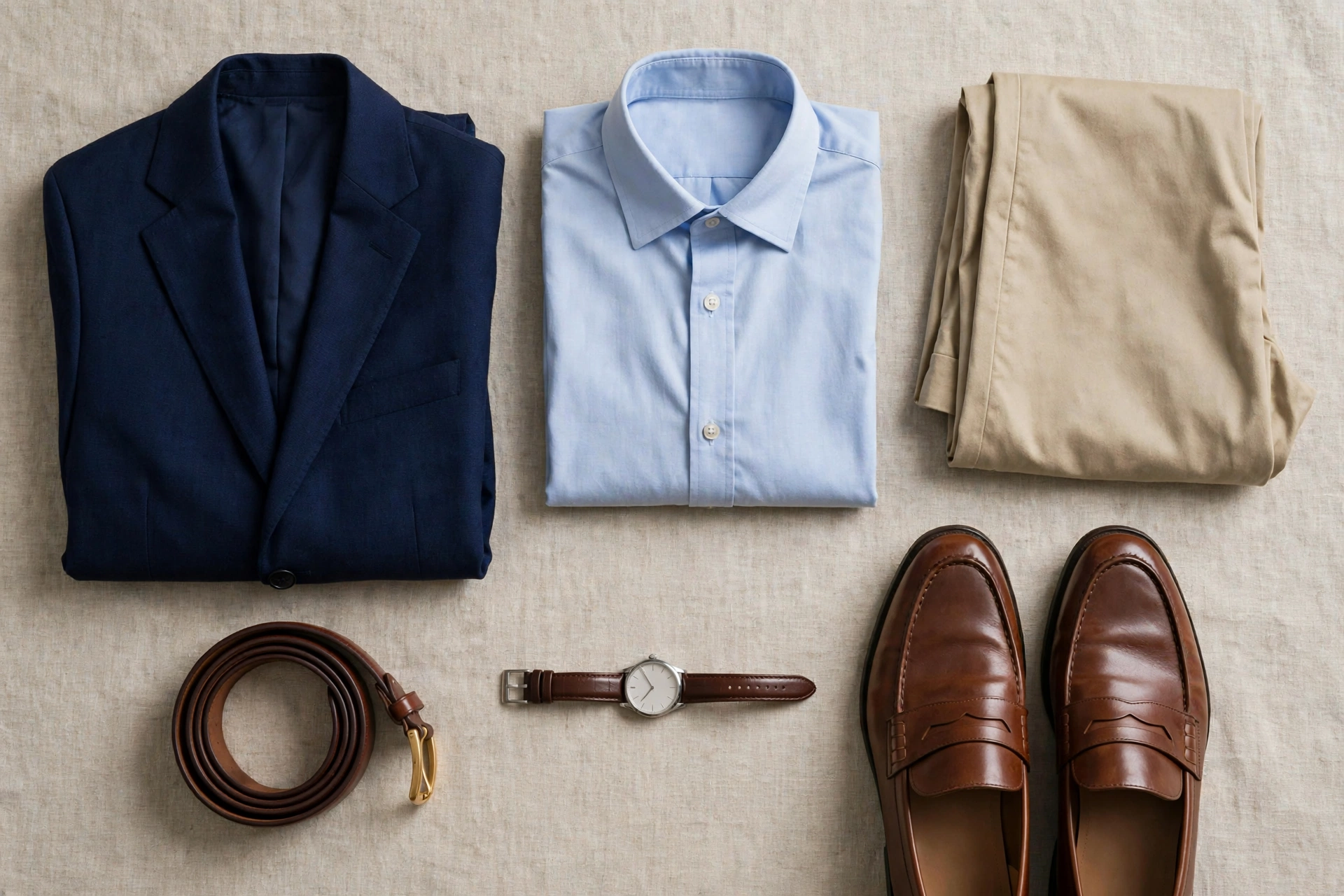
Light blue oxford shirt, tucked into navy chinos, with brown leather loafers. Add a brown leather belt to tie it together. This works in almost every business casual office and requires zero thought in the morning.
The meeting-day formula
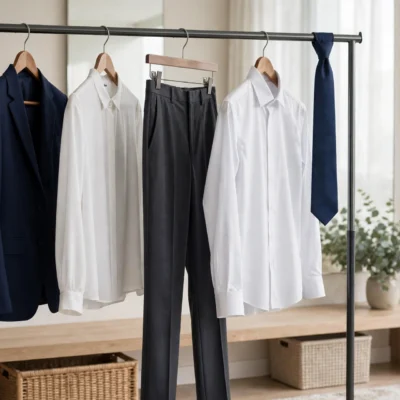
White dress shirt, charcoal trousers, and a navy unstructured blazer. Finish with dark brown derby shoes. The blazer signals effort without the formality of a full suit, making it ideal for client presentations and important internal meetings.
The warm-weather formula
A navy knit polo with stone or khaki chinos and suede loafers worn without socks. Roll-free, breathable, and still clearly professional. Avoid shorts and sandals in the office unless your workplace explicitly allows them.
The cool-weather formula
A merino crew-neck sweater in burgundy, forest green, or gray over a light blue oxford shirt, with dark chinos and Chelsea boots. The visible shirt collar adds structure, and the sweater keeps the outfit from feeling stiff.
The casual Friday formula
Dark indigo jeans with no distressing, a white or chambray button-down shirt, and clean minimal sneakers or loafers. Throw on an unstructured blazer if you want to keep it from reading too casual. This is as far into casual territory as business casual should go.
Business Casual Do’s
- Fit matters most. Clothes that skim the body without pulling or billowing look instantly more professional. Even affordable pieces look good when they fit well.
- Tuck in when layering. A tucked shirt under a blazer or sweater creates a clean line. Untucked shirts are fine on their own only if the hem hits mid-fly and the shirt is not overly long.
- Invest in shoes and a belt. People notice footwear. One good pair of loafers and one pair of derbies cover most offices.
- Keep colors coordinated. Navy, gray, white, and brown are nearly impossible to mismatch. Build around neutrals, then add one accent color at a time.
- Iron or steam. Wrinkles read as careless. A handheld steamer takes two minutes and transforms how your clothes look.
Business Casual Don’ts
- No graphic tees or slogan shirts. Anything with large logos, jokes, or images belongs to leisure time.
- No shorts, flip-flops, or gym wear. Athletic shorts, track pants, and running shoes are not business casual, even in relaxed offices.
- No distressed or ripped denim. If jeans are allowed, they should be dark, clean, and free of fading or tears.
- Don’t overdress either. A full suit with a tie in a smart-casual office can make you look out of touch with the culture. Match the room.
- Avoid strong fragrance. Keep cologne subtle. In shared office spaces, less is more.
Common Business Casual Mistakes to Avoid
The most frequent mistake is treating business casual as “anything goes.” Showing up in a wrinkled polo and cargo shorts technically skips both the business and the casual requirement of looking put-together. The second most common mistake is the opposite: wearing a full suit every day in an office where nobody else does, which can signal you misread the environment.
Another subtle error is neglecting grooming and details. Trimmed nails, neat hair, a clean shave or maintained beard, and a watch or simple accessories complete the picture that clothes alone cannot. Small details like a tucked shirt, a proper belt, and polished shoes are what separate business casual from simply casual.
Finally, avoid dressing for the job you have rather than the setting you are in, when those differ. If your role is casual but you have a client visit, adjust upward for the day. Versatile layers like a blazer you keep at the office make these transitions easy. You can find more style guides on the DigitalGeekSpot homepage to keep building a wardrobe that adapts to any dress code.
Frequently Asked Questions
Are jeans business casual for men?
It depends on the office. In relaxed business casual environments, dark, unwashed jeans without rips or fading are usually acceptable, especially on casual Fridays. In traditional offices, stick to chinos and trousers. When in doubt, choose chinos.
Do men need to wear a tie for business casual?
No. Business casual does not require a tie. If you want to look sharper for a meeting, add a blazer rather than a tie. A tie generally pushes the outfit into business formal territory.
Are sneakers allowed in business casual?
Clean, minimalist leather sneakers in neutral colors are accepted in many modern offices. Athletic running shoes, bright colors, and chunky soles are not. Loafers and derbies remain the safer choice.
Can I wear a polo shirt as business casual?
Yes. A well-fitting polo in a solid color, made from pique cotton or a knit fabric, is a classic business casual option. Avoid oversized, faded, or logo-heavy polos.
What colors work best for business casual wardrobes?
Navy, gray, white, khaki, and brown form a reliable base that mixes easily. Once you have the neutrals covered, add muted accents like olive, burgundy, or light blue.
How do I know if my office is business casual or smart casual?
Business casual leans more professional: collared shirts, chinos, blazers, leather shoes. Smart casual is a step more relaxed and fashion-forward, allowing dark jeans, minimalist sneakers, and more personal style. Check your company handbook or mirror what managers wear.