

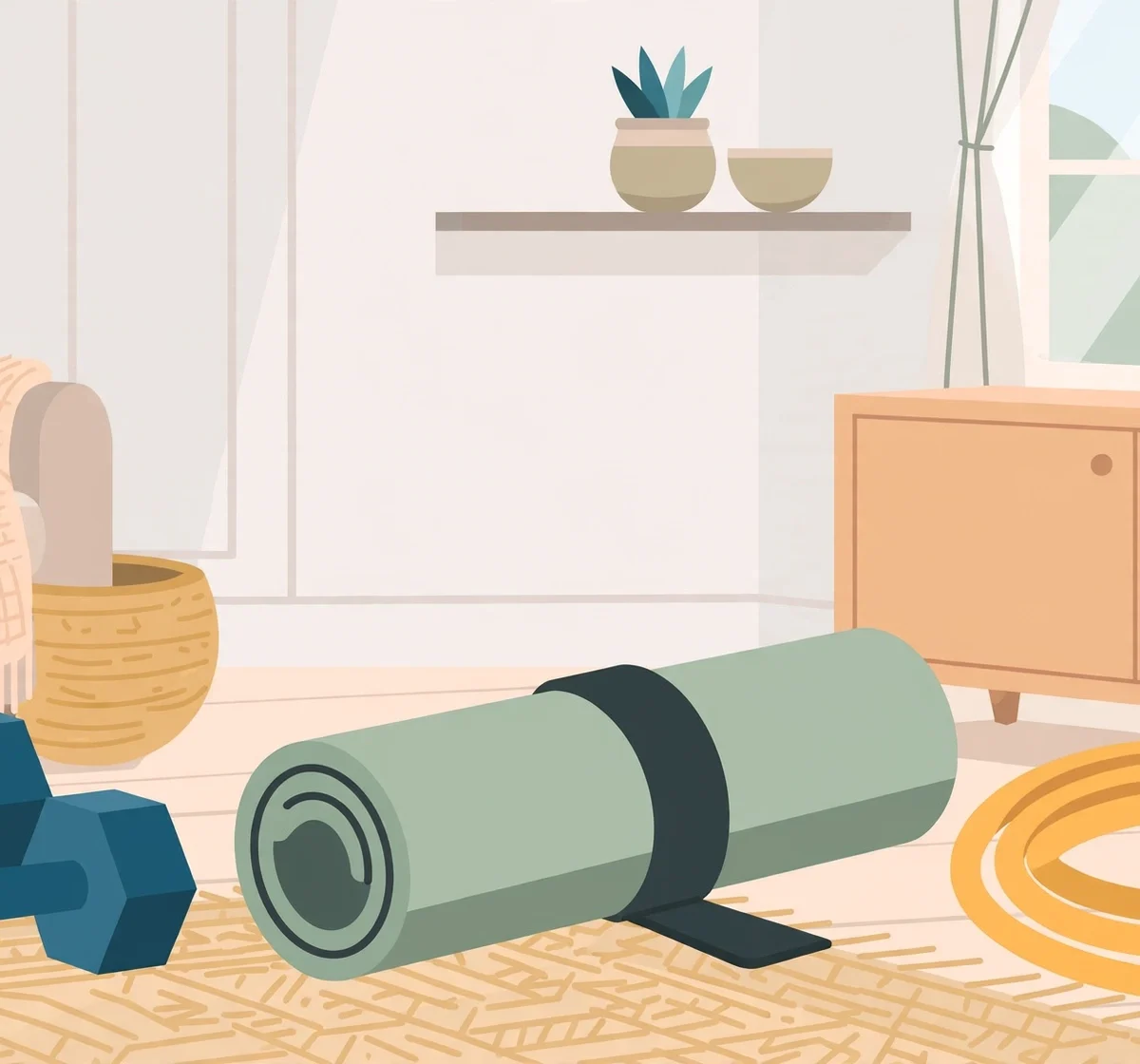
You do not need a gym membership or a room full of machines to get fit. A handful of simple, affordable tools covers cardio, strength, and flexibility training right in your living room. The quick answer to what beginners should buy: start with three essentials (an exercise mat, a set of resistance bands, and a pair of dumbbells or adjustable dumbbells), add a jump rope or kettlebell for cardio and variety, and buy more only after you have trained consistently for a few months.
This guide breaks down the best home workout equipment for beginners, what each piece actually does for you, approximate budget ranges, and a sample routine you can start this week. Note: check with a health professional before starting a new exercise program, especially if you have any heart, joint, or medical condition.
| Equipment | What it trains | Space needed | Typical beginner budget |
|---|---|---|---|
| Exercise mat | Floor work, core, stretching, yoga | Rolls up, stores anywhere | Low |
| Resistance bands | Full-body strength, mobility | Fits in a drawer | Low |
| Dumbbells (fixed or adjustable) | Strength, pressing, pulling, carries | Small corner | Low to mid |
| Jump rope | Cardio, coordination, calorie burn | Needs ceiling clearance | Very low |
| Kettlebell | Strength, conditioning, swings | Small corner | Low |
| Stability ball | Core, balance, posture | Bulky when inflated | Low |
The golden rule: start with less, not more
Fitness experts and beginner guides agree on one point: the best equipment is the equipment you will actually use. Beginners do not need a bench, a squat rack, or a cardio machine to get results. Two or three versatile pieces that you keep within reach beat an expensive setup collecting dust. Buy your first pieces, train with them for eight to twelve weeks, and let your routine tell you what to add next. If motivation dips, remember that a short twenty-minute session with your bands counts; the habit of showing up matters more than the length of any single workout.
1. Exercise mat: the foundation
A quality mat cushions your joints for floor exercises and gives you a non-slip surface for planks, push-ups, stretching, and core work. Look for a mat at least 4 to 6 millimeters thick with a grippy texture. It is the cheapest piece of gear with the most daily uses, and it also makes yoga or Pilates practice far more comfortable. If floor space is tight, choose a mat that rolls up tightly and stores behind a door.
2. Resistance bands: the most versatile starter tool
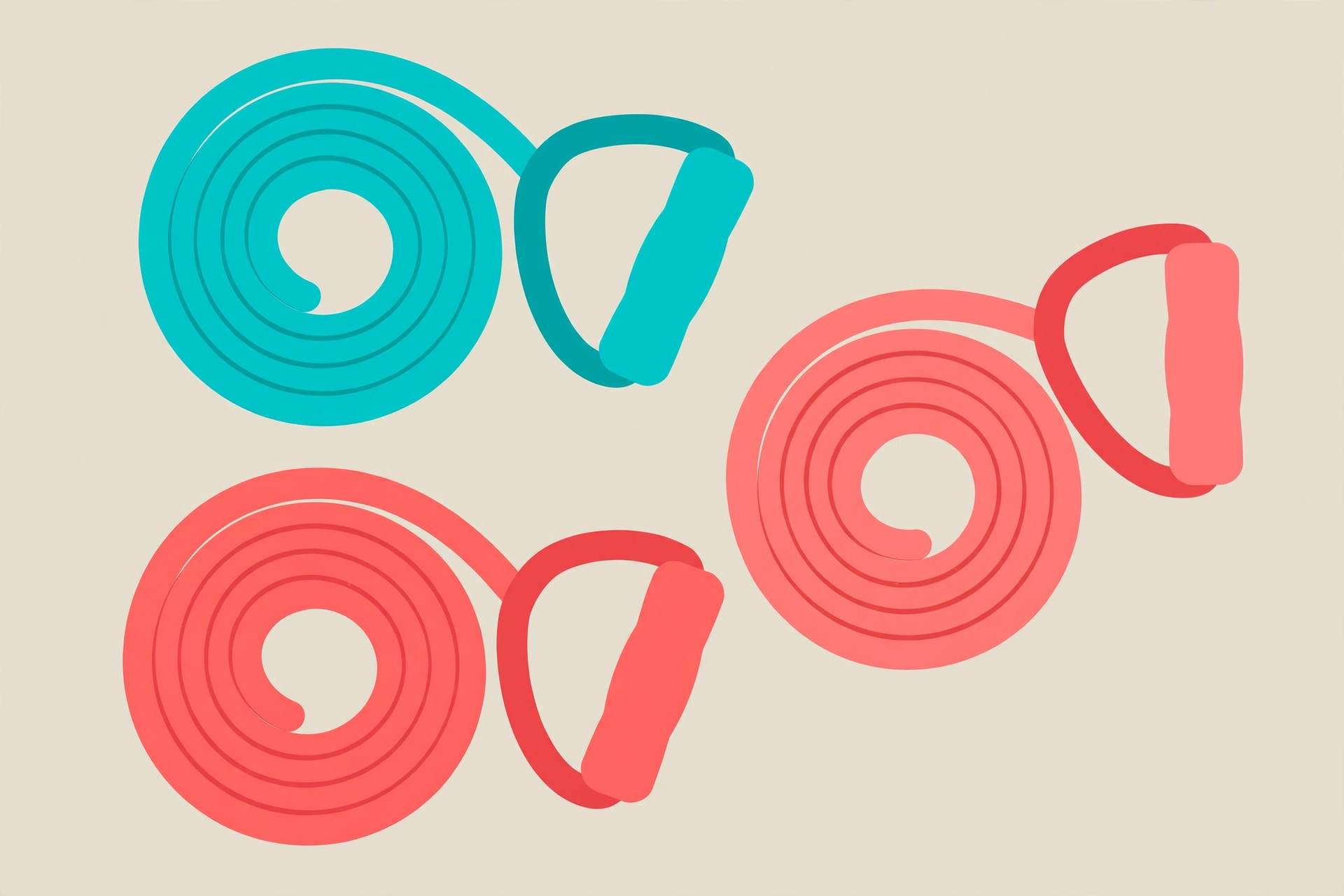
Resistance bands are consistently recommended as the single best first purchase for beginners. One set of loop bands or tube bands with different resistance levels lets you train every major muscle group: chest presses, rows, squats, shoulder presses, glute bridges, and lateral walks. Bands are gentle on joints, pack into a bag, and cost less than a single gym session. Fabric loop bands are popular for lower-body work because they do not roll or pinch skin, while tube bands with handles suit upper-body pressing and pulling.
3. Dumbbells: simple, proven strength training
Dumbbells cover the classic strength movements, from goblet squats and floor presses to rows and overhead presses. Beginners can start with a light pair of fixed-weight dumbbells, but adjustable dumbbells are the smarter long-term buy: one pair replaces a whole rack as you get stronger, and they tuck under a bed or in a closet. Start light enough that you can perform 10 to 12 repetitions with good form, and increase gradually.
For proper form guidance on the core lifts, see our guide on how to start strength training for beginners, which walks through the fundamental movements these weights are made for.
4. Jump rope: cheap cardio that works
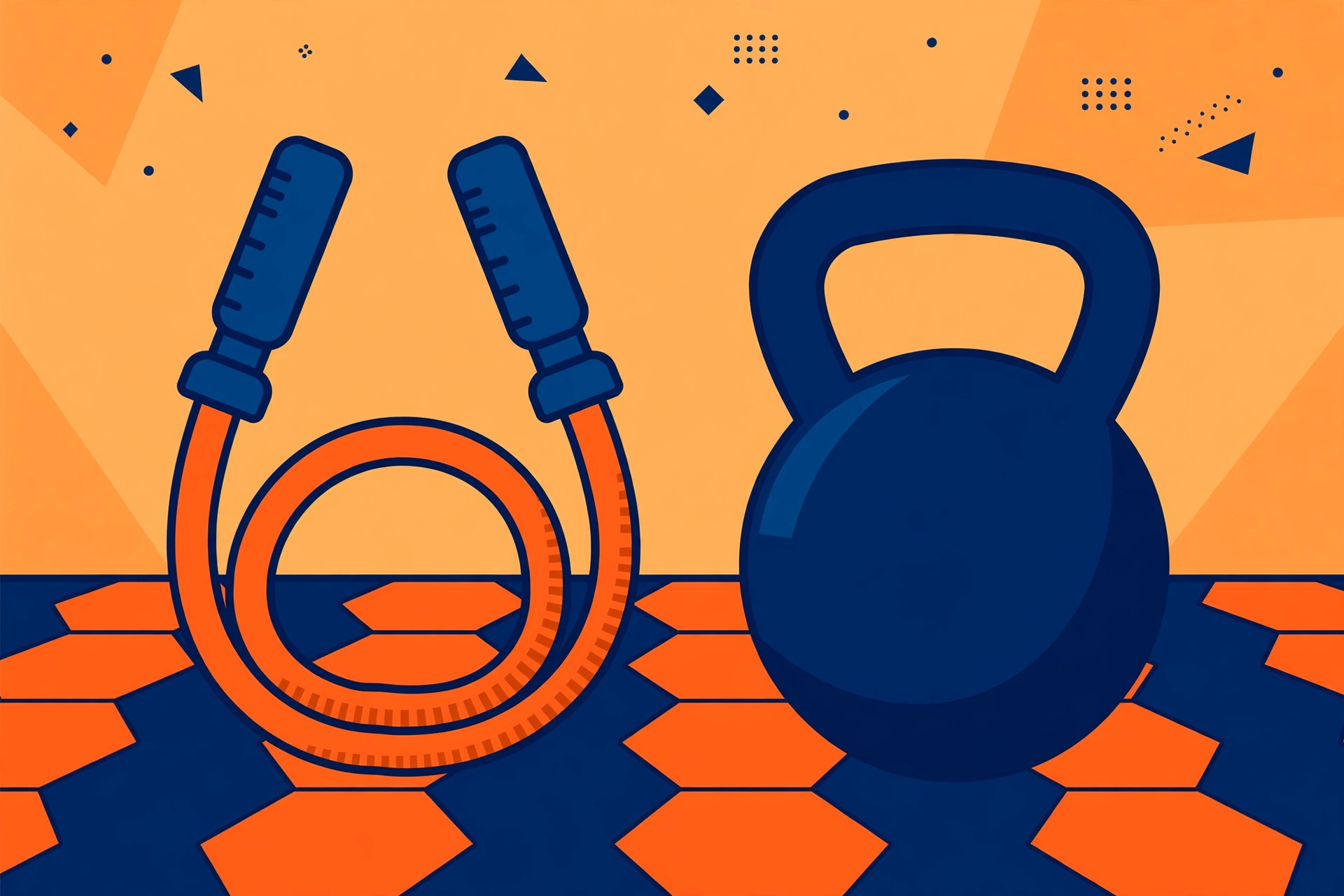
Jumping rope delivers intense cardiovascular training in very little time and improves coordination and footwork. It needs more ceiling clearance than most indoor spaces offer, so it is best for garages, patios, or driveways. Ten minutes of rope work makes a legitimate cardio session, and it pairs well with strength circuits: alternate one minute of rope with one strength exercise for a full workout.
5. Kettlebell: strength plus conditioning
A single kettlebell adds moves you cannot easily do with dumbbells, especially swings, goblet squats, and Turkish get-ups, which blend strength and cardio. Beginners usually start with one light kettlebell and learn the hip-hinge swing first, since good form matters more than weight here. A kettlebell also anchors well against a wall for rows and deadlifts.
6. Stability ball: core and posture
A stability ball challenges your core and balance during exercises like ball crunches, planks, and hamstring curls, and it doubles as an active seat if you work from home. The tradeoff is size: it takes up real space even when you are not using it. If you are tight on space, bands and bodyweight moves cover most of the same ground.
What you can skip (for now)
- Big cardio machines: treadmills, ellipticals, and rowers are expensive and bulky. Bodyweight circuits, a jump rope, or a used exercise bike cover cardio for far less.
- Full weight benches and racks: overkill until you have trained consistently for months.
- Single-purpose gadgets: ab wheels, grip trainers, and vibration plates can wait. Master the basics first.
- Duplicate equipment: you do not need both bands and light dumbbells covering the same movements on day one. Pick one, learn it, then expand.
A simple beginner routine with your first three tools
Do this full-body routine three times per week with at least one rest day between sessions. Keep rest periods of 60 to 90 seconds between sets:
| Exercise | Equipment | Sets x reps |
|---|---|---|
| Banded glute bridge | Band plus mat | 3 x 15 |
| Dumbbell goblet squat | Dumbbell | 3 x 12 |
| Dumbbell floor press | Dumbbells plus mat | 3 x 12 |
| Banded lateral walk | Band | 3 x 12 each side |
| Dumbbell bent-over row | Dumbbells | 3 x 12 |
| Plank hold | Mat | 3 x 30 seconds |
| Dumbbell bicep curl | Dumbbells | 3 x 12 |
Finish with five minutes of gentle stretching for the muscles you trained. Track every session in a notebook or phone app: exercise, weight or band color, sets, and reps. Seeing the numbers improve over four weeks is one of the strongest motivators for staying consistent.
Caring for your equipment
Beginner gear lasts for years with minimal care. Wipe down your mat after sweaty sessions and let it air-dry before rolling it up, since trapped moisture causes odors and breaks down the surface. Inspect resistance bands for small nicks or tears before each workout and replace any band that looks damaged, because a snapped band under tension can sting. Store dumbbells on a flat surface where they cannot roll onto toes or floors, and keep metal handles dry to prevent rust. These small habits keep your home gym safe and ready, which removes one more excuse to skip a session.
Setting up your workout space
You need less room than you think: a clear area about the size of a yoga mat plus arm’s reach in each direction covers most dumbbell and band work. Keep your equipment visible, not boxed in a closet, because gear you see is gear you use. Good ventilation, a water bottle, and a towel complete the setup. If you live in a flat, choose low-impact moves and skip jumping exercises late at night out of courtesy to neighbors.
How much should a beginner spend?
A complete starter setup (mat, resistance bands, and light dumbbells) typically costs less than a few months of gym membership, and many beginner guides put the total in a modest double-digit range when shopping smart. Adjustable dumbbells cost more up front but replace many fixed pairs. The key point: you do not need to spend much to get a genuinely effective home gym. Spend on quality for the items you use daily, and buy budget versions of anything experimental. A little planning up front keeps your home gym cheap, compact, and genuinely useful for years.
Combining home equipment with other training
Home equipment training pairs well with outdoor cardio and skill sports. Many beginners add cycling or running for aerobic fitness alongside their strength days. Our guide on how to improve running stamina for beginners explains how to build that aerobic base safely, and court games like the ones in pickleball rules for beginners make a fun active rest day. Cross-training keeps motivation high and develops fitness more evenly than one activity alone.
At DigitalGeekSpot we publish beginner-friendly fitness guides across many sports, so whether your next step is strength, cardio, or a new game, you will find a practical starting plan.
FAQs
What is the single best piece of home workout equipment for a beginner?
Resistance bands. They are the most versatile, affordable, and space-efficient option, they train every major muscle group, and they are gentle on joints while still challenging your muscles through a full range of motion.
Are resistance bands as effective as weights?
For beginners, yes in practical terms. Bands provide variable resistance that increases as you stretch them, and multiple fitness guides confirm they build strength across all major muscle groups. Many people use bands alongside dumbbells rather than choosing one exclusively.
Can I build muscle working out at home without a gym?
Absolutely. Progressive overload (gradually increasing reps, sets, resistance, or difficulty) is what builds muscle, and dumbbells, bands, kettlebells, and bodyweight exercises all provide it. Consistency over months matters far more than having a commercial gym.
How much space do I need for a home gym?
A mat-sized clear area with arm’s reach around you covers most beginner dumbbell and band exercises. Only bulky items like benches, racks, and cardio machines need dedicated space, which is another reason to start small.
How often should beginners work out at home?
Three full-body sessions per week with rest days between is a solid starting point. Add light activity, walking, or stretching on off days if you feel good, and take a full rest day whenever fatigue lingers.
When should I buy more equipment?
After eight to twelve weeks of consistent training. By then you will know which movements you enjoy, which muscles need more challenge, and whether you want cardio gear, heavier weights, or mobility tools. Buy to solve a specific need, not to fill a cart.
Related Articles
- How to Start Strength Training for Beginners
- How to Improve Running Stamina for Beginners
- Pickleball Rules for Beginners
- Best Sports for Kids Confidence
Verdict
The best home workout equipment for beginners is simple: an exercise mat, resistance bands, and dumbbells, with a jump rope or kettlebell added for cardio and variety. That modest setup covers strength, conditioning, core, and flexibility in a corner of your home for far less than a gym membership. Start with the three essentials, follow the routine above three times a week, track your progress, and expand only when your training outgrows what you own. Check with a health professional before starting any new exercise program, then get moving.


1 Comment