If your lower back aches by the end of the day, you are not alone. Lower back pain is one of the most common complaints among adults, and much of it is linked to long hours of sitting, weak core muscles, and tight hip flexors. The good news is that you do not need a gym membership or expensive equipment to start feeling better. A handful of simple, well-chosen exercises done at home can relieve tension, strengthen the muscles that support your spine, and help prevent flare-ups.
Quick answer: The best exercises for lower back pain at home are gentle, core-stabilizing movements such as the cat-cow stretch, knee-to-chest stretch, pelvic tilt, glute bridge, bird-dog, and child’s pose. Done 10 to 15 minutes a day, these moves improve spinal mobility, strengthen the deep core and glute muscles, and reduce stiffness without straining the back.
Please note: this article is for general information only and is not medical advice. If your back pain is severe, came from an injury, or has lasted more than a few weeks, see a qualified health professional before starting any exercise program.
Best Lower Back Pain Exercises at Home: Quick Comparison
| Exercise | What It Targets | Difficulty | Suggested Dose |
|---|---|---|---|
| Cat-Cow Stretch | Spinal mobility, mid and lower back | Very easy | 10 slow rounds |
| Knee-to-Chest Stretch | Lower back, glutes | Very easy | 30 seconds per leg, 2-3 rounds |
| Pelvic Tilt | Deep abdominal muscles | Easy | 2-3 sets of 10-12 reps |
| Glute Bridge | Glutes, hamstrings, lower back | Easy | 2-3 sets of 10-12 reps |
| Bird-Dog | Core stability, balance | Easy | 8-10 reps per side, 2-3 sets |
| Child’s Pose | Lower back stretch, hips | Very easy | Hold 30-45 seconds |
| Dead Bug | Deep core without spinal load | Easy | 8 reps per side, 2-3 sets |
| Seated Spinal Twist | Thoracic spine, obliques | Very easy | 20 seconds per side |
Why Home Exercises Work for Lower Back Pain
Most lower back pain is nonspecific, which means it is not caused by a single identifiable injury or disease. Research consistently shows that movement, rather than bed rest, is the right response. Gentle exercise keeps blood flowing to the spinal structures, prevents the muscles around the spine from stiffening up, and gradually builds the strength needed to support good posture.
The two main things a home routine should deliver are mobility (keeping the spine and hips moving freely) and stability (teaching the deep core and glute muscles to support the lumbar spine). The exercises below cover both, and none of them require more than a mat or a carpeted floor. If you want to build a fuller routine over time, our guide on home workout equipment for beginners covers low-cost gear that pairs well with bodyweight moves.
The 8 Best Exercises for Lower Back Pain at Home
1. Cat-Cow Stretch
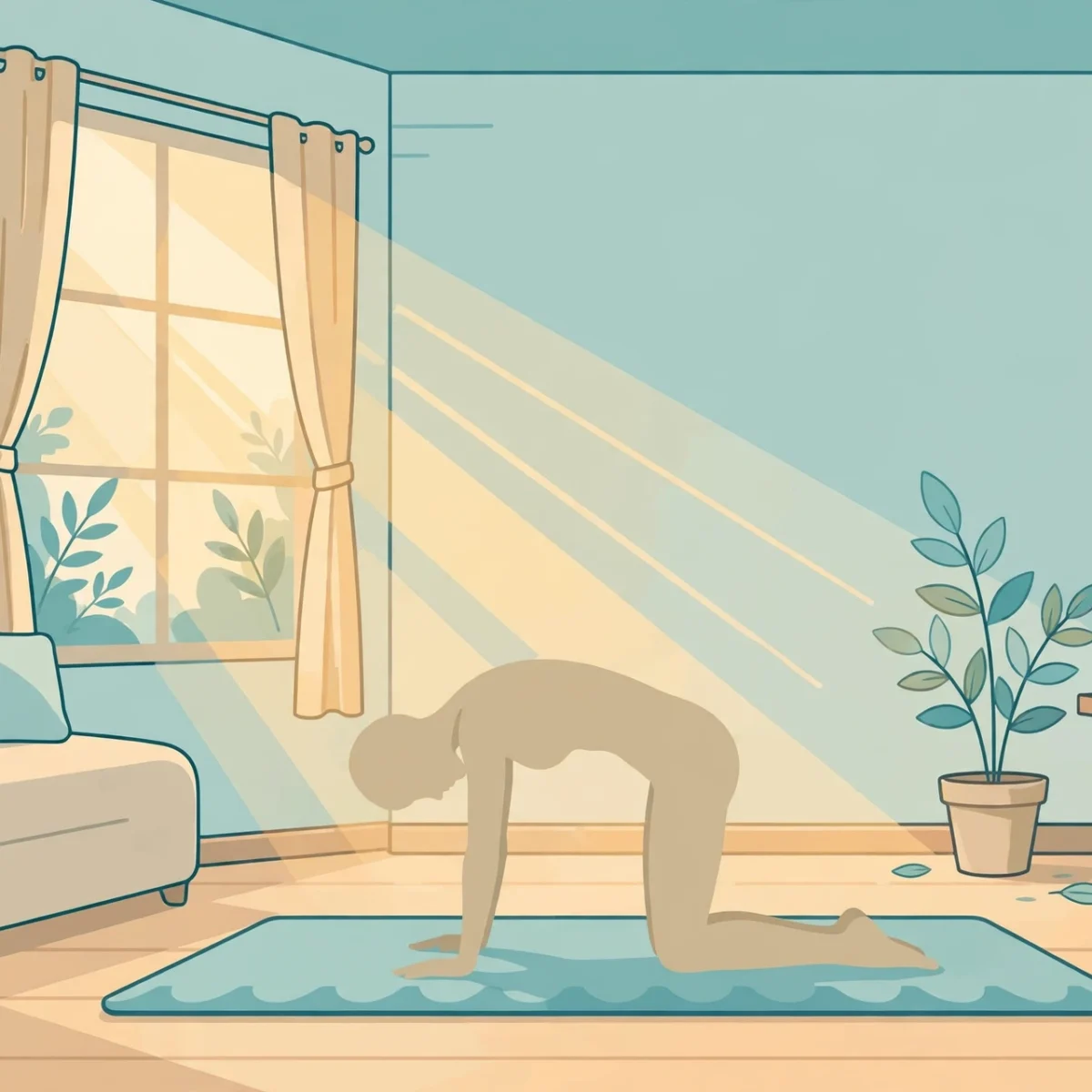
Start on all fours with your hands under your shoulders and knees under your hips. Inhale as you let your belly drop toward the floor and lift your head slightly (cow pose). Exhale as you round your back upward like a cat, tucking your chin. This wave-like motion lubricates the spinal joints and releases tension that builds up from sitting.
- How many: 10 slow rounds, morning and evening
- Tip: Keep the movement smooth and breathing relaxed; there should be no sharp pain at any point
2. Knee-to-Chest Stretch
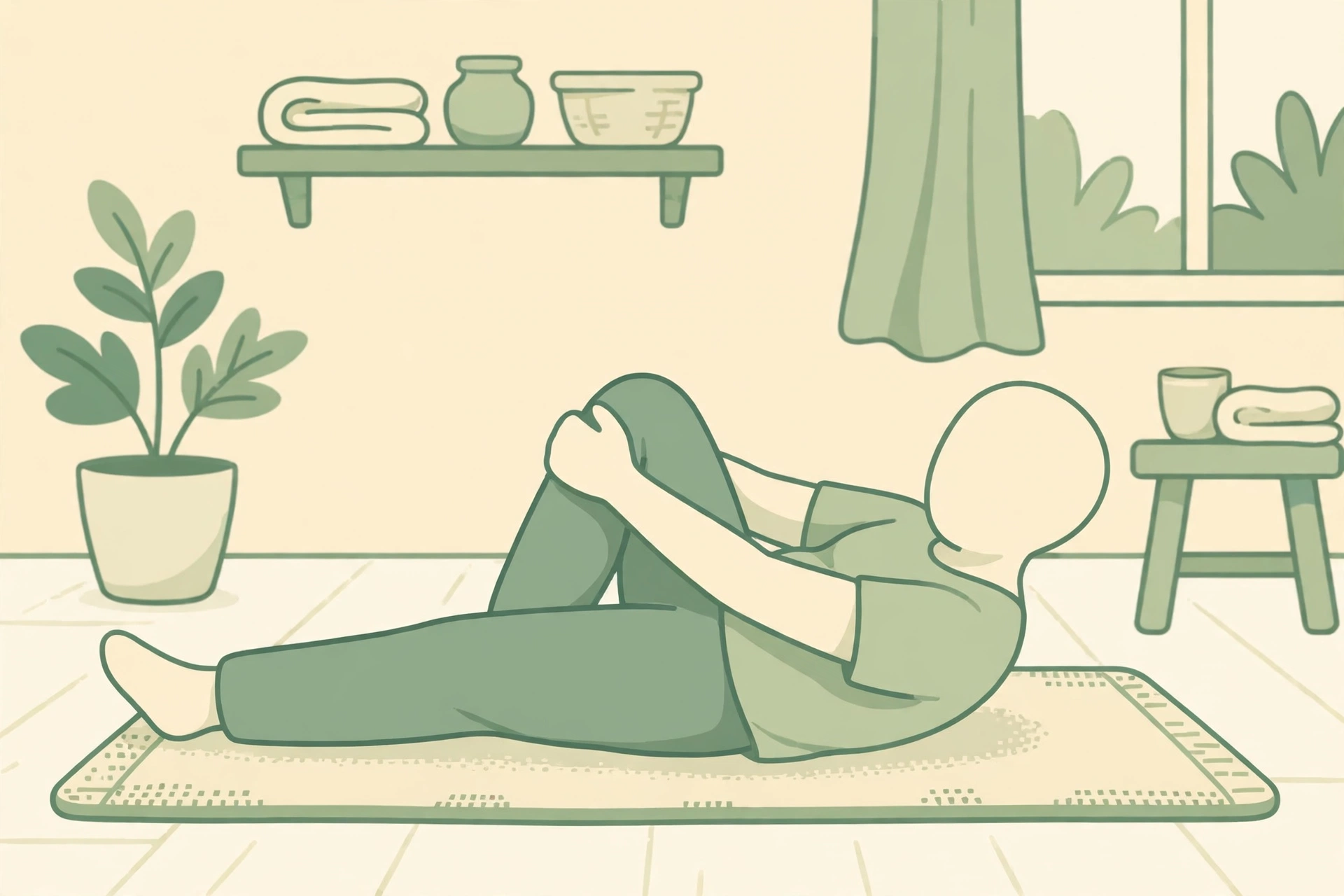
Lie on your back with both legs extended. Draw one knee toward your chest and hold it there with both hands, keeping the other leg flat on the floor. You should feel a gentle stretch through the lower back and the back of the thigh. Repeat with the other leg.
- How many: Hold 30 seconds per leg, 2-3 rounds
- Tip: If pulling one knee is hard on your hands, clasp below the knee instead
3. Pelvic Tilt
Lie on your back with knees bent and feet flat on the floor. Gently tighten your abdominal muscles and press the small of your back into the floor, tilting your pelvis upward. Hold for 5 seconds, then release. This wakes up the deep transverse abdominal muscles that act like a natural brace for the spine.
- How many: 2-3 sets of 10-12 reps
- Tip: The movement is small; your back should stay in contact with the floor throughout
4. Glute Bridge
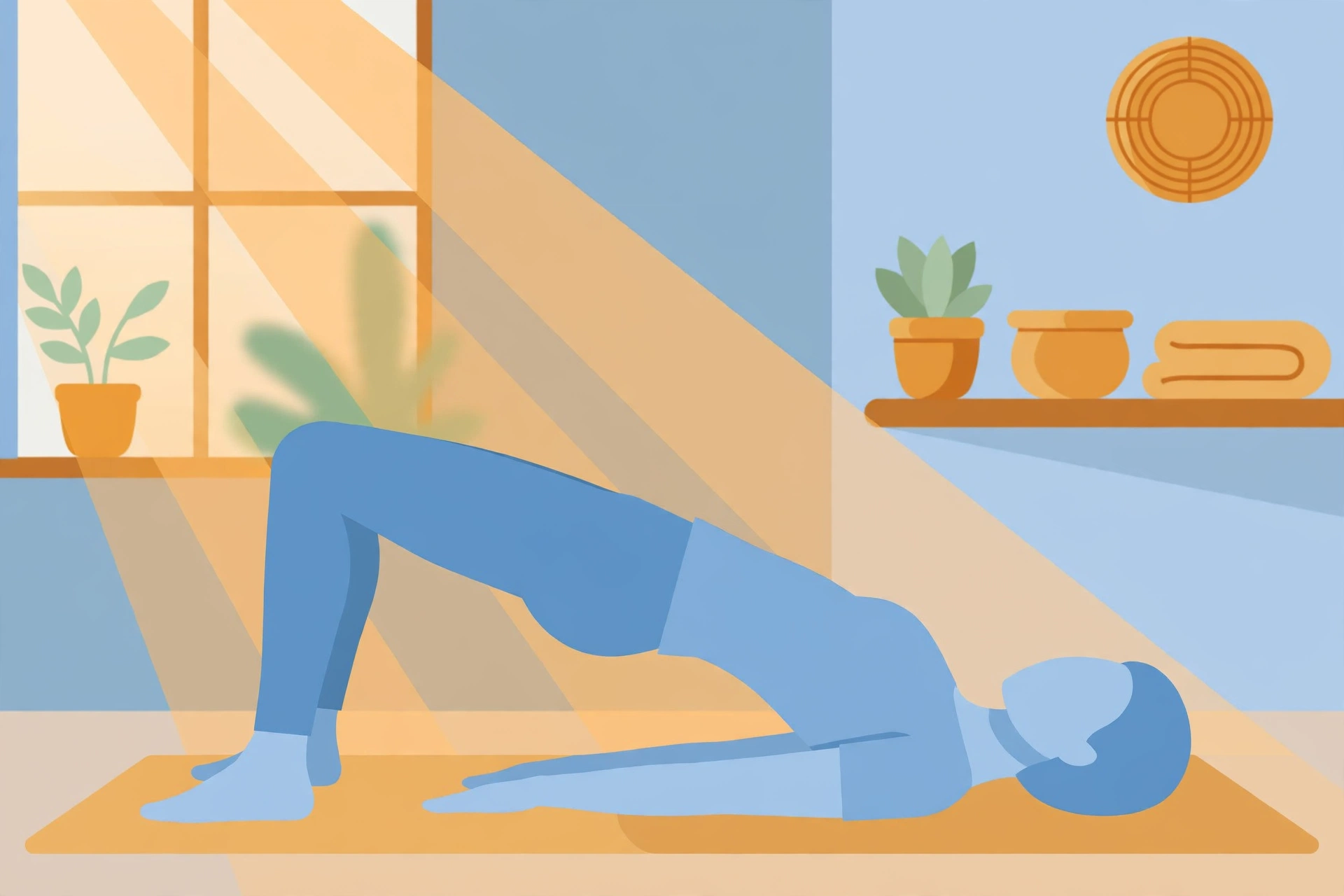
From the same starting position as the pelvic tilt, press through your heels and lift your hips until your body forms a straight line from knees to shoulders. Squeeze your glutes at the top and lower slowly. Weak glutes force the lower back to do more work than it should, so this is one of the most important exercises on the list.
- How many: 2-3 sets of 10-12 reps, holding 3 seconds at the top
- Tip: Do not over-arch the back at the top; keep ribs tucked down
5. Bird-Dog
On all fours, extend your right arm forward and your left leg back at the same time, keeping your hips level and your back neutral. Hold for 5 seconds, return to the start, and repeat on the other side. This trains core stability without loading the spine, which makes it safe for most people with back pain.
- How many: 8-10 reps per side, 2-3 sets
- Tip: Imagine balancing a glass of water on your lower back; if your hips rock, slow down
6. Child’s Pose
Kneel on the floor, sit your hips back toward your heels, and stretch your arms forward along the floor. Rest your forehead on the mat and breathe deeply. This classic yoga position gently stretches the lower back and hip area and is a perfect rest position between harder exercises.
- How many: Hold 30-45 seconds, repeat as needed
- Tip: Spread your knees wider if the stretch feels too intense on the lower back
7. Dead Bug
Lie on your back with arms pointing toward the ceiling and knees bent at 90 degrees. Slowly lower your right arm overhead and extend your left leg toward the floor without letting your lower back arch. Return and switch sides. Despite the funny name, this is one of the best deep-core exercises because it trains the abs while the spine stays neutral.
- How many: 8 reps per side, 2-3 sets
- Tip: Only lower as far as you can without your back lifting off the floor
8. Seated Spinal Twist
Sit upright in a sturdy chair with feet flat on the floor. Slowly rotate your torso to the right, using the armrest for light leverage, and hold for 20 seconds while breathing deeply. Repeat on the left. This is a great desk-break exercise for people whose back pain comes from long hours at a computer.
- How many: 20 seconds per side, 2 rounds
- Tip: Keep your hips facing forward and twist only from the waist
A Simple 15-Minute Daily Routine
If you are not sure how to put these together, try this sequence. It starts with mobility, moves into gentle strength, and finishes with relaxation.
- Warm up (3 minutes): Cat-cow, 10 rounds; seated spinal twist, 20 seconds per side
- Strength (7 minutes): Pelvic tilt, 2 sets of 10; glute bridge, 2 sets of 10; bird-dog, 8 per side
- Stretch and cool down (5 minutes): Knee-to-chest, 30 seconds per leg; child’s pose, 45 seconds
Consistency matters more than intensity. Ten to fifteen minutes every day beats a single long session on the weekend. Over time, as your core gets stronger, you can add moves from a structured beginner strength training plan to build full-body resilience.
Posture and Daily Habits That Protect Your Back
Exercise is only half the story. Much lower back pain comes from how we sit, stand, and move during the other 23 hours of the day. A few habits make a big difference: keep your feet flat and your screen at eye level when you work, take a short walk or stretch break every hour, avoid slouching on soft sofas for long stretches, and lift heavy objects by bending at the knees instead of rounding the back.
Gentle practices like yoga and Pilates also complement these exercises well, and if you are curious about the difference between them, read our yoga vs Pilates comparison to pick the one that suits your needs.
When to See a Professional
Home exercises are meant for ordinary, nonspecific back pain. See a doctor promptly if you notice any of these red flags: numbness or weakness in the legs, loss of bladder or bowel control, pain that followed a significant injury, fever along with back pain, unexplained weight loss, or pain that wakes you at night and does not ease with position changes. Also seek advice if pain has not improved after a few weeks of consistent gentle exercise. A physiotherapist can assess your movement and tailor a program to your body.
Frequently Asked Questions
Are these exercises safe for a slipped disc?
It depends on the severity and whether you are in an acute flare-up. Gentle movements like the cat-cow and pelvic tilt are often fine, but exercises that load the spine or involve deep bending should wait until a clinician has assessed you. When in doubt, get professional guidance first.
How long before I see results?
Many people feel less stiffness within the first week of daily practice. Noticeable strength and posture improvements usually take 4 to 6 weeks of consistent effort. Be patient; backs respond to steady, gradual work.
Should I exercise when my back hurts right now?
If the pain is mild and there are no red-flag symptoms, gentle movement usually helps more than rest. Start with the easiest stretches and stop anything that causes sharp or shooting pain. If the pain is severe, rest and seek medical advice instead.
Can I do these exercises during pregnancy?
Prenatal back care needs specific guidance because the body changes so much during pregnancy. Some of these moves may be adapted, but ask your doctor or a prenatal physiotherapist for a program designed for pregnancy.
Do I need any equipment?
No. A yoga mat or thick carpet is enough for all eight exercises. Optional extras like a resistance band or foam roller can add variety later, but they are not required to start.
Is walking good for lower back pain?
Yes. Walking is one of the most recommended low-impact activities for back health. It keeps the spine moving and strengthens the supporting muscles gently. Our guide on starting cycling for fitness also covers another low-impact cardio option that many people with back issues tolerate well.
Verdict
The best exercises for lower back pain at home are the simple ones you will actually do every day: cat-cow, knee-to-chest, pelvic tilt, glute bridge, bird-dog, and child’s pose. They cost nothing, take 15 minutes, and combine spinal mobility with core stability, which is exactly what an achy back needs. Start gently, stay consistent for a few weeks, and fix the sitting habits that caused the problem in the first place. And remember, this is general information, not medical advice; if pain persists or any red-flag symptoms appear, see a health professional. For more practical wellness content, visit DigitalGeekSpot.