Sleep hygiene is the set of daily habits that determines whether you fall asleep easily and wake up restored. Most poor sleep is not a mystery illness but a collection of fixable behaviors. Here is the direct answer: the best sleep hygiene tips for better rest are keeping a consistent sleep and wake time every day, getting bright light within 30 minutes of waking, keeping your bedroom cool, dark, and quiet at 18 to 22 degrees, cutting caffeine at least 8 hours before bed and screens 60 minutes before, following a calming 20 to 30 minute wind-down routine, and getting out of bed if you cannot sleep within 20 minutes.
This article is for general information only and is not medical advice. If you have persistent sleep problems, speak with a qualified health professional.
Key Takeaways
- Sleep regularity matters more than total hours: keeping sleep and wake times within a 30 to 60 minute window daily is the single most effective habit.
- Most adults need 7 to 9 hours of sleep; light, temperature, and timing shape quality as much as duration.
- Morning daylight anchors your circadian rhythm, while evening light, especially from screens, delays melatonin and sleep onset.
- The 10-3-2-1-0 countdown is a memorable framework: no caffeine 10 hours before bed, no heavy meals or alcohol 3 hours before, no stressful work 2 hours before, no screens 1 hour before, zero snoozes in the morning.
- Your bedroom should be cool (18 to 22 degrees), dark, and quiet, used for sleep first and foremost.
- Chronic insomnia is commonly treated with cognitive behavioral therapy for insomnia (CBT-I), not sleeping pills; see a professional if problems persist.
What Is Sleep Hygiene?
Short answer: Sleep hygiene is the collection of behavioral and environmental practices that promote consistent, high-quality sleep, from light exposure and schedules to bedroom setup and pre-bed routines.
The term sounds clinical, but the concept is simple: your brain decides when to feel sleepy based on signals you give it all day. Regular wake times, daylight, meal timing, exercise, evening light, room temperature, and mental wind-down all feed into that decision. In 2026, sleep science emphasizes aligning habits with how the brain and body actually work rather than just “going to bed earlier.” Small, intentional changes compound into dramatically better rest.
Why Does a Consistent Sleep Schedule Matter Most?
Short answer: Going to bed and waking at the same time daily stabilizes your circadian rhythm, and modern research shows regularity predicts sleep quality better than total hours.
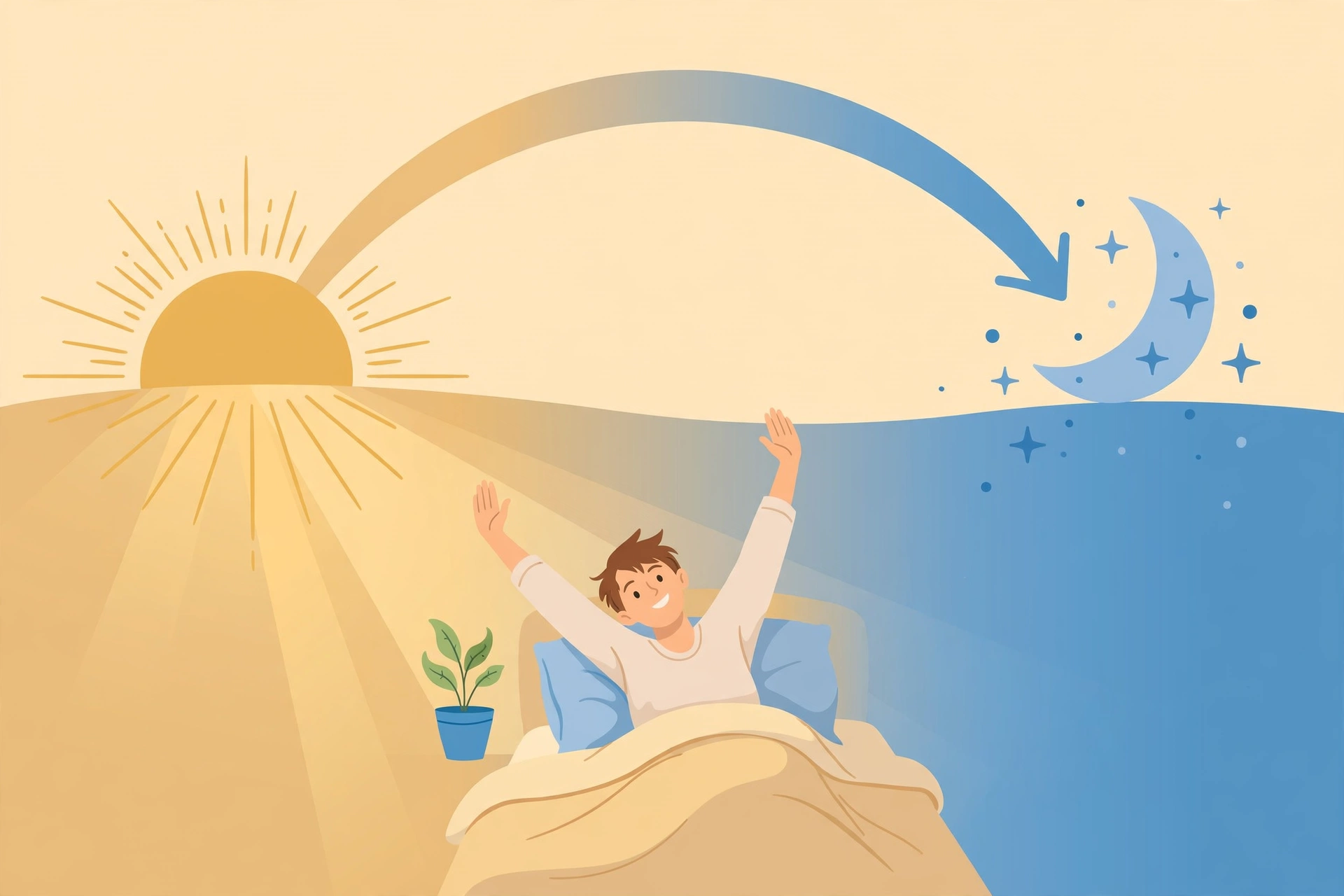
Your body runs on an internal clock that expects sleep at predictable times. A fixed wake time, even on weekends, is the anchor: it sets the timing of evening melatonin release roughly 14 to 16 hours later. Sleeping in on weekends creates “social jet lag” that makes Monday mornings genuinely harder. Keep your schedule within a 30 to 60 minute window every day, and make the wake time non-negotiable even when bedtime slips.
How Does Light Control Your Sleep?
Short answer: Bright light in the morning advances your clock and boosts alertness, while light at night, especially blue-rich screen light, suppresses melatonin and delays sleep by up to 90 minutes.
- Morning: get bright light within 30 minutes of waking. Outdoor daylight is strongest; a bright window or light therapy lamp helps on dark mornings.
- Daytime: spend time in daylight hours; well-lit days produce sleepier nights.
- Evening: dim lights two hours before bed and switch to warm-toned lighting.
- Screens: cut screen use 60 minutes before bed. Blue light delays melatonin; the mental stimulation of scrolling delays it further.
- Bedroom: make it completely dark with blackout curtains or a sleep mask. Even dim light from a charging phone can suppress melatonin.
Instagram’s newer “Your Algorithm” topic controls are interesting, but no feed is worth the melatonin cost of late-night scrolling. If screens are unavoidable, use night modes and app timers as damage control, not as a solution.
What Is the 10-3-2-1-0 Sleep Countdown?
Short answer: It is a memorable daily countdown: stop caffeine 10 hours before bed, finish heavy meals and alcohol 3 hours before, end stressful work 2 hours before, cut screens 1 hour before, and allow zero snooze-button hits in the morning.
| Countdown | Rule | Why It Works |
|---|---|---|
| 10 | No caffeine 10 hours before bed | Caffeine’s half-life is 5 to 6 hours; afternoon coffee is still active at midnight |
| 3 | No heavy meals or alcohol 3 hours before | Alcohol fragments sleep and blocks REM; late meals disrupt digestion |
| 2 | No high-stress work 2 hours before | Cortisol and mental arousal directly oppose sleep onset |
| 1 | No screens 1 hour before | Blue light plus mental stimulation delays melatonin |
| 0 | Zero snoozes in the morning | Fragmented snooze sleep is low quality and anchors a consistent wake time |
You do not need to adopt all five on day one. Start with the caffeine rule and the screen rule; they deliver the biggest improvement for most people.
What Should Your Bedroom Be Like for Great Sleep?
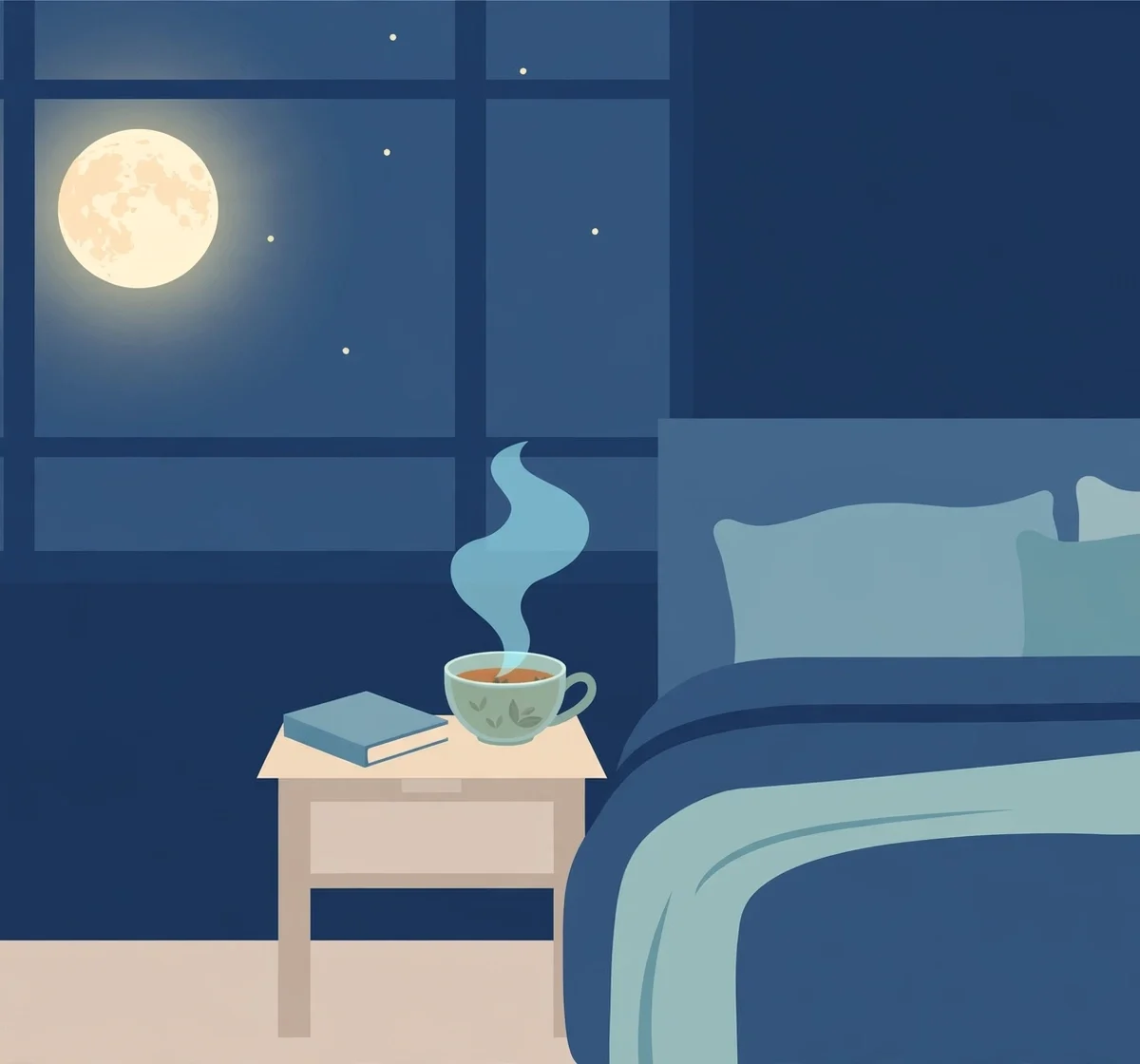
Short answer: Cool, dark, quiet, and comfortable, ideally 18 to 22 degrees, with breathable bedding and the bed reserved mainly for sleep.
Your core body temperature must drop to initiate and maintain sleep, which is why cooler rooms win. Complete darkness protects melatonin. Quiet matters, though consistent white noise is fine and can mask disruptive sounds. The principle of stimulus control says: use your bed for sleep (and intimacy) only, so your brain associates it with sleep rather than wakefulness. If you work, scroll, or worry in bed, the association weakens. For more on building healthy daily structure, see our wellness guides across the site.
What Should Your Wind-Down Routine Include?
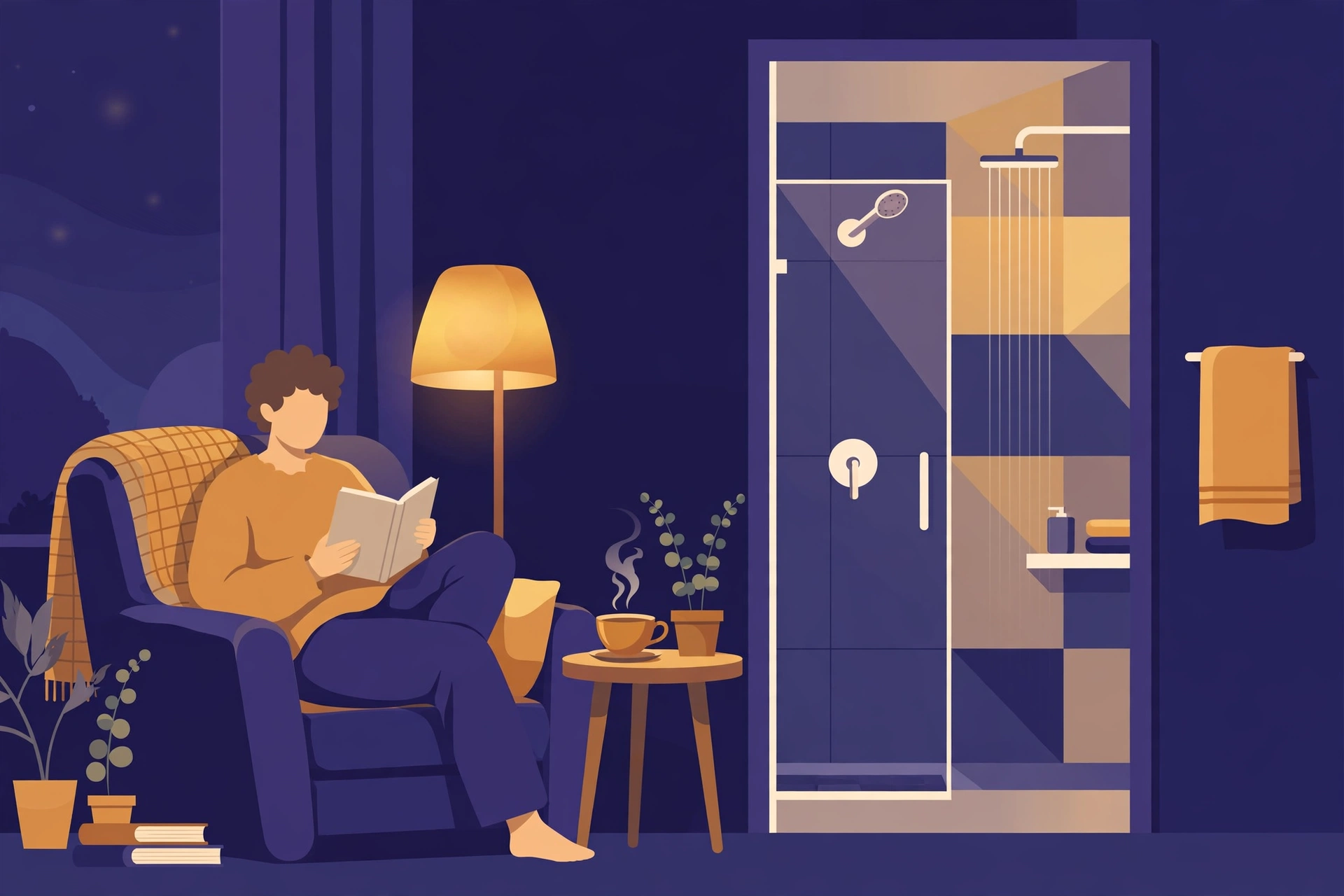
Short answer: Twenty to 30 minutes of the same calm activities nightly, such as reading a physical book, light stretching, journaling, or a warm shower, trains your nervous system to downshift.
Consistency is the active ingredient: the routine becomes a conditioned cue for sleepiness. Good options include reading fiction, gentle yoga or stretching, meditation or breathing exercises, journaling tomorrow’s tasks out of your head, and a warm bath or shower (the post-shower temperature drop aids sleep onset). Avoid news, intense shows, work email, and heated discussions. Dim the lights during the routine to stack the light signal with the behavioral one.
Can Exercise and Diet Improve Sleep?
Short answer: Yes. Regular daytime exercise deepens sleep, while heavy late meals, alcohol, and excess caffeine degrade it.
- Exercise: regular physical activity increases deep sleep; finish intense workouts at least 3 hours before bed, though gentle evening movement is fine.
- Caffeine: with a 5 to 6 hour half-life, a 2 PM coffee is still quarter-strength at midnight. Set a personal cutoff and keep it.
- Alcohol: it may help you fall asleep but fragments the second half of the night and suppresses REM sleep.
- Meals: avoid heavy, spicy, or large meals within 3 hours of bed; a light snack is fine if hunger keeps you up.
- Sleep-friendly foods: foods rich in magnesium, tryptophan, and melatonin, such as almonds, kiwi, tart cherries, oatmeal, and bananas, may support healthy sleep as part of a balanced diet.
What Should You Do When You Cannot Fall Asleep?
Short answer: If you are still awake after about 20 minutes, get up, go to another dim room, do something calm until sleepy, then return to bed.
Lying awake trains your brain to associate bed with wakefulness, which is the opposite of what you want. Do not check the clock repeatedly; clock-watching fuels anxiety about sleep, which further prevents it. Keep the lights dim during the intermission, avoid phones, and return only when genuinely drowsy. If racing thoughts are the issue, keep a notepad by the bed to park worries for tomorrow.
Do Naps Help or Hurt Nighttime Sleep?
Short answer: Short early-afternoon naps of 10 to 20 minutes can boost alertness without harming nighttime sleep, but long or late naps do.
Nap before 3 PM and keep it under 30 minutes to avoid grogginess and nighttime interference. If you struggle with insomnia, skip naps entirely while you rebuild your sleep drive. Shift workers and new parents are exceptions where strategic napping is a necessity rather than a luxury.
When Should You See a Doctor About Sleep?
Short answer: Seek professional help if you have difficulty falling or staying asleep at least three nights a week with daytime consequences, loud snoring with breathing pauses, severe daytime sleepiness, or persistent morning headaches.
Chronic insomnia is most effectively treated with cognitive behavioral therapy for insomnia (CBT-I), which addresses the thoughts and behaviors maintaining the problem. Sleeping tablets are not the only option and are generally not the best long-term solution. Loud snoring, gasping, or witnessed breathing pauses may indicate sleep apnea, which needs medical evaluation. Do not self-diagnose; a sleep professional can distinguish poor habits from genuine disorders.
Final Verdict: The Sleep Hygiene Starter Plan
Do not overhaul everything tonight. This week, fix your wake time and morning light. Next week, add the caffeine cutoff and the screen curfew. The week after, cool and darken the bedroom and build a 20-minute wind-down routine. Sleep hygiene works because it is a system of small signals, not a single trick, and every signal you align makes the next night a little easier. Your days will feel the difference before your tracker does. Explore more health topics at DigitalGeekSpot.
Related Articles
- How to Start Swimming for Fitness
- Cranberry Juice Benefits
- Brazil Nuts Benefits
- Black Seed Oil Benefits
Frequently Asked Questions
How many hours of sleep do adults need?
Most adults should aim for 7 to 9 hours per night. Individual needs vary, but consistently getting enough sleep supports brain function, mood, immune health, and overall well-being.
What are the most important sleep hygiene practices?
Keep a consistent sleep and wake time, get morning daylight, limit caffeine and alcohol, cut screens before bed, keep the bedroom cool and dark, and follow a relaxing wind-down routine.
Does screen time really affect sleep?
Yes. Blue light from phones and computers can suppress melatonin and delay sleep onset by up to 90 minutes, and the mental stimulation of scrolling adds to the effect. Reducing screens 30 to 60 minutes before bed improves sleep quality.
What temperature should my bedroom be for sleep?
Experts generally recommend 18 to 22 degrees Celsius (65 to 72 Fahrenheit). A cool, dark, quiet room helps your body drop its core temperature, which is necessary to initiate sleep.
Can exercise help you sleep better?
Yes. Regular physical activity deepens sleep and helps you fall asleep faster. Avoid intense exercise within about 3 hours of bedtime, as it can be stimulating for some people.
What foods help you sleep?
Foods rich in magnesium, tryptophan, and melatonin, such as almonds, kiwi, tart cherries, oatmeal, bananas, and yogurt, may support healthy sleep. Avoid heavy meals and excess caffeine close to bedtime.
What should I do if I cannot fall asleep?
If you are awake after about 20 minutes, get up and do something calm in dim light until sleepy, then return to bed. Lying awake trains your brain to associate bed with wakefulness.
Are naps bad for sleep?
Short naps of 10 to 20 minutes before 3 PM are fine for most people. Long or late-afternoon naps can interfere with nighttime sleep, especially if you already struggle with insomnia.