The Short Answer
Crypto gas fees are the payments users make to have their transactions processed and permanently recorded on a blockchain. On Ethereum and other EVM-compatible networks, every transaction consumes a measured amount of computational work called gas, and you pay for each unit of gas in a tiny denomination of ETH called gwei. The busier the network is, the higher the price per unit climbs. Other blockchains use different systems: Bitcoin charges based on transaction size rather than computation, and Solana uses a small base fee plus an optional priority fee. This guide explains exactly how gas fees work, why they rise and fall, and how you can realistically pay less.
Crypto Fee Models at a Glance
| Network | Fee model | Priced in | What a simple transfer needs |
|---|---|---|---|
| Ethereum | Gas for computational work | gwei (billionths of ETH) | 21,000 gas units |
| Bitcoin | Transaction size (virtual bytes) | satoshis per vByte | Varies with transaction size |
| Solana | Base fee plus optional priority fee | lamports (fractions of SOL) | Small flat base fee per signature |
| BNB Smart Chain | EVM-compatible gas model | gwei (fractions of BNB) | Similar structure to Ethereum |
What Are Gas Fees in Crypto?
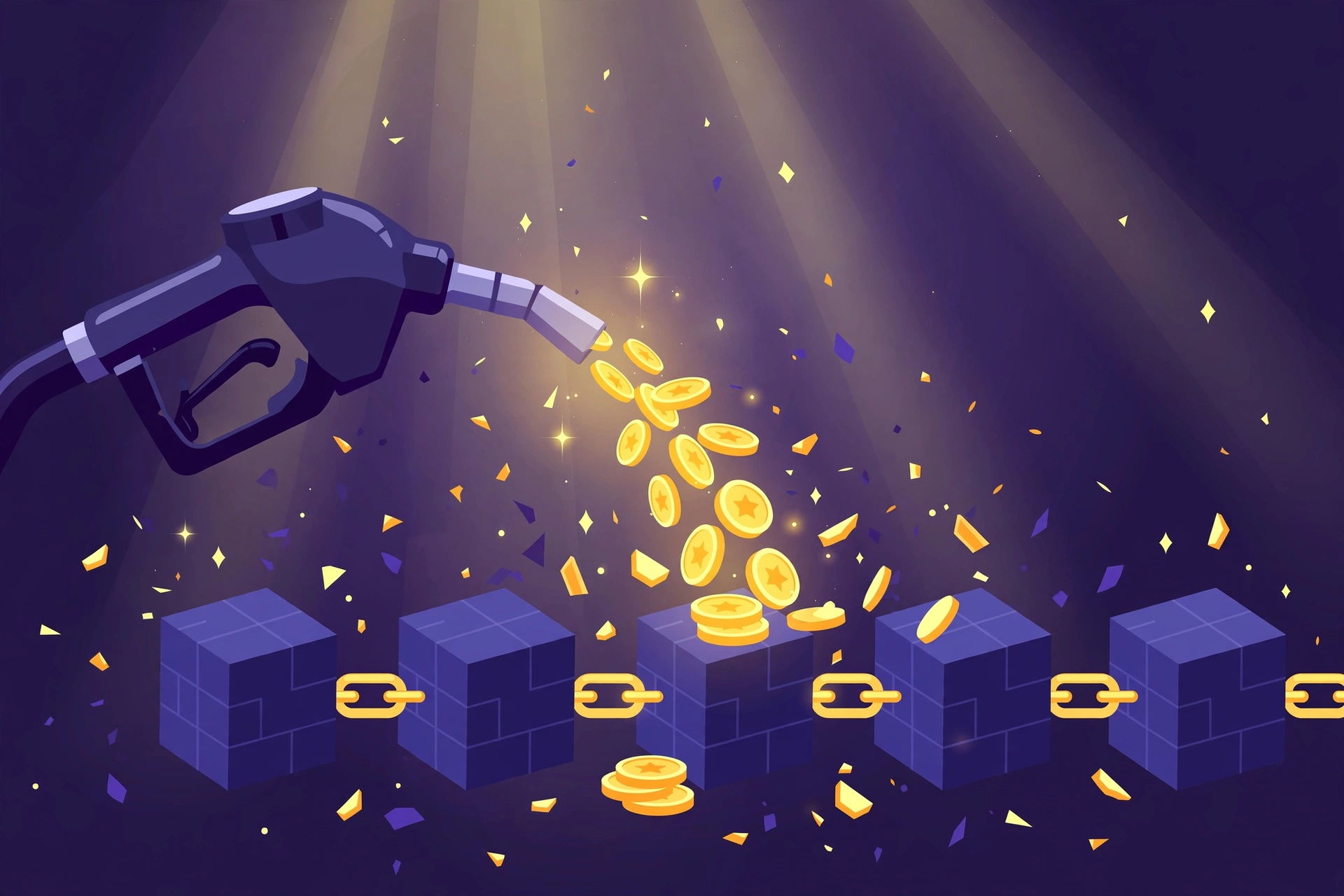
Think of a blockchain as a shared global computer. Every time you send coins, swap tokens, or interact with a decentralized app, you are asking thousands of independent computers (validators or miners) to do work for you: verify your signature, run the code, and record the result forever. Gas is the unit used to measure that work. The fee you pay is gas multiplied by the current price per unit.
Gas fees exist for three practical reasons. First, they stop spam: if transactions were free, attackers could flood the network with junk and grind it to a halt. Second, they protect the network from buggy code: if a smart contract gets stuck in an infinite loop, it eventually runs out of gas and stops instead of freezing everything. Third, they compensate the validators who process transactions and keep the network secure.
One important clarification: the term gas fee properly belongs to Ethereum and EVM-compatible networks. Other blockchains charge transaction fees through different mechanisms, so calling every blockchain fee a gas fee is technically incorrect, even though many people use the phrase loosely.
How Gas Fees Work on Ethereum
Ethereum has the best-known gas system, and understanding it helps you read fee estimates on any EVM chain. Three concepts do all the heavy lifting: gas units, gwei, and the two-part fee introduced by the London upgrade.
Gas Units: Measuring the Work
Every operation on Ethereum costs a fixed number of gas units, set by the protocol. A simple ETH transfer from one wallet to another always costs exactly 21,000 gas, whether you send a few cents or a few million dollars. Calling a smart contract costs more because more computation is involved. A basic token transfer typically needs more gas than a plain ETH transfer, a decentralized exchange swap can require roughly 100,000 to 150,000 units, and minting an NFT can exceed 200,000 units depending on the contract logic. The more the network is asked to do, the more gas the transaction burns.
Gwei: Pricing the Work
Gas prices are quoted in gwei, a denomination of ETH. One gwei equals one billionth of an ETH (0.000000001 ETH). The name stands for giga-wei, where wei is the smallest unit on the network. Prices are quoted in gwei simply because quoting them in whole ETH would produce an unreadable string of zeros after the decimal point.
Base Fee and Priority Fee
Since the London upgrade (EIP-1559) in August 2021, Ethereum transactions generally include two fee components. The base fee is set automatically by the protocol based on how full recent blocks have been: when demand rises, the base fee rises, and when blocks are emptier, it falls. The base fee is burned, permanently removing that ETH from circulation, which means heavy network activity can influence the ETH supply alongside staking issuance. The priority fee, often called a tip, is an amount you choose to offer the validator that includes your transaction: the higher the tip, the faster your transaction is likely to be picked up. The priority fee goes to the validator, not into the burn.
You also set a maximum fee you are willing to pay, which caps what the transaction can cost you even if the base fee moves while your transaction waits in the queue.
A Real Gas Fee Calculation
The core formula fits on one line:
Gas used x (base fee + priority fee) = total fee
Here is a worked example using calm network conditions. Suppose you send ETH to a friend: the transfer needs 21,000 gas units, the network base fee is 10 gwei, and you add a 2 gwei priority fee for reasonably fast confirmation.
- 21,000 x (10 + 2) = 252,000 gwei
- 252,000 gwei = 0.000252 ETH
Your transfer total becomes the amount sent plus 0.000252 ETH in fees. What that costs in dollars depends on the ETH market price at that moment, so the same transaction can feel cheap or expensive depending on both network demand and the token price.
Fees have also changed dramatically over time. Independent fee trackers reported average Ethereum gas prices around 72 gwei in early 2024, falling to roughly 2.7 gwei by 2025 after the Dencun upgrade in March 2024 made Layer 2 data far cheaper. Average fees in February 2025 were reported near $0.76, compared with over $24 in February 2021, a decline of more than 96 percent. The lesson: gas is a market, and its history is one of long cycles of congestion followed by upgrades that relieve pressure.
Why Do Gas Fees Go Up and Down?
Gas prices are pure supply and demand for limited blockspace. Each block can only hold so many transactions, so when more people want in than the block can fit, users bid against each other with higher priority fees. Common triggers for fee spikes include popular NFT launches, heavy decentralized exchange trading during volatile markets, new token launches, and sudden price moves that send everyone rushing to trade at once. Speculative waves around meme coin launches are a classic example of demand that can clog a network within hours. Transactions that miss a block wait in the mempool, the waiting area for unconfirmed transactions, until a validator picks them up.
When activity calms down, base fees fall and transactions clear quickly at low prices. There is no guaranteed cheapest hour of the day: Ethereum runs globally around the clock, and fees follow real-time demand, not a fixed schedule. Historical patterns can hint at quieter windows, but checking a live gas tracker before you transact is far more reliable than any rule of thumb.
Gas Fees on Other Blockchains
Bitcoin: Fees by Size, Not Computation
Bitcoin does not use gas at all. Its fees depend mainly on the transaction’s virtual size and the prevailing fee rate, expressed in satoshis per virtual byte. A useful consequence: the amount of BTC you send does not directly determine the fee. A transaction consolidating many small inputs can require more blockspace, and therefore a higher fee, than a transaction moving a much larger amount with a single input.
Solana: Base Fee Plus Priority Fee
Solana uses its own model: transactions pay a small base fee per signature and can include an optional prioritization fee tied to requested compute units. This keeps simple transfers cheap while letting users pay extra for faster inclusion during congestion.
BNB Smart Chain and Other EVM Chains
Networks such as BNB Smart Chain and Avalanche C-Chain use EVM-compatible gas models that work like Ethereum’s, with gas units and gwei-style pricing denominated in their own native tokens. The same mental model applies, but the absolute costs are typically lower because these networks have different capacity and demand profiles. For a look at how one alternative Layer 1 is performing, see our Avalanche price and market insights coverage.
How to Pay Less in Gas Fees
You cannot eliminate fees on direct on-chain transactions, but you can often cut them substantially with a little planning.
- Time your transactions. Check a live gas tracker and wait for quieter periods instead of transacting during an obvious spike.
- Use Layer 2 networks. Networks like Arbitrum, Optimism, and Base execute transactions off the Ethereum mainnet and settle the results back to it, which is often far cheaper than mainnet for the same action.
- Batch where possible. Doing several actions in one transaction, when your wallet or app supports it, costs less than several separate transactions.
- Keep it simple. Prefer the simplest transaction that achieves your goal. A direct transfer is far cheaper than routing through multiple smart contracts.
- Set a sensible priority fee. During calm periods a small tip confirms quickly. Raising it blindly during congestion just donates money to validators.
- Pick the right network for the job. For simple stablecoin transfers, networks designed for cheap payments can cost a fraction of Ethereum mainnet. Just remember that switching networks can introduce bridge, liquidity, and security tradeoffs that outweigh the savings.
- Use a wallet with good fee estimation. Modern wallets estimate base and priority fees for you, which beats guessing.
- Avoid failed transactions. A transaction that runs out of gas or reverts can still consume computational resources before failing, meaning you pay the fee without getting the result. Double-check contract interactions before confirming.
- Do not forget the native token. If you hold tokens on Ethereum but no ETH at the same address, you cannot move anything. Keep a small ETH balance for fees so you are not stuck.
Common Gas Fee Mistakes
Beginners tend to make the same handful of errors. Setting the gas limit too low causes the transaction to fail while still costing you the gas already used. Confusing the gas limit (how much work you allow) with the gas price (what you pay per unit) leads to badly calibrated transactions. Panic-raising the tip during every minor delay wastes money when the base fee was the real bottleneck. And many first-time users discover too late that moving ERC-20 tokens requires ETH for fees, not just the tokens themselves.
Frequently Asked Questions
What is gwei?
Gwei is a denomination of ETH used to quote gas prices. One gwei equals one billionth of an ETH (0.000000001 ETH). It exists because gas prices in whole ETH would be impractically small decimal numbers.
Do Bitcoin transactions have gas fees?
No. Bitcoin has transaction fees, not Ethereum-style gas. Fees depend largely on the transaction’s virtual size and the fee rate you offer per virtual byte, not on computational steps.
Can I avoid gas fees completely?
Not for normal direct on-chain transactions. Someone always pays for the computation, whether it is you or a party sponsoring the fee (as in some account-abstraction setups). You can reduce fees by timing transactions, using Layer 2 networks, or choosing cheaper execution paths.
Why did my failed transaction still cost me?
Because the network still did computational work before the transaction failed. Validators executed your transaction up to the failure point, and that work is what the fee pays for, not the successful outcome.
Are Layer 2 transactions really cheaper?
Usually, yes, often dramatically so, because execution happens off the Ethereum mainnet and only compressed data or proofs are settled on Layer 1. But bridging assets onto or off a Layer 2 adds its own costs, and each Layer 2 has its own fee quirks.
What is the cheapest time to send crypto?
There is no guaranteed cheapest hour. Fees follow global, real-time demand for blockspace. Check a live gas tracker and transact when the network is quiet rather than relying on a fixed schedule.
Related Articles
- Crypto30x.com Avalanche: Real-Time AVAX Price, Charts, and Market Insights
- Riding the Next Wave of Crypto Innovation
- Crypto30x.com Gigachad: The Boldest Meme Coin Revolution in 2025

The Verdict
Crypto gas fees are simply the market price of shared blockchain computation. On Ethereum, that price is measured in gas units and quoted in gwei, split into a protocol-set base fee that gets burned and a priority fee that tips validators. Fees spike when demand for blockspace outruns supply and fall when the network is quiet, and other chains like Bitcoin and Solana price the same problem differently. The most reliable ways to pay less are timing your transactions, using Layer 2 networks, keeping transactions simple, and never paying for computation you do not need. DigitalGeekSpot covers practical crypto topics like this regularly, so check back before your next on-chain move.
Note: this article is general educational information about how blockchain fees work, not financial advice. Fees and network conditions change constantly, so verify current conditions before transacting.