
One of the first security decisions every crypto user faces is the hot wallet vs cold wallet question: should you keep your coins in a wallet connected to the internet, or in one kept offline? The answer affects both your convenience and your safety, and most experienced users end up using both. This beginner-friendly guide explains what each type is, how they compare on security, cost, and ease of use, and which one fits different situations. Educational content only, not financial advice.
Before diving in, one core concept: a crypto wallet does not actually “hold” coins the way a physical wallet holds cash. Your coins live on the blockchain; the wallet holds the private keys that prove ownership and authorize spending. Whoever controls the private keys controls the coins. Everything about wallet security comes down to protecting those keys.
What Is a Hot Wallet?
A hot wallet is any cryptocurrency wallet connected to the internet. That includes mobile wallet apps, desktop wallets, browser extension wallets, and the wallets built into exchange accounts. Because they are online, hot wallets can send, receive, and swap crypto instantly, which makes them ideal for everyday activity.
Common examples of hot wallet use include keeping spending money on a phone app, interacting with decentralized applications, and holding funds on an exchange for active trading. Many beginners start here because setup takes minutes and the interfaces feel familiar.
The trade-off is exposure. An internet-connected device can be reached by malware, phishing attacks, and hackers. If your phone is compromised or you approve a malicious transaction, funds in a hot wallet can be drained quickly. Hot wallets are convenient, but they should be treated like the cash in your physical pocket: handy for daily use, but not where you keep your life savings.
What Is a Cold Wallet?
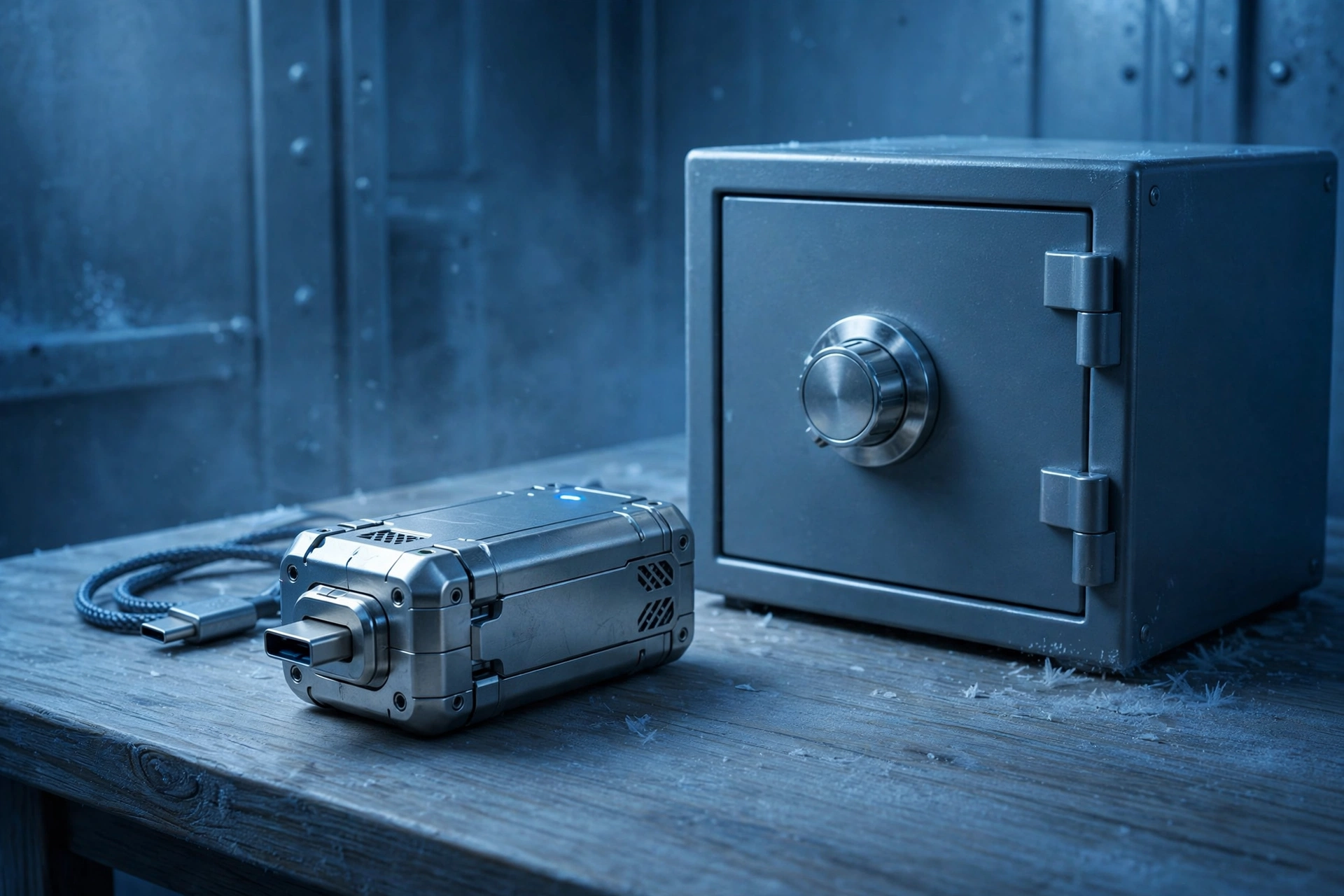
A cold wallet keeps your private keys completely offline. The most common type is a hardware wallet: a small physical device (often USB-sized) that stores your keys and signs transactions internally, so the keys never touch an internet-connected computer. Other forms of cold storage include paper wallets (keys printed or written down) and air-gapped computers that never go online.
Cold wallets are designed for long-term holding. To spend from a hardware wallet, you physically connect it, confirm the transaction on the device’s own screen, and then disconnect it. That physical confirmation step blocks most remote attacks: even if your computer is infected with malware, the attacker cannot sign transactions without the device in hand.
The trade-offs are cost and convenience. Hardware wallets cost money to buy, setup takes longer, and every transaction requires the device to be present. Paper wallets are free but fragile: lose the paper, or let someone photograph it, and the funds are gone or stolen. For most people holding meaningful amounts long term, a hardware wallet is the standard recommendation.

Hot Wallet vs Cold Wallet: Side-by-Side Comparison
| Factor | Hot Wallet | Cold Wallet |
|---|---|---|
| Internet connection | Always online | Offline (keys never exposed) |
| Security level | Moderate; vulnerable to hacks, malware, phishing | High; immune to most remote attacks |
| Convenience | Very convenient; instant transactions | Less convenient; needs the physical device |
| Cost | Usually free | Hardware wallets cost money to purchase |
| Best for | Daily spending, trading, small amounts | Long-term holding, large amounts |
| Setup difficulty | Easy; minutes | Moderate; requires careful seed phrase backup |
| Recovery if lost | Depends on the service; custodial wallets may help | Only via your seed phrase backup; lose it and funds are gone |
Security Differences in Detail
The security gap between hot and cold wallets comes down to the attack surface. A hot wallet’s private keys exist on an internet-connected device, so any successful attack on that device, through malware, a fake app, a phishing site, or a malicious browser extension, can potentially reach the keys. Exchange wallets add another layer of risk: you do not hold the keys at all, the exchange does, so you are trusting the company’s security and solvency.
A hardware cold wallet shrinks the attack surface dramatically. Keys are generated and stored inside a secure chip and never leave it. Transactions are signed inside the device, and you verify the recipient address on the device’s own screen, which defeats malware that tries to swap addresses on your computer. The remaining risks are physical: theft of the device, loss, or damage, plus the ever-critical seed phrase backup. That is why the standard advice is to buy hardware wallets only from the manufacturer or authorized sellers, never secondhand, since a tampered device could be pre-compromised.
Cost and Convenience Trade-Offs
Hot wallets win on cost and convenience. Most are free to download, sync in minutes, and let you transact from anywhere. If you are just starting out, experimenting with small amounts, or actively trading, that frictionless experience matters.
Cold wallets ask for an upfront investment of money and effort: buying the device, learning the setup, writing down and safely storing the recovery seed phrase, and physically confirming each transaction. In exchange, you get the strongest practical protection available for long-term holdings. Think of it like a safe deposit box: slightly annoying to visit, but exactly where valuables belong.
A sensible middle ground that many users adopt is the two-wallet strategy: a hot wallet with a small working balance for daily use, and a cold wallet holding the bulk of funds for the long term. This mirrors how people treat checking versus savings accounts.
Which Wallet Should You Use? Use-Case Guidance
- Complete beginner with a small amount: Start with a reputable hot wallet app while you learn. Keep amounts small until you understand the basics of addresses and networks. A guide on how to send crypto on the correct network is worth reading before your first transfer, since sending on the wrong network is a common beginner mistake.
- Active trader: A hot wallet or exchange account makes sense for funds you trade frequently, but move profits to colder storage regularly.
- Long-term holder: Use a hardware cold wallet. The inconvenience is minor compared with the protection it provides for savings you do not plan to touch.
- Large amounts: Cold storage is strongly recommended, with the seed phrase backed up in more than one secure physical location.
- Interacting with new apps or sites: Use a separate hot wallet containing only small amounts, so a malicious approval cannot drain your main holdings.
You can find more beginner security explainers like this one on the DigitalGeekSpot homepage.
Custodial vs Non-Custodial: A Related Distinction
Alongside hot versus cold, you will hear the terms custodial and non-custodial. A custodial wallet means a third party (usually an exchange) holds your private keys for you. It is convenient and offers password recovery, but you are trusting the company completely. A non-custodial wallet means you alone hold the keys, which gives you full control but also full responsibility: there is no “forgot password” button.
Hot wallets can be either custodial (exchange accounts) or non-custodial (your own phone app). Hardware cold wallets are non-custodial by design. Understanding both distinctions helps you evaluate any wallet’s real risk profile instead of relying on marketing claims.
Common Mistakes to Avoid
- Keeping everything on an exchange. Exchanges are hot and custodial: convenient, but a single point of failure. Only keep there what you actively trade, and know the withdrawal process in advance (for example, this walkthrough of how to withdraw from Crypto.com).
- Buying a hardware wallet secondhand. Always buy new from the manufacturer. A used device could be tampered with.
- Storing your seed phrase digitally. Screenshots, cloud notes, and emails can all be hacked. Write it on paper (or stamp it on metal) and store it offline.
- Skipping the backup test. After setting up a cold wallet, practice restoring from the seed phrase before sending large amounts, so you know the backup works.
- Approving transactions blindly. Always verify the address and amount on your device screen or in the wallet prompt before confirming.
Frequently Asked Questions
Can a cold wallet be hacked?
Remote hacking of a properly used hardware wallet is extremely difficult because the keys never leave the device. Realistic risks are physical theft, loss, damage, buying a tampered device, or someone finding your seed phrase backup. Supply-chain and physical security matter more than remote attacks here.
Do I need both a hot and a cold wallet?
Not strictly, but most users benefit from both. A hot wallet handles daily activity and small amounts conveniently, while a cold wallet secures long-term holdings. Using both lets each do what it does best.
What happens if I lose my hardware wallet?
Your funds are not on the device; they are on the blockchain. As long as you have your seed phrase backup, you can buy a new device (or use compatible software) and restore full access. Without the seed phrase, the funds are permanently inaccessible.
Are exchange wallets hot or cold?
From your perspective as a user, exchange wallets function as hot and custodial: you access them online and the exchange holds the keys. Reputable exchanges keep most customer funds in their own cold storage behind the scenes, but you still trust the exchange, not your own keys.
Is a paper wallet still a good cold wallet option?
Paper wallets are a legitimate form of cold storage, but they are fragile and unforgiving: paper degrades, ink fades, and a single photo compromises the keys. Hardware wallets are generally safer and easier for most people today.
How much crypto justifies buying a hardware wallet?
There is no fixed threshold, but a common rule of thumb is that if losing the amount would seriously upset you, it deserves cold storage. The cost of a hardware device is small compared with the value it protects for long-term holders.