

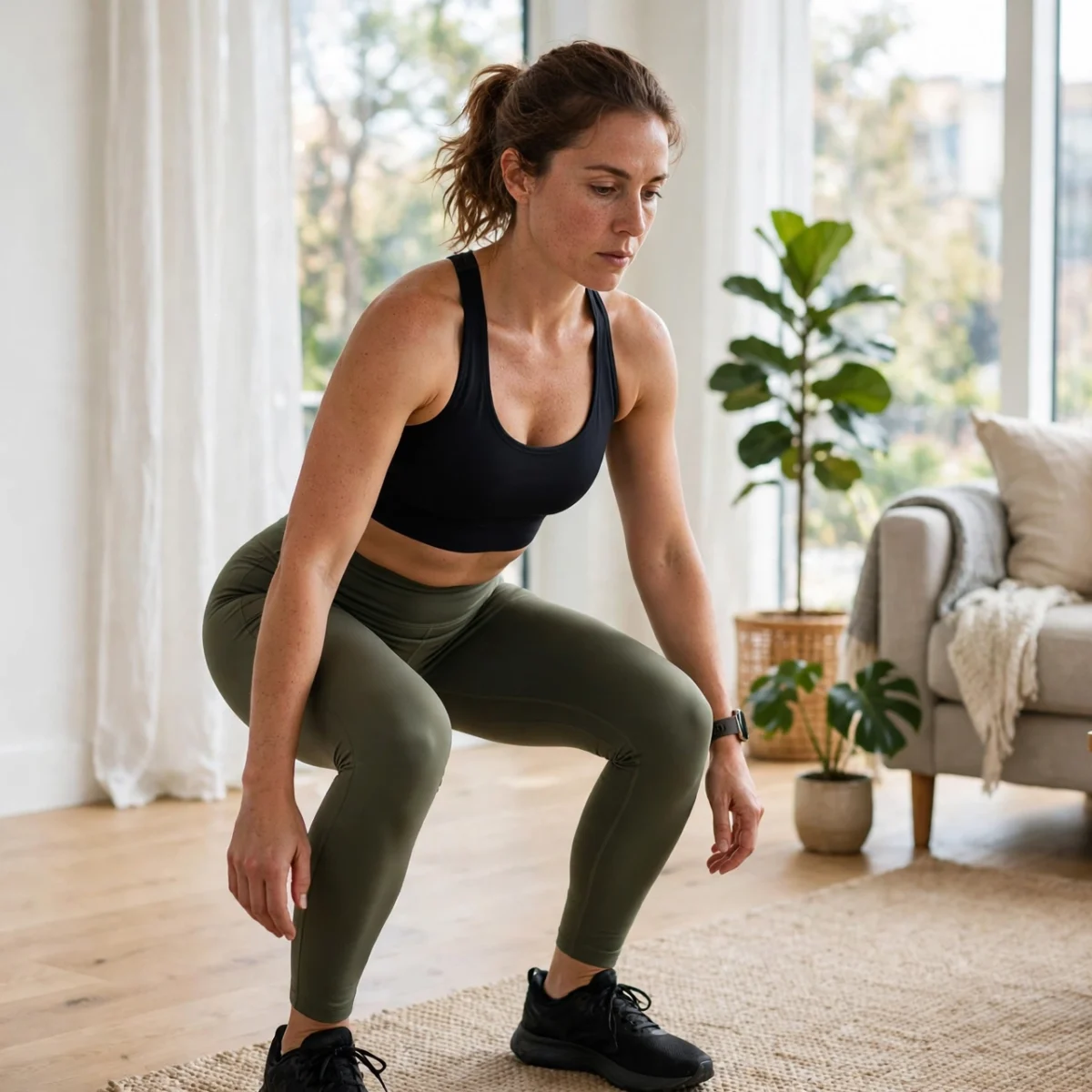
You do not need a gym membership, a garage full of weights, or fancy machines to get fit. Some of the most effective exercises ever invented use nothing but your own body. This guide to home workouts without equipment shows beginners exactly where to start: which exercises to learn first, how to put them into a simple routine, and a sample weekly schedule that builds strength and fitness from zero.
Bodyweight training is ideal for complete beginners because it teaches your body to move well before adding external load. You can do it in a living room, a bedroom, or a backyard, and a full session takes 20 to 30 minutes. For motivation during your sessions, you might enjoy our list of songs to listen to when alone for a workout playlist, and you can find more guides on the DigitalGeekSpot homepage.
Why Bodyweight Training Works for Beginners
When you are new to exercise, your biggest gains come from learning movement patterns, building baseline strength, and developing consistency. Bodyweight exercises deliver all three. Squats, push-ups, planks, and lunges train the major muscle groups while also improving balance, coordination, and joint stability.
Research-based fitness guidance consistently shows that beginners improve rapidly with simple progressive programs, and bodyweight routines fit that description perfectly. You also remove the most common barriers to starting: cost, commute time, and intimidation. The best workout program is the one you actually do, and a routine you can start in your living room right now has a major advantage.
Another benefit is safety. With no external weights, the risk of overloading your joints before your connective tissue adapts is lower. You learn to control your own body first, which creates a foundation that makes any future training, including weightlifting, safer and more effective.
Setting Up Your Workout Space
You need less space than you think. Clear an area roughly the size of a yoga mat, about 6 feet by 3 feet, with enough ceiling height to stand and raise your arms. Move coffee tables, toys, and anything breakable out of the way.
Helpful but optional items include:
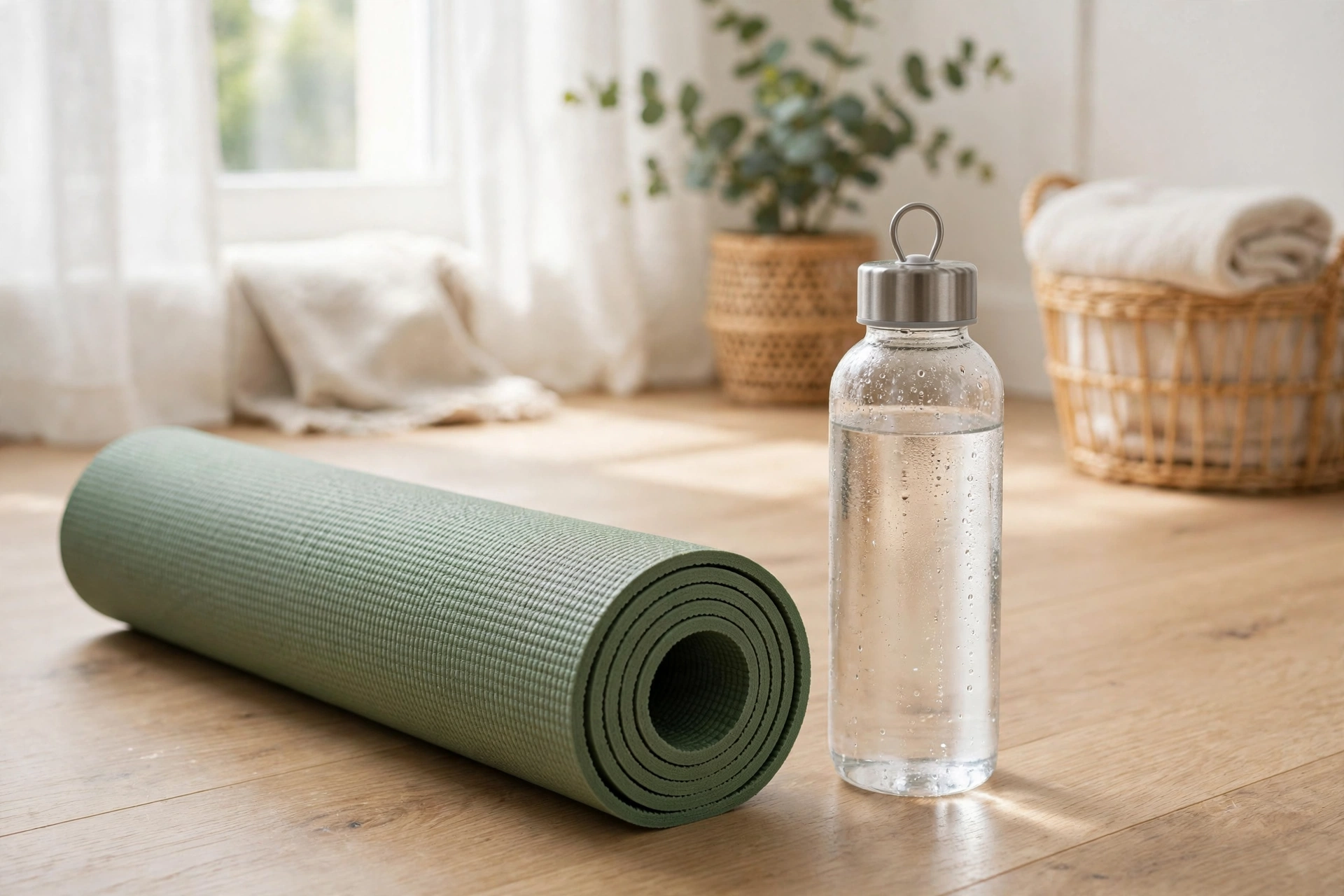
- A yoga mat or thick towel for floor exercises, kinder on knees and elbows
- A sturdy chair or low table for step-ups, incline push-ups, and tricep dips
- A timer, your phone works fine, for work and rest intervals
- Water and a small towel within reach
Good ventilation and natural light make sessions more pleasant, but any room works. Work out in comfortable clothes and bare feet or flat, stable shoes, depending on your flooring.
The 7 Foundational Bodyweight Exercises
Master these seven movements and you have a complete full-body routine. Focus on form over speed or repetitions, especially in the first weeks.
1. Bodyweight Squat
Stand with feet shoulder-width apart, toes slightly out. Push your hips back and bend your knees as if sitting into a chair, keeping your chest up and knees tracking over your toes. Go as deep as comfortable, then drive through your heels to stand. This trains your quads, glutes, and core.
2. Push-Up (Start on Your Knees or an Incline)
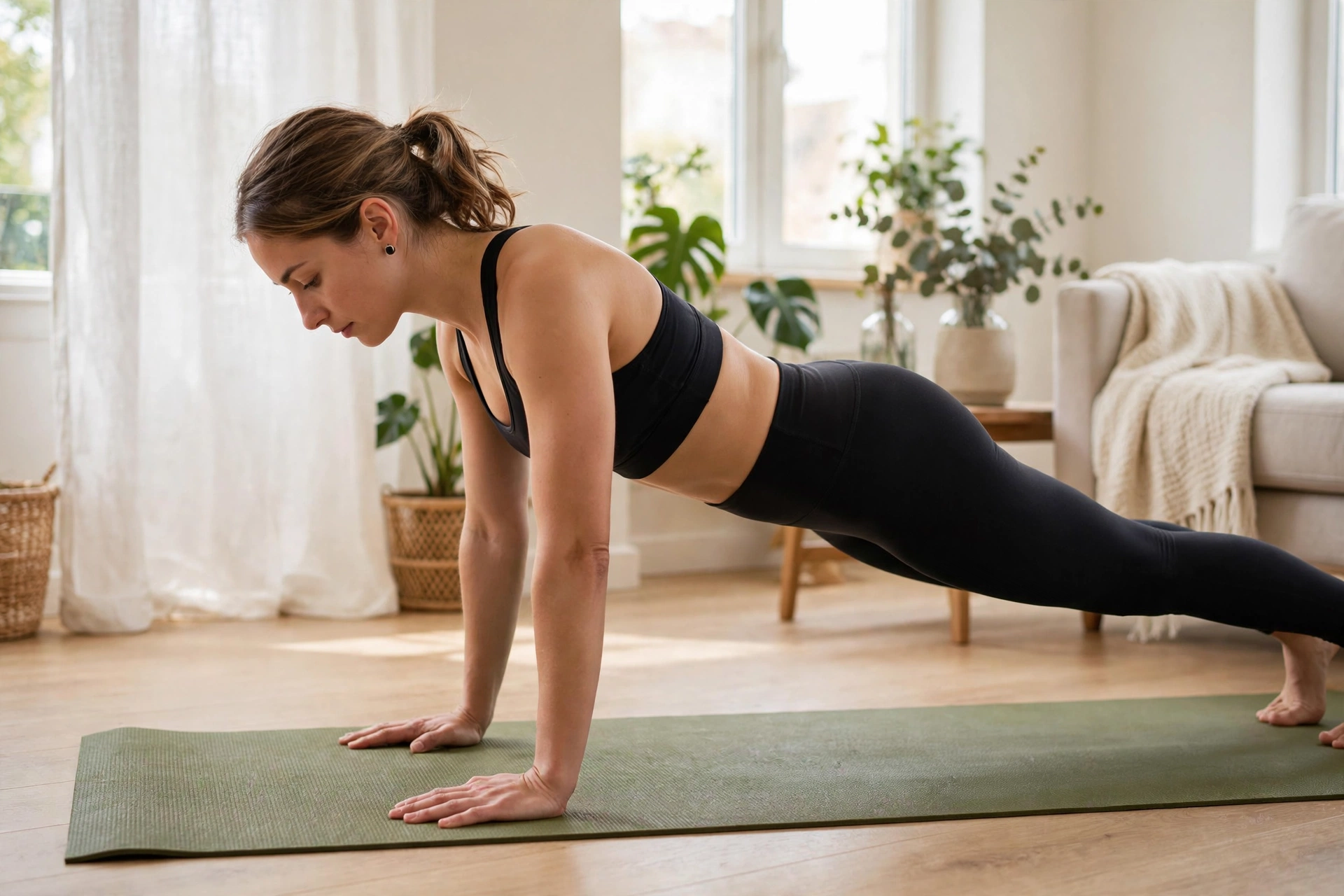
Most beginners cannot do a full push-up on day one, and that is normal. Start with hands on a sturdy chair or countertop, body in a straight line from head to knees or feet. Lower your chest toward the surface, then press back up. As you get stronger, lower the incline until you can do knee push-ups, then full push-ups. For a detailed form breakdown, see our guide on how to do a proper push-up.
3. Glute Bridge
Lie on your back with knees bent and feet flat on the floor. Squeeze your glutes and lift your hips until your body forms a straight line from shoulders to knees. Pause for a second, then lower slowly. This strengthens the glutes and lower back, muscles that weaken from long hours of sitting.
4. Reverse Lunge
Stand tall, step one foot back about two feet, and lower until both knees are bent near 90 degrees, keeping your front knee over your ankle. Push through your front heel to return to standing, then switch legs. Reverse lunges are gentler on the knees than forward lunges, making them a better beginner choice.
5. Plank
Rest on your forearms and toes (or knees for an easier version) with your body in a straight line from head to heels. Brace your core like someone is about to tap your stomach, and breathe normally. Start with 15 to 20 second holds and build up gradually. Avoid letting your hips sag or pike upward.
6. Dead Bug
Lie on your back with arms extended toward the ceiling and knees bent at 90 degrees. Slowly lower your right arm overhead while extending your left leg toward the floor, keeping your lower back pressed into the ground. Return and switch sides. This builds deep core stability without straining the neck.
7. Wall Sit
Lean your back against a wall and slide down until your thighs are roughly parallel to the floor, knees over ankles. Hold the position while breathing steadily. Start with 15 to 20 seconds. Wall sits build quad endurance with zero impact.
How to Structure a Beginner Workout
A well-structured session has three parts and takes about 25 minutes total.
Warm-up (5 minutes). Never skip this. March in place, do arm circles, leg swings, hip circles, and 10 easy bodyweight squats. The goal is to raise your body temperature and loosen your joints, not to tire yourself.
Main circuit (15 minutes). Pick 5 to 6 exercises from the list above. Perform each for 30 seconds (or 8 to 12 repetitions), rest 30 seconds, then move to the next. After completing all exercises, rest 1 to 2 minutes, then repeat the circuit once more. Two rounds is plenty for beginners.
Cool-down (5 minutes). Walk slowly in place, then hold gentle stretches for the muscles you worked: quads, hamstrings, chest, shoulders, and hip flexors, about 20 to 30 seconds each. Stretching after exercise, when muscles are warm, feels better and helps you wind down.
Sample Weekly Schedule for Complete Beginners
Three full-body sessions per week with rest days between them is the ideal starting point. Here is a 4-week schedule that gradually increases the challenge.
Week 1: Learn the Movements
- Monday: Full-body circuit A: squats, incline push-ups, glute bridges, dead bugs, wall sit. 1 round, easy effort, focus on form.
- Tuesday: Rest or a 20-minute walk
- Wednesday: Full-body circuit B: reverse lunges, incline push-ups, glute bridges, plank (knees), dead bugs. 1 round.
- Thursday: Rest or a 20-minute walk
- Friday: Repeat circuit A, 1 round. Try one or two more repetitions per exercise than Monday.
- Saturday: Rest or light activity like stretching
- Sunday: Full rest
Week 2: Add a Second Round
Same exercises and schedule, but perform 2 rounds of each circuit with 90 seconds of rest between rounds. Total workout time rises to about 25 minutes.
Week 3: Increase the Work Intervals
Keep 2 rounds, but extend work intervals from 30 to 40 seconds and shorten rests to 20 seconds between exercises. Try knee push-ups if incline push-ups feel easy, and full planks instead of knee planks.
Week 4: Consolidate and Progress
Same structure as Week 3. By now the movements should feel familiar. This is the week to test small progressions: deeper squats, longer plank holds, or slower, more controlled repetitions. If any exercise still feels shaky, stay at its easier version, progress is not a race.
After four weeks, you can keep following this template while gradually applying the progression methods in the next section. Many people train happily with bodyweight routines for months before ever touching a weight.
Progression: Getting Stronger Without Equipment
Muscles grow when challenged a little more than last time. Without weights, you progress by changing leverage, volume, and tempo:
- More repetitions or rounds. Go from 8 reps to 12, or from 2 rounds to 3.
- Longer holds. Extend planks and wall sits by 5 to 10 seconds each week.
- Harder variations. Move from incline push-ups to knee push-ups to full push-ups, from glute bridges to single-leg glute bridges, from reverse lunges to walking lunges.
- Slower tempo. Take 3 seconds to lower into each squat or push-up. Slower eccentrics make the same exercise significantly harder.
- Shorter rests. Reducing rest between exercises raises the cardiovascular demand.
- Single-limb versions. Split squats, single-leg deadlifts (unweighted), and assisted single-leg squats challenge balance and strength simultaneously.
Pick one variable to progress at a time. Trying to add reps, rounds, and harder variations all at once is a recipe for soreness and burnout.
Recovery and Rest Days
Beginners often underestimate rest. Your muscles adapt and grow stronger between workouts, not during them, so the rest days in the schedule are doing real work. Expect some muscle soreness, especially in the first two weeks, this is normal and fades as your body adapts.
Support recovery with the basics: sleep 7 to 9 hours, eat enough protein across the day (eggs, beans, lentils, dairy, meat, or fish), and drink water regularly. For guidance on fueling your sessions, see what to eat before a workout. Gentle walking or stretching on rest days promotes blood flow and eases stiffness better than sitting still all day.
If soreness is severe enough to change how you walk, or a joint (not a muscle) hurts sharply, take extra rest and consider checking with a health professional before continuing. Pain is information, not weakness.
Common Beginner Mistakes to Avoid
Doing too much in week one. Enthusiasm is great, but 5 hard sessions in your first week usually ends in crushing soreness and a abandoned routine by week two. Start with three moderate sessions.
Skipping the warm-up. Cold muscles and stiff joints are more injury-prone. Five minutes of easy movement makes every workout safer and more effective.
Sacrificing form for repetitions. Ten perfect squats beat thirty sloppy ones. Poor form ingrains bad movement patterns and raises injury risk. When your form breaks down, the set is over.
Training through sharp pain. Muscle burn and fatigue are normal. Sharp, stabbing, or joint pain is not. Stop the exercise and reassess.
Expecting visible results in two weeks. Strength and endurance improve noticeably within 3 to 4 weeks, but visible body composition changes take longer. Track performance instead: more reps, longer holds, easier sessions. Those numbers move first and they are the real proof your program works.
Frequently Asked Questions
Can you build muscle with bodyweight exercises alone?
Yes, especially as a beginner. Your muscles respond to tension and progressive challenge, not to the source of resistance. Beginners can build meaningful strength and muscle with bodyweight training for many months by progressing to harder variations. Advanced lifters eventually need external weights to keep progressing, but that is a long way off when you are starting out.
How long should a beginner home workout be?
Twenty to 30 minutes, three times per week, is enough to see real progress as a beginner. This includes your warm-up and cool-down. Longer sessions are not better at this stage, consistency beats duration. As you get fitter, you can extend to 35 to 45 minutes.
Do I need to warm up before bodyweight exercises?
Yes. A 5-minute warm-up of easy movement like marching in place, arm circles, and light squats raises your body temperature, lubricates your joints, and prepares your nervous system. It reduces injury risk and makes the workout itself feel easier.
How fast will I see results from home workouts?
Most beginners notice better energy and less effort in daily activities within 2 to 3 weeks. Measurable strength gains, like more push-up repetitions or longer plank holds, typically appear within 4 to 6 weeks of consistent training. Visible muscle definition takes longer, usually a few months, and depends heavily on nutrition and consistency.
Should beginners work out every day?
No. Muscles need 24 to 48 hours to recover after strength training, which is why the sample schedule uses three sessions per week with rest days between. Daily gentle movement like walking is fine and healthy, but strength exercises need recovery days to produce results.
What if I cannot do a single push-up?
That is completely normal and exactly why the plan starts with incline push-ups against a chair or countertop. Almost everyone can do those. As your chest, shoulder, and tricep strength builds over a few weeks, lower the incline gradually until you reach the floor. Progress, not starting ability, is what matters.



1 Comment