

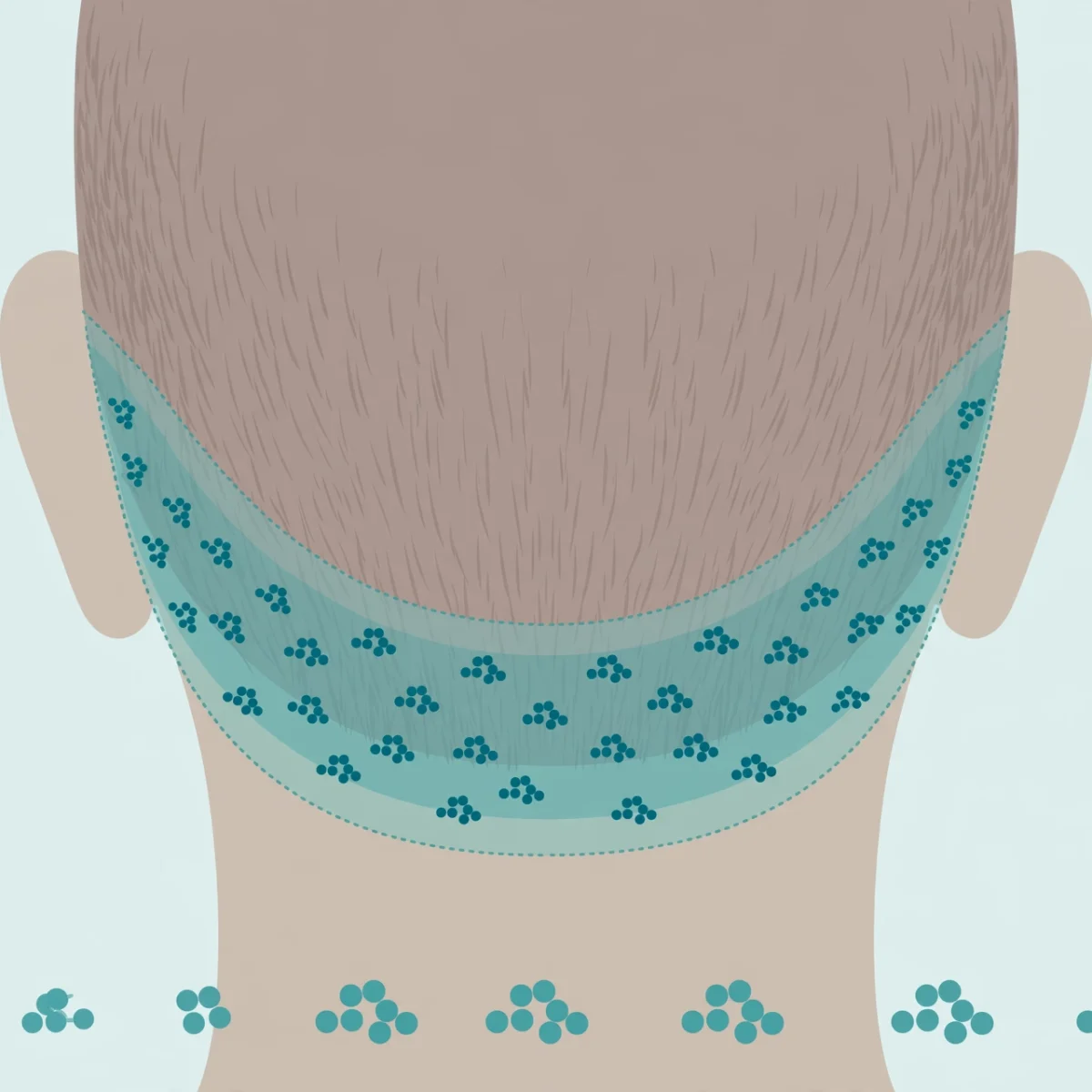
Hair transplantation moves hair rather than creating it, and that makes one region of the scalp more important than all the others. So what is the role of the donor area in hair transplantation? The short answer: the donor area is the permanent zone of hair at the back and sides of the head from which grafts are harvested, and it determines whether a transplant is possible, how many grafts can be moved safely, and how natural the result looks. This guide from DigitalGeekSpot explains what the donor area is, how surgeons assess it, how harvesting works, and who is, and is not, a candidate.
The Short Answer
The donor area is the band of hair around the back and sides of the scalp that is genetically resistant to the hormones driving pattern hair loss. In a transplant, a surgeon relocates follicular units from this zone to thinning or bald areas. Because transplanted hair keeps the characteristics of where it came from, donor hair typically keeps growing in its new location. The donor area’s density, size, hair quality, and long-term stability set a hard ceiling on what any transplant can achieve, which is why reputable surgeons evaluate it before discussing anything else.
What the Donor Area Is
The donor area, sometimes called the “safe donor zone”, wraps around the back of the head (the occipital region) and extends up the sides above the ears (the parietal regions). In pattern hair loss, follicles here resist dihydrotestosterone (DHT), the hormone that miniaturizes follicles on the top and front of the scalp. That is why even men with advanced baldness typically keep a horseshoe of hair: the donor zone survives while the top thins.
This underlies the principle of donor dominance: transplanted follicles keep the characteristics of their origin site, so a DHT-resistant follicle moved to the hairline generally keeps growing there. Without this quirk, transplantation would not work.
The donor supply is finite. An average donor zone contains a limited number of harvestable follicular units, often discussed in terms of a few thousand grafts over a lifetime, and every graft removed is gone from the donor area permanently. There is no way to create new donor hair, which is why planning and conservation matter so much.
Why the Donor Area Decides Everything
Think of the donor area as the budget for the entire procedure. Everything about the surgical plan flows from it:
- Candidacy: insufficient donor density or an unstable donor zone (for example, in diffuse unpatterned hair loss) can make someone a poor candidate or rule out surgery entirely.
- Graft count: the number of grafts available determines how much coverage is achievable. Ambitious hairline restorations on a limited donor supply lead to thin, disappointing results.
- Staging: because hair loss is progressive, surgeons must reserve donor grafts for future loss. Using the whole budget in the first procedure is a classic planning error.
- Naturalness: donor hair characteristics, thickness, curl, color contrast with the scalp, determine how natural the transplanted result looks.
- Donor aesthetics: overharvesting leaves the back of the head visibly thin or scarred, trading one cosmetic problem for another.
Reputable consultations start with donor examination, not hairline design. Any clinic that skips donor assessment and jumps straight to quoting graft numbers is a red flag.
How Surgeons Assess Your Donor Area
Donor evaluation is part measurement, part judgment. Here is what a thorough assessment covers:
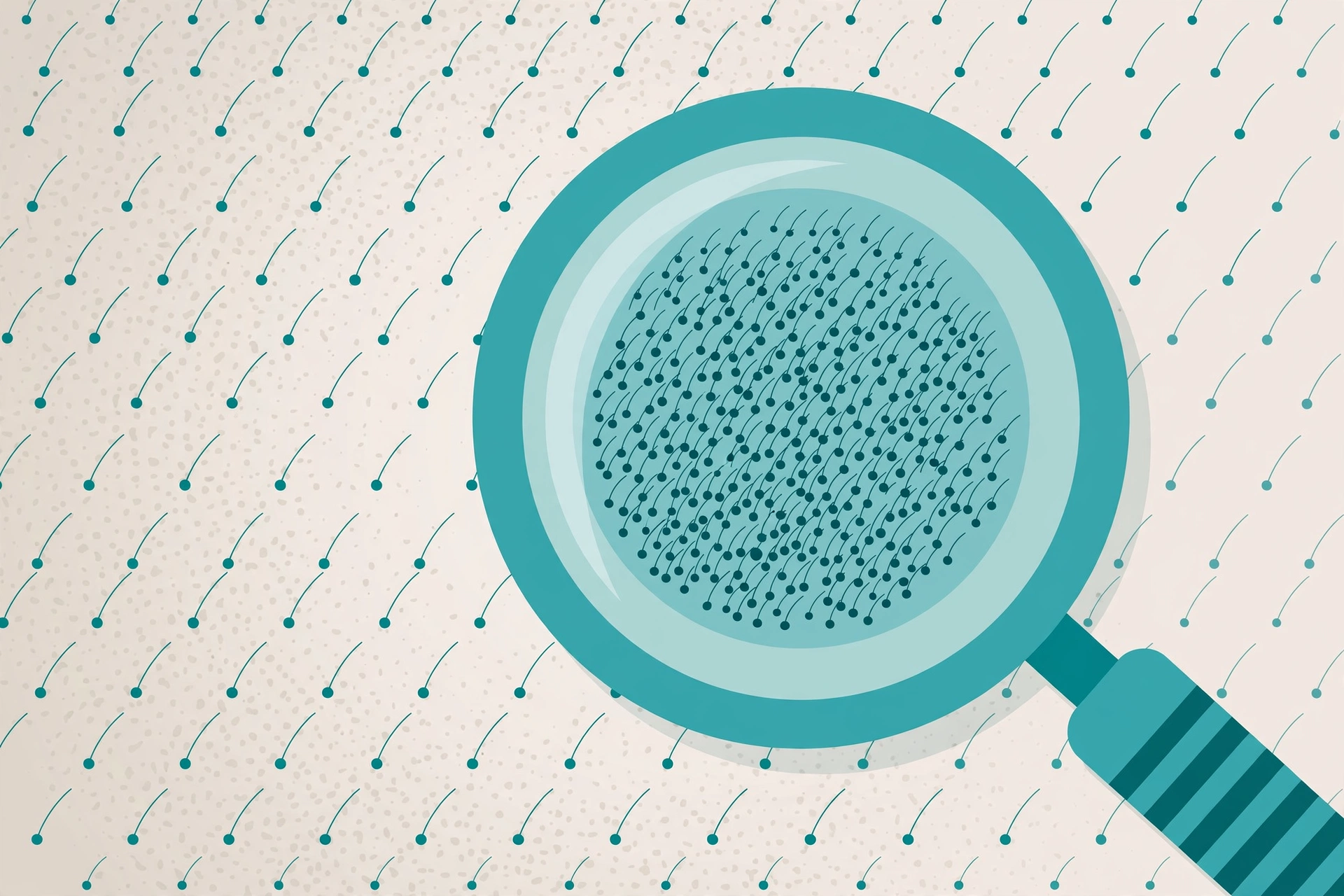
Donor Density
Density, the number of follicular units per square centimeter, is the headline number. It is measured with a densitometer or trichoscope, a magnifying device that lets the surgeon count follicles in a small area and extrapolate. Higher density means more grafts available and better camouflage of the extraction sites afterward. Density varies between individuals and even between regions of the same donor zone, so surgeons map it rather than taking a single reading.
Scalp Laxity
Laxity is how loose or stretchy the scalp is. It matters most for FUT (strip) procedures, where a strip of scalp is removed and the wound closed, looser scalps allow wider strips and finer scars. For FUE, laxity matters less, but very tight scalps can still complicate extraction. Surgeons test it by simply moving the scalp with their fingers during the exam.
Hair Characteristics
Not all donor hair is equal. Caliber (thickness of individual hairs) matters enormously: coarse hair covers more scalp per graft than fine hair. Curl and wave also add coverage, and color contrast between hair and scalp affects how thinning reads visually. The number of hairs per follicular unit (one to four) matters too, multi-hair units are the workhorses of coverage.
Donor Stability
The critical long-term question: will the donor zone itself stay intact? In classic pattern loss it generally does, but in diffuse unpatterned alopecia (DUPA) and some other conditions, the donor area thins too, and transplanting unstable hair means the transplanted hair can later be lost as well. Surgeons look for miniaturization (thinning, wispy hairs) within the donor zone under magnification. Finding significant miniaturization there is one of the strongest reasons to decline surgery.
How Donor Hair Is Harvested: FUE vs FUT
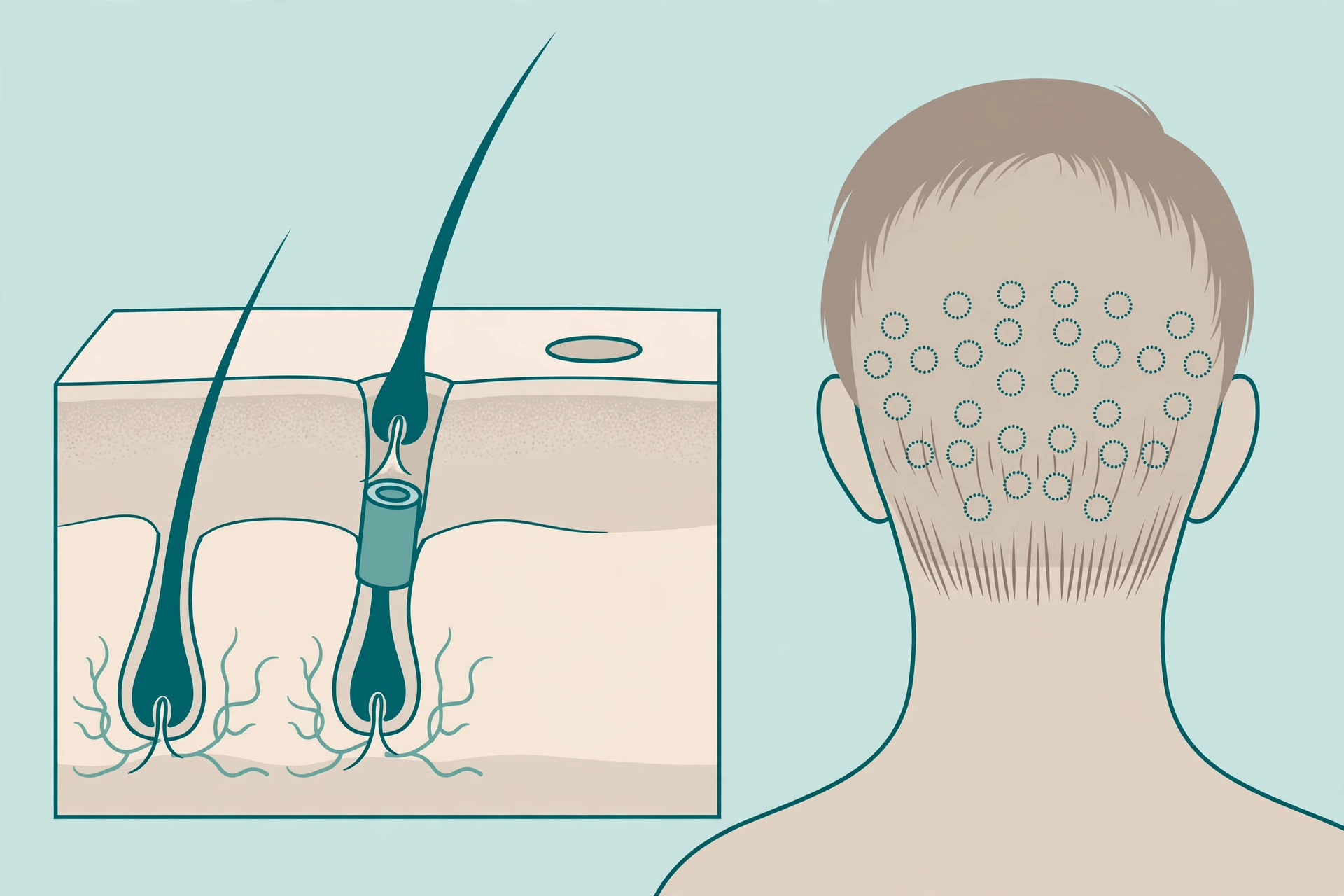
There are two established harvesting methods, and they treat the donor area very differently:
| Feature | FUE (Follicular Unit Extraction) | FUT (Follicular Unit Transplantation / Strip) |
|---|---|---|
| How it works | Individual follicular units punched out one by one with a tiny circular tool | A strip of scalp is removed from the donor zone, then divided into grafts under microscopes |
| Scarring | Many tiny dot scars scattered across the donor area | One linear scar across the back of the head |
| Best for short hair | Usually better, dot scars are easier to conceal with short cuts | Linear scar may show with very short hairstyles |
| Graft yield per session | Limited by how many units can be extracted without visible thinning | Can yield high graft counts in one session |
| Donor preservation | Allows selective harvesting, spreading extraction across the zone | Removes a defined band; repeat strips reduce laxity |
| Recovery | Generally quicker, less postoperative discomfort | Tighter, longer healing at the strip site |
Neither method is universally superior, the choice depends on goals, hairstyle, and donor characteristics. Either way, extraction must be distributed and conservative: skilled surgeons harvest in a spread pattern so the donor zone still looks full afterward.
Some clinics also discuss body hair (beard or chest) as a supplementary donor source when scalp supply is limited. Body hair differs in texture and growth cycle from scalp hair, so it is generally a backup option rather than a primary plan.
Donor Depletion and Overharvesting
Donor depletion is what happens when too much has been taken from the donor area, the back and sides look visibly thin, see-through, or patchy, sometimes worse than the original baldness. Overharvesting is one of the most common causes of poor transplant outcomes, and it is largely irreversible: you cannot put the hair back.
Warning signs of a clinic that may overharvest include quoting very high graft numbers without a careful donor exam, promising full density across a large bald area in a single session, and showing few or no photos of donors’ backs of heads in their results. Ethical surgeons plan for the lifetime donor budget, not just the current procedure, because pattern loss usually progresses, grafts must be rationed for the future. A conservative plan that leaves donor reserves is a sign of good judgment, not a lack of ambition.
Who Is Not a Good Candidate
Donor limitations rule out surgery for a meaningful share of people who seek it. Common situations where a reputable surgeon will advise against a transplant include:
- Diffuse thinning including the donor zone (DUPA): unstable donor hair may not survive long-term after transplanting.
- Very low donor density: too few harvestable grafts to make a cosmetic difference without visibly depleting the donor area.
- Very young patients with aggressive early loss: the future pattern is unpredictable, and operating too early risks wasting the lifetime donor budget.
- Unrealistic expectations: wanting juvenile density across a large bald area on a modest donor supply is a plan for disappointment.
- Active scarring alopecias or uncontrolled medical conditions: these need medical treatment first, and sometimes permanently rule out surgery.
- Fine, straight, low-contrast hair with extensive loss: not an absolute rule-out, but the achievable result may not justify surgery.
Being told “not yet” or “not a candidate” by an honest surgeon is valuable information, not a sales failure. Non-surgical options, medication, and sometimes supportive therapies, may be more appropriate. For example, platelet-rich plasma is sometimes offered alongside medical or surgical treatment; our explainer on what PRP hair transplants are covers how that therapy is used and what it can realistically do.
Can the Donor Area Regrow?
Extracted follicles do not grow back, each harvested graft is a permanent withdrawal from the donor supply. Occasionally a partially transected follicle may regenerate, but this is unreliable and never counted on in planning. This permanence is exactly why donor management is the central discipline of hair transplant surgery: every graft spent is a graft gone forever, so each one should be placed where it delivers the most lasting cosmetic value.
Related Articles
Frequently Asked Questions
What exactly is the donor area in a hair transplant?
The donor area is the region at the back and sides of the scalp where hair is genetically resistant to pattern hair loss. Grafts are harvested from this zone and transplanted to thinning or bald areas. Its density, size, and stability determine how many grafts are available and whether surgery is advisable at all.
Does transplanted hair fall out again?
Transplanted hair typically sheds within the first few weeks after surgery, this “shock loss” is normal, and then regrows from the transplanted follicles over the following months. Because the follicles come from the DHT-resistant donor zone, they generally keep growing long-term. However, the patient’s original non-transplanted hair around them can continue to thin, which is why ongoing medical treatment and long-term planning matter.
How many grafts can be taken from the donor area?
There is no universal number, it depends on donor density, the size of the safe zone, hair characteristics, and how much must be reserved for future loss. Surgeons calculate a personalized lifetime budget during the donor assessment. Be wary of any clinic that quotes a graft number before examining your donor area.
Will the donor area look thin after FUE?
With conservative, well-distributed extraction, the donor area should still look full afterward, that is the goal. Visible thinning, patchiness, or a “moth-eaten” look indicates overharvesting: too many grafts taken too close together. This is a key reason to choose a surgeon based on donor management skill, not just the price per graft.
Can body hair be used if the scalp donor area is weak?
Beard and body hair are sometimes used as supplementary donor sources, but they differ from scalp hair in texture, thickness, and growth cycles, so results are less predictable. Most surgeons treat body hair as a backup option for adding volume rather than a replacement for a proper scalp donor assessment.
Conclusion
The donor area is the foundation of every hair transplant: a finite, irreplaceable supply of DHT-resistant hair that sets the ceiling on graft count, coverage, and long-term success. A thorough donor assessment, density, laxity, hair characteristics, and stability, should come before any discussion of hairlines or graft numbers, and conservative harvesting that preserves the donor’s appearance is the mark of a skilled surgeon. If your donor area is strong and your expectations are realistic, transplantation can deliver lasting, natural results. If it is weak or unstable, the honest answer may be to wait, treat medically, or not operate at all, and a surgeon who tells you that is one worth trusting.
This article is not medical advice; consult a qualified professional.



2 Comments