Learning how to choose running shoes for the first time can feel confusing. Walk into any running store or browse online and you will find dozens of models with unfamiliar terms like heel drop, pronation, and responsive foam. The good news is that beginners do not need the most expensive or most technical shoe on the shelf. They need a comfortable, well-fitting pair that matches their feet and their training surface. This guide walks you through everything a new runner needs to know, from understanding your foot type to getting the sizing right and spotting beginner-friendly features.
Why the Right Pair Matters
Running is a high-impact activity. With every stride, your feet absorb forces of roughly two to three times your body weight, and that stress travels up through your ankles, knees, and hips. A proper running shoe is engineered to cushion that impact and guide your foot through a natural stride. Regular sneakers, court shoes, or worn-out trainers often lack the cushioning, support structure, and running-specific fit that help beginners stay comfortable.
Comfort is the single most important factor for new runners. Discomfort, rubbing, or hot spots in the first few weeks can turn a promising new habit into a chore. When your shoes fit well and feel good, you are more likely to stick with your training plan. If you are just getting started with the sport, you may also want to read our guide to starting running for beginners alongside this article for a complete first-week plan.
Know Your Foot Type First
Before you look at a single shoe, it helps to understand the shape and mechanics of your own feet. Two characteristics matter most: your arch height and your gait (the way your foot rolls when you walk or run).
Check your arch height
Arches generally fall into three groups. Flat feet (low arches) tend to roll inward more, which is called overpronation. High arches tend to roll outward less and may need extra cushioning to absorb shock. Neutral or medium arches usually fall somewhere in between. A simple at-home check is the wet footprint test: wet the bottom of your foot, step on a paper bag or dark cardboard, and look at the print. A full print suggests a flatter arch, a narrow band suggests a higher arch, and a moderate curve suggests a neutral arch.
Understand pronation
Pronation is the natural inward roll of the foot after landing, and a certain amount is normal. Shoes are often grouped into categories based on how much support they provide:
- Neutral shoes suit runners with neutral gaits or mild pronation. Most beginner-friendly models fall here.
- Stability shoes include guide features for runners whose feet roll inward more noticeably.
- Motion control shoes are the most structured option, intended for significant overpronation.
Many specialty running stores offer a free gait analysis, where staff watch you walk or run on a treadmill to see how your feet move. This is a useful, no-pressure way to narrow down the right category before you try anything on. As a beginner, you do not need to overthink this. A comfortable neutral or stability shoe covers the vast majority of new runners.
Get the Sizing Right
Running shoes should not fit like dress shoes or casual sneakers. Feet swell during runs, and your toes need room to spread on impact. Follow these sizing tips to get it right:
- Leave a thumb’s width of space between your longest toe and the front of the shoe. Many runners buy running shoes a half to a full size larger than their everyday shoes.
- Shop in the afternoon or evening, when your feet are at their largest, to avoid a fit that feels fine in the morning but tight on a run.
- Bring the socks you plan to run in, since thick and thin socks change the fit noticeably.
- Check the heel and midfoot. The heel should feel snug with minimal slipping, and the midfoot should feel secure without pressure on the top of your foot.
- Walk, jog, and bounce in the store. A few steps around the shop are not enough. Most running stores expect you to test shoes with a short jog.
- Listen to your feet. No break-in period should be required. A good running shoe feels comfortable the first time you put it on.
Feet are often slightly different sizes, so fit the larger foot and adjust lacing on the smaller one. Also remember that sizing varies between brands, so do not fixate on the number. The feel matters far more than the size printed on the box.
What to Look for in Your First Pair
For a first pair, keep your priorities simple. These are the features that matter most for beginners:
Cushioning
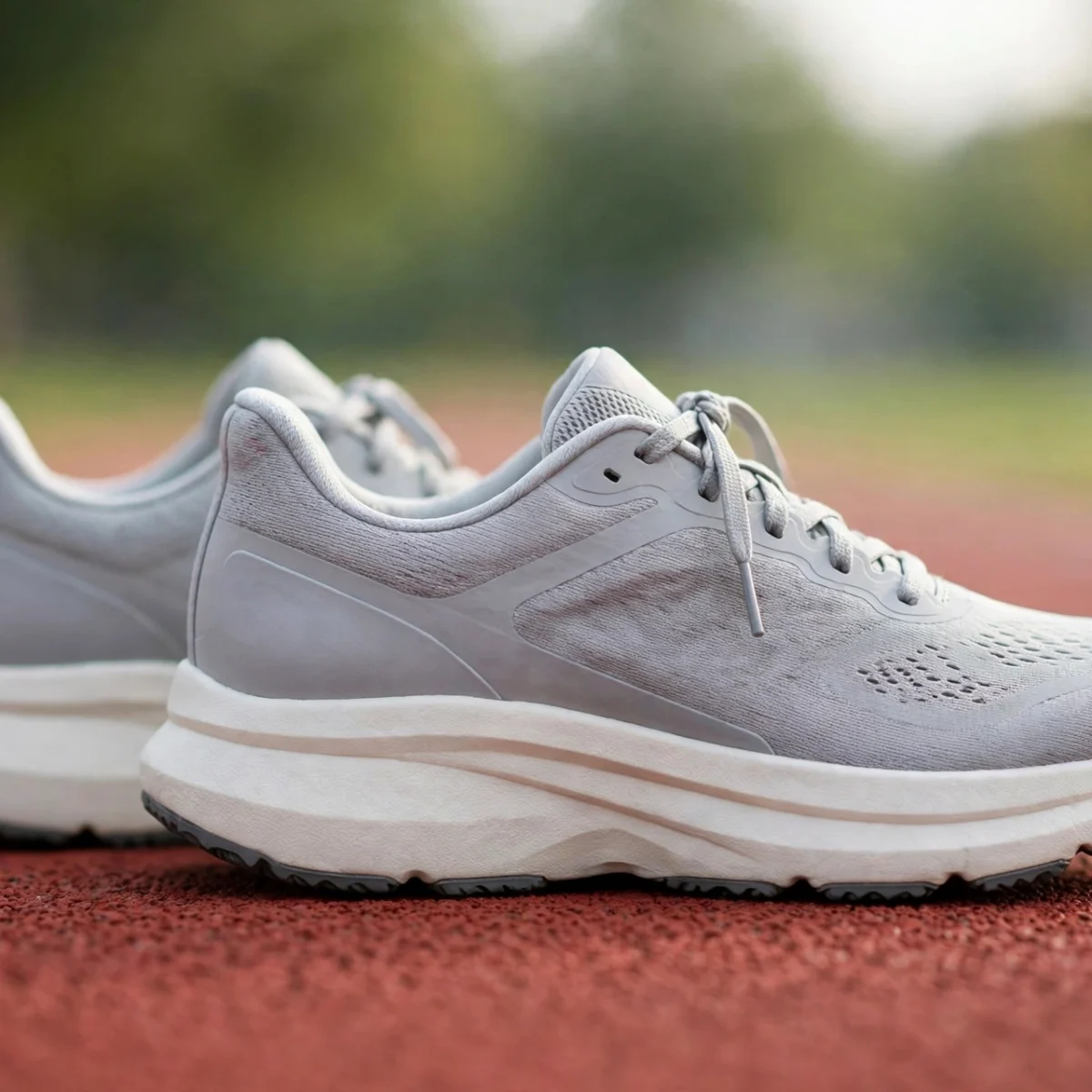
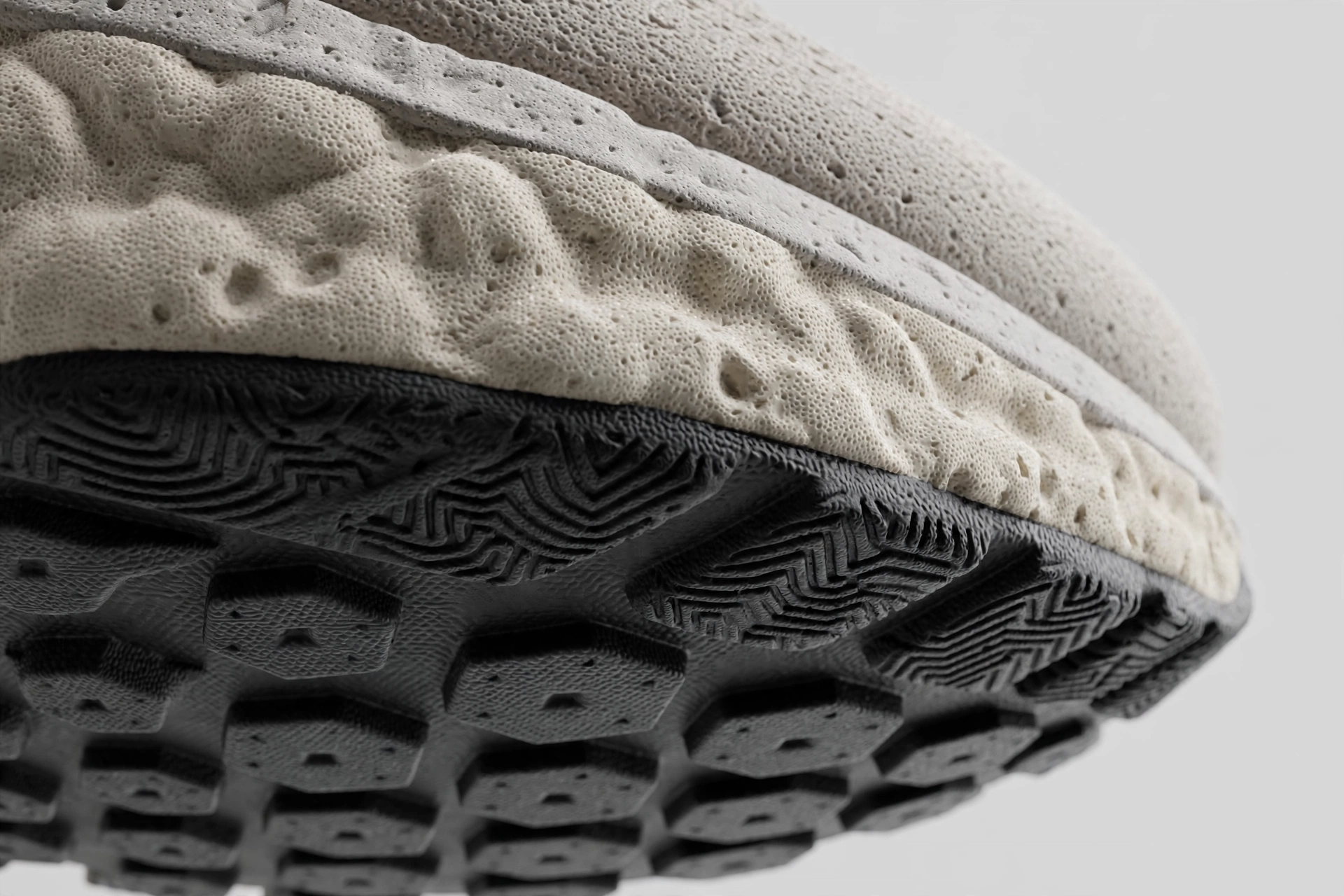
Look for a well-cushioned midsole that feels soft but not mushy underfoot. Moderate cushioning protects new runners whose legs are still adapting to impact. Maximalist, ultra-thick shoes are not necessary, and very firm minimal shoes are best left until you have more experience.
Heel drop
Heel drop (also called offset) is the height difference between the heel and the forefoot, measured in millimeters. Most beginner-friendly shoes have a drop between 8 and 12 millimeters, which feels natural for runners coming from everyday footwear. Lower drops change how your calves and Achilles load, so they are better explored later.
Weight
Lighter shoes feel faster, but for beginners durability and cushioning matter more than shaving grams. A moderate-weight daily trainer is the ideal first shoe.
Road vs. trail
Choose based on where you will actually run. Road running shoes suit pavement, tracks, and treadmills, with smoother outsoles and lighter builds. Trail shoes have grippier lugs and tougher uppers for dirt, gravel, and uneven paths. If you will mix surfaces, a road shoe with a bit of outsole texture handles light gravel paths fine. Planning to work up to longer distances? Our guide to training for your first 5K explains how your shoe choice fits into a complete plan.
Upper fit and breathability
A breathable engineered mesh upper keeps feet cooler and adapts to foot shape. Check that the toe box gives your toes room to wiggle and that there are no seams pressing on bunions or the tops of your toes.
When and Where to Try Shoes On
A specialty running store is the best place for your first pair. Staff can watch your gait, bring out several options in your category, and let you test them properly. The service is usually free, and there is no obligation to buy the priciest model. If you prefer to shop online, order from retailers with free return policies so you can test shoes on a short indoor run and send back what does not work.
Bring your current workout shoes so staff can see the wear pattern on the soles, which reveals a lot about your gait. Worn-down inner edges, for example, can hint at overpronation, while wear concentrated on the outer edge can suggest the opposite.
Common Beginner Mistakes to Avoid
- Buying for looks alone. The most attractive colorway means nothing if the fit is wrong. Comfort first, style second.
- Choosing fashion sneakers. Lifestyle sneakers from fashion brands are not built for running impact, no matter how sporty they look.
- Going too small. Cramped toes lead to blisters, black toenails, and numbness on longer runs.
- Overbuying technology. Carbon-plated racers and ultra-minimal shoes serve specific purposes. A simple daily trainer is the right tool for learning to run.
- Ignoring socks. Cotton socks hold moisture and cause blisters. Moisture-wicking running socks are a cheap upgrade that makes a real difference.
- Replacing too late. Shoes lose cushioning long before they look worn out, which brings us to the next section.
How Often to Replace Your Running Shoes
Most running shoes last roughly 300 to 500 miles, depending on your weight, running surface, and the shoe’s construction. Heavier runners and rough surfaces wear shoes out faster. Watch for these signs that it is time for a new pair:
- The tread is visibly worn smooth, especially under the forefoot or heel.
- The midsole shows deep creases or feels flat and lifeless compared to when it was new.
- New aches in your knees, shins, or feet appear without any change in training.
- One shoe leans or the heel counter has collapsed inward.
A simple way to track mileage is to log your runs in a free app or note the purchase date on the shoe box. Rotating two pairs, if your budget allows, extends the life of both and gives the foam time to recover between runs. For more training and fitness ideas, you can explore additional guides on the DigitalGeekSpot homepage.
Frequently Asked Questions
Should beginners buy expensive running shoes?
Not necessarily. A mid-range daily trainer from an established running brand usually offers everything a beginner needs: reliable cushioning, a comfortable fit, and durable construction. Fit matters far more than price. An affordable shoe that fits perfectly will serve you better than a premium model in the wrong size.
Do I need different shoes for walking and running?
It helps to have a dedicated pair for running. Walking shoes and running shoes are built for different impact patterns and stride mechanics. Using your running shoes only for runs also makes it easier to track their mileage and know when to replace them.
How should running shoes feel in the store?
They should feel comfortable immediately, with no pinching, rubbing, or pressure points. Your toes should have room to wiggle, your heel should feel secure, and the overall ride should feel smooth when you jog. Any discomfort in the store will only get worse on a run.
Can I run in cross-training shoes?
Cross-trainers are designed for lateral movement in gym workouts, not the repetitive forward impact of running. For occasional very short jogs they will do, but anyone running regularly should switch to proper running shoes to protect their joints and stay comfortable.
Do I need insoles or orthotics as a beginner?
Most beginners do fine with the insoles that come in the shoe. If you have persistent foot pain, a diagnosed condition like plantar fasciitis, or a strong recommendation from a medical professional, custom orthotics may help. Otherwise, focus on finding a shoe that fits well on its own.
Is it okay to buy running shoes online?
Yes, as long as you buy from a retailer with a generous return policy. Ideally, get fitted in a store first to learn your size and preferred category in a given brand, then reorder online with confidence. Always test new shoes on a short run before committing to them for longer distances.