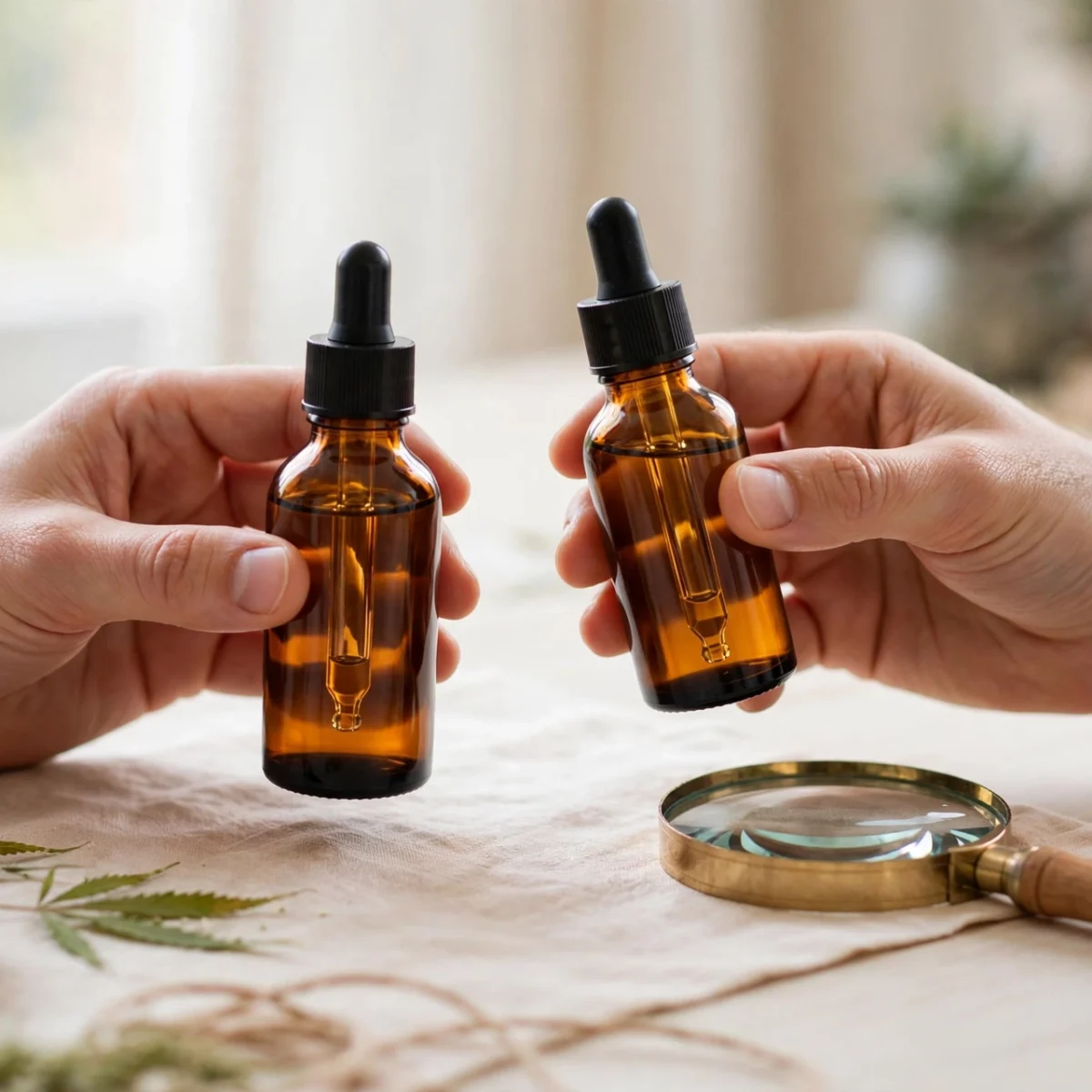
Choosing a CBD oil comes down to verifying four things: an accessible third-party lab report matching the bottle’s batch number, clearly stated CBD content in milligrams per bottle and per serving, a spectrum type that fits your THC preferences, and a short, transparent ingredient list. Reputable oils use CO2 or ethanol extraction, name their hemp source, and avoid disease-treatment claims on the label. Price alone is an unreliable quality signal; the Certificate of Analysis is the document that actually proves what is inside the bottle.
This article is for informational purposes only and is not medical advice. Talk to a healthcare professional before using any CBD product, especially if you take medication.
Key Takeaways
- The Certificate of Analysis (COA) from an independent lab is the single most important quality proof; never buy CBD oil without one.
- Compare products by milligrams of CBD per serving and price per milligram, not by bottle size or vague terms like “extra strength.”
- Full-spectrum, broad-spectrum, and isolate describe THC content and compound profile; choose based on your drug-testing and preference situation.
- CO2 extraction is widely regarded as the cleanest method; ethanol extraction is also reputable when properly performed.
- Red flags include missing lab reports, no milligram amounts, disease-cure claims, and “hemp oil” labels with no CBD content stated.
- Store CBD oil in a cool, dark place; most oils keep for 12 to 18 months before potency noticeably declines.
Why Is Choosing CBD Oil So Confusing?
The CBD market grew faster than its regulations. In the United States, hemp-derived CBD became federally legal under the 2018 Farm Bill, but no pre-market approval system verifies most products, which means quality ranges from rigorously tested to outright mislabeled. Independent testing programs have repeatedly found products containing far less CBD than labeled, and occasionally more THC than legal limits allow.
This guide gives you a repeatable buying process instead of brand recommendations, because brands change but quality criteria do not. Work through the checks below in order, and you will filter out the majority of low-quality products within minutes. For background on what CBD actually is, start with the fundamentals before shopping.
Check 1: The Third-Party Lab Report (COA)
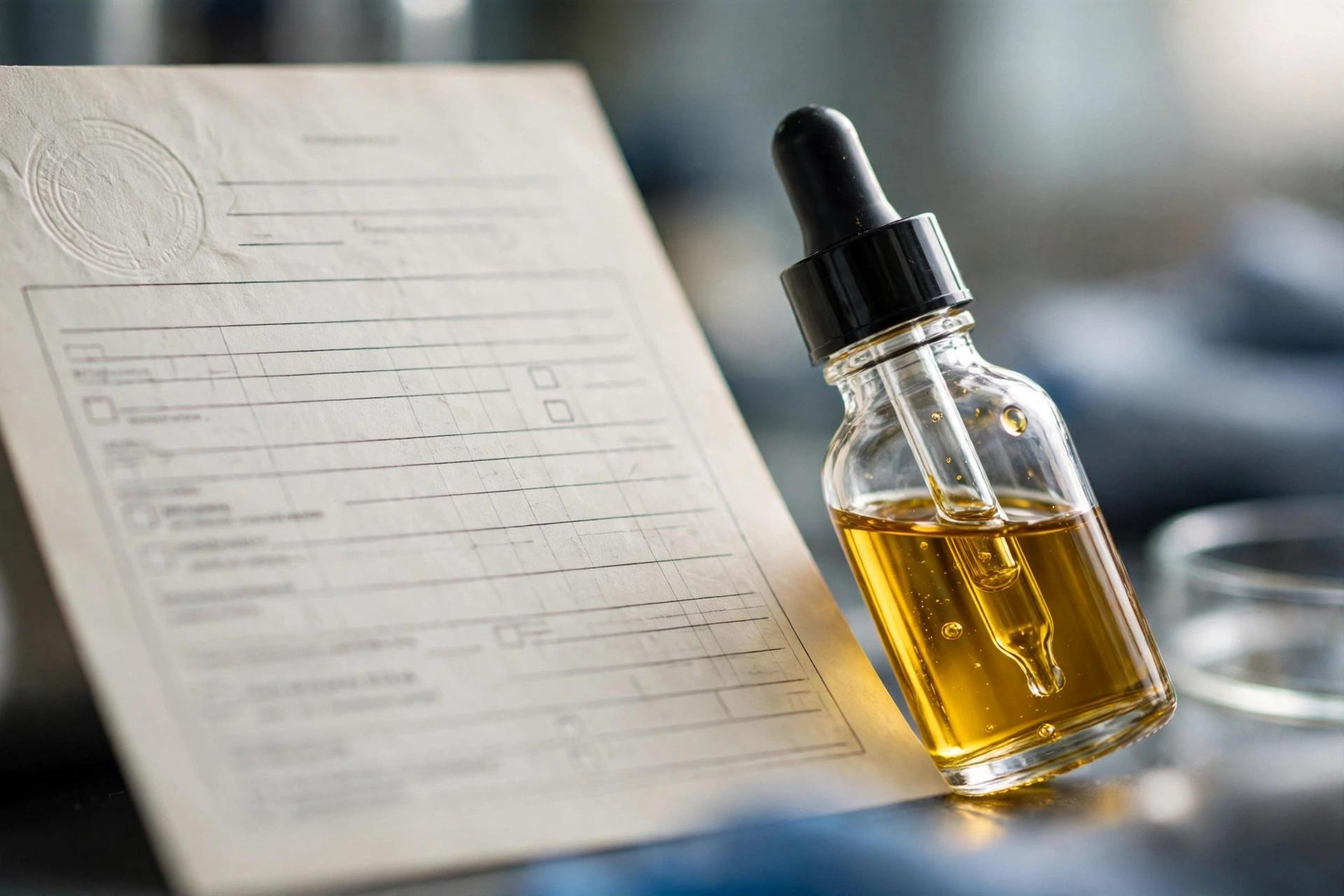
A Certificate of Analysis is a lab report from an independent testing facility, and it is non-negotiable. A proper COA shows the product’s cannabinoid profile (confirming CBD content and THC level), contaminant screening for pesticides, heavy metals, residual solvents, and microbes, and a batch or lot number that matches the bottle in your hand.
How to use it in practice: find the COA link or QR code on the product page or label, confirm the batch number matches your bottle, check that the CBD total is within about 10 percent of the label claim, and verify THC is at or below 0.3 percent. If a company cannot produce a current, batch-specific COA, or buries it where shoppers cannot find it, move on regardless of price or marketing. Our detailed tutorial on how to read a CBD lab report walks through each section of a real COA so you can interpret results yourself.
Check 2: Potency Math, Milligrams That Matter
CBD oil strength is measured in milligrams of CBD per bottle, but the number that matters for comparison is milligrams per serving and price per milligram. A “1000 mg” bottle with 30 servings delivers about 33 mg per serving; a “500 mg” bottle with a dropper serving of 17 mg may suit a beginner better despite the smaller total.
| Bottle example | Total CBD | Per 1 ml serving | Typical buyer |
|---|---|---|---|
| 30 ml / 500 mg | 500 mg | About 17 mg | Beginners testing tolerance |
| 30 ml / 1000 mg | 1000 mg | About 33 mg | Regular users wanting flexibility |
| 30 ml / 2500 mg | 2500 mg | About 83 mg | Experienced users (higher cost per bottle, lower per mg) |
To compare value, divide the bottle price by total CBD milligrams. A $60 bottle with 1000 mg costs $0.06 per mg; a $40 bottle with 500 mg costs $0.08 per mg, making the “expensive” bottle the better value. Ignore marketing terms like “maximum strength” or “extra potent,” which have no standardized meaning. If dropper math confuses you, our explainer on how much CBD is in a dropper shows the calculation step by step.
Check 3: Choose the Right Spectrum Type
Spectrum type determines which hemp compounds, and how much THC, the oil contains. There is no universally best option; the right choice depends on your sensitivity to THC and whether you undergo drug testing.
| Spectrum | Contains | THC level | Best for |
|---|---|---|---|
| Full-spectrum | CBD plus minor cannabinoids, terpenes, trace THC | Up to 0.3% | Buyers wanting the complete plant profile who are not drug tested |
| Broad-spectrum | Multiple compounds with THC removed | Non-detectable | Buyers wanting variety without THC |
| Isolate | Purified CBD only | None | Buyers wanting CBD alone; simplest drug-test profile |
Note that “THC-free” claims deserve the same verification as everything else: confirm non-detectable THC on the COA rather than trusting the front label. For the full technical comparison, see full-spectrum vs broad-spectrum vs isolate CBD.
Check 4: Extraction Method and Hemp Source
Extraction method affects purity. Supercritical CO2 extraction is widely considered the gold standard because it produces clean extract without residual solvents. Ethanol extraction is also reputable when performed properly, though it can yield a stronger-tasting oil. Be cautious of products that do not disclose their extraction method at all, or that use hydrocarbon solvents without clear purging verification on the COA.
Hemp source matters because hemp is a bioaccumulator: it absorbs whatever is in its soil, including heavy metals and pesticides. Oils made from organically grown, domestic hemp with disclosed farm origins are preferable to oils with no sourcing information. A brand transparent about its farms, extraction, and testing is demonstrating the exact confidence you want as a buyer. At DigitalGeekSpot we emphasize verifiable quality signals over marketing, and in CBD, transparency is the quality signal.
Check 5: Read the Ingredient List
Quality CBD oil has a short ingredient list: hemp extract and a carrier oil, sometimes with natural flavoring. Common carrier oils include MCT oil (derived from coconut, neutral taste, good absorption) and hemp seed oil (adds omega fatty acids, earthier taste). Olive oil appears in some products as well.
Question long lists of artificial additives, fillers, or “proprietary blends” that hide actual contents. Also distinguish formats: a tincture is an oil-based extract taken under the tongue, while “CBD oil” is sometimes used loosely for the same thing, our CBD tincture vs CBD oil guide clarifies the terminology so labels cannot confuse you.
Red Flags: When to Walk Away
| Red flag | Why it matters |
|---|---|
| No accessible COA | No independent proof of contents or safety |
| No milligram amounts on the label | You cannot verify dose or compare value |
| Disease treatment or cure claims | Illegal for supplements; signals a dishonest seller |
| “Hemp oil” with no CBD stated | May be hemp seed oil with negligible CBD |
| Suspiciously cheap for the claimed potency | Often signals underfilled or fake product |
| No batch or lot number | COA cannot be matched to your bottle |
| Medical-style packaging with a white coat on the ad | Marketing theater, not quality evidence |
Counterfeit and mislabeled CBD is common enough that we maintain a dedicated guide to how to spot fake CBD oil; read it before buying from an unfamiliar seller, especially on marketplaces.
How Should You Store CBD Oil?
Proper storage protects your investment. Keep CBD oil in a cool, dark place away from heat and direct sunlight, such as a pantry or cupboard; refrigeration is unnecessary for most oils but will not harm them. Always seal the bottle tightly, since air exposure degrades cannabinoids over time.
Most CBD oils maintain labeled potency for 12 to 18 months when stored correctly. Signs of degradation include a significantly darker color, a rancid smell from the carrier oil, or noticeably weaker effects at your usual serving. Our storage guide covers the details in how to store CBD oil.
Frequently Asked Questions
What is the most important thing to check when buying CBD oil?
The third-party Certificate of Analysis. It independently verifies CBD content, THC level, and contaminant screening for the exact batch you are buying. No lab report means no verified quality, regardless of brand reputation or price.
How many milligrams of CBD oil should a beginner buy?
Most beginners start with a 500 mg or 1000 mg bottle (about 17 to 33 mg per 1 ml serving), which allows low, adjustable servings. Bottle size is less important than per-serving milligrams and the ability to measure small servings with the dropper. Discuss serving decisions with a healthcare professional.
Is more expensive CBD oil better?
Not necessarily. Compare price per milligram of CBD across products with verified COAs instead of judging by shelf price. Some premium-priced oils offer no better lab results than mid-priced competitors, while suspiciously cheap oils often fail potency verification.
What is the difference between CBD oil and hemp seed oil?
CBD oil is extracted from hemp flowers and leaves where cannabinoids concentrate; hemp seed oil is pressed from seeds and contains little to no CBD. Products labeled only “hemp oil” without milligram CBD amounts may be hemp seed oil. Always check the COA for actual CBD content.
Should I choose full-spectrum or isolate?
Choose full-spectrum if you want the complete plant profile and are not subject to drug testing; choose broad-spectrum or isolate if you want to avoid THC. Verify the actual THC content on the COA rather than relying on front-label claims in either case.
How can I tell if a CBD oil is fake?
Check for the red flags above: no COA, no milligram labeling, cure claims, and prices far below market for the claimed potency. Buy from the brand’s official site or authorized retailers rather than unknown marketplace sellers, and verify the batch number on the COA matches your bottle.
Does CBD oil expire?
Yes, gradually. Most oils keep labeled potency for 12 to 18 months stored cool, dark, and sealed. Expired oil is unlikely to become harmful, but degraded cannabinoids and rancid carrier oil reduce quality. Check color and smell if a bottle is old.
Can I bring CBD oil when traveling?
Hemp-derived CBD is federally legal in the US but subject to state rules, and international laws vary from permissive to prohibitive. Check the laws of every jurisdiction on your route before traveling with CBD oil, and carry the product in its original labeled packaging with the COA accessible.
Related Articles
- How to Read a CBD Lab Report
- How to Spot Fake CBD Oil
- Full-Spectrum vs Broad-Spectrum vs Isolate CBD
- How to Store CBD Oil
The Bottom Line
Choosing CBD oil is a verification exercise, not a brand loyalty decision. Demand a batch-matched third-party lab report, compare milligrams per serving and price per milligram, pick a spectrum type that fits your THC situation, and reject products with missing data or cure claims. Shoppers who run these five checks buy with confidence; shoppers who skip them gamble. The extra ten minutes at the product page is the cheapest quality insurance in the CBD market.