

Learning how to spot fake CBD oil is one of the most valuable skills a CBD shopper can build. The CBD market still has uneven labeling standards and light enforcement, which means low-quality and misleading products sit on shelves right next to legitimate ones. Some contain far less CBD than advertised; others contain none at all. This buyer-safety checklist walks through the warning signs of low-quality CBD products and the verification steps that separate trustworthy brands from the rest.
“Fake” covers a spectrum. At one end are outright counterfeits: bottles with no CBD at all, sometimes just flavored cooking oil. In the middle are misleading products: hemp seed oil marketed with CBD-style language, or labels that overstate the CBD content. At the milder end are simply low-quality products: real CBD, but with sloppy manufacturing, no testing, and labels you cannot verify. The checklist below catches all three.
Warning Sign 1: No Third-Party Lab Report
The single biggest red flag is a missing certificate of analysis, or COA. A COA is an independent lab report that verifies a product’s CBD content and screens for contaminants. Reputable brands publish one for every batch and link it on the product page or print a QR code on the label.
Be suspicious of brands that publish no lab reports at all, publish one generic report shared across all products, or publish reports that are years old. A legitimate COA names the specific product and batch, comes from an accredited independent laboratory, and is recent. If you have never examined one, our guide on how to read a CBD lab report shows exactly what to check.
Warning Sign 2: Vague or Missing CBD Numbers on the Label
A trustworthy CBD oil states its CBD content clearly in milligrams, for example “1000 mg CBD.” Watch out for labels that:
- List only “hemp extract” weight without stating the actual CBD content
- Use the ambiguous phrase “hemp oil” with no further detail
- Advertise a big milligram number on the front that turns out to refer to the whole bottle of mixed ingredients, not CBD
- List CBD only in the marketing copy but not in the supplement facts or ingredients
If you cannot determine the milligrams of CBD from the label alone, the brand is either careless or deliberately vague. Either way, choose a product with transparent labeling. Our label-math guide to how much CBD is in a dropper helps you convert any clear label into plain numbers.
Warning Sign 3: Unrealistic Health Claims
CBD products are not approved to treat, cure, or prevent any condition, and responsible brands know this. Treat the following as immediate red flags:
- Claims that a product “cures,” “treats,” or “heals” specific conditions
- Promises of guaranteed results or miracle outcomes
- Disease names printed on the packaging or in the product title
- Testimonials presented as proof that the product works for medical conditions
Beyond being misleading, disease claims on CBD products violate advertising regulations in the United States. A brand willing to break those rules is also likely to cut corners on testing and labeling. Legitimate companies describe their products in general terms and let the lab reports do the talking.
Warning Sign 4: Suspiciously Low Prices
CBD extraction, carrier oils, packaging, and third-party testing all cost money. While prices vary, genuine CBD oil has a realistic price floor. If a “1000 mg CBD oil” sells for the price of a bottle of cooking oil, something does not add up.
Price alone never proves a product is fake, and expensive does not automatically mean good. But extreme discounting on high-potency claims is a classic marker of misleading products. Compare the price per milligram of CBD across a few reputable brands to calibrate your sense of normal pricing before hunting for bargains.
Warning Sign 5: Hemp Seed Oil Masquerading as CBD Oil
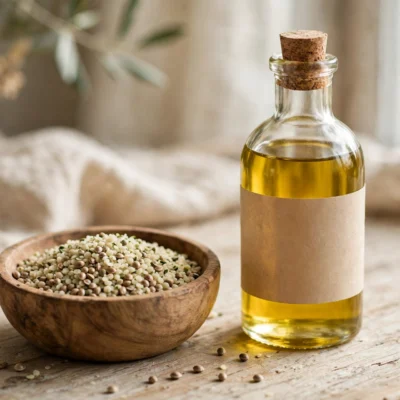
One of the most common deceptions is selling plain hemp seed oil with CBD-style branding. Hemp seed oil is a legitimate food oil pressed from hemp seeds, but it contains virtually no CBD. Unscrupulous sellers list it in CBD categories, use imagery of droppers and cannabis leaves, and price it above grocery-store levels while staying below real CBD prices.
The defense is simple label literacy. Real CBD oil states milligrams of CBD and names a hemp extract in the ingredients. Hemp seed oil lists a single ingredient and no CBD number. We explain the full distinction in our comparison of hemp seed oil vs CBD oil.
Warning Sign 6: No Company Information or Contact Details
Legitimate brands stand behind their products with a real company presence: a physical address or at least a verifiable business location, customer service contact information, and an “about us” page with actual company history. Warning signs include:
- No company address anywhere on the site or label
- Only a contact form with no email or phone number
- A website registered very recently with no track record
- Product sold only through anonymous marketplace listings with no brand website
Marketplace platforms can be convenient, but they also host the highest concentration of misleading CBD listings. When buying from a marketplace, verify the brand independently: find its own website, check for published lab reports, and confirm the company details match.
Warning Sign 7: Sloppy Packaging and Labeling Errors
Professional manufacturers invest in accurate labeling. Frequent typos, inconsistent milligram numbers between the front label and the supplement facts, missing ingredient lists, or labels that peel and look homemade all suggest a product made without proper quality control.
Also check for basic regulatory details: a supplement or nutrition facts panel, a full ingredient list, the net quantity, and the manufacturer’s name and location. Missing basics do not automatically mean the product is fake, but they indicate a company that is not taking compliance seriously.
Verification Steps: A 5-Minute Checklist Before You Buy
Run through these steps with any new brand before spending money:
- Find the COA. Locate the third-party lab report for the specific product and batch. Confirm it comes from an independent lab, not the brand itself.
- Match the numbers. Check that the tested CBD total is reasonably close to the labeled total. Small variations are normal; large gaps are not.
- Check the THC line. Confirm THC is within the legal limit and matches what the product type promises (for example, non-detectable for broad-spectrum or isolate products).
- Read the full ingredient list. Confirm a hemp extract is present, note the carrier oil, and look for unnecessary additives.
- Verify the company. Confirm real contact details, a plausible company history, and consistent branding between the website, the label, and the lab report.
- Scan reviews critically. Look for detailed, specific reviews rather than generic praise, and be wary of products with only five-star ratings posted in a short time span.
Five minutes of checking beats months of wondering whether a product contains what it claims. Make it a habit, especially with brands you have never bought from before.
What to Do If You Suspect a Product Is Fake
If a product you bought shows red flags, stop using it and document what you found: save the label photos, the product page, and any lab report discrepancies. Contact the seller for a refund; reputable retailers have return policies, and payment providers often side with buyers when a product is misrepresented.
You can also report misleading CBD products to consumer protection agencies in your area. Reports from shoppers are one of the main ways regulators learn about bad actors. And consider leaving a factual, detailed review describing exactly what you found, so other shoppers benefit from your experience.
Storing Your CBD Oil Properly After You Buy
Buying a quality product is only half the job; storing it correctly protects your investment. CBD oil degrades with heat, light, and air exposure, so a cool, dark place with the bottle sealed extends its usable life. For the full rundown, see our guide on how to store CBD oil.
This article is for general information only and is not medical advice. For more plain-language CBD buying guides and product explainers, browse the DigitalGeekSpot homepage.
Frequently Asked Questions
How can you tell if CBD oil is fake?
Check for a third-party lab report matching the product and batch, clear CBD milligrams on the label, realistic pricing, and verifiable company information. Missing lab reports and vague labels are the strongest warning signs.
Do fake CBD products contain any CBD at all?
Some contain less CBD than advertised, and some contain none. A common deception is selling hemp seed oil, which contains virtually no CBD, with CBD-style branding and pricing.
Are cheap CBD oils always fake?
No, but suspiciously cheap high-potency products deserve scrutiny. Compare the price per milligram of CBD against reputable brands; prices far below the normal range often signal misleading labels.
What should a real CBD lab report show?
It should come from an independent accredited lab, name the specific product and batch, list measured CBD and THC levels close to the label claims, and include contaminant screening results.
Can I trust CBD products from online marketplaces?
Marketplaces host both legitimate and misleading listings. Verify any marketplace product independently: find the brand’s own website, confirm published lab reports, and check that company details are consistent.
What should I do if I bought a fake CBD product?
Stop using it, document the label and listing, request a refund from the seller, and consider reporting the product to consumer protection agencies. A factual public review can also warn other shoppers.
1 Comment