
If you want to learn how to start running for beginners, you are in the right place. Running is one of the simplest ways to get fitter, because it needs almost no equipment, no gym membership, and no special skills to begin. You just need a pair of shoes, a safe place to run, and a plan that keeps you from doing too much too soon.

Most beginners quit because they start too fast. They try to run nonstop on day one, feel terrible, and decide running is not for them. This guide takes a different approach: an 8-week run-walk plan that slowly increases your running time while giving your body room to recover. It also covers the gear you actually need, proper form basics, and the most common beginner mistakes so you can avoid them.
This article is general fitness information only, not medical advice. If you have a health condition or have been inactive for a long time, check with a qualified health professional before starting a new exercise routine.
For more beginner-friendly guides on fitness and everyday wellness, you will find plenty of them on the DigitalGeekSpot homepage.
Why Running Is a Great Starting Point
Running burns more calories per minute than most forms of exercise, which is why many beginners pick it up when they want to get fitter. It strengthens your heart and lungs, builds endurance in your legs, and improves your mood. Many runners report clearer thinking after a session, which makes it a popular habit for people with busy schedules.
It is also flexible. You can run for 20 minutes before work, during lunch, or in the evening. You do not need to commute to a gym or book a class. That flexibility is one reason running routines last longer than many other workout plans. If you are also building a simple home routine, home workouts without equipment pair well with a running plan.
The Gear You Actually Need
You do not need much to start, but two items matter: shoes and socks.
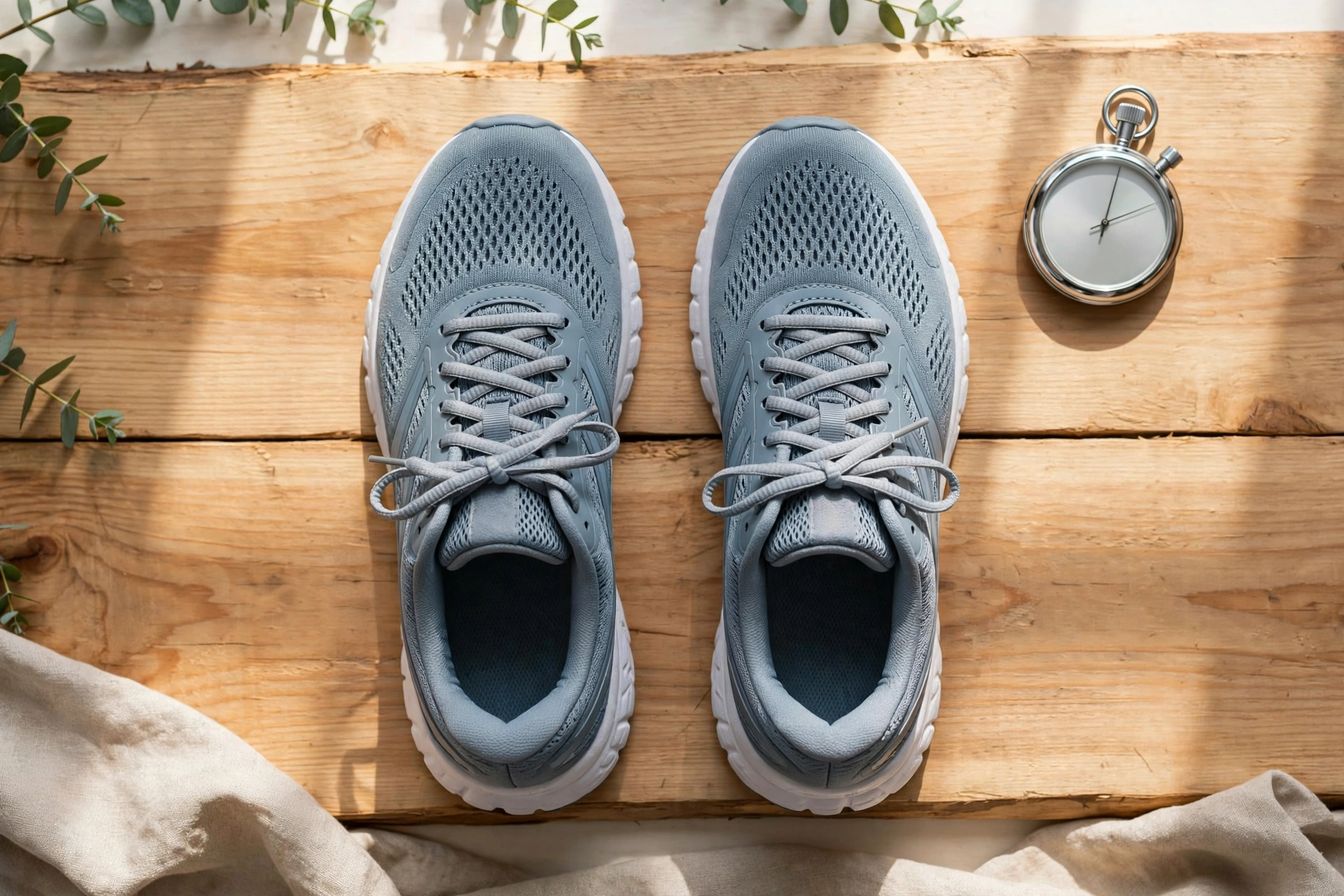
Running shoes: Your everyday sneakers might be fine for the first week, but dedicated running shoes make a real difference once you run longer. They cushion impact and support your feet through the repetitive motion of running. For a deeper look at fit, cushioning, and when to replace shoes, read our guide on how to choose running shoes.
Moisture-wicking socks: Cotton socks absorb sweat and cause blisters. Running socks made from synthetic or wool blends stay drier and protect your feet, and they cost very little.
Comfortable clothing: Any breathable workout clothes will do. On cold days, layer with a light jacket. On sunny days, a cap and sunscreen help.
Optional but helpful: A phone armband or running belt for your keys, a basic stopwatch app to time your run-walk intervals, and reflective gear if you run before sunrise or after sunset.
How the 8-Week Run-Walk Plan Works
The run-walk method alternates short bursts of running with walking breaks. Walking is not cheating; it is the training strategy that lets beginners build fitness without exhaustion. Over eight weeks, the running intervals get longer and the walking breaks get shorter.
Each week, do three sessions on non-consecutive days (for example, Monday, Wednesday, and Saturday). Every session starts with a 5-minute brisk walk to warm up and ends with a 5-minute easy walk plus gentle stretching to cool down.
Week 1: Run 1 minute, walk 2 minutes
Alternate 1 minute of easy running with 2 minutes of walking for 21 minutes total. The running pace should feel comfortable enough that you could speak in short sentences.
Week 2: Run 1.5 minutes, walk 1.5 minutes
Alternate 90 seconds of running with 90 seconds of walking for 24 minutes. Keep the same easy effort.
Week 3: Run 2 minutes, walk 1.5 minutes
Alternate 2 minutes of running with 90 seconds of walking for about 28 minutes. You will notice your breathing settling into a rhythm.
Week 4: Run 3 minutes, walk 1.5 minutes
Alternate 3 minutes of running with 90 seconds of walking for about 30 minutes. Week 4 is often where beginners feel real progress, so keep a training log to see it.
Week 5: Run 5 minutes, walk 2 minutes
Longer run intervals now: 5 minutes running, 2 minutes walking, for about 30 minutes. A simple stopwatch or phone timer keeps the intervals honest.
Week 6: Run 8 minutes, walk 2 minutes
Two or three rounds of 8 minutes running and 2 minutes walking. You are now spending most of the session running.
Week 7: Run 12 minutes, walk 2 minutes
Most people can hold a conversation while running by now. Two 12-minute run blocks with a 2-minute walk between them.
Week 8: Run 20 to 25 minutes continuously
Week 8 is the goal week: 20 to 25 minutes of continuous, comfortable running. If you need one walking break in the middle, that is fine. You have built a real running habit.
From here, you can keep adding a few minutes each week. Many graduates of this plan set their sights on a race, and our guide on how to train for your first 5k picks up right where this plan ends. Learning what zone 2 training is can also help you manage your effort on longer runs.
Running Form Basics for Beginners
Good form reduces strain and makes running feel easier. Keep these points in mind:
- Posture: Run tall with a slight lean forward from the ankles, not the waist. Keep your shoulders relaxed, not hunched.
- Arms: Bend your elbows about 90 degrees and swing your arms forward and back, not across your body. Keep your hands relaxed, not clenched.
- Feet: Aim to land with your foot under your body, not far in front of it. Shorter, quicker steps beat long, bounding strides.
- Breathing: Breathe deeply from your belly. If you are gasping, you are running too fast; slow down or take a walking break.
Fueling and Hydration Basics
For runs under an hour, you do not need special sports nutrition. Eat a light meal or snack 1 to 2 hours before running, something with simple carbohydrates like a banana or toast, and drink water beforehand. For more detail, see what to eat before a workout.
Drink water throughout the day, and bring a small bottle on warm days. Avoid heavy, high-fat, or very high-fiber meals right before a run, since they can cause stomach discomfort.

7 Beginner Mistakes to Avoid
- Running too fast: The number one mistake. Most of your running should feel easy. If you cannot talk, slow down.
- Skipping the warm-up: Cold muscles and stiff joints lead to poor runs. Always start with a brisk walk.
- Increasing too quickly: Adding too much time or distance in one week is the fastest route to shin splints and knee pain. Stick to the plan’s gradual progression.
- Ignoring rest days: Your fitness improves during recovery, not during the run itself. Keep at least one full rest day between sessions.
- Wearing the wrong shoes: Worn-out or unsupportive shoes cause foot, shin, and knee problems. Replace shoes roughly every 300 to 500 miles of use.
- Not hydrating: Even mild dehydration makes runs feel much harder. Drink water before, during longer runs, and after.
- Comparing yourself to others: Your only competition is your previous run. Social media runners often have years of training behind them.
Staying Motivated Through 8 Weeks
Motivation dips are normal. A few tactics help:
- Schedule your runs like appointments and keep a simple log of each session.
- Run with music or podcasts. Our songs to listen to when alone list has plenty of tracks that work well for solo runs.
- Find a running partner or join a beginner-friendly local running group for accountability.
- Repeat a week if life gets in the way. Consistency over weeks matters more than perfection.
Frequently Asked Questions
How long should a beginner run in the first week?
In this plan, week 1 uses 1-minute run intervals alternating with 2 minutes of walking for about 21 minutes per session. The total running time is small on purpose, so your body can adapt without excessive soreness.
Is it okay to walk during a run?
Yes. The run-walk method is a proven beginner strategy. Walking breaks let you cover more total distance, keep your heart rate in a comfortable range, and recover faster between sessions.
How often should a beginner run each week?
Three sessions per week on non-consecutive days works well for most beginners. It gives you enough training stimulus to improve while leaving plenty of recovery time.
What is the best time of day to run?
Whenever you can do it consistently. Morning runs can boost your energy for the day, evening runs relieve stress, and midday runs fit into lunch breaks. Consistency beats timing.
How do I know if I am running too fast?
Use the talk test: you should be able to speak in short sentences while running. If you can only gasp out single words, slow down or take a walking break until your breathing settles.
Do I need to stretch before running?
A 5-minute brisk walk is the best warm-up. After your run, do light stretches for your calves, quads, hamstrings, and hip flexors while your muscles are still warm.